.webp&w=384&q=75)

Loading, please wait...
Loading, please wait...

Under the current percentile system, candidates qualify based on their relative performance against other test-takers. However, this often allows students with lower absolute marks to qualify if overall scores are low. In contrast, a percentage-based cutoff would establish a fixed benchmark of actual marks. Therefore, students must achieve a specific score regardless of peer performance. Furthermore, this move aims to standardize the admission pool and uphold rigorous standards.
The scale of the NEET-UG examination continues to expand rapidly each year. For instance, the National Testing Agency (NTA) expects over 26 lakh registrations for the 2026 edition. While candidate numbers grow, concerns regarding academic proficiency in the eligible pool have also intensified. By implementing a fixed percentage, the NMC hopes to address these concerns effectively. Although eligible numbers might decrease, the overall quality of students will likely improve.
If this proposal is accepted, the admission landscape will likely become more competitive. Candidates will have to focus on maximizing their absolute scores rather than just improving their relative rank. Moreover, coaching centers might need to alter their strategies to emphasize comprehensive subject mastery. Additionally, the shift could significantly shrink the eligible pool, making it harder for students to secure seats in limited medical and dental colleges. Ultimately, the proposal seeks to ensure that only those meeting a high benchmark enter the profession.
Q1: How does a percentage cutoff differ from a percentile system?
A percentage cutoff requires a fixed minimum score (e.g., 50% of total marks), whereas a percentile system is relative to other candidates' performance.
Q2: When will NEET-UG 2026 be conducted?
The National Testing Agency (NTA) is scheduled to conduct the NEET-UG 2026 examination on May 3, 2026.
Q3: Why is the NMC proposing this change?
The change aims to ensure minimum academic competency and improve the overall quality of students entering the medical and dental fields.
Disclaimer: This content is for informational and educational purposes only. It does not constitute medical advice or replace professional judgment. Refer to the latest local and national guidelines for clinical practice.
References

Read summarized clinical updates, watch expert medical content, and earn CME certifications right from your smartphone.
Open your smartphone camera to scan and install.





NMC proposes a NEET-UG percentage cutoff to replace the percentile system, ensuring minimum academic competency and improving the quality of medical educati...
7 months ago
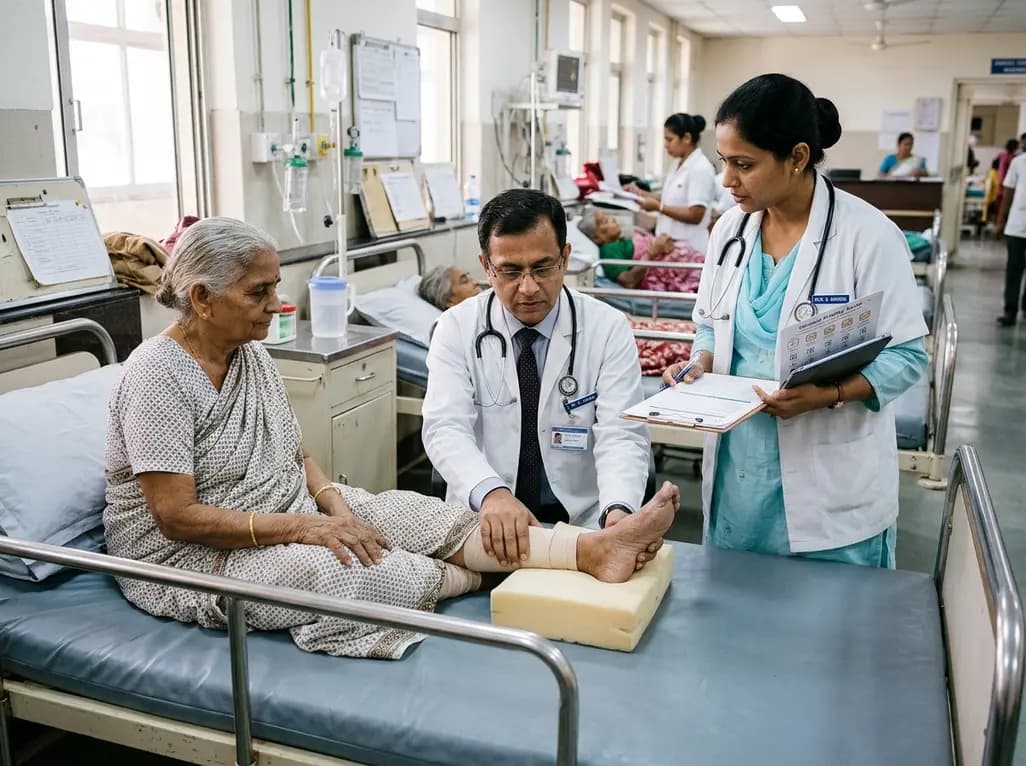
A retrospective cohort study reveals that frailty quadruples the odds of pressure injuries in hospitalized older adults. Integrating the Clinical Frailty Scale with comprehensive geriatric care is crucial for identifying vulnerability early and implementing targeted multidisciplinary prevention.
Today

Occult maternal malignancy accounts for 3.82% of persistent unreportable NIPT results with genomic noise. Multiple chromosomal aberrations, notably on chromosome 18, warrant thorough oncological evaluation and whole-body MRI to ensure timely maternal diagnosis while preserving fetal care.
Today

This article reviews the forensic and clinical complexities of acute myocarditis arising on left ventricular hypertrophy in children, highlighting early diagnostic red flags and multidisciplinary postmortem autopsy protocols.
Today

A randomized controlled trial demonstrates that an eight-week dual-task training intervention significantly improves static and dynamic postural control over standard balance exercises in individuals with chronic ankle instability, addressing critical neurocognitive deficits during athletic and daily activities.
Today

A retrospective cohort study of 7,716 ICU patients from the MIMIC-IV database demonstrates that Gradient Boosting Decision Trees significantly outperform traditional SOFA scores in predicting in-hospital mortality among patients with sepsis and diabetes, with SHAP analysis providing clinical interpretability.
Today
