.webp&w=384&q=75)

Loading, please wait...
Loading, please wait...

Necrotizing pneumonia in children is a rare but life-threatening complication of community-acquired pneumonia. Because this disease causes extensive destruction of lung tissue, it creates thin-walled cavities. Consequently, clinicians must recognize the signs of therapy-resistant cases early. Although doctors initiate timely antibiotics, some patients still develop progressive complications. Therefore, a multidisciplinary approach is vital for a successful recovery. Because of the high risks, specialists must collaborate closely to manage these patients effectively.
Accurate diagnosis relies on advanced imaging because clinical signs often overlap with simple pneumonia. Specifically, contrast-enhanced computed tomography remains the most sensitive diagnostic tool. Furthermore, it reveals areas of decreased enhancement and significant parenchymal loss. Additionally, lung ultrasound provides a safe and portable way to monitor pleural fluid. While many cases present with persistent fever, doctors should also watch for worsening respiratory distress. Notably, if the fever continues for several days despite treatment, they must consider necrotizing changes. So, early imaging is essential for guiding the medical plan.
Management involves a combination of medical and surgical strategies. Most patients recover with prolonged intravenous antibiotics; however, some develop severe complications. For example, a child might develop a bronchopleural fistula or massive lung gangrene. Because of this, the patient may need urgent surgical intervention. Moreover, a surgeon can remove necrotic tissue to stabilize the child. So, the patient can eventually breathe better and recover. Although surgery is a major step, it often saves lives in refractory cases. Finally, most children recover well and lead healthy lives because their lungs can heal over time. Thus, timely intervention ensures a favorable long-term prognosis.
Physicians use contrast-enhanced CT scans to identify loss of lung structure and the presence of air-filled cavities. They also look for persistent symptoms like high fever that do not improve with standard antibiotics.
Surgery is required when a child develops complications like bronchopleural fistulas or when the lung tissue becomes gangrenous. It is also considered if the disease continues to progress despite aggressive antibiotic therapy.
Recovery is often prolonged, requiring 2 to 4 weeks of intravenous antibiotics. However, most children regain normal lung function within several months after the initial infection clears.
Disclaimer: This content is for informational and educational purposes only. It does not constitute professional medical advice, diagnosis, or treatment. Always seek the advice of your physician or other qualified health provider with any questions you may have regarding a medical condition. Refer to the latest local and national guidelines for clinical practice.
References

Read summarized clinical updates, watch expert medical content, and earn CME certifications right from your smartphone.
Open your smartphone camera to scan and install.





A case report on necrotizing pneumonia in children, focusing on diagnostic imaging, multidisciplinary management, and surgical intervention for complication...
4 months ago

A New York City initiative successfully distributed over 48,000 COVID-19 oral antiviral prescriptions through rapid home delivery in 2022. With 92% delivered within 24 hours, the program safeguarded vulnerable and elderly populations, establishing an equitable framework for emergency drug distribution.
Today

A premature neonate developed upper limb compartment syndrome after uterine rupture extruded the arm through a scar defect. Conservative management with continuous monitoring yielded complete functional recovery and normal limb growth at 10-year follow-up, highlighting non-operative safety in selected cases.
Today

Dendritic cells bridge innate and adaptive immunity in myocardial infarction. This review explores their pathological roles, circulating dynamics, novel tolerogenic interventions, and how standard cardiovascular medications modulate dendritic cells to improve post-infarction myocardial repair and patient outcomes.
Today
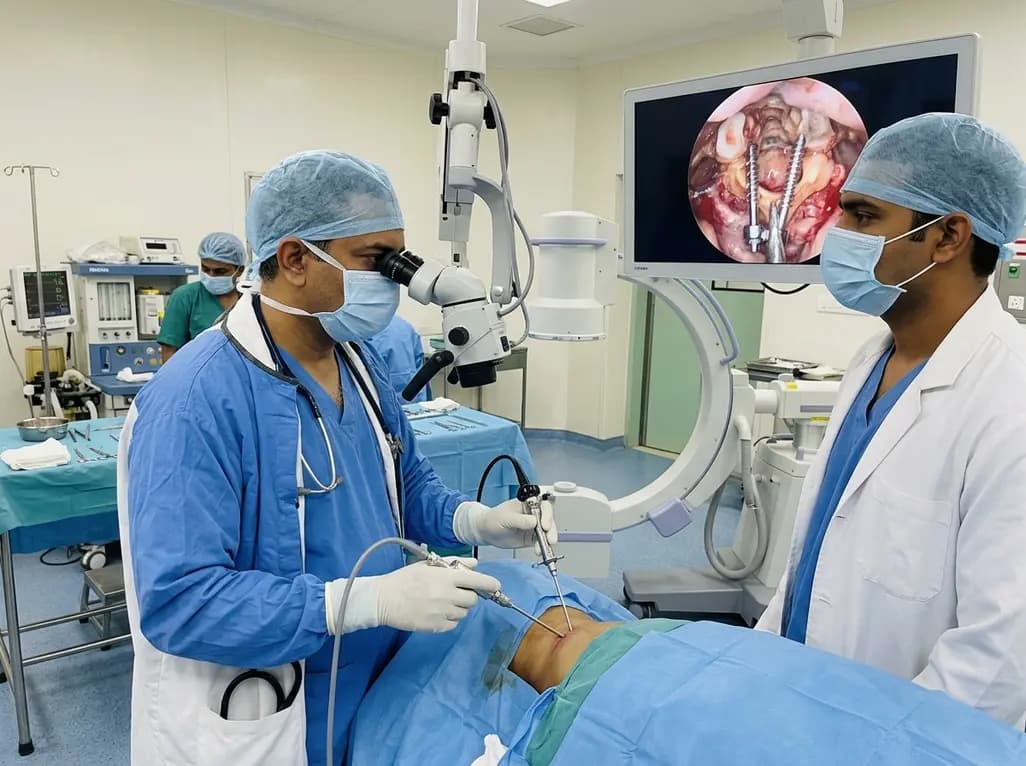
Endoscopic posterior cervical fusion combines minimally invasive decompression, joint preparation, and rigid screw-rod fixation for atlantoaxial pathologies. Early clinical findings demonstrate solid bony union, excellent symptom relief, and minimal soft-tissue morbidity without significant vascular compromise.
Yesterday

Atherosclerosis involves extensive glycometabolic reprogramming across immune and vascular cells. This review examines how glycolysis, the pentose phosphate pathway, and lactate-driven epigenetic shifts fuel plaque vulnerability, while highlighting novel therapeutic targets like PFKFB3 and LDHA.
Today
