

Loading, please wait...
Loading, please wait...

Managing acute respiratory viral illnesses remains a persistent challenge for clinicians worldwide. Recently, evaluated therapeutic strategies have targeted innate immune pathways directly within the pulmonary epithelium. A comprehensive systematic review and meta-analysis has evaluated the efficacy and safety profile of nebulized interferon beta-1a (SNG001) in patients diagnosed with COVID-19. By delivering antiviral cytokines directly to the respiratory tract, this inhaled formulation addresses local immune deficiencies caused by viral immune evasion mechanisms. Furthermore, the pooled evidence offers valuable insights into reducing disease severity before hospitalization becomes necessary.
Endogenous interferon-beta serves as a primary defense line against respiratory viral pathogens. However, coronaviruses frequently blunt host innate responses by inhibiting endogenous interferon synthesis. Consequently, inadequate pulmonary cytokine levels allow unabated viral replication and subsequent tissue inflammation. SNG001 provides a targeted recombinant formulation delivered via aerosolization. Therefore, direct inhalation achieves elevated therapeutic drug concentrations across the alveolar epithelial lining without causing excessive systemic toxicities. Moreover, this localized administration activates protective interferon-stimulated genes. In addition, the therapy enhances mucociliary clearance and strengthens epithelial barrier integrity. Thus, early administration holds promise for limiting early viral spread.
Researchers conducted a rigorous literature search across PubMed, Embase, Cochrane Library, and clinicaltrials.gov through late 2025. Ultimately, four randomized controlled trials comprising 1,055 participants fulfilled all inclusion criteria. The pooled analysis revealed that nebulized therapy led to an 84% reduction in hospitalizations among outpatients (RR 0.16, 95% CI 0.03 to 0.88). Additionally, patients receiving the inhaled drug experienced significantly fewer serious adverse events (RR 0.65, 95% CI 0.47 to 0.90). However, the intervention did not produce statistically significant differences regarding all-cause mortality (RR 0.72, 95% CI 0.37 to 1.39). Similarly, day-28 non-recovery rates remained comparable between the study arms.
Patient safety represents a paramount consideration during acute respiratory management. Importantly, overall adverse event frequencies did not differ significantly between the SNG001 and control cohorts (RR 0.97, 95% CI 0.90 to 1.04). Systemic administration of cytokines frequently elicits debilitating flu-like symptoms, hepatotoxicity, and hematological abnormalities. In contrast, the aerosolized delivery route restricts drug exposure predominantly to pulmonary tissue. As a result, treatment-emergent side effects were generally mild, transient, and self-limiting. Most commonly reported issues included temporary cough, mild headache, and minor pharyngeal irritation. Consequently, these findings confirm that the therapy maintains a favorable safety profile across ambulatory and hospitalized settings.
The observed reduction in hospitalization holds notable significance for ambulatory respiratory care. For instance, preventing inpatient admission protects strained healthcare infrastructure during seasonal infection surges. Furthermore, outpatient nebulization empowers early therapeutic intervention before lower respiratory damage accelerates. Clinicians can potentially identify high-risk individuals and initiate targeted inhalation therapy at home. Therefore, ambulatory protocols might lower overall healthcare costs and avoid nosocomial complications. Nevertheless, doctors must consider delivery logistics and individual device maintenance. Proper patient instruction regarding mesh nebulizer hygiene remains crucial to avoid secondary contamination. Overall, community delivery shows substantial clinical promise.
Although these pooled findings are encouraging, several notable evidence gaps require attention. First, existing trial datasets primarily accrued participants during earlier pandemic waves. Consequently, researchers must evaluate therapeutic efficacy against evolving viral variants. Second, widespread vaccination and natural immunity have altered baseline patient immune profiles. Therefore, future randomized controlled trials must specifically investigate vaccinated and previously infected cohorts. In addition, clinical scientists should explore optimal dosing schedules and combination protocols with oral antivirals. As a result, continued clinical exploration will clarify where inhaled cytokines fit into modern antiviral algorithms.
The primary benefit demonstrated by pooled clinical trial data is a significant reduction in COVID-19-related hospitalizations among outpatients. In addition, patients receiving the nebulized drug experienced significantly fewer serious adverse events compared with control groups. However, the treatment has not yet shown a statistically significant reduction in overall 28-day all-cause mortality across the evaluated randomized clinical trials.
Aerosolized delivery directs the active antiviral protein straight to the infected respiratory epithelium where viral replication occurs. Consequently, localized administration achieves high pulmonary therapeutic concentrations while minimizing systemic circulation. This targeted approach prevents the severe systemic side effects, such as persistent fever, cytopenias, and liver enzyme elevations, which commonly occur during systemic subcutaneous or intravenous interferon administration.
Currently, inhaled interferon cannot replace established standard-of-care oral antivirals. Instead, clinical evidence suggests it may serve as a complementary therapeutic option for preventing disease progression. Clinicians must await larger phase 3 trials in modern, vaccinated populations before routinely integrating this agent into standard outpatient management guidelines.
Disclaimer: This content is for informational and educational purposes only. It does not constitute medical advice and should not replace professional clinical judgment. Treatments and dosages must be individualized according to the patient's specific clinical condition and prevailing regulatory approvals. Refer to the latest local and national guidelines for clinical practice.
References
Qin J et al. Nebulized interferon-β1a (SNG001) in COVID-19 patients: A systematic review and meta-analysis of randomized controlled trials. Pulmonology. 2026 Dec undefined. doi: 10.1080/25310429.2026.2765991. PMID: 43053745.
Wilkinson TMA et al. Safety and efficacy of inhaled nebulised interferon beta-1a (SNG001) for treatment of SARS-CoV-2 infection: a randomised, double-blind, placebo-controlled, phase 2 trial. Lancet Respir Med. 2021;9(2):196-206. doi: 10.1016/S2213-2600(20)30511-7.
Monk PD et al. Nebulised interferon-β1a (SNG001) in hospitalised COVID-19: SPRINTER phase III study. ERJ Open Res. 2023;9(2):00605-2022. doi: 10.1183/23120541.00605-2022.

Read summarized clinical updates, watch expert medical content, and earn CME certifications right from your smartphone.
Open your smartphone camera to scan and install.





A meta-analysis of four randomized controlled trials reveals that nebulized interferon beta-1a (SNG001) significantly reduces hospital admissions and serious adverse events in COVID-19 patients, offering promising therapeutic value for outpatient respiratory care.
Today

A large cohort study demonstrates that fetal growth restriction in a first pregnancy raises maternal cardiovascular risk within five years postpartum, including elevated rates of heart failure, stroke, and myocardial infarction. Clinicians must initiate proactive postpartum screening and cardiovascular prevention.
Today

An NHANES analysis reveals that meeting 24-hour movement guidelines significantly lowers the odds of cardiovascular disease, obesity, hypertension, and diabetes among adults with disabilities, emphasizing the power of combined physical activity, sleep, and limited sedentary time.
Today

A paired cadaveric study compared triple and quintuple percutaneous Achilles tendon lengthening. While quintuple hemisection showed numerically greater elongation, differences were not statistically significant.
Yesterday
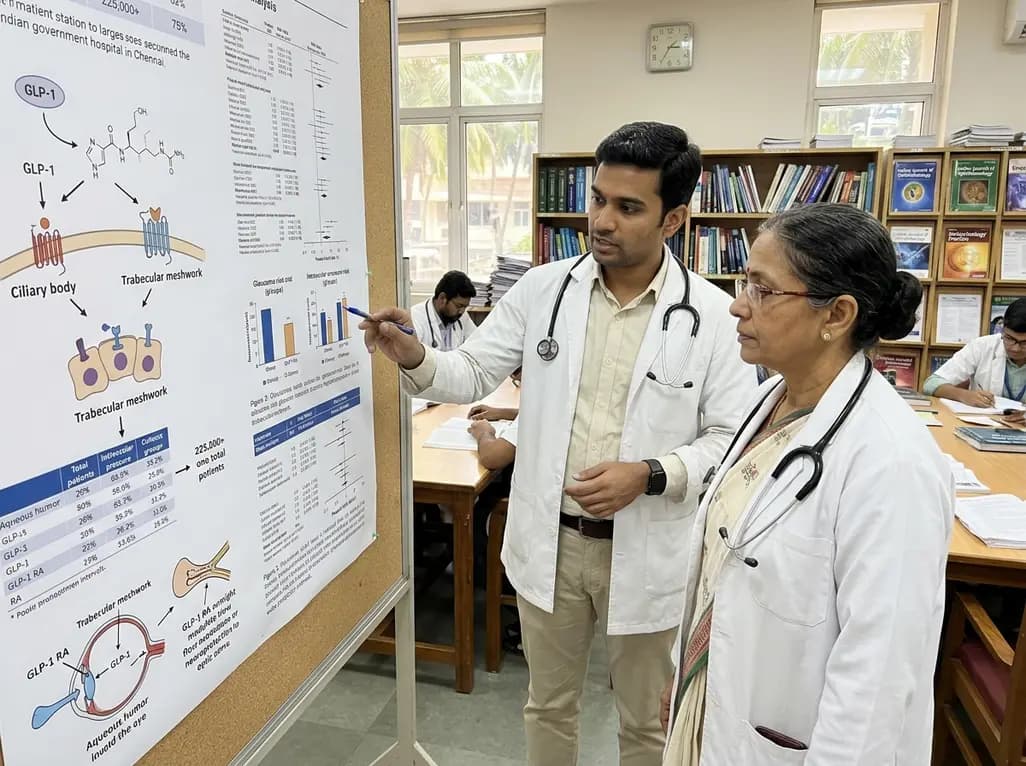
A systematic review and meta-analysis of over 225,000 patients explores whether GLP-1 receptor agonists reduce the risk of glaucoma and ocular hypertension. While pooled data show a 31% lower risk, low certainty and wide prediction intervals urge cautious optimism and further randomized trial evaluation.
Today
