.webp&w=384&q=75)

Loading, please wait...
Loading, please wait...

Accurate risk stratification remains essential when evaluating patients with high-risk localized prostate cancer prior to definitive surgery. Clinicians historically utilize standardized risk categories to predict adverse pathological features and counsel surgical candidates. However, marked disease heterogeneity within the high-risk category continues to create management dilemmas in routine practice. Consequently, clinical trial designs frequently adjust entry criteria to enrich study cohorts for aggressive tumor biology.
Risk stratification provides the essential roadmap for deciding between radical prostatectomy, radiotherapy, and multimodal systemic intensification. The National Comprehensive Cancer Network defines high-risk disease using clear, reproducible parameters. These criteria include a serum prostate-specific antigen greater than 20 ng/mL, clinical stage T3 to T4 disease, or Gleason grade group 4 to 5. Clinicians across high-volume centers rely on these guidelines because they remain simple and easily accessible during initial biopsy evaluation.
In contrast, recent peri-operative trials explore whether narrower definitions enrich patient populations with more aggressive biology. Specifically, the phase 3 PROTEUS trial evaluated peri-operative androgen receptor pathway inhibition in surgically treated disease. Therefore, trial investigators applied stricter histological thresholds to select surgical candidates. These criteria incorporate biopsy core volume, grade group distribution, and extensive core involvement. Although designed to select patients facing higher recurrence risk, these parameters demand extensive histological pathology review before clinicians can establish eligibility.
The PROTEUS framework establishes specific histological thresholds that exceed conventional high-risk definitions. To meet PROTEUS inclusion, a patient must present with an overall Gleason grade group of 3 or higher. Furthermore, the biopsy must fulfill one of four specific spatial or histological benchmarks. These benchmarks include Gleason grade group 5 in at least one core, or grade group 4 across at least two cores with 80 percent involvement each.
Alternatively, the patient must harbor grade group 3 or higher across six systematic biopsy cores. The final pathway requires grade group 3 or higher across at least three cores accompanied by a baseline prostate-specific antigen of 20 ng/mL or higher. Consequently, these strict requirements aim to exclude men with low-volume Gleason pattern 4 tumors. While this methodology effectively purifies trial cohorts for investigational drugs, it substantially increases pathological complexity. Evaluating exact linear percentages across multiple systematic cores demands substantial time and expert genitourinary pathology review.
To evaluate these classification schemes, investigators evaluated an institutional database comprising 358 radical prostatectomy patients. They categorized each patient under both conventional NCCN criteria and experimental PROTEUS criteria. Overall, 62 patients met standard NCCN high-risk definitions, representing 17 percent of the entire surgical cohort. In contrast, only 44 patients met the more restrictive PROTEUS criteria, representing 12 percent of the study cohort.
Importantly, cross-classification demonstrated significant overlap but revealed notable discordance. While 38 patients met both definitions simultaneously, 24 patients qualified exclusively under standard NCCN criteria. Conversely, 6 patients met the PROTEUS requirements but fell outside the standard NCCN high-risk boundary. These divergent distributions confirm that trial-enrichment parameters select a distinct subpopulation rather than a simple mathematical subset. Therefore, relying solely on trial definitions in general practice would exclude nearly 39 percent of traditionally high-risk men from intensive peri-operative consideration.
Researchers examined whether the restrictive trial criteria improved discrimination of adverse surgical outcomes after radical prostatectomy. They specifically analyzed extraprostatic extension, positive surgical margins, and early biochemical persistence defined as a prostate-specific antigen of 0.2 ng/mL or greater at 12 months. Statistical discrimination was quantified using the area under the receiver operating characteristic curve.
Surprisingly, neither classification system demonstrated superior predictive discrimination over the other. For extraprostatic extension, the area under the curve reached 0.56 for NCCN criteria and 0.56 for PROTEUS criteria. Similarly, margin status prediction showed comparable performance, yielding an area under the curve of 0.54 for NCCN and 0.52 for PROTEUS. Finally, twelve-month biochemical failure showed no statistically significant difference, yielding values of 0.59 and 0.64, respectively. Consequently, both tools demonstrated comparable prognostic performance despite the complex multi-core calculation demanded by the trial framework.
These empirical findings carry direct relevance for multi-disciplinary teams managing localized genitourinary malignancies. While restrictive eligibility criteria serve clinical trials by maximizing event rates, their direct translation into routine clinical workflows presents practical hurdles. Standardizing systematic biopsy review across community pathology centers remains challenging, especially regarding exact percentage involvement thresholds.
Furthermore, standard NCCN categorization captures a broader spectrum of aggressive biology without adding diagnostic burden. Because post-surgical oncologic outcomes remain statistically comparable between definitions, clinicians do not need to discard familiar guidelines. Instead, multi-disciplinary tumor boards can continue utilizing standard NCCN risk groupings to identify candidates for radical prostatectomy. Meanwhile, clinicians should interpret trial results with the understanding that trial eligibility reflects an enriched, narrower cross-section of everyday high-risk patients.
Standard NCCN criteria require a serum PSA above 20 ng/mL, clinical T3 to T4 disease, or Gleason grade group 4 to 5. In contrast, PROTEUS requires overall grade group 3 or higher with extensive core involvement, such as grade group 5 in one core, grade group 4 across two cores with 80 percent involvement, or multiple involved systematic cores.
No, statistical analysis revealed no significant differences in discrimination. Area under the curve values for predicting extraprostatic extension, positive margins, and post-surgical PSA persistence at 12 months remained statistically comparable between both definitions. Thus, the more restrictive PROTEUS criteria did not significantly outperform standard NCCN classifications in predicting adverse radical prostatectomy outcomes.
Routine adoption is unnecessary because standard NCCN criteria provide equivalent predictive power with lower diagnostic complexity. Calculating core percentages and systematic involvement demands extensive pathological resources without yielding superior prognostic discrimination. Therefore, clinicians can confidently maintain standard guideline-based definitions for surgical counseling, reserving PROTEUS criteria primarily for clinical trial screening and specific research protocols.
Disclaimer: This content is for informational and educational purposes only and should not be considered medical advice. Always consult a qualified healthcare professional regarding any medical condition or treatment. Refer to the latest local and national guidelines for clinical practice.
References

Read summarized clinical updates, watch expert medical content, and earn CME certifications right from your smartphone.
Open your smartphone camera to scan and install.





A comparative analysis examines whether the restrictive PROTEUS clinical trial criteria improve post-surgical oncologic discrimination over standard NCCN risk definitions in localized prostate cancer. Results show comparable predictive performance for adverse surgical and biochemical outcomes.
Today

A spatial multi-omics study reveals that ozone exposure alters regional macrophage phenotypes and non-immune cell signaling during surfactant protein-C mutant lung injury. Although structural remodeling remained unchanged at 7 days, pollutant exposure heightened inflammatory activation and animal mortality.
Today
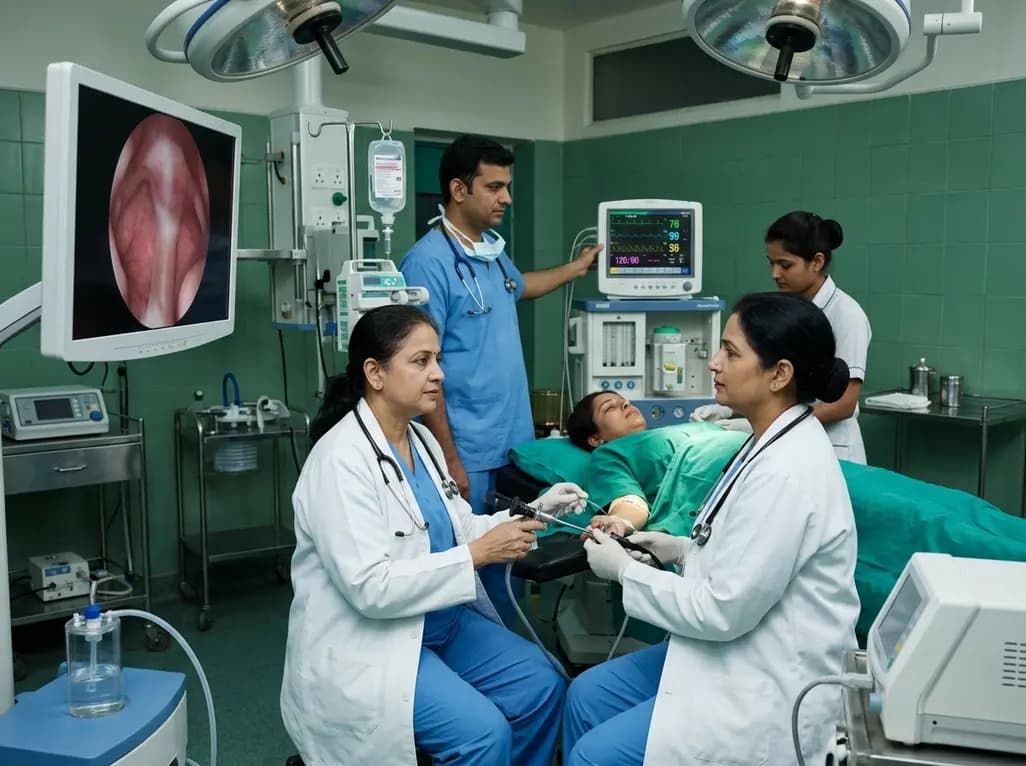
A meta-analysis of nine RCTs comparing remimazolam versus propofol in hysteroscopy reveals remimazolam significantly reduces injection pain, hypotension, and respiratory depression while maintaining comparable sedation success, recovery times, and procedural duration.
Today

Abdominal aortic aneurysm rupture remains a catastrophic vascular emergency. Groundbreaking research reveals that USP53 accelerates aneurysm progression by reprogramming smooth muscle cell metabolism toward aerobic glycolysis, highlighting a promising target beyond conventional diameter-based surveillance.
Yesterday

A breakthrough study leverages natural language processing to accurately identify incident medication-related osteonecrosis of the jaw and track antiresorptive drug holidays from clinical narratives in electronic health records, advancing osteoporosis pharmacovigilance and dental safety.
Today

Recent research defines ferro-aging as a conserved iron-lipid axis driving organ decline across primates. Age-related iron dyshomeostasis stimulates ACSL4-mediated lipid peroxidation, promoting cellular senescence. Notably, vitamin C directly inhibits ACSL4, suppressing phospholipid oxidation and multi-organ decay.
Yesterday
