.webp&w=384&q=75)

Loading, please wait...
Loading, please wait...

Excessive UVR exposure causes skin cancer, which currently poses a serious global health risk. Recent medical trends emphasize using natural phytoconstituents like Naringenin due to their fewer adverse effects compared to synthetic medicines. Naringenin serves as a potent antioxidant with remarkable UV-protection potential. However, its therapeutic use remains limited by poor bioavailability and stability. Researchers are now addressing these drawbacks through a novel Naringenin skin cancer therapy using mannosylated niosomal nanogels.
This innovative approach utilizes a modified thin-film hydration technique to create ligand-specific nanocarriers. By employing a Box-Behnken experimental design, the team optimized naringenin-loaded niosomes for superior performance. Furthermore, incorporating these niosomes into a topical gel enhances their rheological properties and spreadability. Consequently, this system improves skin permeation and ensures the drug reaches the deeper layers of the epidermis effectively. Notably, the mannose content allows for targeted interaction with specific receptors.
Cytotoxicity assays demonstrate that mannosylated formulations provide higher cellular uptake and dose-dependent activity across multiple cell lines. The study notably showed significant reductions in myeloperoxidase levels during in vivo evaluations. Moreover, the nanogel effectively lowered UVB-induced 4-HNE and COX-2 protein levels. These biomarkers are critical indicators of oxidative stress and inflammation. Therefore, the research highlights how targeted delivery can mitigate the harmful effects of ultraviolet radiation.
Additionally, the mannose ligand specifically targets receptors on cancer cells and macrophages. This targeting mechanism increases the concentration of naringenin at the tumor site while reducing systemic toxicity. Specifically, the topical application of this nanogel offers a localized treatment option that overcomes the limitations of oral administration. Thus, this targeted delivery system represents a major breakthrough in dermatological oncology.
Naringenin acts as a potent antioxidant that scavenges reactive oxygen species (ROS) and protects cells from UV-induced damage. It also reduces inflammation by lowering COX-2 and 4-HNE protein levels.
The mannosylated nanogel uses specific ligands to target receptors on cancer cells. This increases drug uptake and improves skin permeability, leading to more effective treatment compared to conventional topical formulations.
Yes, natural phytoconstituents like Naringenin generally have fewer side effects than synthetic chemotherapy. By using a targeted nanocarrier, the treatment also minimizes the impact on healthy surrounding tissues.
Disclaimer: This content is for informational and educational purposes only. It does not constitute medical advice or replace consultation with a healthcare professional. Refer to the latest local and national guidelines for clinical practice.
References
Verma N et al. Targeted delivery of Naringenin-enriched mannosylated niosomal nanogel for effective therapy of skin cancer. J Drug Target. 2026 Apr 20. doi: 10.1080/1061186X.2026.2659915. PMID: 42007930.
Tripathi D et al. Naringenin in Melanoma: Mechanistic Insights and Nanodelivery Strategies for Clinical Translation. Mol Pharm. 2025 Nov 3. doi: 10.1021/acs.molpharmaceut.5c00556. PMID: 41058449.
Sajeeda A et al. Naringenin prevents ultraviolet-B radiation-induced skin damage via alleviation of impaired mitochondrial dynamics. J Photochem Photobiol B. 2024 Jul;256:112944. doi: 10.1016/j.jphotobiol.2024.112944. PMID: 38796981.

Read summarized clinical updates, watch expert medical content, and earn CME certifications right from your smartphone.
Open your smartphone camera to scan and install.





Researchers have developed a mannosylated niosomal nanogel to enhance the delivery of Naringenin, showing significant potential in targeting skin cancer cel...
6 months ago

A rare case of homozygous deletional hereditary persistence of fetal hemoglobin (HPFH) in Ghanaian twins reveals 100% HbF and erythrocytosis with normal red cell indices, providing key insights into globin gene regulation, differential diagnosis from delta-beta thalassemia, and clinical implications.
Today
The 2026 KASID guidelines provide comprehensive clinical recommendations on sexuality, fertility, pregnancy, and lactation for patients with inflammatory bowel disease, prioritizing sustained remission and multidisciplinary care to optimize maternal and neonatal outcomes.
Today
A comparative non-contact study reveals that high-power radiofrequency delivery with the QDOT MICRO catheter induces an artifactual contact force rise. Electrophysiologists must understand this power-dependent thermal and electrical phenomenon to avoid inadvertent catheter withdrawal and ineffective ablation.
Today

A novel proof-of-concept study presents a six-degree-of-freedom articulated manikin neck equipped with linear potentiometers. The system provides real-time kinematic motion feedback during cervical immobilisation, delivering sub-degree tracking accuracy to improve pre-hospital trauma training and patient safety.
Today
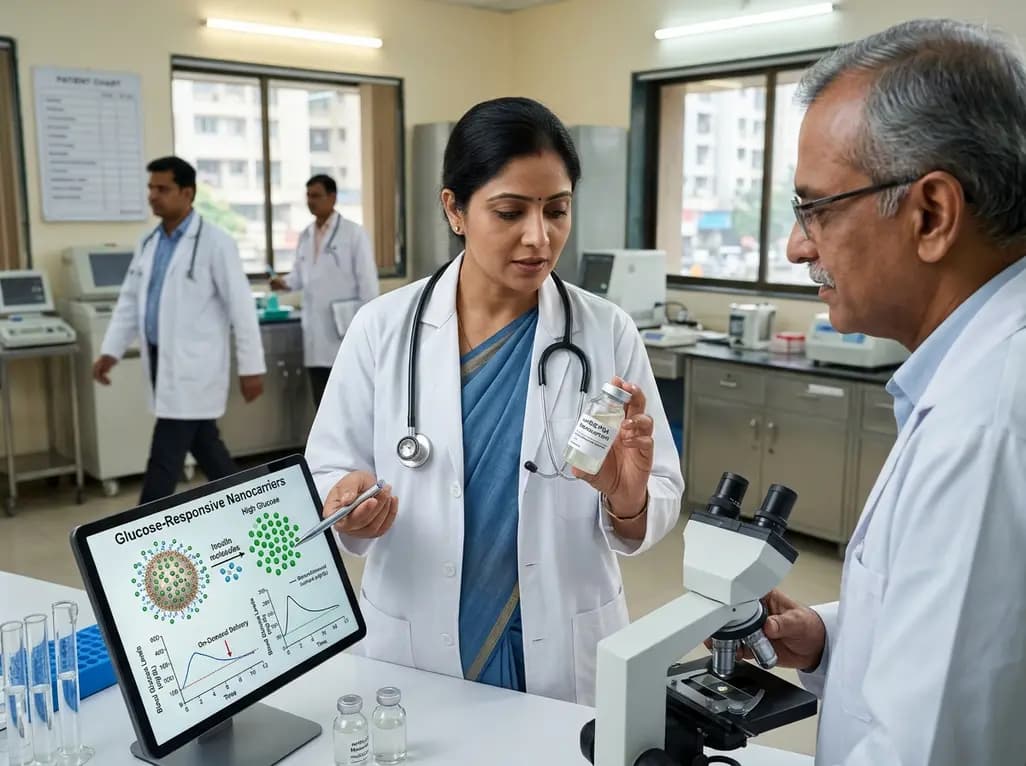
Novel glucose-responsive mPEG-PSA nanocarriers deliver insulin aspart on demand, achieving dual postprandial and basal glycemic control without hypoglycemia in diabetic models. This biomaterial breakthrough offers promising clinical implications for physiologic diabetes management.
Today
