.webp&w=384&q=75)

Loading, please wait...
Loading, please wait...

Ageing is accompanied by progressive skeletal deterioration that severely elevates fracture risks and impairs quality of life among elderly populations. Clinicians and researchers recognize senile osteoporosis as an escalating global health burden with substantial morbidity. While secondary osteoporosis and postmenopausal bone loss have established interventions, dedicated pharmacological agents targeting primary age-associated skeletal fragility remain scarce. Recent pharmacological investigations have highlighted the dietary flavanone naringenin as a promising candidate for skeletal protection. Emerging preclinical research reveals that this bioflavonoid actively combats age-related bone loss by directly interacting with master transcription factors governing skeletal homeostasis. Consequently, understanding these molecular mechanisms opens novel avenues for geriatric bone health and regenerative therapeutics.
Senile or age-related osteoporosis develops through complex biological cascades characterized by uncoupled bone remodeling. As individuals age, bone marrow mesenchymal stem cells shift their lineage commitment, which favors adipogenesis over osteogenesis. Concurrently, endogenous osteoblast senescence reduces mineral apposition, while osteoclast-mediated bone resorption continues unabated. This chronic imbalance produces marked microarchitectural degradation, thinned cortical shells, and porous trabeculae. Furthermore, elderly patients frequently present with multi-organ comorbidities and altered pharmacokinetics, which complicates conventional therapy. Current antiresorptive agents, such as bisphosphonates and receptor activator of nuclear factor-κB ligand inhibitors, effectively reduce osteoclastic resorption. However, they frequently suppress bone turnover and fail to rebuild deteriorated microarchitecture. Similarly, anabolic options like parathyroid hormone analogues have defined treatment windows and elevated costs. Therefore, clinicians urgently require dual-action therapeutic molecules that safely stimulate bone formation while curbing excessive resorption. Natural polyphenols provide an exciting structural framework for targeted drug development in skeletal ageing.
Naringenin is a naturally occurring flavanone abundant in citrus fruits and various medicinal herbs. In recent preclinical evaluations, researchers assessed the therapeutic efficacy of naringenin using naturally ageing murine models. The investigators performed comprehensive in vivo analyses to quantify skeletal geometry, biomechanical strength, and mineral turnover markers. Dual-energy X-ray absorptiometry and micro-computed tomography demonstrated that naringenin administration significantly improved trabecular microarchitecture and increased overall bone mineral density. Moreover, three-point bending and femoral biomechanical tests confirmed enhanced skeletal load-bearing capacity. Dynamic bone histomorphometry revealed that naringenin notably elevated both mineral apposition rates and bone formation rates. In addition, serum biomarker profiling demonstrated a substantial reduction in systemic bone resorption markers. Cellular assays reinforced these findings by showing that naringenin simultaneously promoted osteogenic differentiation in progenitor cells while attenuating receptor activator-induced osteoclastogenesis. Thus, naringenin exhibits a unique bidirectional regulatory capacity that reverses age-related skeletal decay.
To define the precise direct molecular target through which naringenin operates, researchers conducted detailed biochemical and biophysical investigations. High-throughput RNA sequencing first revealed significant enrichment of osteoblast differentiation pathways and Runx2-dependent gene networks following naringenin exposure. Subsequently, advanced biophysical assays, including surface plasmon resonance, cellular thermal shift assays, and drug affinity responsive target stability, confirmed direct physical binding between naringenin and Runt-related transcription factor 2 (Runx2). Molecular dynamics simulations further clarified the stable structural docking between the flavanone and the Runx2 active pocket. Biotin-conjugated pull-down and competitive binding assays validated this direct interaction at the protein level. Importantly, Runx2 serves as the essential master regulator required for osteoblast lineage commitment and matrix mineralization. Genetic silencing using small interfering RNA markedly attenuated the osteogenic efficacy of naringenin in cell culture. Consequently, this study definitively establishes Runx2 as the direct pharmacological target through which naringenin orchestrates skeletal rejuvenation.
The therapeutic value of naringenin stems largely from its balanced dual-action profile on the bone remodeling balance. On one hand, naringenin binds Runx2 to upregulate downstream osteogenic genes, including alkaline phosphatase, osteocalcin, and type I collagen. This molecular activation accelerates extracellular matrix synthesis, promotes calcium nodule deposition, and restores osteoblast vigor in aged microenvironments. On the other hand, naringenin effectively dampens osteoclastic differentiation and bone-resorbing activity. By modulating the cytokine milieu and inhibiting nuclear factor-κB signaling, naringenin restrains osteoclast maturation from monocyte-macrophage precursors. Furthermore, it modulates the osteoprotegerin to RANKL ratio, thereby shielding vulnerable trabeculae from accelerated catabolism. This simultaneous enhancement of bone construction alongside suppression of skeletal breakdown contrasts sharply with pure antiresorptive therapies. As a result, naringenin preserves trabecular connectivity without inducing severe bone turnover suppression, which offers an advantageous pharmacological template for geriatric patients.
Although these preclinical findings provide compelling mechanistic evidence, translating naringenin into human clinical practice requires addressing key pharmacological hurdles. Native naringenin exhibits relatively poor water solubility and extensive first-pass glucuronidation in the intestine and liver, which limits its systemic bioavailability. Consequently, pharmaceutical scientists are actively developing novel delivery platforms, such as liposomes, polymeric nanoparticles, and microemulsions, to optimize bio-absorption. In addition, synthetic naringenin derivatives with enhanced metabolic stability are currently undergoing evaluation. From an integrative clinical perspective, naringenin presents a favorable safety profile with low systemic toxicity, making it suitable for long-term supportive management. Clinicians must note, however, that while dietary sources and nutraceutical formulations provide supportive antioxidant benefits, standardized pharmaceutical preparations will be vital for reliable therapeutic outcomes. Future clinical trials should focus on validating pharmacokinetics, dosing regimens, and fracture risk reduction in senile cohorts.
Senile osteoporosis represents an intricate interplay of systemic senescence, mechanical disuse, and metabolic dysregulation. Addressing this multifactorial disease requires a comprehensive management paradigm integrating pharmacotherapy, physical rehabilitation, and adequate nutritional support. While standard bisphosphonates, denosumab, and anabolic agents remain the cornerstone of current osteoporosis management, emerging nutraceutical and targeted small molecules offer promising adjunct possibilities. Physicians should actively emphasize dietary patterns rich in natural bioflavonoids, adequate protein, calcium, and vitamin D to support foundational skeletal resilience. Furthermore, the identification of Runx2 as a druggable small-molecule target provides medicinal chemists with a defined blueprint for creating next-generation bone anabolic drugs. As translational research progresses, clinicians can anticipate newer therapeutic regimens that restore osteoblastic vitality and safely mitigate the societal burden of fragility fractures in the ageing population.
Postmenopausal osteoporosis arises primarily from acute estrogen withdrawal, leading to rapid osteoclast activation and high-turnover bone resorption. In contrast, senile osteoporosis represents a low-turnover condition driven by intrinsic cellular senescence, diminished osteoblastogenesis, reduced mesenchymal stem cell differentiation, and long-term mechanical disuse. Consequently, senile bone loss affects both cortical and trabecular compartments progressively, requiring therapies that actively stimulate bone formation alongside resorption suppression.
Naringenin directly binds to Runt-related transcription factor 2 (Runx2), the master transcriptional regulator of osteogenesis. By stabilizing and activating Runx2, naringenin triggers the transcription of essential osteogenic genes, including osteocalcin, alkaline phosphatase, and type I collagen. Furthermore, this molecular interaction promotes osteoprogenitor proliferation, accelerates extracellular matrix mineralization, and counteracts the age-induced decline in osteoblast synthetic capacity within the bone microenvironment.
Current clinical evidence does not support replacing standard prescription osteoporosis medications with dietary naringenin. Although citrus fruits provide beneficial bioflavonoids, dietary intake yields relatively low and variable systemic bioavailability. Therefore, patients diagnosed with osteoporosis or high fracture risk should continue guideline-directed pharmacotherapy, such as bisphosphonates or teriparatide, while viewing dietary flavonoids as complementary lifestyle support until standardized pharmaceutical formulations receive regulatory approval.
Disclaimer: This content is for informational and educational purposes only. It is not intended to provide medical advice or to be a substitute for professional medical advice, diagnosis, or treatment. Patients should always consult with a qualified healthcare professional for medical concerns. Clinicians should use their own clinical judgment. The information may not reflect the most recent advancements or guidelines. Refer to the latest local and national guidelines for clinical practice.
References

Read summarized clinical updates, watch expert medical content, and earn CME certifications right from your smartphone.
Open your smartphone camera to scan and install.





Recent research reveals that the dietary flavonoid naringenin directly binds and activates the osteogenic transcription factor Runx2, enhancing bone formation while suppressing resorption to mitigate age-related bone loss.
last month

A Bayesian multilevel meta-analysis reveals that aerobic training combined with moderate carbohydrate restriction modestly lowers HbA1c in type 2 diabetes. However, sparse data and very low certainty leave incremental benefits over exercise or diet alone unproven, highlighting the need for individualized care.
Today

Findings from Project Viva indicate that sustained postpartum weight retention, rather than excessive gestational weight gain alone, directly worsens women's mid-life cardiovascular health, degrading blood pressure and glycemic parameters decades after delivery.
Today
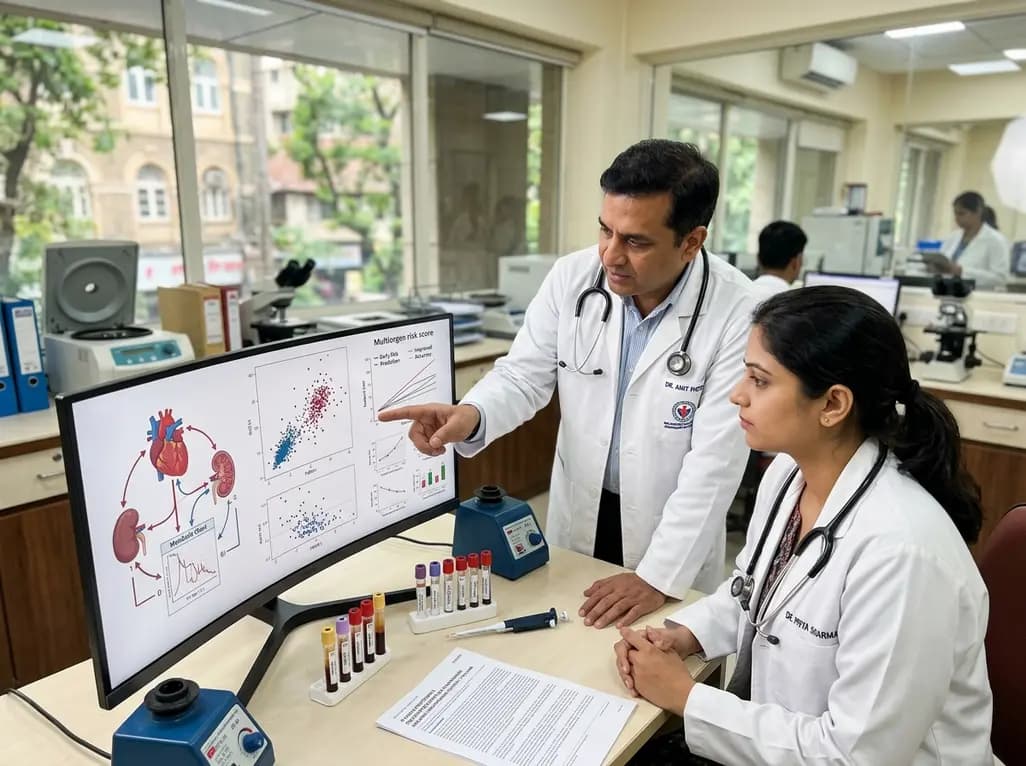
A large UK Biobank study reveals that plasma proteomic signatures capture preclinical organ damage and improve multiorgan risk prediction across early CKM syndrome stages 0 to 2 beyond traditional PREVENT clinical models.
Today

A retrospective CBCT study reveals that superior TMJ space asymmetry correlates moderately with occipital condyle-atlas-axis asymmetry in unilateral TMJ osteoarthritis, highlighting an imaging correlate between jaw biomechanics and upper cervical alignment rather than a standalone diagnostic marker.
Today

A cross-sectional investigation highlights the complex pathophysiological links between serum Klotho deficiency, secondary hyperaldosteronism, and vascular damage in CKD. Discover key insights into non-invasive vascular stiffness markers and targeted therapeutic pathways for cardiorenal protection.
Today
