.webp&w=384&q=75)

Loading, please wait...
Loading, please wait...

Medulloblastoma represents the most common malignant embryonal brain tumor diagnosed in pediatric patients worldwide. Historically, neuropathologists classified these posterior fossa neoplasms primarily on histological appearances, distinguishing classic, desmoplastic/nodular, extensively nodular, and large cell/anaplastic variants. Over the past decade, however, extensive molecular investigations have completely transformed disease understanding. Current clinical practice stratifies medulloblastoma into four distinct molecular groups: WNT-activated, Sonic Hedgehog (SHH)-activated, Group 3, and Group 4. Furthermore, recent scientific consensus has identified numerous refined subtypes within these broader categories that exhibit markedly different biological behaviors and clinical outcomes. Consequently, adopting Nanopore sequencing in medulloblastoma classification is rapidly becoming a transformative approach to deliver rapid, accessible, and comprehensive epigenetic and genomic profiling for affected children.
Accurate molecular classification is indispensable for pediatric neuro-oncology teams. Modern management demands a careful balance between curative aggressive multimodal therapy and the reduction of severe long-term neurocognitive, endocrine, and developmental toxicities. For instance, children diagnosed with WNT-activated tumors exhibit excellent five-year survival rates exceeding ninety percent. Therefore, these low-risk patients represent ideal candidates for therapy de-escalation protocols designed to minimize cranio-spinal radiation sequelae. Conversely, patients presenting with MYC-amplified Group 3 tumors or TP53-mutant SHH tumors face high rates of early relapse and dismal prognoses, necessitating immediate treatment intensification.
However, accessing timely molecular profiling remains a major logistical challenge across many oncology centers globally. Gold-standard DNA methylation profiling using hybridization microarrays requires high-input genomic DNA, expensive centralized infrastructure, and batching of tumor samples. As a result, processing delays frequently stretch from several weeks to over a month. These lengthy turnaround times significantly hinder timely risk stratification, clinical trial enrollment, and personalized postoperative treatment planning in acute clinical settings.
To overcome the inherent limitations of array-based methylation profiling, researchers have turned toward third-generation, long-read sequencing technologies. A landmark multi-center investigation evaluated the diagnostic accuracy and clinical utility of whole-genome Nanopore sequencing for comprehensive medulloblastoma characterization. The research team rigorously benchmarked Nanopore sequencing against the gold-standard Illumina EPIC methylation array using a well-annotated cohort of 44 frozen medulloblastoma specimens. Subsequently, the investigators validated the assay across an expanded integrated diagnostic cohort comprising 116 medulloblastoma cases.
Importantly, Nanopore sequencing offers native detection of 5-methylcytosine modifications without requiring bisulfite conversion or chemical degradation. In addition, the platform simultaneously captures genome-wide copy number aberrations directly from the same low-coverage sequencing run. Consequently, clinicians obtain dual diagnostic insights—both epigenetic group assignment and chromosomal structural variations—within a unified and streamlined diagnostic workflow. This native single-molecule analysis substantially preserves scarce pediatric tissue specimens while reducing sample preparation complexity.
The study demonstrated remarkable concordance between long-read Nanopore sequencing and conventional microarray platforms. Specifically, Nanopore sequencing correctly assigned 42 out of 44 tumors (95.5%) to their definitive molecular subgroups within the initial discovery cohort. Furthermore, when evaluated across the larger integrated diagnostic cohort of 116 tumors, the platform maintained a high diagnostic accuracy of 91.4% (106 out of 116 samples). These results clearly establish that shallow long-read sequencing reliably captures the distinctive epigenetic landscapes defining WNT, SHH, Group 3, and Group 4 tumors.
Beyond standard four-group classification, the investigators examined whether Nanopore data could resolve refined second-generation medulloblastoma subtypes. Remarkably, the technology accurately subtyped 28 out of 30 evaluated tumors (93.3%). This high-resolution fidelity is particularly vital because subtype-specific cytogenetic alterations, such as chromosome 17q gain, 11p loss, or MYCN amplification, carry direct prognostic and therapeutic significance. Therefore, the assay effectively bridges the gap between basic epigenetic discovery and routine diagnostic execution.
A notable strength of this clinical evaluation was the successful implementation of miniaturized Flongle flow cells. Standard high-throughput sequencing runs frequently require clinicians to wait weeks to pool multiple patient samples to achieve cost efficiency. In sharp contrast, Flongle flow cells enable cost-effective, single-sample sequencing runs using as little as 200 nanograms of input DNA. In this study, 18 medulloblastomas underwent evaluation using single-use Flongle flow cells, achieving an impressive diagnostic accuracy of 94.4% (17 out of 18 tumors correctly classified).
Moreover, single-sample Flongle sequencing dramatically shortens turnaround times. Sequencing runs typically conclude within 24 hours of tissue resection. As a consequence, neuropathologists and pediatric oncologists can establish definitive molecular diagnoses before discharge from the neurosurgical unit. This rapid turnaround allows multidisciplinary tumor boards to finalize targeted therapy protocols and stratify clinical trial eligibility before radiotherapy initiation.
The clinical implications of this diagnostic paradigm are profound, especially for developing healthcare systems and resource-constrained regional cancer centers. Nanopore sequencing hardware features low initial capital expenditure, compact benchtop footprints, and minimal infrastructure requirements. Unlike monolithic microarray scanners that remain restricted to centralized reference laboratories, portable sequencers can operate directly within institutional pathology departments.
Additionally, the ability to derive simultaneous copy number variation (CNV) profiles from the same data eliminates the need for redundant fluorescent in situ hybridization (FISH) or multiplex ligation-dependent probe amplification (MLPA) tests. Pathologists can readily confirm monosomy 6 in suspected WNT tumors, detect GLI2 or MYCN amplifications in SHH cases, and identify isochromosome 17q in Group 3/4 tumors. Thus, integrating Nanopore technology simplifies laboratory testing pathways while preserving precious pediatric biopsy material.
Looking ahead, prospective clinical trials will play a decisive role in embedding real-time sequencing into standardized clinical management pathways. Continued optimization of automated bioinformatic classification pipelines and machine-learning algorithms will further enhance subtyping confidence and reduce analytical processing times. Furthermore, future validation on formalin-fixed paraffin-embedded (FFPE) tissues and stereotactic liquid biopsy samples will expand the clinical reach of this technology.
In summary, this extensive validation study firmly positions Nanopore sequencing as an innovative, highly accurate, and accessible solution for medulloblastoma diagnostics. By reconciling speed, cost-effectiveness, and molecular precision, the platform holds immense potential to democratize advanced molecular oncology, refine risk stratification, and ultimately improve survival outcomes for pediatric brain cancer patients.
Nanopore sequencing demonstrates high concordance with the gold-standard EPIC array, achieving over 91% to 95% accuracy for subgrouping and 93.3% accuracy for refined subtyping. Moreover, Nanopore technology provides simultaneous copy number profiling with faster turnaround times and significantly lower infrastructure costs than microarrays.
Flongle flow cells allow cost-effective sequencing of individual tumor samples without waiting to batch specimens. The entire sequencing run completes within 24 hours, enabling multidisciplinary oncology teams to establish definitive molecular subclassification and plan risk-adapted therapies before the patient begins postoperative treatment.
Yes, low-coverage whole-genome Nanopore sequencing reliably generates medium-resolution copy number profiles from raw sequencing data. This native capability detects critical diagnostic alterations, including monosomy 6, isochromosome 17q, and MYC/MYCN gene amplifications, eliminating the need for separate cytogenetic testing assays.
Disclaimer: This content is for informational and educational purposes only and is not intended to substitute professional medical judgment, diagnosis, or treatment. Medical knowledge evolves rapidly, and clinical presentations vary significantly among individual patients. Healthcare professionals should critically evaluate this information in the context of their specific clinical settings, institutional protocols, and individual patient characteristics. Refer to the latest local and national guidelines for clinical practice.
References
Filser M et al. Nanopore sequencing as a cutting-edge technology for medulloblastoma classification. Neuro Oncol. 2025 Jun 21. doi: 10.1093/neuonc/noae279. PMID: 39731757.
Louis DN, Perry A, Wesseling P, et al. The 2021 WHO Classification of Tumors of the Central Nervous System: a summary. Neuro Oncol. 2021;23(8):1231-1251.
Taylor MD, Northcott PA, Korshunov A, et al. Molecular subgroups of medulloblastoma: the current consensus. Acta Neuropathol. 2012;123(4):465-472.
Kuschel LP, Hench J, Frank S, et al. Robust methylation-based classification of brain tumours using nanopore sequencing. Neuropathol Appl Neurobiol. 2023;49(4):e12856.

Read summarized clinical updates, watch expert medical content, and earn CME certifications right from your smartphone.
Open your smartphone camera to scan and install.





A landmark study demonstrates that Nanopore sequencing enables rapid, highly accurate molecular subgrouping and subtyping of medulloblastoma, offering a cost-effective alternative to microarray profiling for pediatric brain tumors.
last month

A retrospective clinical analysis reveals that hemodialysis-associated cognitive dysfunction arises from synergistic pathological mechanisms, including severe chronic anemia, worsening renal clearance, abnormal regional brain iron deposition, and an imbalance between neuroinflammatory and neurotrophic factors.
Today

A multiparametric MRI approach combining quantitative T2 shading, apparent diffusion coefficient (ADC) measurements, and morphological signs provides superior diagnostic accuracy over subjective evaluation to differentiate ovarian endometriomas from benign hemorrhagic cysts.
Today
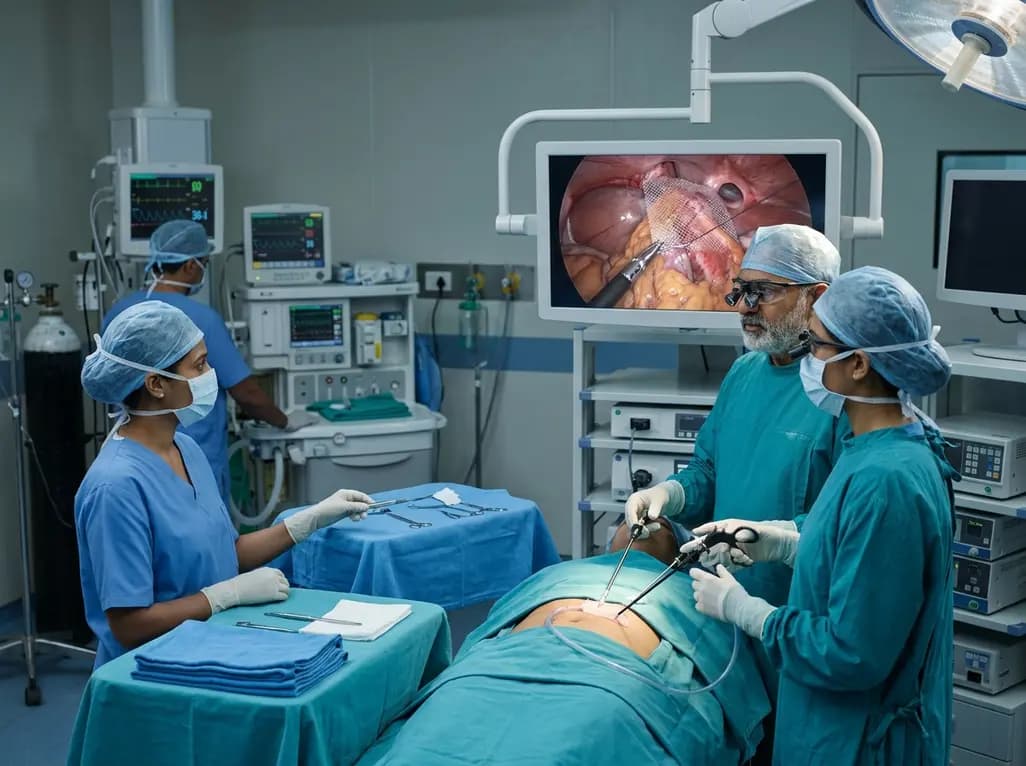
Discover a novel laparoscopic approach for iatrogenic diaphragmatic hernia repair following pedicled omentoplasty. This modified Sugarbaker technique integrates dorsal pedicle lateralization and round ligament reinforcement to secure the diaphragmatic defect while preserving vital omental vascularity.
Today

Evaluating Hill-Sachs lesion size and the distance to dislocation is critical in recurrent shoulder instability. As bone loss concepts shift from binary on-track classifications to continuous risk assessment, clinicians must identify when isolated Bankart repair is insufficient and supplementary procedures are needed.
Today

New research reveals that M1 macrophage-derived exosomes aggravate diabetic nephropathy by transferring WTAP to stabilize S1PR2 mRNA. Silencing WTAP in these vesicles attenuates endothelial injury and renal fibrosis, pointing toward innovative nanomedicine therapies.
Today
