.webp&w=384&q=75)

Loading, please wait...
Loading, please wait...
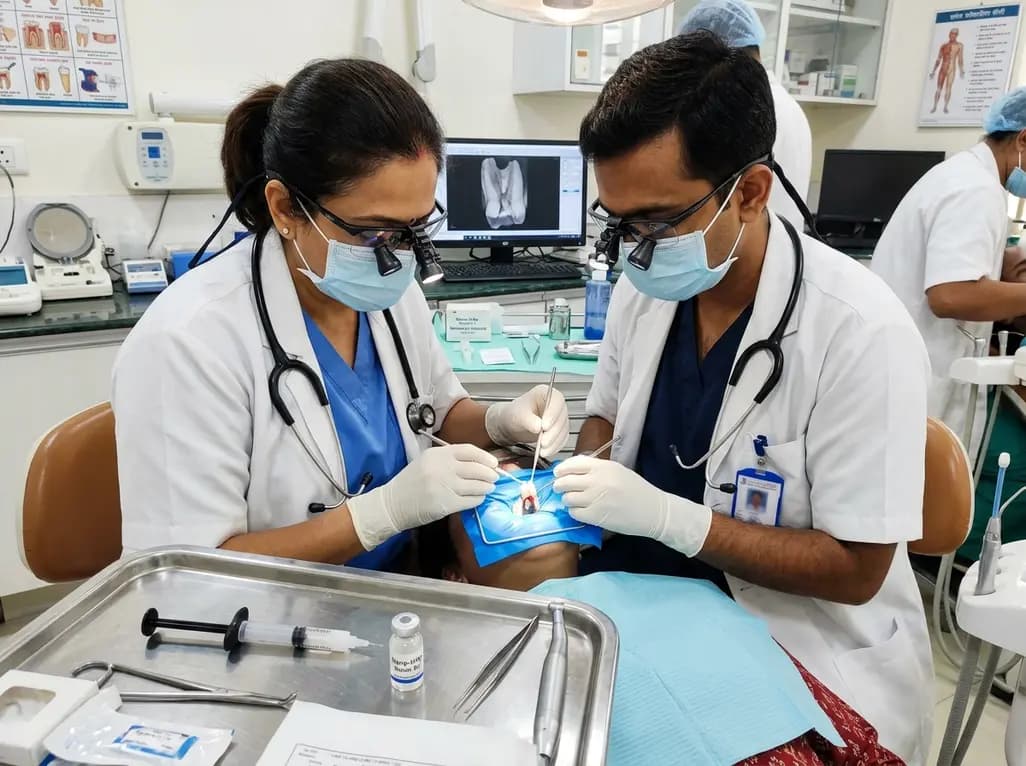
Managing endodontically treated teeth with structural breakdown remains one of the most frustrating dilemmas in clinical dentistry. Specifically, vertical root fracture repair has historically yielded poor clinical outcomes because the surrounding periodontal ligament and alveolar bone struggle to regenerate adjacent to conventional restorative materials. When fractures propagate longitudinally along the root canal wall toward the periodontium, persistent bacterial colonization and deep pocket formation inevitably follow. Dentists frequently resort to extraction followed by dental implants or fixed prostheses. However, modern biomaterial developments and extraoral bonding protocols combined with intentional replantation now offer promising biological avenues to preserve natural dentition.
Historically, treating longitudinal root fractures posed major mechanical and biological hurdles. Intraoral approaches rarely grant complete visualization of the entire fracture line without extensive bone removal. Consequently, clinicians developed extraoral bonding techniques alongside intentional replantation. During this procedure, the clinician carefully extracts the fractured tooth, debrides the root surface extraorally, etches the dentin, bonds the fragments, and replants the unit into the socket. Despite meticulous surgical protocols, the interface between the bonding adhesive and host periodontium frequently determines long-term success. Conventional glass ionomer cements lack adequate mechanical strength to resist masticatory stresses over time. Conversely, while adhesive resin cements provide superior tensile strength and fracture resistance, unpolymerized monomer elution can trigger chronic soft tissue inflammation. Therefore, dental researchers have actively sought bioactive formulations that provide uncompromising adhesive retention while simultaneously promoting periodontal tissue reattachment and bone regeneration.
Among available adhesive materials, 4-methacryloxyethyl trimellitate anhydride/methyl methacrylate tri-n-butylborane (4-META/MMA-TBB) resin cement, widely known as Super-Bond, has demonstrated reliable adhesion to moist dentin. Its unique polymerization mechanism initiated by tri-n-butylborane allows effective bonding even under challenging dental conditions. However, standard resin cements remain essentially bio-inert and do not actively induce mineral deposition or osteoblast differentiation. To overcome this limitation, investigators incorporated nano-hydroxyapatite (naHAp) particles directly into the 4-META/MMA-TBB matrix. Nano-hydroxyapatite closely mimics the natural mineralized phase of human bone and cementum. Consequently, adding naHAp to the polymer network enhances surface bioactivity without compromising mechanical integrity. In preclinical models, this hybrid biomaterial releases essential calcium and phosphate ions into the surrounding microenvironment. This ionic exchange encourages biological apatite precipitation and creates a favorable substrate for neighboring periodontal cells.
Recent experimental investigations in animal models have elucidated how incorporating nano-hydroxyapatite alters local tissue responses following surgical replantation. Electron probe microanalysis (EPMA) demonstrated dense calcium and phosphorus deposition immediately adjacent to the material-tissue interface in roots repaired with naHAp-incorporated resin. In contrast, standard 4-META/MMA-TBB resin without additives exhibited only faint, minimal mineral signals. Histological evaluations further corroborated these findings across sequential healing phases. While standard resin specimens induced mild-to-moderate early inflammatory infiltration that subsided slowly, the naHAp-modified cement maintained a consistently low inflammatory profile from early stages onward. Moreover, collagen fibers within the reforming periodontal space organized with greater density and alignment adjacent to the bioactive cement surface. These cellular observations confirm that nano-hydroxyapatite attenuates cytotoxicity and actively stimulates localized remineralization along damaged root surfaces.
To understand the molecular mechanisms underlying enhanced tissue healing, researchers analyzed key osteogenic and periodontal biomarkers using quantitative immunohistochemistry. The transcription factor osterix (OSX) serves as an essential early driver of osteoblast differentiation, whereas osteocalcin (OCN) marks mature matrix mineralization and bone turnover. Concurrently, periostin (POSTN) functions as a crucial matricellular protein responsible for maintaining periodontal ligament structural integrity and mechanical adaptation. Laboratory analyses revealed that roots repaired with naHAp/SB exhibited significantly higher OSX expression across all evaluation time points compared to control resin alone. Furthermore, mature markers OCN and POSTN displayed robust, sustained upregulation throughout the experimental timeline. Thus, the continuous release of bioactive cues from naHAp accelerates osteogenic commitment and promotes functional collagenous ligament remodeling, bridging the gap between artificial cement and host bone.
From a translational standpoint, these biomaterial enhancements provide significant optimism for restorative dentists, endodontists, and periodontists in daily practice. When patients present with vertical root fractures, intentional replantation utilizing bio-modified adhesive resins could expand conservative tooth-preservation options. Clinicians must still adhere to strict operative principles, including minimizing extraoral dry time to under fifteen minutes and preventing mechanical trauma to root surfaces. Moreover, combining high-strength adhesive resin with bioactive nano-hydroxyapatite directly addresses the primary cause of replantation failure, which is fibrous encapsulation and epithelial down-growth. Although broad clinical trials in human cohorts remain necessary before establishing universal protocols, these preclinical findings validate naHAp-modified 4-META/MMA-TBB as a viable therapeutic strategy for salvaging structurally compromised teeth.
Nano-hydroxyapatite closely replicates the composition and crystallographic structure of natural tooth enamel, dentin, and alveolar bone. When mixed into dental resin cements, it actively releases calcium and phosphate ions into the surrounding surgical site. This ionic exchange significantly lowers local cytotoxicity, suppresses inflammatory cell infiltration, and stimulates osteoblastic differentiation, thereby accelerating both cementum regeneration and alveolar bone formation around the repaired root fracture.
The 4-META/MMA-TBB resin utilizes an alkylborane catalyst that initiates polymerization even in moist environments like root dentin. Furthermore, the 4-META monomer chemically binds with dentinal collagen and mineral components, producing a resilient hybrid layer. This chemical bonding provides superior fracture resistance and sealing ability compared to standard glass ionomers or traditional resin composites, reducing bacterial microleakage along vertical root fracture lines.
Intentional replantation remains a technique-sensitive salvage procedure reserved for carefully selected cases. It is indicated when non-surgical management is impossible and the patient wishes to preserve the natural tooth. Success depends heavily on atraumatic extraction, minimal extraoral manipulation time under fifteen minutes, meticulous root debridement, and rigid adhesive stabilization. Advanced multi-rooted teeth with extensive bone destruction may carry a poorer long-term prognosis.
Disclaimer: This content is for informational and educational purposes only and should not be construed as medical or dental advice. Refer to the latest local and national guidelines for clinical practice.
References

Read summarized clinical updates, watch expert medical content, and earn CME certifications right from your smartphone.
Open your smartphone camera to scan and install.





Vertical root fractures often carry a poor prognosis due to periodontal breakdown. Adding nano-hydroxyapatite to 4-META/MMA-TBB resin significantly dampens inflammation and boosts osteogenic markers, offering a promising biomaterial strategy for tooth preservation and intentional replantation.
last month

UK Research and Innovation is deploying £80 million across the NHS to trial nine cutting-edge technologies. The initiative features seven-minute brain MRIs, blood biomarker assays, and predictive AI tools, aiming to evaluate 92% of suspected cases within 18 weeks and overcome lengthy diagnostic backlogs.
Today

A mixed-methods study identifies key drivers of PMTCT service utilization among adolescent girls and young women aged 15-24. Highlighting age disparities, PrEP uptake, and systemic barriers, the evidence guides clinicians toward adolescent-responsive, integrated maternal HIV prevention protocols.
Today

PepsiCo and Monster Beverage have challenged the FSSAI ban on the energy drink label in Indian courts. While companies highlight supply disruptions, regulatory actions spotlight severe cardiovascular and metabolic risks associated with excessive caffeine, sugar, and taurine consumption, especially in adolescents.
Today

A narrative review investigates whether the articularis genus muscle functions as an independent anatomical entity or blends with the vastus intermedius. We evaluate its morphology, role in retracting the suprapatellar bursa, and direct clinical significance in anterior knee pain and arthroplasty.
Today

A Bayesian multilevel meta-analysis reveals that aerobic training combined with moderate carbohydrate restriction modestly lowers HbA1c in type 2 diabetes. However, sparse data and very low certainty leave incremental benefits over exercise or diet alone unproven, highlighting the need for individualized care.
Yesterday
