.webp&w=384&q=75)

Loading, please wait...
Loading, please wait...
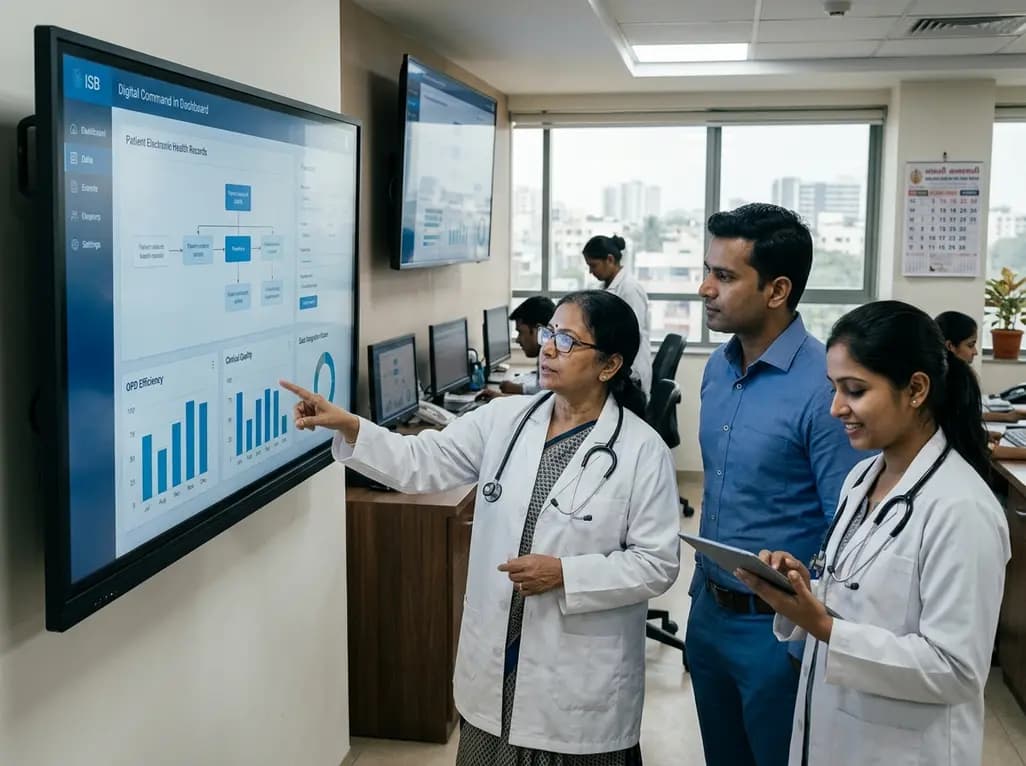
Indian healthcare is undergoing a rapid technological evolution. A landmark study by the Indian School of Business (ISB) highlights that implementing NABH digital health standards delivers measurable improvements across hospital workflows. Researchers evaluated certified hospitals across India to assess real-world outcomes. Consequently, the findings offer valuable operational benchmarks for modern healthcare administrators and clinicians alike.
The Max Institute of Healthcare Management at ISB recently unveiled its extensive white paper on digital accreditation. Specifically, the study evaluated twenty healthcare facilities holding Silver, Gold, and Platinum certifications under the digital framework. Researchers gathered qualitative insights from eighty senior leaders alongside extensive quantitative survey metrics. Importantly, the data shows that digital maturity scores surged from 3.42 to 4.35 on a five-point scale following certification.
Furthermore, core hospital operations experienced immediate advantages. Leadership commitment catalyzed this shift, driving nearly 77% of all adoption decisions across participating centers. System integration scores rose from 3.31 to 4.35 across certified institutions. In addition, hospitals documented shorter discharge turnarounds, reduced patient waiting times, and minimized revenue leakage. Therefore, structured accreditation converts abstract digital goals into tangible operational advantages for healthcare providers.
The National Accreditation Board for Hospitals and Healthcare Providers established the NABH digital health standards to guide systematic digital progression. Rather than enforcing a rigid checklist, the board assesses organizations across four distinct stages: Core, Commitment, Achievement, and Excellence. Facilities earn Silver, Gold, or Platinum accreditations based on their performance across these progressive stages.
Consequently, hospitals gain a structured roadmap that accommodates diverse starting points. The framework evaluates critical digital pillars, including Hospital Information Systems (HIS), Electronic Medical Records (EMR), and cybersecurity protocols. Moreover, it emphasizes patient data privacy and digital infrastructure resilience. As a result, healthcare centers avoid fragmented software adoption. Instead, they build robust platforms that support long-term institutional scalability and compliance.
Beyond administrative gains, structured digitization significantly enhances bedside care. According to the ISB assessment, the utilization of digital records in clinical decision-making jumped from 3.00 to 4.37 post-accreditation. Standardized digital charting provides doctors with rapid access to verified medical histories, diagnostic reports, and medication profiles. Thus, clinicians can make faster and more accurate therapeutic choices.
Additionally, interoperable documentation reduces diagnostic redundancies and minimizes preventable medical errors. Point-of-care clinical decision support systems alert healthcare providers to drug interactions and critical lab abnormalities instantly. Furthermore, nursing teams experience streamlined handovers because electronic charts maintain consistent records across shifts. Ultimately, these clinical enhancements translate into superior patient safety and shorter hospital stays.
Significantly, the ISB study focused deliberately on small and medium-sized hospitals located in non-metro regions. Resource-constrained centers often face formidable barriers when adopting advanced technologies. However, the tiered accreditation framework enabled smaller healthcare facilities to modernize cost-effectively without overburdening their budgets.
For instance, non-metro centers reported substantial reductions in administrative bottlenecks. Automated billing and digitized discharge summaries eliminated hours of manual paperwork. Meanwhile, integrated inventory systems curbed medication wastage and improved pharmacy tracking. Consequently, these operational efficiencies allowed smaller facilities to deliver quality care at lower operational overheads. The evidence proves that digital transformation succeeds far beyond elite metropolitan healthcare chains.
Regulators emphasize that digital standards must serve broader national healthcare priorities. During the white paper launch, insurance regulatory authorities stressed that standardized data creates an essential foundation for affordable healthcare delivery. Standardized digital platforms align seamlessly with the Ayushman Bharat Digital Mission (ABDM) and national health claims exchanges.
Moreover, interoperable health records enable frictionless cashless claims processing and transparent policy settlements. High-quality data pipelines generate dependable evidence for actuarial pricing, reducing administrative disputes between hospitals and third-party payers. In addition, collaborative partnerships among regulators, healthcare institutions, and quality bodies foster public trust. Therefore, embracing digital standards prepares hospitals for a modern, interconnected insurance ecosystem.
Q1: What are NABH digital health standards?
NABH digital health standards represent a nationwide accreditation framework designed to evaluate and enhance digital maturity across healthcare facilities in India. The standards assess electronic medical records, hospital information systems, cybersecurity, patient data privacy, and interoperability. By providing tiered recognition levels, the framework guides hospitals toward systematic digital transformation.
Q2: How do digital health standards improve clinical outcomes?
Digital standards ensure standardized documentation and seamless data exchange between departments. Consequently, clinicians gain immediate access to comprehensive patient medical histories, lab investigations, and real-time decision support alerts. This continuous data flow minimizes diagnostic errors, prevents adverse drug interactions, speeds up discharge workflows, and elevates overall patient safety.
Q3: Can small and medium-sized hospitals achieve this accreditation?
Yes, the framework specifically accommodates small and medium healthcare organizations through tiered maturity levels, including Silver, Gold, and Platinum tiers. These progressive levels allow resource-constrained hospitals to adopt essential digital capabilities incrementally without excessive financial strain, improving operational workflows and billing efficiency.
Disclaimer: This content is for informational and educational purposes only. It does not constitute medical advice or replace professional judgment. Refer to the latest local and national guidelines for clinical practice.
References

Read summarized clinical updates, watch expert medical content, and earn CME certifications right from your smartphone.
Open your smartphone camera to scan and install.





A recent study by ISB's Max Institute reveals that adopting NABH digital health standards significantly enhances hospital operational efficiency, clinical decision-making, and data integration across small, medium, and large healthcare facilities in India.
last month

A spatial multi-omics study reveals that ozone exposure alters regional macrophage phenotypes and non-immune cell signaling during surfactant protein-C mutant lung injury. Although structural remodeling remained unchanged at 7 days, pollutant exposure heightened inflammatory activation and animal mortality.
Today

A meta-analysis of nine RCTs comparing remimazolam versus propofol in hysteroscopy reveals remimazolam significantly reduces injection pain, hypotension, and respiratory depression while maintaining comparable sedation success, recovery times, and procedural duration.
Today

Abdominal aortic aneurysm rupture remains a catastrophic vascular emergency. Groundbreaking research reveals that USP53 accelerates aneurysm progression by reprogramming smooth muscle cell metabolism toward aerobic glycolysis, highlighting a promising target beyond conventional diameter-based surveillance.
Yesterday
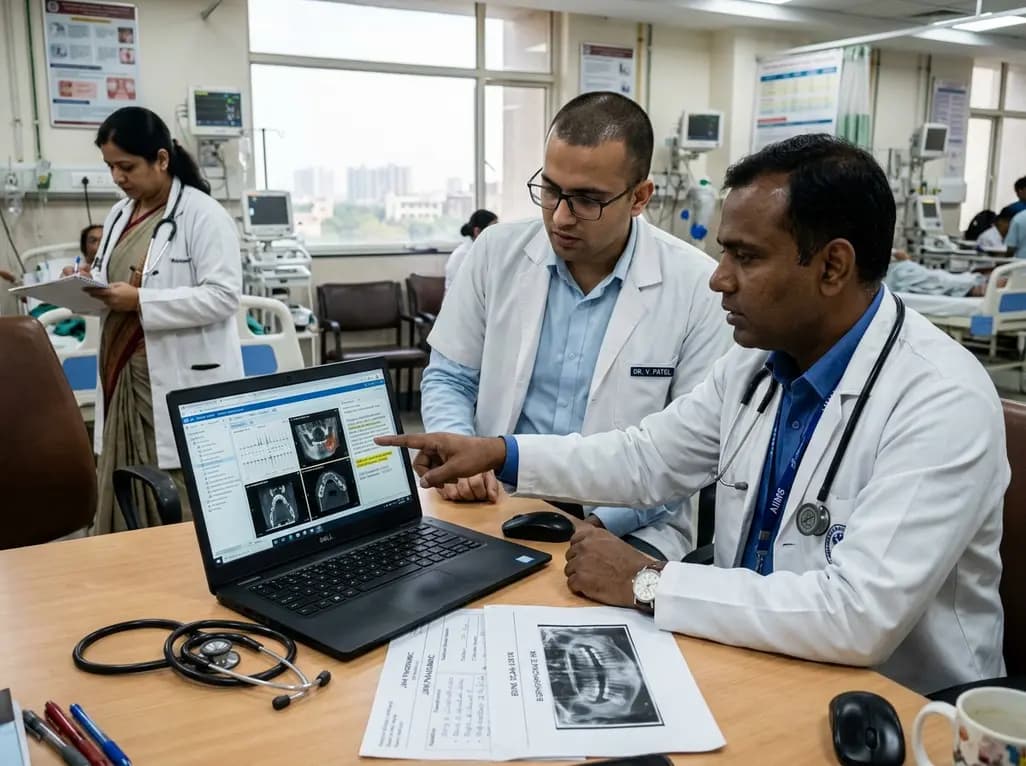
A breakthrough study leverages natural language processing to accurately identify incident medication-related osteonecrosis of the jaw and track antiresorptive drug holidays from clinical narratives in electronic health records, advancing osteoporosis pharmacovigilance and dental safety.
Today
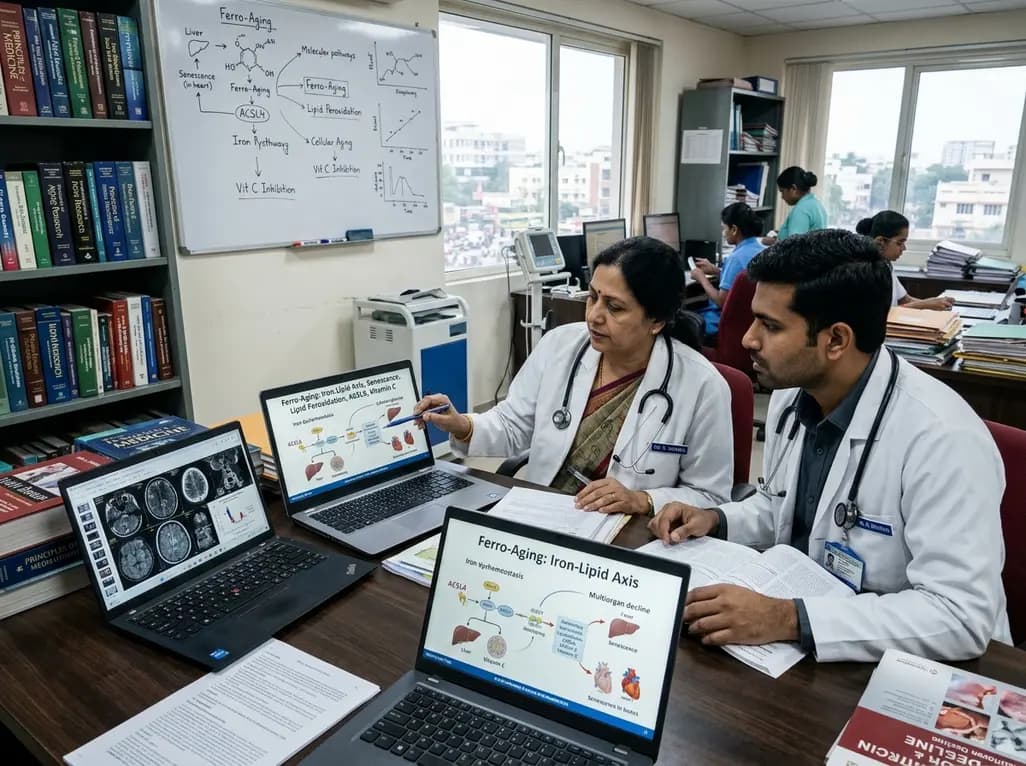
Recent research defines ferro-aging as a conserved iron-lipid axis driving organ decline across primates. Age-related iron dyshomeostasis stimulates ACSL4-mediated lipid peroxidation, promoting cellular senescence. Notably, vitamin C directly inhibits ACSL4, suppressing phospholipid oxidation and multi-organ decay.
Yesterday
