.webp&w=384&q=75)

Loading, please wait...
Loading, please wait...

Myelomeningocele is one of the most severe forms of spina bifida, characterized by the failure of the neural tube to close during early embryonic development. In low- and middle-income countries, timely access to pediatric neurosurgical repair remains a critical clinical hurdle. Understanding myelomeningocele presentation timing is vital for optimizing infant survival and reducing life-threatening complications like central nervous system infections. When surgical closure is delayed beyond seventy-two hours, exposed neural tissue becomes highly vulnerable to bacterial colonization, ventriculitis, and progressive neurological impairment.
A prospective cohort study conducted at a major tertiary academic center in Lusaka, Zambia, provided important insights into the sociodemographic and clinical determinants affecting hospital admission times. Out of one hundred eighteen enrolled infants, over seventy percent experienced delayed presentation to specialized care. The median infant age at initial neurosurgical evaluation was eight days, well beyond the recommended standard for prompt postnatal repair. Factors such as long travel distance and premature birth significantly increased the likelihood of late evaluation, whereas structured prenatal care played a protective role. Investigating these operational and clinical determinants provides clinicians and policymakers with actionable data to refine referral pathways, enhance maternal health services, and reduce early neonatal morbidity across underserved populations.
Distance to specialized tertiary facilities emerged as one of the strongest statistical predictors of delayed care in this patient cohort. Infants whose families had to travel five hundred kilometers or more to reach the referral center were over five times more likely to present late compared to those living in closer geographic proximity. The logistical hardship of rural transportation, combined with limited regional infrastructure, creates profound delays in transferring vulnerable neonates who require emergent neurosurgical evaluation.
Prematurity was another primary factor associated with delayed presentation. Preterm infants had nearly four times higher odds of late hospital arrival than full-term infants. Premature newborns frequently require immediate stabilization for respiratory distress, low birth weight, or systemic metabolic instability at local birth facilities before transfer can even be contemplated. Consequently, neurosurgical consultation is secondary to basic neonatal survival measures, resulting in prolonged initial care times. Identifying geographic and clinical risk factors helps healthcare networks designate rapid transfer protocols and regionalized transport systems. Addressing these logistical barriers can dramatically reduce transit times and ensure that high-risk neonates reach surgical facilities within the optimal timeframe for neural closure.
Routine prenatal care, specifically obtaining antenatal ultrasound imaging after twenty weeks of gestation, demonstrated a significant protective effect against delayed hospital presentation. Infants whose mothers received at least one second- or third-trimester ultrasound exhibited significantly lower odds of arriving late at the tertiary neurosurgical center. Antenatal imaging enables early identification of structural congenital anomalies, allowing obstetricians and family medicine providers to counsel parents and plan delivery near advanced medical centers.
Despite this positive association, challenges in prenatal diagnostic accuracy remain prevalent in resource-limited settings. While routine ultrasonography improves maternal clinical awareness and encourages prompt post-birth care seeking, subtle fetal neural tube defects can still be missed without targeted sonographic training. Enhancing second-trimester fetal anomaly scanning in primary healthcare clinics can significantly bridge the gap between prenatal detection and early postnatal care. When health systems integrate systematic ultrasound screening into routine obstetric care, healthcare providers can proactively establish referral pathways prior to delivery. This proactive approach minimizes administrative delays and ensures seamless transfer of neonates directly to tertiary institutions equipped for complex pediatric neurosurgery.
Interestingly, the Zambian prospective study revealed that several maternal sociodemographic parameters were not statistically associated with delayed presentation. Factors such as maternal age, level of formal education, marital status, parity, and household monthly income showed no statistically significant correlation with late hospital arrival. The self-reported median monthly income among participating families was extremely low, highlighting generalized economic hardship across the cohort rather than isolated individual disparities.
Furthermore, infant gender and the presence of concurrent congenital anomalies or underlying comorbidities did not significantly influence presentation timing. These unexpected findings suggest that structural and health system barriers, such as distance and transportation logistics, outweigh individual family demographics in determining access to specialized pediatric neurosurgery. While financial constraints undoubtedly burden families, community-wide infrastructure limitations affect all patients equally regardless of maternal educational background. Clinicians evaluating public health strategies must therefore prioritize structural interventions—such as establishing decentralized emergency transport networks—over demographic targeting alone, as systemic transport bottlenecks affect entire patient populations uniformly across underserved geographic regions.
Addressing the challenges of delayed myelomeningocele presentation requires a comprehensive understanding of healthcare infrastructure in resource-limited environments. In many low-income regions, primary referring centers lack specialized pediatric neurosurgical teams, necessitating long-distance transfer to single tertiary facilities. The referral process is frequently hampered by poor communication networks, inadequate transport ambulances, and delays in recognizing open neural tube defects immediately at birth.
When neonates arrive late for surgical intervention, the risk of preoperative wound contamination and cerebrospinal fluid leak increases dramatically. Late presenters often require prolonged preoperative broad-spectrum antibiotic therapy to treat local wound infections before definitive neurosurgical repair can safely occur. Additionally, delayed surgical closure increases the risk of early-onset hydrocephalus and progressive neurological deficits. Strengthening primary healthcare provider training regarding neonatal back lesions, coupled with standardized emergency referral guidelines, can substantially streamline the transfer process. Regional health authorities must invest in regionalized care models that integrate primary maternity centers with tertiary surgical facilities to minimize unnecessary delay.
Improving myelomeningocele presentation timing requires coordinated public health initiatives and healthcare infrastructure investments. First, expanding second-trimester ultrasound coverage and training peripheral midlevel health workers to identify neural tube defects can significantly improve prenatal referral rates. Establishing dedicated regional transport funds or neonatal transport units can alleviate the economic and physical burden on families forced to travel vast distances for care.
Second, developing direct referral protocols between rural district hospitals and tertiary neurosurgical centers eliminates intermediate administrative delays. Equipping peripheral maternity units with basic sterile dressing kits and educational materials regarding immediate neonatal lesion protection helps prevent pre-hospital wound contamination. By combining improved prenatal detection with rapid transport systems, healthcare networks can shorten presentation times, reduce perioperative complications, and improve long-term neurological outcomes for infants born with myelomeningocele in low-resource environments.
The primary factors contributing to delayed myelomeningocele presentation include long travel distances to tertiary surgical centers and infant prematurity. Families traveling over five hundred kilometers face severe transport hurdles. Additionally, premature infants often require prolonged medical stabilization for respiratory or metabolic issues at local facilities prior to transfer, delaying specialized neurosurgical evaluation past the critical seventy-two-hour post-birth period.
Receiving antenatal ultrasound imaging after twenty weeks of gestation significantly reduces the risk of delayed hospital presentation. Second-trimester fetal scanning allows clinicians to detect structural fetal anomalies early, enabling proactive delivery planning and timely referral to tertiary facilities equipped for pediatric neurosurgery. This prenatal foresight minimizes administrative bottlenecks and helps families prepare for immediate transfer following delivery.
In many resource-limited settings, pervasive economic hardship and widespread transport infrastructure deficits affect entire communities uniformly. Because geographic distance and absent emergency transport systems present severe structural barriers, individual household income or maternal education levels do not significantly alter presentation timing. Systemic healthcare infrastructure challenges outweigh individual sociodemographic differences in determining how quickly neonates access specialized tertiary neurosurgical care.
Disclaimer: This content is for informational and educational purposes only and does not constitute medical advice, diagnosis, or treatment. Always seek the advice of a qualified healthcare provider with any questions regarding a medical condition. Refer to the latest local and national guidelines for clinical practice.
References

Read summarized clinical updates, watch expert medical content, and earn CME certifications right from your smartphone.
Open your smartphone camera to scan and install.





A prospective study from Zambia highlights that long geographic distance and prematurity delay neurosurgical presentation for myelomeningocele, whereas late antenatal ultrasound improves timing.
last month

The World Health Organization has launched a 10-year framework to address evidence gaps in traditional, complementary, and integrative medicine. Prioritizing conditions such as stroke, cancer, and depression, this global roadmap highlights rigorous clinical trials, pharmacovigilance, and safer patient care.
Today

A recent longitudinal study evaluated the link between prenatal loss of control eating and cardiovascular health using Life's Essential 8 frameworks. While direct associations across pregnancy were non-significant, the high prevalence of dysregulated eating highlights critical implications for obstetric practice.
Today

Explore modern perioperative management protocols for clinical xenotransplantation. Learn how costimulation blockade, anti-inflammatory perfusion, and coagulopathy rescue overcome interspecies hurdles.
Today

A retrospective study evaluating a locally deployed vision language model (Qwen3-VL) reveals that smartphone-captured radiographs and retrieval-augmented generation can paradoxically reduce diagnostic accuracy in bone tumor referrals due to optical noise and textual hallucinations.
Today
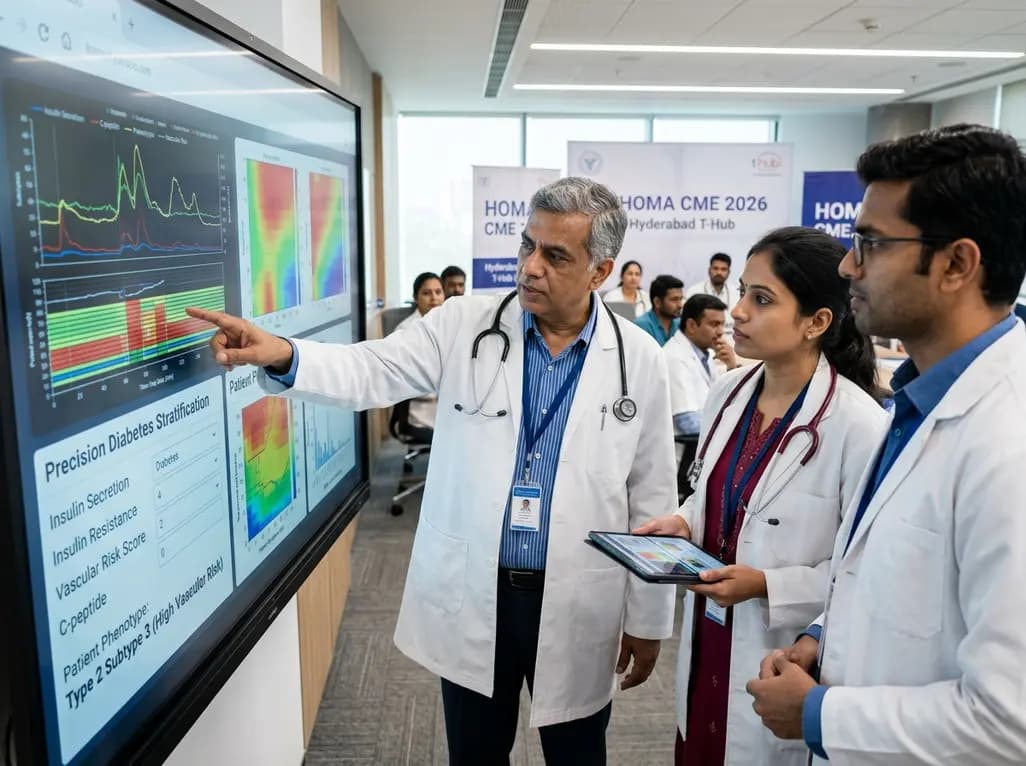
At Homa CME 2026 at Hyderabad's T-Hub, healthcare leaders emphasized moving beyond routine metrics through digital calculators and precision stratification. Discover why characterizing individual insulin secretion, resistance patterns, and vascular risks transforms chronic metabolic care in India.
Today
