.webp&w=384&q=75)

Loading, please wait...
Loading, please wait...

In modern clinical practice, multidrug-resistant pathogens present one of the most pressing threats to patient safety and global public health. Clinicians in intensive care units, inpatient wards, and surgical suites routinely encounter difficult-to-treat infections caused by both Gram-negative and Gram-positive bacteria. Consequently, empirical antimicrobial choices frequently fail, leading to delayed recovery, prolonged hospitalization, elevated healthcare expenses, and increased patient mortality. Addressing these complicated infections demands a nuanced understanding of underlying resistance mechanisms, rapid microbiological diagnostics, and the strategic deployment of newly approved anti-infective therapies. Furthermore, clinical teams must balance aggressive definitive therapy with rigorous antimicrobial stewardship to preserve the longevity of next-generation pharmacological agents.
The epidemiological trajectory of antimicrobial resistance highlights a worldwide crisis that spans hospital and community settings. Among Gram-negative species, the rapid proliferation of carbapenem resistance poses an immense clinical challenge. Organisms such as carbapenem-resistant Enterobacterales, Pseudomonas aeruginosa, and Acinetobacter baumannii drastically limit conventional pharmacological alternatives. Meanwhile, clinicians manage enduring threats from Gram-positive isolates, most notably methicillin-resistant Staphylococcus aureus and vancomycin-resistant enterococci. Consequently, standard empirical protocols often prove inadequate for critically ill patients presenting with sepsis, complicated urinary tract infections, or hospital-acquired pneumonia. Therefore, healthcare providers must evaluate local resistance patterns and recognize patients carrying severe risk factors. Prior broad-spectrum antimicrobial exposure, prolonged mechanical ventilation, indwelling central lines, and extended institutional stays dramatically heighten infection vulnerability. Understanding these diverse drivers allows multidisciplinary teams to detect resistant infections earlier and initiate effective therapeutic protocols without detrimental clinical delay.
Bacteria deploy diverse molecular adaptations to evade antimicrobial destruction, complicating therapeutic selection across medical specialties. Alterations in penicillin-binding proteins diminish the binding affinity of conventional beta-lactams, as classically observed in methicillin-resistant staphylococcal isolates. Additionally, bacterial enzymatic destruction represents an exceptionally potent defensive barrier. The production of extended-spectrum beta-lactamases, AmpC enzymes, and diverse carbapenemases—including serine carbapenemases and metallo-beta-lactamases—renders standard regimens entirely ineffective. Beyond enzymatic destruction, pathogens frequently modify outer membrane porin channels to block drug penetration directly. Concurrently, upregulated active efflux pumps actively expel therapeutic compounds from within the bacterial cytoplasm, conferring multidrug resistance across disparate antibiotic classes. Because multiple resistance pathways frequently coexist within a single bacterial strain, empirical guessing often results in treatment failure. Thus, clinicians must integrate phenotypic sensitivity profiles with molecular genotypic data whenever available to tailor definitive antimicrobial regimens precisely.
Historically, clinicians relied heavily on older, nephrotoxic agents such as colistin and polymyxin B to treat carbapenem-resistant Gram-negative infections. Fortunately, modern drug development has delivered innovative beta-lactam and beta-lactamase inhibitor combinations that fundamentally transform clinical outcomes. Novel agents, including ceftazidime-avibactam, meropenem-vaborbactam, imipenem-cilastatin-relebactam, and ceftolozane-tazobactam, provide robust bactericidal activity while displaying substantially superior safety and tolerability profiles. In addition, the novel siderophore cephalosporin cefiderocol exploits bacterial iron-transport pathways to bypass porin loss and efflux mechanisms, successfully neutralizing challenging metallo-beta-lactamase-producing isolates. Clinical trials consistently demonstrate that these modern anti-infective agents reduce all-cause mortality and minimize acute kidney injury compared to legacy polymyxin-based combinations. Therefore, contemporary therapeutic consensus guidelines strongly recommend prioritizing these novel beta-lactamase inhibitor combinations as first-line targeted therapies for severe multidrug-resistant Gram-negative infections.
Invasive Gram-positive infections caused by methicillin-resistant Staphylococcus aureus and vancomycin-resistant enterococci continue to generate substantial clinical morbidity. While glycopeptides like vancomycin remain historical benchmarks, minimum inhibitory concentration creeping and tissue penetration limitations often impair their clinical effectiveness. Consequently, modern clinicians leverage targeted alternatives with enhanced pharmacokinetic profiles. Lipopeptides such as daptomycin offer rapid concentration-dependent bactericidal action against bloodstream infections and right-sided infective endocarditis. Similarly, oxazolidinones, including linezolid and tedizolid, provide exceptional oral bioavailability and reliable tissue distribution for pneumonia and complex skin infections. For difficult-to-treat enterococcal species harboring vancomycin resistance, newer lipoglycopeptides and fifth-generation cephalosporins such as ceftaroline provide valuable therapeutic versatility. Clinicians must carefully match individual drug properties to the specific anatomical site of infection, paying close attention to pulmonary surfactant interactions, bone penetration, and potential bone marrow suppression during extended therapeutic courses.
Optimal patient outcomes depend directly on the synergy between advanced clinical microbiology and prompt therapeutic decisions. Diagnostic stewardship protocols emphasize obtaining appropriate blood, sputum, and tissue cultures before administering antimicrobial therapy. Furthermore, rapid molecular diagnostic platforms, such as polymerase chain reaction panels and matrix-assisted laser desorption ionization-time of flight mass spectrometry, identify pathogen species and resistance genes within hours. However, genotypic identification alone cannot replace comprehensive phenotypic antimicrobial susceptibility testing. Phenotypic testing accurately confirms minimum inhibitory concentrations and reveals non-enzymatic resistance mechanisms like efflux pump overexpression. Therefore, treating physicians must correlate rapid molecular alerts with definitive susceptibility reports to de-escalate broad initial regimens safely. This systematic diagnostic workflow prevents unnecessary broad-spectrum toxicity, shortens the time to effective directed therapy, and directly suppresses the emergence of secondary resistance mutations during prolonged hospitalization.
Standardizing clinical care through evidence-based guidelines is vital to managing severe infections successfully. Practice recommendations, such as the German S3 guideline on antibiotic therapy for severe multidrug-resistant bacterial infections, establish structured frameworks for clinical decision-making. These frameworks guide clinicians through appropriate pathogen risk stratification, individualized dosing strategies, extended infusion protocols, and early source control. Moreover, hospital-based antimicrobial stewardship programs play an essential role in optimizing patient safety. Stewardship teams continuously monitor institutional resistance trends, restrict redundant broad-spectrum usage, and guide therapeutic drug monitoring for complex anti-infectives. By integrating therapeutic guidelines into everyday clinical workflows, medical institutions ensure that novel anti-infectives remain effective tools rather than transient solutions. Ultimately, combining robust institutional protocols with rapid diagnostic feedback safeguards patient health and curbs the broader transmission of resistant bacterial clones across modern healthcare facilities.
Novel beta-lactamase inhibitor combinations, such as ceftazidime-avibactam and meropenem-vaborbactam, provide targeted enzymatic inhibition with significantly higher clinical cure rates. Unlike colistin, which carries high risks of severe nephrotoxicity and neurotoxicity, these modern agents offer superior tolerability, predictable pharmacokinetics, and reduced mortality, making them preferred first-line choices for resistant Gram-negative infections.
Specific resistance mechanisms directly neutralize select drug classes while leaving others effective. For example, serine carbapenemases respond well to avibactam or vaborbactam combinations, whereas metallo-beta-lactamases require cefiderocol or aztreonam-avibactam. Identifying exact resistance enzymes through molecular or phenotypic testing prevents ineffective drug administration and ensures precise, pathogen-directed therapy.
Antimicrobial stewardship programs ensure that clinicians utilize novel, broad-spectrum anti-infectives judiciously rather than indiscriminately. By enforcing diagnostic confirmation, appropriate dosing, and timely de-escalation, stewardship teams prevent the rapid emergence of secondary bacterial resistance. This vigilant oversight protects drug efficacy and preserves vital therapeutic options for future vulnerable patients.
Disclaimer: This content is for informational and educational purposes only. It is not intended to substitute for professional medical advice, diagnosis, or treatment. Refer to the latest local and national guidelines for clinical practice.
References

Read summarized clinical updates, watch expert medical content, and earn CME certifications right from your smartphone.
Open your smartphone camera to scan and install.





Multidrug-resistant pathogens pose significant clinical challenges globally. Learn how novel anti-infectives, updated clinical guidelines, and rapid susceptibility profiling are transforming patient management against severe Gram-negative and Gram-positive resistant infections.
last month

A systematic review of 41 preclinical studies reveals that baicalin dampens systemic inflammation, inhibits NF-κB and NLRP3 pathways, and improves organ preservation in sepsis models. However, substantial study heterogeneity and a complete lack of human clinical trials highlight the need for further translational research.
Today
Discover the crucial distinctions between mesonephric and mesonephric-like proliferations of the female genital tract. Learn the key histomorphologic, immunohistochemical, and molecular differences essential for accurate diagnosis and clinical management.
Today
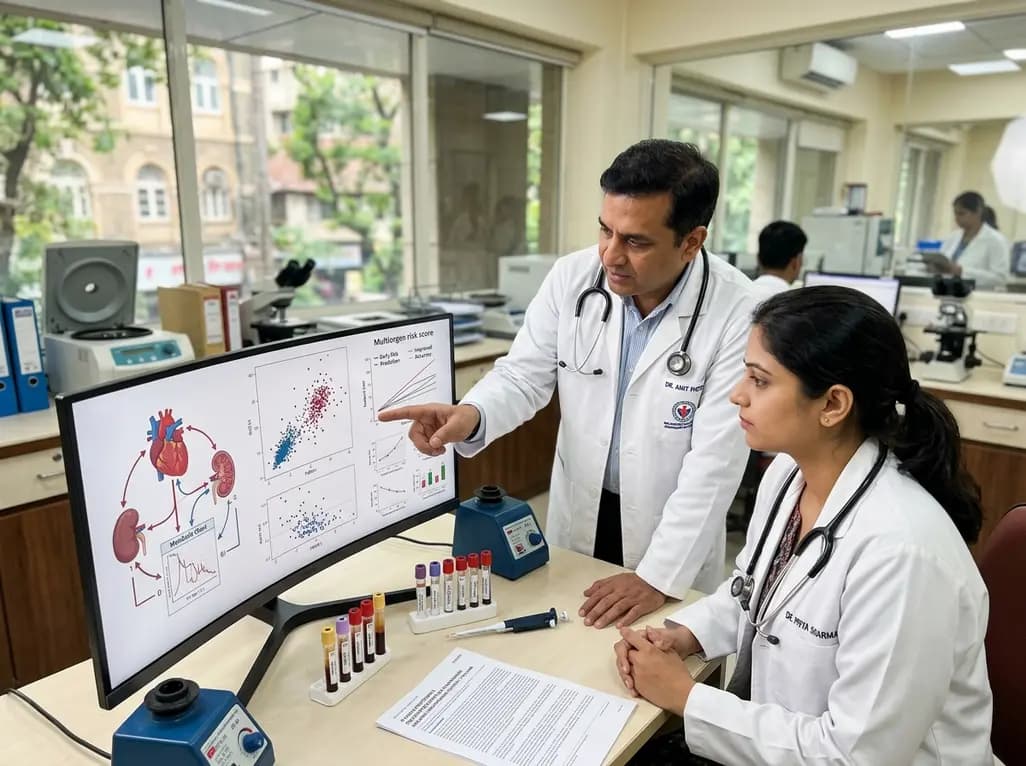
A large UK Biobank study reveals that plasma proteomic signatures capture preclinical organ damage and improve multiorgan risk prediction across early CKM syndrome stages 0 to 2 beyond traditional PREVENT clinical models.
Today
A narrative review investigates whether the articularis genus muscle functions as an independent anatomical entity or blends with the vastus intermedius. We evaluate its morphology, role in retracting the suprapatellar bursa, and direct clinical significance in anterior knee pain and arthroplasty.
Today

A Bayesian multilevel meta-analysis reveals that aerobic training combined with moderate carbohydrate restriction modestly lowers HbA1c in type 2 diabetes. However, sparse data and very low certainty leave incremental benefits over exercise or diet alone unproven, highlighting the need for individualized care.
Today
