.webp&w=384&q=75)

Loading, please wait...
Loading, please wait...
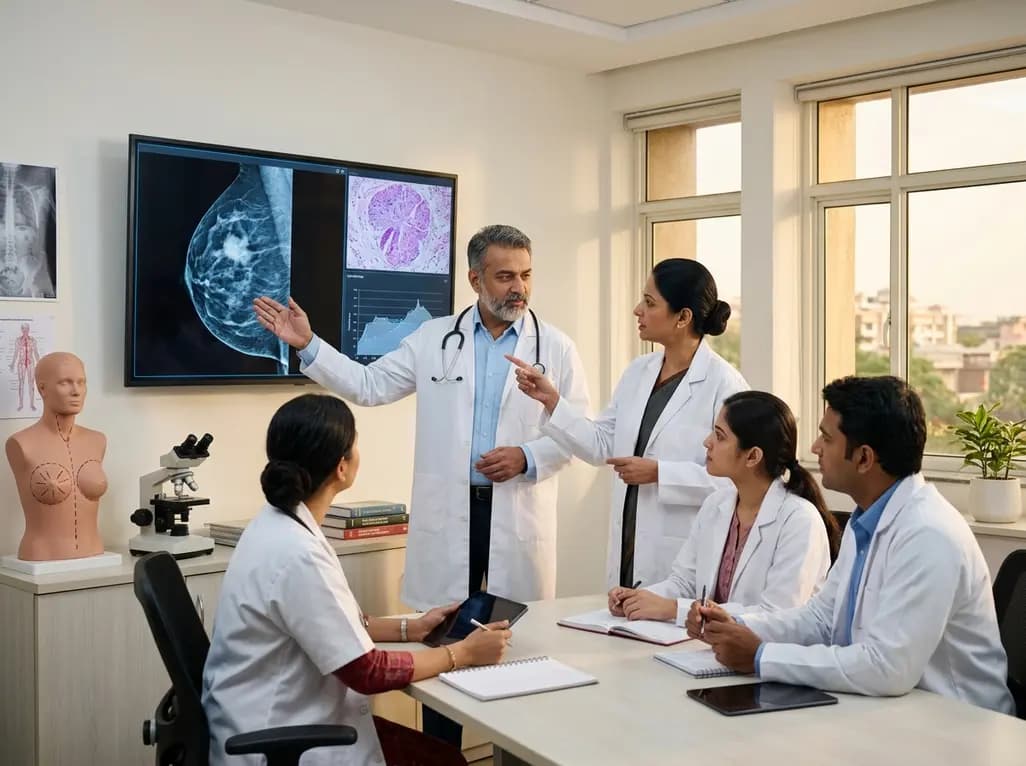
The landscape of oncological care is shifting rapidly toward highly specialized, sub-organ-specific expertise. Consequently, the traditional model of surgical training is proving insufficient for the complexities of modern breast cancer management. This evolution necessitates a robust Multidisciplinary Breast Cancer Curriculum that prepares fellows to navigate the intersection of surgical precision, genomic interpretation, and radiological assessment. Currently, breast cancer remains the most diagnosed malignancy among women in India, highlighting an urgent need for standardized education. Educators must bridge the gap between various clinical silos to ensure that future surgical oncologists understand the biological and radiological nuances of the disease. Therefore, a structured program focusing on interdisciplinary cooperation is no longer optional but essential for high-quality care. By implementing a yearlong core curriculum, institutions can foster an environment where surgery, pathology, and imaging are discussed in a unified context. This approach ensures that the fellow’s clinical judgment is not only technically sound but also scientifically comprehensive. Furthermore, such models facilitate a smoother transition from academic training to independent clinical practice in high-volume cancer centers.
Successful educational models often prioritize active participation over passive listening. Specifically, the Breast Fellows Forum utilizes two-hour-long, fellow-run interactive sessions that occur monthly. These in-person meetings allow trainees to take ownership of the material, leading discussions on complex clinical scenarios and diagnostic dilemmas. During these sessions, fellows from surgery, pathology, and imaging collaborate to dissect specific topics of relevance. This peer-led format encourages critical thinking and enhances communication skills across different specialties. Additionally, these interactions build professional relationships that mirror real-world multidisciplinary tumor boards. When a surgical fellow understands the challenges faced by a radiologist in interpreting neoadjuvant response, their preoperative planning becomes more nuanced. Similarly, exposure to the intricate details of histopathological reporting allows the surgeon to better explain prognostic markers to their patients. Consequently, the interactive nature of the curriculum reinforces theoretical knowledge through practical application. By rotating the responsibility of leading these forums, programs ensure that every fellow develops the leadership and presentation skills necessary for their future careers as consultants.
While in-person interaction is vital, the integration of diverse subspecialties often requires a broader reach. To address this, faculty from medical oncology, cancer genetics, plastic surgery, and radiation oncology present didactic sessions via virtual formats. These hour-long sessions provide deep dives into niche topics that might not be available at every training site. For instance, understanding the surgical implications of BRCA1 or BRCA2 mutations requires expert guidance from cancer geneticists. Similarly, the nuances of oncoplastic reconstruction are best taught by plastic surgeons who specialize in post-mastectomy aesthetic outcomes. Virtual formats allow these busy specialists to share their expertise without the logistical barriers of physical attendance. Furthermore, the use of digital platforms enables the archiving of lectures, creating a valuable resource for fellows to revisit throughout the year. This hybrid approach—combining in-person peer sessions with virtual expert lectures—creates a comprehensive educational ecosystem. Therefore, the curriculum remains both flexible and rigorous, ensuring that trainees receive a well-rounded education despite the increasing specialization of various medical fields.
In the Indian context, the availability of organ-specific fellowships is currently limited to major metropolitan areas. Most general surgeons still manage a significant portion of breast cancer cases, often without the benefit of formal multidisciplinary training. However, there is a growing push toward MCh and PDCC programs that focus specifically on surgical oncology. Implementing a Multidisciplinary Breast Cancer Curriculum within these Indian institutions could significantly standardize care across the country. Currently, the lack of patient awareness regarding organ-specific surgeons remains a challenge; however, specialized training helps build the clinical reputation necessary to change these perceptions. Moreover, Indian medical educators are increasingly adopting digital tools to connect rural training centers with urban expert hubs. This allows fellows in smaller cities to participate in high-level discussions on targeted therapies and advanced imaging techniques. Consequently, these educational initiatives contribute to a more equitable distribution of oncological expertise. By prioritizing such collaborative models, India can better address its rising cancer burden and ensure that patients receive care that aligns with international gold standards.
The ultimate goal of any medical curriculum is to improve patient survival and quality of life. Research consistently shows that multidisciplinary team care is associated with significantly better outcomes. In fact, some studies indicate an 18% reduction in mortality for breast cancer patients managed by integrated teams compared to those treated in fragmented systems. A standardized curriculum ensures that every fellow graduates with a clear understanding of these evidence-based MDT protocols. When surgeons are trained to respect the boundaries and contributions of their colleagues in radiation and medical oncology, treatment variability decreases. Furthermore, this collaborative mindset leads to more personalized treatment plans that account for both biological markers and patient preferences. Consequently, the curriculum acts as a quality assurance mechanism within the training program. By focusing on diagnostics and longitudinal clinical care, the model prepares fellows to manage the entire patient journey rather than just the surgical event. Therefore, the long-term impact of this education extends far beyond the fellowship year, influencing the standard of care for thousands of future patients.
Looking ahead, the sustainability of specialized fellowship programs depends on their ability to adapt to technological and clinical innovations. The Breast Fellows Forum model demonstrates that a yearlong, structured approach can effectively manage the interdisciplinary aspects of surgical oncology. Future iterations of this curriculum may incorporate artificial intelligence in diagnostics and genomic-based surgical planning. As neoadjuvant therapies continue to evolve, the role of the surgeon is becoming increasingly integrated with that of the medical oncologist. Therefore, educational models must continue to break down silos and encourage joint training sessions among fellows of different specialties. Additionally, emphasizing practice management and the business of medicine within the curriculum will prepare trainees for the administrative challenges of modern healthcare. Educators should also focus on expanding these programs to include nursing and paramedical staff to create a truly holistic MDT environment. By fostering a culture of lifelong learning and interdisciplinary respect, these fellowship models will continue to lead the way in surgical education and patient-centered oncological care.
A multidisciplinary approach is vital because breast cancer management involves complex, overlapping therapies including surgery, chemotherapy, radiation, and reconstruction. No single specialist can master every facet of modern treatment protocols. By integrating expertise from radiologists, pathologists, and oncologists, the team ensures that diagnostic accuracy is maximized and treatment plans are personalized. This collaborative effort has been scientifically proven to reduce mortality rates and minimize unnecessary treatment variability for patients.
The Breast Fellows Forum improves training by transitioning from passive learning to an active, fellow-led model. Through monthly interactive sessions, fellows must critically analyze clinical cases and present their findings to peers across specialties. This format builds leadership, enhances communication, and reinforces the practical application of multidisciplinary protocols. Furthermore, the inclusion of virtual didactic sessions from subspecialists ensures that trainees gain deep knowledge in niche areas like genetics and oncoplastic surgery.
Yes, this curriculum model is highly adaptable to the Indian medical landscape. While organ-specific fellowships are currently concentrated in tier-1 cities, the virtual components of this curriculum allow for wider dissemination of expertise. Indian institutions can leverage digital platforms to connect various oncology departments, ensuring that even in resource-limited settings, trainees receive comprehensive multidisciplinary education. Such models are essential for standardizing surgical oncology care and improving outcomes for the growing number of breast cancer patients in India.
Disclaimer: This content is for informational and educational purposes only. It is not a substitute for professional medical advice, diagnosis, or treatment. Always seek the advice of your physician or other qualified health provider with any questions you may have regarding a medical condition. The information provided here does not constitute an endorsement of any specific curriculum or treatment model. Refer to the latest local and national guidelines for clinical practice.
References
Wapnir I et al. Breast Fellows Forum: A Multidisciplinary Core Curriculum Model for Surgical Oncology Fellowships. J Surg Oncol. 2026 Jul 16. doi: 10.1002/jso.70336. PMID: 42460551.
Saini KS et al. Role of the multidisciplinary team in breast cancer management: results from a large international survey involving 39 countries. Ann Oncol. 2012;23(4):853-859.
Kesson EM et al. Effects of multidisciplinary team working on breast cancer survival: retrospective, comparative, interventional cohort study of 13,722 women. BMJ. 2012;344:e2718.

Read summarized clinical updates, watch expert medical content, and earn CME certifications right from your smartphone.
Open your smartphone camera to scan and install.





Subspecialty training is evolving toward more multidisciplinary models. This article explores a yearlong core curriculum for breast fellowships, integrating surgery, pathology, imaging, and genetics to improve clinician expertise and patient outcomes through interactive and virtual learning formats.
3 months ago

A retrospective cohort study of 7,716 ICU patients from the MIMIC-IV database demonstrates that Gradient Boosting Decision Trees significantly outperform traditional SOFA scores in predicting in-hospital mortality among patients with sepsis and diabetes, with SHAP analysis providing clinical interpretability.
Today
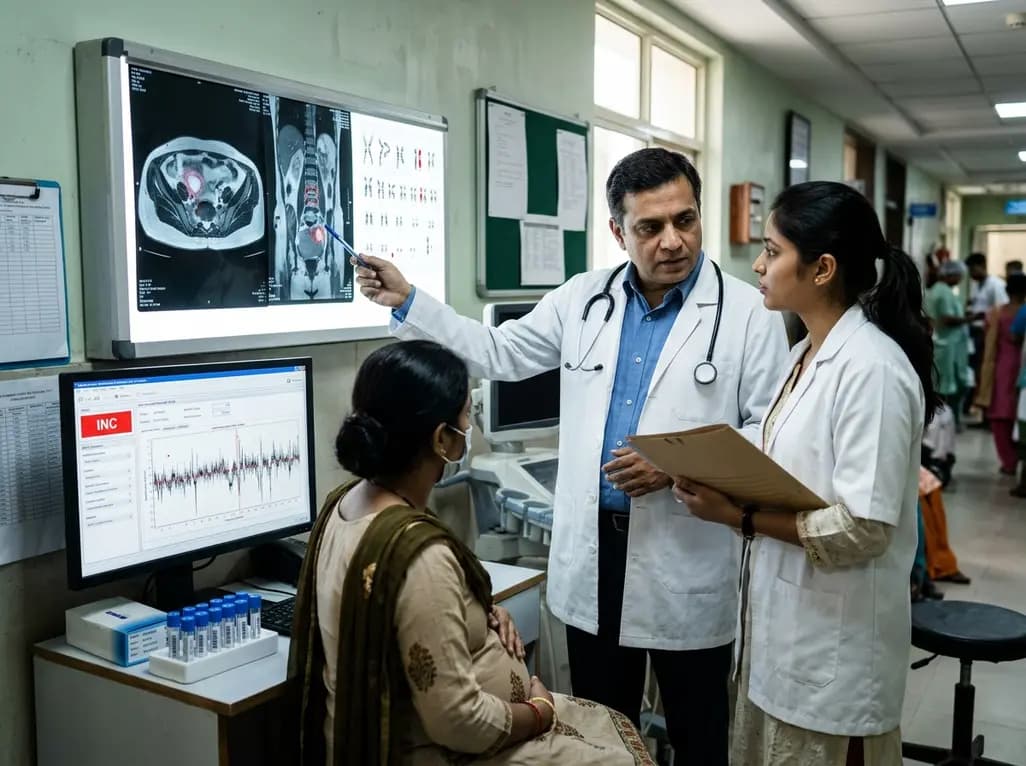
Occult maternal malignancy accounts for 3.82% of persistent unreportable NIPT results with genomic noise. Multiple chromosomal aberrations, notably on chromosome 18, warrant thorough oncological evaluation and whole-body MRI to ensure timely maternal diagnosis while preserving fetal care.
Today
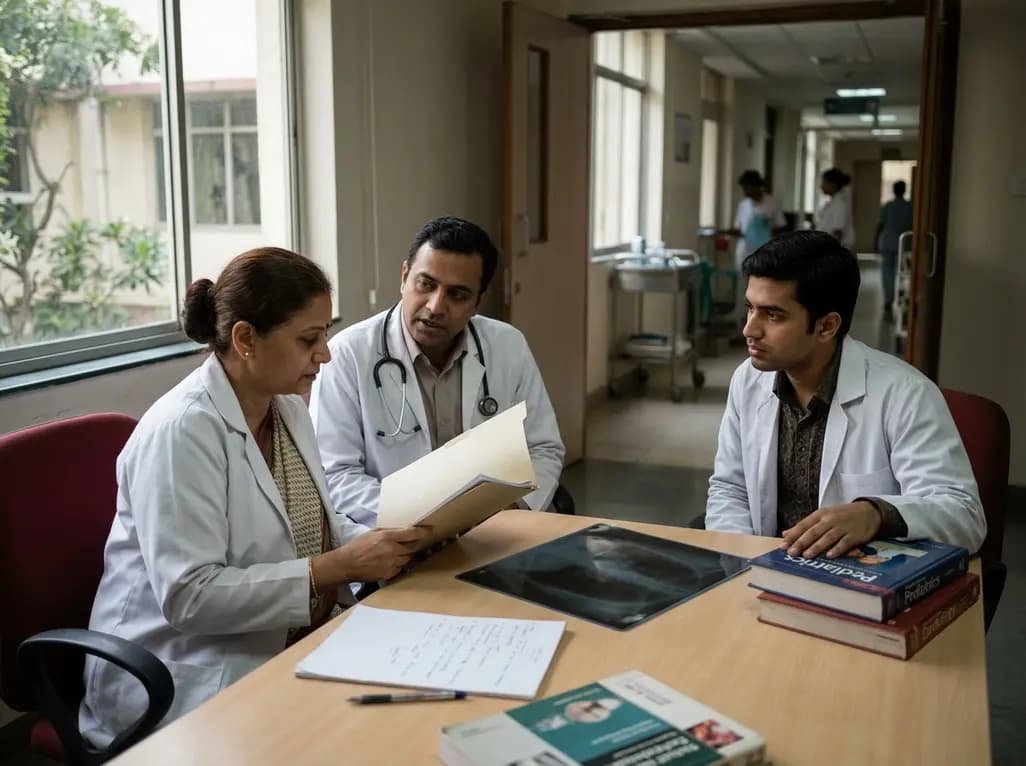
This article reviews the forensic and clinical complexities of acute myocarditis arising on left ventricular hypertrophy in children, highlighting early diagnostic red flags and multidisciplinary postmortem autopsy protocols.
Today

This comparative study evaluates posterior labral tears with and without glenohumeral instability, highlighting distinct demographic patterns, MRI underestimation in stable shoulders, and successful arthroscopic repair outcomes.
Yesterday

A clinical study demonstrates that early intervention with tocilizumab, either as monotherapy or bridged with corticosteroids, achieves significant proptosis reduction and resolves active inflammation in treatment-naive thyroid eye disease.
Yesterday
