.webp&w=384&q=75)

Loading, please wait...
Loading, please wait...
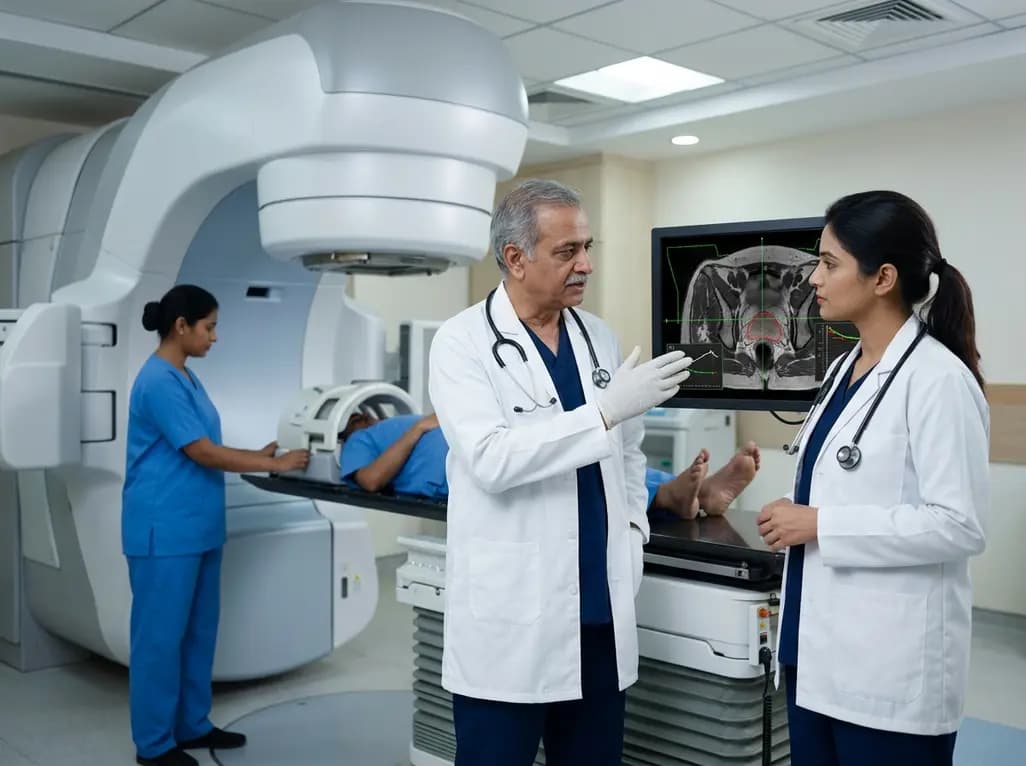
MRI-guided prostate radiotherapy is transforming the standard of care for patients with localized prostate cancer by offering unprecedented precision. Consequently, this technology allows for real-time visualization of the tumor and adjacent healthy organs during treatment. Furthermore, the pivotal MIRAGE trial highlights significant reductions in both acute and late gastrointestinal and urinary toxicities. Overall, the enhanced precision of imaging-guidance enables clinicians to use narrower planning target volume margins. However, long-term oncological efficacy still requires further verification through extended follow-up studies.
Specifically, researchers are evaluating the clinical utility of this technology across multiple indications, including primary treatment, salvage therapy, and focal boosting of intraprostatic lesions. Moreover, technical and financial challenges currently limit the widespread adoption of magnetic resonance imaging-guided linear accelerators in routine practice. Therefore, rigorous health economic evaluations will be crucial for defining future reimbursement strategies in diverse healthcare settings. Additionally, many oncology centers are still adapting to the complex organizational changes required for implementing these systems. As medical technology advances, these linear accelerators may eventually become a routine part of precision medicine for urologists and oncologists alike.
The MIRAGE trial is a landmark phase III randomized study comparing MRI-guided radiotherapy to standard stereotactic body radiotherapy. It demonstrated that MRI guidance significantly lowers the risk of moderate-to-severe urinary and bowel side effects.
MRI guidance provides superior soft-tissue visualization and real-time tracking of the prostate. This allows doctors to reduce the safety margins around the target, which minimizes radiation exposure to the bladder and rectum.
Disclaimer: This content is for informational and educational purposes only. It does not constitute professional medical advice, diagnosis, or treatment. Always seek the advice of your physician or other qualified health provider with any questions you may have regarding a medical condition. Refer to the latest local and national guidelines for clinical practice.
References
Adoum SL et al. Magnetic resonance imaging-guided radiotherapy for prostate cancer: A systematic review of the literature. Cancer Radiother. 2026 Jun 02. doi: undefined. PMID: 42229011.
Kishan AU et al. Magnetic resonance imaging-guided vs computed tomography-guided stereotactic body radiotherapy for prostate cancer: The MIRAGE randomized clinical trial. JAMA Oncol. 2023;9(3):365-373. doi:10.1001/jamaoncol.2022.6558.
Szablewska S, Roszkowski K. Magnetic resonance-guided adaptive stereotactic radiotherapy in prostate cancer patients: a systematic literature review. Rep Pract Oncol Radiother. 2025;30(4):548-558. doi: 10.5603/rpor.106916.

Read summarized clinical updates, watch expert medical content, and earn CME certifications right from your smartphone.
Open your smartphone camera to scan and install.





A systematic review confirms that MRI-guided radiotherapy reduces treatment toxicity in prostate cancer through enhanced precision and real-time tumor track...
4 months ago

A retrospective cohort study of 7,716 ICU patients from the MIMIC-IV database demonstrates that Gradient Boosting Decision Trees significantly outperform traditional SOFA scores in predicting in-hospital mortality among patients with sepsis and diabetes, with SHAP analysis providing clinical interpretability.
Today

A prenatal case highlights severe glutaric acidemia type II presenting as bilateral hyperechoic cystic kidneys at 18 weeks. Whole-exome sequencing revealed a novel homozygous ETFDH frameshift variant, demonstrating the power of rapid genetic testing in fetal renal anomalies.
Today
This article reviews the forensic and clinical complexities of acute myocarditis arising on left ventricular hypertrophy in children, highlighting early diagnostic red flags and multidisciplinary postmortem autopsy protocols.
Today

This comparative study evaluates posterior labral tears with and without glenohumeral instability, highlighting distinct demographic patterns, MRI underestimation in stable shoulders, and successful arthroscopic repair outcomes.
Yesterday

A clinical study demonstrates that early intervention with tocilizumab, either as monotherapy or bridged with corticosteroids, achieves significant proptosis reduction and resolves active inflammation in treatment-naive thyroid eye disease.
Yesterday
