

Loading, please wait...
Loading, please wait...
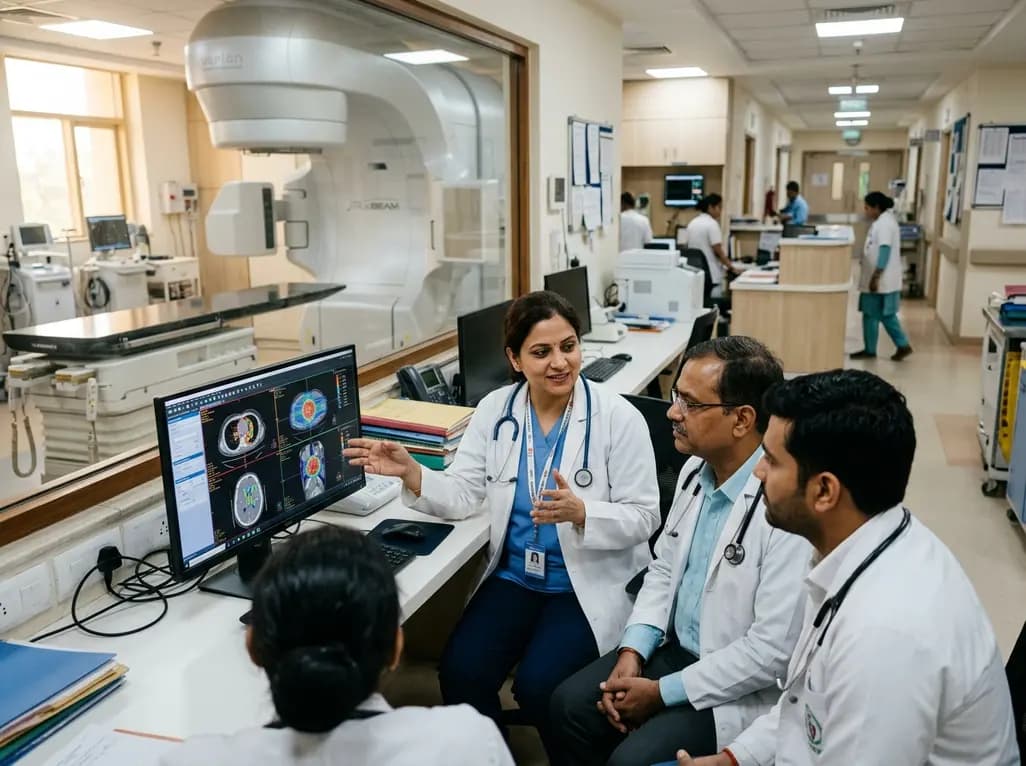
Specifically, radiotherapy is a major component of cancer treatment and helps thousands of patients annually. Moreover, it also contributes significantly to long-term disease control. Consequently, the French Society of Radiation Oncology (SFRO) recently developed a strategic white paper so clinicians can modernize. Additionally, this document focuses on modern radiotherapy technologies to improve clinical practice. Furthermore, the report outlines ten essential objectives but also addresses current barriers. Notably, these goals aim to strengthen therapeutic outcomes and national research capacity. However, rapid innovations also raise important clinical challenges. For instance, providers must address equitable access and sustainable financing. Therefore, the society conducted a multidisciplinary consultation with healthcare stakeholders.
As a result of this consultation, four strategic priorities emerged so they can guide the sector. First, the paper highlights the necessity of ensuring equitable technology access. Second, it emphasizes strengthening patient-centered care and supportive services. Third, the authors prioritize reinforcing safety and quality frameworks. Finally, the plan addresses workforce planning and professional recognition. Thus, these recommendations aim to support innovation and research capacity. In addition, the proposals seek to modernize financing mechanisms and billing reforms. Specifically, addressing workforce shortages among therapists is crucial because demand is rising. Importantly, these steps will help maintain international competitiveness. Ultimately, the white paper provides a vital roadmap for stakeholders and policymakers.
Specifically, the priorities include ensuring equitable technology access and patient-centered care. Moreover, they focus on reinforcing safety and workforce planning. Therefore, these goals address the most critical needs in oncology.
Notably, innovations like adaptive radiotherapy allow for more precise targeting. Consequently, these tools improve therapeutic success and minimize damage to healthy tissues. Furthermore, they offer promising results for future treatment schedules.
Disclaimer: This content is for informational and educational purposes only and does not constitute medical advice. Always seek the advice of a physician or other qualified health provider with any questions regarding a medical condition. Refer to the latest local and national guidelines for clinical practice.
References

Read summarized clinical updates, watch expert medical content, and earn CME certifications right from your smartphone.
Open your smartphone camera to scan and install.





The SFRO white paper outlines ten objectives to modernize radiotherapy in France. Specifically, it focuses on integrating modern technologies, ensuring equitable access, and addressing workforce shortages. These priorities aim to enhance oncology outcomes and maintain international competitiveness.
4 months ago

A retrospective cohort study of 7,716 ICU patients from the MIMIC-IV database demonstrates that Gradient Boosting Decision Trees significantly outperform traditional SOFA scores in predicting in-hospital mortality among patients with sepsis and diabetes, with SHAP analysis providing clinical interpretability.
Today

Occult maternal malignancy accounts for 3.82% of persistent unreportable NIPT results with genomic noise. Multiple chromosomal aberrations, notably on chromosome 18, warrant thorough oncological evaluation and whole-body MRI to ensure timely maternal diagnosis while preserving fetal care.
Today

This article reviews the forensic and clinical complexities of acute myocarditis arising on left ventricular hypertrophy in children, highlighting early diagnostic red flags and multidisciplinary postmortem autopsy protocols.
Today

This comparative study evaluates posterior labral tears with and without glenohumeral instability, highlighting distinct demographic patterns, MRI underestimation in stable shoulders, and successful arthroscopic repair outcomes.
Yesterday

A clinical study demonstrates that early intervention with tocilizumab, either as monotherapy or bridged with corticosteroids, achieves significant proptosis reduction and resolves active inflammation in treatment-naive thyroid eye disease.
Yesterday
