

Loading, please wait...
Loading, please wait...

A mobile stroke treatment unit represents a transformative paradigm in emergency neurological care by delivering specialized neurovascular diagnosis and immediate intervention directly to the patient's doorstep. Traditional neurology residency curricula predominantly concentrate on acute stroke management within hospital emergency departments, neurointensive care units, and inpatient wards. However, acute ischemic stroke is intensely time-dependent, where every passing minute without reperfusion results in the loss of nearly two million neurons. Therefore, introducing trainees to the prehospital phase bridges a major educational void. By dispatching neurology trainees alongside emergency medical service teams, residents gain firsthand perspective on the operational challenges, triage dilemmas, and time-critical decision trees that define hyperacute stroke assessment. This experiential learning significantly refines clinical acumen, bolsters diagnostic accuracy, and ultimately elevates patient care standards across the entire continuum of stroke systems.
A specialized ambulance equipped with a portable computed tomography scanner, point-of-care laboratory testing, and telemedicine capabilities forms the core of a modern mobile stroke treatment unit. Consequently, this innovative platform effectively moves hospital-grade diagnostic workflows into the field. Neurology residents on an active rotation encounter suspected stroke patients minutes after symptom onset, demanding rapid clinical synthesis. In this unconventional setting, trainees rapidly conduct standard neurological examinations, evaluate eligibility criteria for intravenous thrombolysis, and interpret non-contrast computed tomography scans under authentic field pressures. Moreover, navigating the compact physical confines of the vehicle sharpens procedural economy and spatial communication. Because hyperacute management decisions must occur instantaneously, trainees cultivate vital decisive habits. They learn to differentiate mimics such as severe hypoglycemia, focal seizures, complicated migraines, or psychogenic functional deficits with heightened speed and clinical precision.
Direct collaboration with emergency medical services personnel constitutes one of the most enriching educational facets of this prehospital rotation. In conventional inpatient clinical training, neurology residents frequently observe prehospital handover reports through an insulated lens, occasionally failing to appreciate the physical, logistical, and environmental hurdles first responders confront. However, stepping inside the field dismantles these interdisciplinary silos. Residents actively collaborate with paramedics, emergency medical technicians, and dispatch personnel, thereby gaining substantial insight into prehospital dispatch triage protocols, field stabilization techniques, and regional transport networks. Furthermore, trainees observe how environmental variables, including home clutter, extreme temperatures, and transport traffic, impact stroke assessment workflows. This mutual professional exchange builds lasting respect between specialties. As a result, participating physicians develop stronger communication skills and cultivate an enduring appreciation for cohesive multidisciplinary teamwork across stroke care pathways.
Beyond technical and diagnostic proficiency, field dispatch provides trainees with an unfiltered window into the social determinants of health influencing acute outcomes. When physicians evaluate patients directly within their living environments, socioeconomic factors shift from theoretical medical record notes to tangible realities. Specifically, residents witness firsthand the acute barriers posed by severe poverty, unstable housing, physical isolation, language barriers, and family caregiver dynamics. Therefore, trainees learn how prehospital delay patterns frequently correlate with lower health literacy and community-level economic disparities. Observing these social realities in person enables future neurologists to formulate more realistic and compassionate discharge plans during subsequent inpatient rotations. In addition, trainees learn to recognize system-level healthcare inequities that impede timely stroke recognition, prompt emergency dispatch activation, and post-discharge rehabilitation adherence, thereby cultivating a deeply holistic approach to patient care.
The specialized clinical competencies acquired aboard prehospital units provide substantial dividends once neurology residents resume traditional hospital duties. Having managed hyperacute vascular emergencies in unstructured field environments, trainees approach emergency room consultations with greater diagnostic agility, calm, and speed. Furthermore, they understand precisely how upstream notification protocols and mobile tele-stroke communications streamline in-hospital workflows, including direct-to-angiography suite transfers for endovascular thrombectomy. Consequently, these residents serve as critical champions for institutional process improvement. They advocate effectively for minimized door-to-needle and door-to-groin puncture times because they have witnessed how prehospital minutes dictate long-term neurological recovery. Over time, residents exposed to these specialized units evolve into comprehensive vascular leaders capable of optimizing regional stroke networks, refining transfer protocols, and advancing community-wide public health stroke initiatives.
Establishing a successful elective program requires thoughtful institutional collaboration between academic neurology departments, emergency medicine leadership, and municipal emergency services. Because only a limited number of medical centers currently operate active prehospital neurovascular units, formal curriculum development must establish rigorous orientation modules and explicit safety protocols. Trainees must master radiation safety standards for portable scanners, comprehensive field safety protocols, and structured interdisciplinary communication frameworks before entering operational shifts. Moreover, educational leaders should integrate targeted simulation exercises, case debriefing conferences, and telemedicine oversight to maximize learning efficiency while safeguarding patient welfare. Although operational hurdles exist, providing neurology trainees with immersive field experience bridges the vital gap between classroom theory and real-world clinical practice, creating forward-thinking neurologists prepared for modern healthcare systems.
A mobile stroke treatment unit delivers prehospital clinical assessment, rapid computed tomography neuroimaging, and immediate intravenous thrombolysis directly to suspected acute stroke patients at the scene, dramatically reducing time-to-treatment intervals and minimizing irreversible brain tissue loss.
Field experience exposes residents to real-world diagnostic challenges, interprofessional teamwork with paramedics, and diverse socioeconomic environments. This exposure refines rapid neurovascular evaluation skills, promotes calm clinical decision-making under authentic pressure, and bridges prehospital and emergency department workflows.
Patients experiencing acute ischemic stroke within the standard thrombolytic treatment time window benefit the most. Early field diagnosis enables expedited administration of clot-busting medications and direct triage to specialized endovascular stroke centers for mechanical thrombectomy.
Disclaimer: This content is for informational and educational purposes only. Refer to the latest local and national guidelines for clinical practice.
References
Saini N et al. Opinion & Special Articles: Mobile Stroke Treatment Unit: A Distinctive Learning Experience in Neurology Residency. Neurology. 2026 Dec 22. doi: 10.1212/WNL.0000000000218833. PMID: 43019502.
Grotta JC, Yamal JM, Parker SA, et al. Prospective, Multicenter, Controlled Trial of Mobile Stroke Units. N Engl J Med. 2021;385(11):971-981.
Herpich F, Rincon F. Prehospital Stroke Care and Mobile Stroke Units. Curr Treat Options Neurol. 2020;22(8):21.
Powers WJ, Rabinstein AA, Ackerson T, et al. Guidelines for the Early Management of Patients With Acute Ischemic Stroke: 2019 Update to the 2018 Guidelines for the Early Management of Acute Ischemic Stroke. Stroke. 2019;50(12):e344-e418.

Read summarized clinical updates, watch expert medical content, and earn CME certifications right from your smartphone.
Open your smartphone camera to scan and install.





Integrating a mobile stroke treatment unit elective into neurology residency bridges prehospital emergency care and acute neurological decision-making, significantly enhancing clinical competence.
Today

Gastrointestinal smooth muscle cells rely on nanoscale membrane domains to integrate mechanosensitive currents. Recent insights show that nanodomain architecture, rather than channel properties alone, orchestrates motility, opening new therapeutic avenues for clinical dysmotility and gastrointestinal aging.
Today
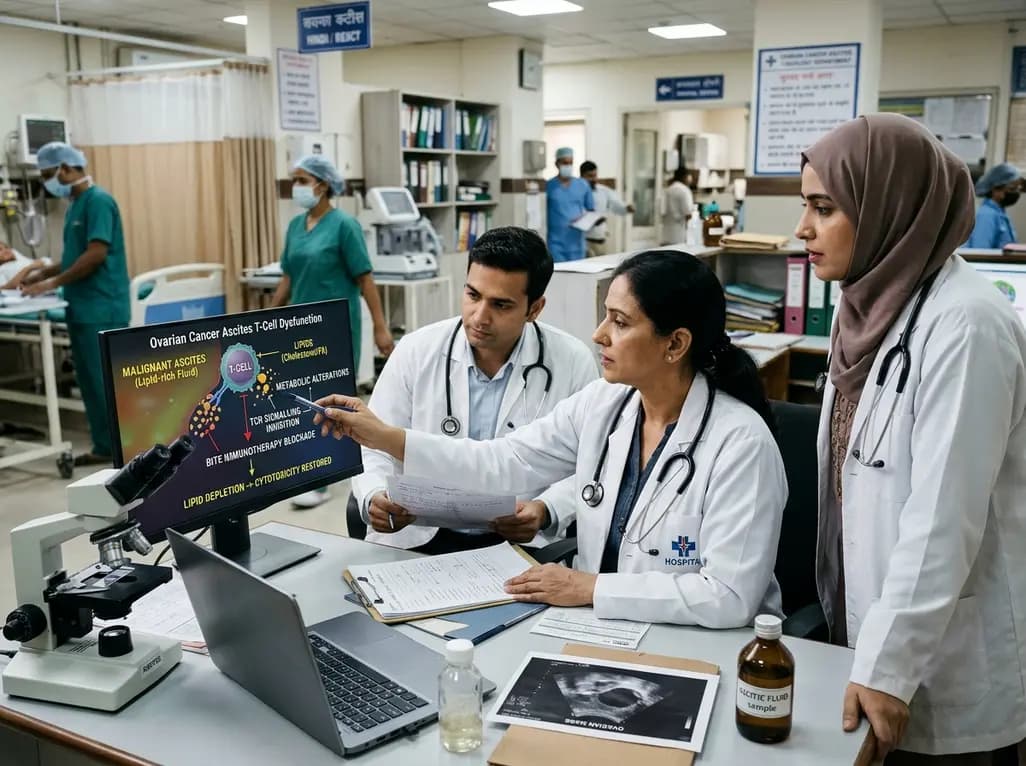
A landmark study reveals that lipid-rich malignant ascites alters the T-cell metabolic transcriptome, causing cholesterol efflux and impaired fatty acid oxidation. This suppresses TCR signalling and blocks BiTE immunotherapy, while lipid depletion restores antitumour cytotoxicity in ovarian cancer.
Today
Novel clinical evidence demonstrates the feasibility of combining VA-ECMO with the NyokAssist self-expanding transvalvular pump for active left ventricular unloading in infarct-related cardiogenic shock, achieving successful stabilization and decannulation.
Today
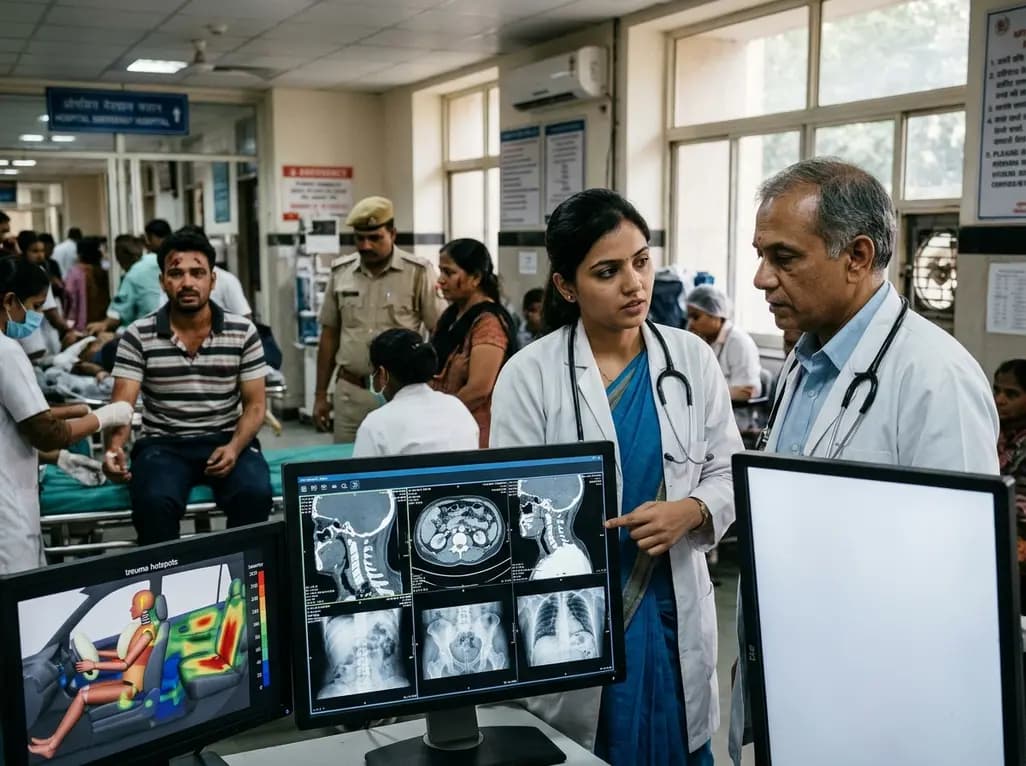
Recent crash analyses demonstrate significant variations in traffic injury severity across vehicle seating positions. Electric vehicle passengers face disproportionately higher trauma risks than drivers, particularly during airbag deployments, demanding adapted emergency assessment and clinical vigilance.
Today
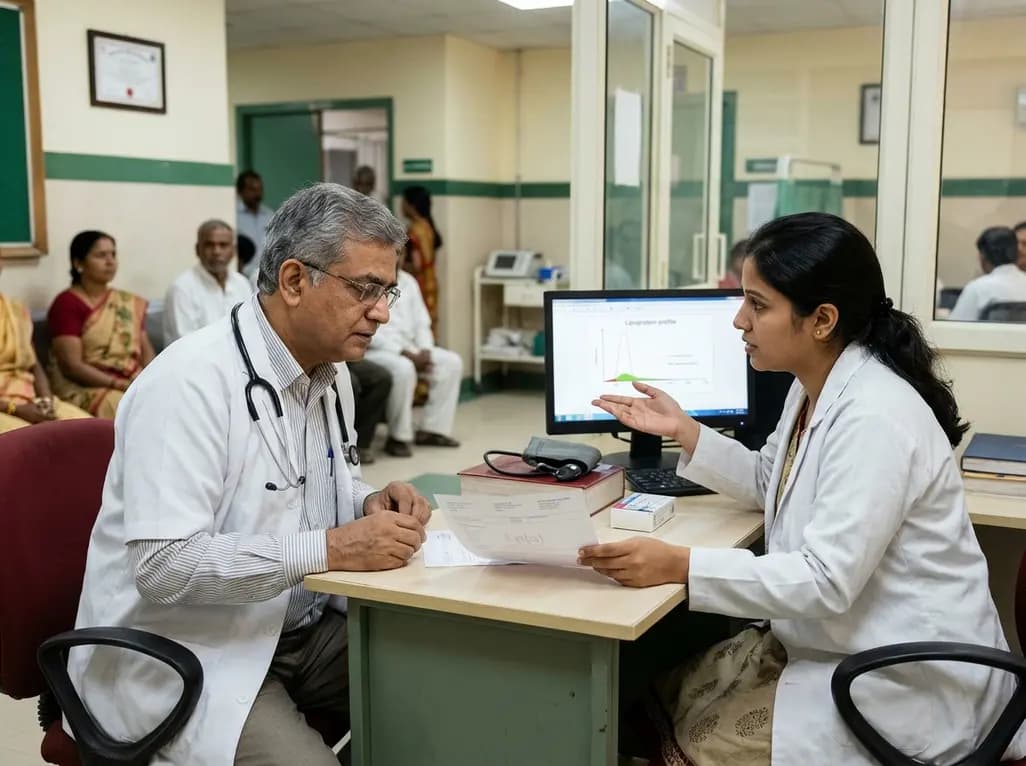
Understand the causal role of Lipoprotein(a) in cardiovascular disease, why international guidelines recommend once-in-a-lifetime molar testing, and the clinical implications of recent phase 3 RNA outcome trials.
Today
