.webp&w=384&q=75)

Loading, please wait...
Loading, please wait...
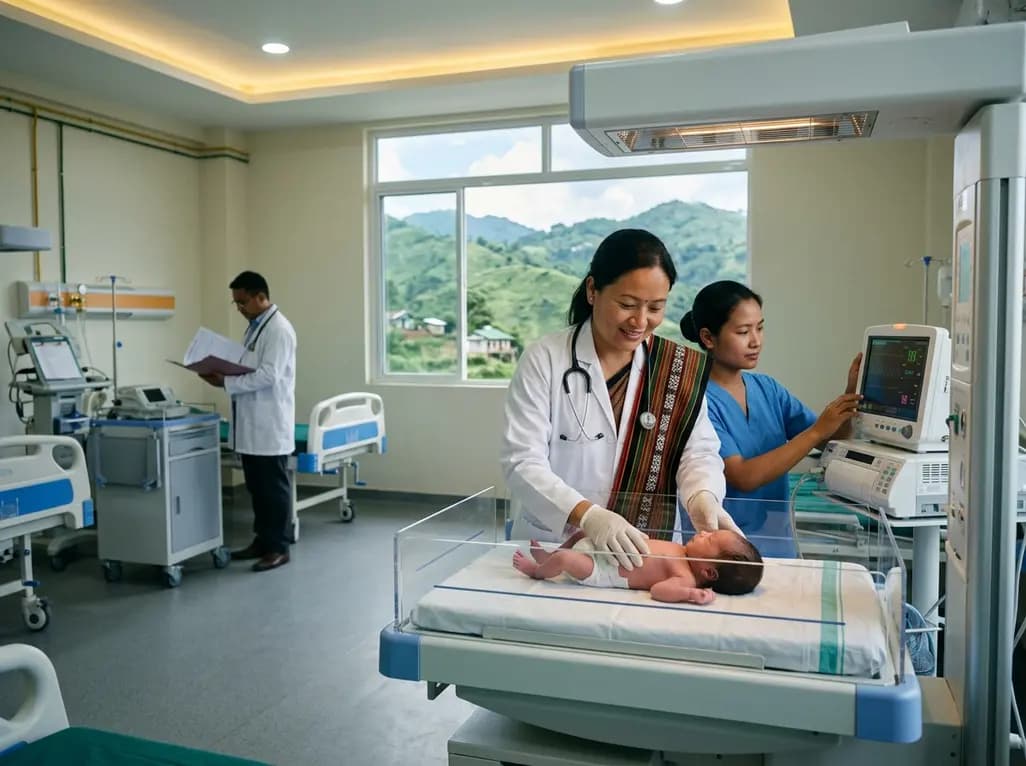
The central government has recently approved a substantial financial package to enhance Mizoram health infrastructure, providing Rs 120 crore under the Financial Assistance to States/UTs for Public Health Infrastructure (FASPHI) scheme for the 2026-27 financial year. Chief Minister Lalduhoma publicly announced this landmark funding during an official visit to Zoram Medical College and Hospital in Falkawn near Aizawl. Indeed, this significant monetary allocation stems from performance-based incentives designed by the sixteenth Finance Commission to reward states showing remarkable progress in public health parameters. Consequently, the Union Ministry of Health and Family Welfare reviewed and approved Mizoram's comprehensive project proposal, forwarding it directly to the Ministry of Finance for formal disbursement. Nationally, the FASPHI scheme operates with an impressive total budget outlay of Rs 4,200 crore to incentivize health reform across various states and union territories. Thus, Mizoram's successful qualification for these funds highlights the state's strategic emphasis on building robust medical facilities. Furthermore, this financial support reflects a broader national commitment to strengthening decentralized public health systems in India's northeastern region. In addition, the funds will immediately address longstanding systemic gaps in secondary and primary care. Therefore, healthcare administrators and local practitioners anticipate that this capital injection will substantially improve clinical workflow, facility accessibility, and emergency referral efficiency throughout the region.
The allocation under the FASPHI framework relies on measurable advancements across four primary public health metrics. Specifically, the national scheme evaluates states on Infant Mortality Rate reductions, Maternal Mortality Ratio improvements, Tuberculosis Mortality Rate declines, and the number of facilities obtaining National Quality Assurance Standards certification. Remarkably, Mizoram qualified for incentives across two distinct performance indicators, demonstrating commendable institutional progress over recent evaluation cycles. First, the state earned Rs 20 crore by successfully reducing its Infant Mortality Rate from 13 deaths per 1,000 live births in 2023 down to 12 in 2024. Second, Mizoram achieved a maximum incentive grant of Rs 100 crore by securing a 21.07 percent increase in NQAS-certified health facilities between the 2024-25 and 2025-26 operational periods. As a result, the combined accomplishments yielded the full Rs 120 crore allocation for the state. Moreover, health officials emphasized that rigorous standardization under NQAS ensures better infection control, patient safety protocols, and standardized clinical documentation across primary health centers. Furthermore, these performance milestones demonstrate how structured financial rewards can motivate local health departments to achieve tangible clinical outcomes. Eventually, maintaining these high standards will ensure sustained improvements in population health metrics across both rural and urban sectors.
A central pillar of the approved Rs 120 crore project proposal involves upgrading rural health centers into First Referral Units to provide comprehensive emergency care. Specifically, the state government allocated Rs 83.57 crore to upgrade four key Community Health Centres from non-FRU to full FRU status. These targeted facilities include Sakawrdai CHC in Aizawl district, Kawrthah CHC in Mamit district, West Phaileng CHC in Mamit district, and Bungtlang South CHC in Lunglei district. Consequently, these structural upgrades will equip rural health centers with functional operation theaters, blood storage facilities, and round-the-clock emergency obstetric care. In rural regions, transforming standard community health centers into fully operational First Referral Units drastically reduces critical delay times for emergency procedures. Furthermore, clinicians in remote districts will now have better access to essential surgical, anesthetic, and pediatric intervention capabilities without sending patients on long journeys to tertiary hospitals. As a result, patient survival rates during acute surgical or obstetric crises are expected to improve dramatically. Therefore, this strategic allocation ensures that medical facilities in remote geographic pockets receive modern diagnostic tools and adequate infrastructure. Ultimately, these upgrades will establish a robust safety net for vulnerable populations living far from capital cities.
In addition to rural center upgrades, the financial package allocates Rs 14.03 crore to expand specialized infectious disease management capabilities. Specifically, new infectious disease wards will be established at Lunglei District Hospital, Lawngtlai District Hospital, and Kulikawn Sub-District Hospital. Furthermore, Kulikawn Sub-District Hospital will receive a dedicated Tuberculosis Treatment Unit to strengthen local pulmonary disease containment. Beyond physical infrastructure, the project designates Rs 22.39 crore for procuring state-of-the-art diagnostic equipment to combat tuberculosis and enhance maternal and child health services state-wide. Consequently, these diagnostic tools will allow clinicians to detect drug-resistant tuberculosis strains earlier and initiate targeted antimicrobial therapy without delay. Moreover, establishing dedicated isolation facilities prevents cross-transmission within general hospital wards during infectious disease outbreaks. In recent years, public health experts have consistently stressed the vital necessity of isolated infectious disease units in regional medical centers. Thus, these targeted diagnostic and isolation enhancements directly fortify local health authorities against emerging endemic pathogens and seasonal respiratory epidemics. Ultimately, clinicians will gain access to modern tools that significantly elevate standards of care for complex communicable diseases across Mizoram.
The multifaceted infrastructure package directly targets maternal and pediatric clinical outcomes across all administrative levels of Mizoram's healthcare system. By deploying modern medical equipment across peripheral centers, frontline clinicians can conduct timely antenatal screenings, identify high-risk pregnancies early, and manage neonatal complications effectively. Furthermore, during his institutional review, Chief Minister Lalduhoma inspected Zoram Medical College and Hospital, the state's flagship 519-bed tertiary healthcare facility in Falkawn. This major institution serves as the cornerstone for advanced medical education, specialized clinical care, and referral support throughout the region. Consequently, strengthening secondary facilities like FRUs directly alleviates the heavy patient burden currently experienced by ZMC&H, allowing tertiary specialists to focus on high-complexity cases. Moreover, Chief Minister Lalduhoma extended formal gratitude to Health Minister Lalrinpuii and dedicated health department officers for their proactive efforts in securing performance incentives. Indeed, effective administrative coordination between central ministries and state health departments accelerates financial approvals and project execution. Therefore, these combined investments in equipment, infrastructure, and human resources create a sustainable environment for high-quality clinical care. In conclusion, Mizoram's strategic approach offers a valuable blueprint for incentive-driven health sector transformation in India.
Q1: What is the FASPHI scheme and how does it benefit state health infrastructure?
The Financial Assistance to States/UTs for Public Health Infrastructure (FASPHI) scheme is a central initiative under the sixteenth Finance Commission featuring a Rs 4,200 crore outlay for 2026-27. It offers performance-linked financial incentives to states based on improvements in Infant Mortality Rate, Maternal Mortality Ratio, Tuberculosis Mortality Rate, and NQAS certifications. Consequently, these performance grants enable state governments to fund critical facility upgrades, purchase advanced medical equipment, and improve public healthcare delivery.
Q2: How did Mizoram secure Rs 120 crore under the FASPHI initiative?
Mizoram qualified for performance incentives across two specific indicators under the FASPHI scheme. First, the state reduced its Infant Mortality Rate from 13 deaths per 1,000 live births in 2023 to 12 in 2024, earning a Rs 20 crore incentive. Second, Mizoram achieved a 21.07 percent increase in National Quality Assurance Standards (NQAS) certified health facilities between 2024-25 and 2025-26, securing the maximum allowed incentive of Rs 100 crore.
Q3: Which healthcare facilities in Mizoram are slated for infrastructure upgrades?
The approved Rs 120 crore plan targets four Community Health Centres—Sakawrdai, Kawrthah, West Phaileng, and Bungtlang South—for upgrade into First Referral Units (FRUs) costing Rs 83.57 crore. Additionally, infectious disease wards will be established at Lunglei, Lawngtlai, and Kulikawn hospitals, with Kulikawn also receiving a Tuberculosis Treatment Unit. Furthermore, Rs 22.39 crore is designated for advanced TB diagnostic tools and maternal and child healthcare equipment state-wide.
Disclaimer: This content is for informational and educational purposes only. It does not constitute medical advice or replace professional judgment. Refer to the latest local and national guidelines for clinical practice.
References

Read summarized clinical updates, watch expert medical content, and earn CME certifications right from your smartphone.
Open your smartphone camera to scan and install.





Mizoram is set to receive Rs 120 crore under the central FASPHI scheme to strengthen public health infrastructure. The performance-linked incentive will fund CHC upgrades into First Referral Units, infectious disease wards, TB treatment units, and advanced equipment for maternal and child healthcare services.
Today
The Food Safety and Standards Authority of India (FSSAI) has rejected industry appeals and directed beverage manufacturers to remove the term 'energy drink' and unapproved therapeutic claims within 90 days. This regulation aims to curb misbranding and ensure clear labeling across commercial food products.
Today
Johnson & Johnson announced a $5.5 billion settlement to resolve nearly 69,000 lawsuits alleging its talc-based baby powder caused ovarian cancer. This comprehensive deal covers 99.75% of active claims. Read about the legal strategy, scientific evidence on talc exposure, and clinical counseling for patients.
Today
A cross-sectional study evaluates post-intensive care syndrome in cardiac patients 2-4 weeks post-ICU discharge, highlighting cognitive, psychological, and functional impairments and the need for structured multidisciplinary rehabilitation.
4 days back
Anterior cruciate ligament reconstruction failure lacks uniform definition. A narrative review proposes an integrative framework incorporating objective and subjective instability, persistent pain, restricted motion, graft rupture, and secondary meniscal injury to standardize clinical reporting.
3 days back
A UK Biobank study of 471,540 participants reveals that metabolic syndrome increases incident gastric cancer risk by 36% (HR=1.36). A positive trend was observed with accumulating metabolic components, with waist circumference showing the strongest association, highlighting modifiable risk targets.
4 days back
