.webp&w=384&q=75)

Loading, please wait...
Loading, please wait...

Mitochondrial homeostasis remains fundamental to cellular viability and organ function across human tissues. For decades, clinicians and researchers attributed mitochondrial quality control almost exclusively to canonical macro-mitophagy. However, emerging scientific evidence demonstrates that mitochondrial microautophagy functions as a distinct, highly coordinated clearance pathway. This innovative process enables the selective removal of damaged mitochondrial subdomains while preserving overall organelle network integrity. Consequently, cells maintain continuous bioenergetic output without sacrificing viable mitochondrial mass during localized physiological stress.
Historically, classical mitophagy required complete depolarization of the organelle membrane. The cell then packaged the entire defective mitochondrion into a double-membrane autophagosome before lysosomal delivery. In contrast, mitochondrial microautophagy operates at a sub-organelle resolution to repair localized structural injuries. Therefore, this pathway prevents premature organelle degradation and supports cellular bioenergetics under transient oxidative burdens.
Specifically, cells deploy this mechanism as a redox-adaptive survival system. When localized metabolic stress damages discrete protein complexes or lipid microdomains, the organelle isolates these lesions without collapsing the electrical gradient. Furthermore, specialized contact sites facilitate direct interaction between mitochondria and lysosomes. The lysosome directly invaginates or wraps around the injured mitochondrial microdomain. Consequently, the cell avoids the metabolic cost of de novo mitochondrial biogenesis.
Additionally, this selective sequestration preserves intact mitochondrial DNA and active cristae structures. Because non-injured segments remain functional, cellular respiration continues uninterrupted. Medical researchers now recognize this sub-organelle quality control mechanism as a pivotal factor in long-term cellular longevity. Thus, understanding this pathway provides critical insights into how high-energy tissues sustain prolonged survival under persistent metabolic demands.
Mitochondrial microautophagy proceeds through a tightly regulated five-step sequential program. First, specialized sensor proteins detect localized stress, initiating the damage-sensing phase. Highly localized reactive oxygen species serve as critical signaling cues in this microenvironment. Subsequently, these reactive oxygen species define precise damage microdomains and trigger targeted biochemical tags.
Second, the damaged mitochondrion establishes stable membrane contact sites with nearby lysosomes. Notably, these inter-organelle contacts bridge the two structures without inducing organelle fusion. Third, the lysosomal membrane undergoes localized remodeling to execute cargo engulfment. The lysosomal surface invaginates inward, capturing the targeted mitochondrial components directly into its hydrolytic lumen.
Fourth, lysosomal hydrolases degrade the engulfed cargo with high biochemical selectivity. In this manner, cells clear toxic protein aggregates, oxidized membrane lipids, and fragmented nucleoids efficiently. Finally, permeases export degraded macromolecules back into the cytoplasm for metabolic recycling. Consequently, this multi-step pathway recycles essential amino acids, lipids, and nucleotides to maintain systemic cellular homeostasis. Furthermore, this dynamic sequence shields adjacent cellular structures from leaking cytotoxic components.
Multiple sophisticated molecular modules govern the progression of this sub-organelle pathway. For instance, the ubiquitin-autophagy-related protein 8 system flags damaged surface proteins to recruit degradation machinery. Simultaneously, vacuolar-type H-ATPase complexes regulate the necessary membrane remodeling and maintain lysosomal acidification. Furthermore, Ras-related in brain GTPases cooperate with endosomal sorting complexes required for transport to coordinate membrane scission.
Moreover, the spermatogenesis-associated 18 pathway, also known as the mitochondria-eating protein network, directs selective vacuolar entry. This protein facilitates the direct translocation of injured matrix constituents into the lysosomal compartment. Concurrently, nuclear stress-response networks tightly monitor and amplify this clearance process. Specifically, transcription factor EB coordinates lysosomal biogenesis under sustained microautophagic demand.
In addition, nuclear factor erythroid 2-related factor 2 coordinates antioxidant responses and enhances transcription of degradation mediators. Meanwhile, the mechanistic target of rapamycin complex 1 acts as a metabolic switch, fine-tuning clearance activity based on nutrient availability. Together, these convergent molecular signals ensure precise substrate recognition and prevent non-specific organelle consumption. Accordingly, disruption in any single regulatory node may impair organelle fidelity.
Mitochondrial injury represents a hallmark feature in diverse acute and chronic internal diseases. During acute ischemic injury, such as myocardial infarction or acute ischemic stroke, cells experience abrupt oxygen deprivation. Subsequent reperfusion generates bursts of reactive oxygen species within localized mitochondrial subdomains. In this setting, mitochondrial microautophagy removes damaged electron transport components rapidly, preventing outer membrane permeabilization and apoptotic caspase activation.
Similarly, chronic metabolic disorders, including type 2 diabetes and metabolic dysfunction-associated steatohepatitis, impose continuous cellular strain. Excessive nutrient flux elevates lipid peroxidation and damages mitochondrial cristae within hepatocytes and pancreatic beta-cells. However, functional microautophagic flux preserves insulin secretion and glucose homeostasis by purging oxidized lipid clusters. Consequently, tissues maintain adequate adenosine triphosphate synthesis despite prolonged oxidative stress.
Conversely, defective microautophagy exacerbates systemic inflammation and insulin resistance. Accumulation of damaged mitochondrial fragments promotes cytosolic release of mitochondrial DNA, triggering cyclic GMP-AMP synthase-stimulator of interferon genes activation. Therefore, preserving or pharmacologically stimulating this clearance pathway offers a compelling therapeutic avenue for metabolic and cardiovascular conditions. Indian clinicians treating high-risk diabetic and ischemic patient cohorts must appreciate these emerging pathophysiological mechanisms.
Post-mitotic cells, such as neurons and cardiac myocytes, possess minimal regenerative capacity and depend heavily on mitochondrial longevity. In neurodegenerative disorders, such as Parkinson's disease and Alzheimer's disease, localized mitochondrial stress precedes widespread neuronal death. Emerging evidence reveals that early microautophagic failure allows cytotoxic protein aggregates and damaged respiratory chains to persist. Consequently, enhancing this sub-organelle pathway may arrest progressive synaptic failure before irreversible neurodegeneration develops.
Furthermore, biological aging involves progressive declines in organelle quality control across major organ systems. Over time, senescence-associated mitochondrial deterioration reduces metabolic fitness and triggers chronic low-grade sterile inflammation. Because canonical mitophagy often slows during advanced chronological age, microautophagy provides a crucial alternative defense against localized organelle decay. Thus, targeted modulation of this mechanism represents an innovative strategy for extending functional healthspan.
Nevertheless, key scientific questions require urgent clarification before clinical translation succeeds. Investigators must identify specific redox-sensitive receptors that recognize localized damage signatures. In addition, scientists must develop precise pharmacological agonists that stimulate microautophagy without interrupting essential macroautophagy. Ultimately, addressing these critical knowledge gaps will establish novel biomarkers and therapeutic options for aging-related chronic illnesses.
Canonical macro-mitophagy degrades whole, depolarized mitochondria by encapsulating the entire organelle within a specialized double-membrane autophagosome that fuses with a lysosome. In contrast, mitochondrial microautophagy selectively removes damaged sub-organellar components while preserving the remainder of the organelle. The lysosome directly invaginates and engulfs the injured microdomain via direct membrane contacts. Consequently, this targeted mechanism conserves functional mitochondrial mass and sustains uninterrupted cellular energy production during localized metabolic stress.
Localized reactive oxygen species function as critical upstream signaling messengers rather than merely harmful byproducts. Under physiological or metabolic stress, injured electron transport chains generate focal bursts of oxidative free radicals. These localized oxidants define discrete damage microdomains on the organelle and oxidatively modify nearby proteins and lipids. Consequently, this focal stress signal recruits molecular machinery, promotes mitochondria-lysosome membrane contact formation, and initiates direct cargo engulfment without triggering global mitochondrial destruction.
Targeting mitochondrial microautophagy provides promising therapeutic avenues for managing neurodegenerative disorders, acute ischemic injury, metabolic diseases, and age-related functional decline. Pharmacological activation of this pathway could prevent toxic mitochondrial DNA leakage, suppress chronic sterile inflammation, and rescue bioenergetic output in stressed tissues. Furthermore, developing selective agonists that enhance sub-organelle clearance allows physicians to preserve mitochondrial network integrity. Consequently, this strategy may protect post-mitotic neurons and cardiomyocytes from premature apoptosis during pathological stress.
Disclaimer: This content is for informational and educational purposes only. It does not constitute medical advice, diagnosis, or treatment recommendations. Always consult a qualified healthcare professional regarding any medical condition or clinical decision. Refer to the latest local and national guidelines for clinical practice.
References
Zhang H et al. Mitochondrial Microautophagy: An Emerging Pathway in Maintaining Mitochondrial Homeostasis. Antioxid Redox Signal. 2026 Sep 02. doi: 10.1177/15230864261481794. PMID: 42686641.
Kiraly S, Stanley J, Eden ER. Lysosome-Mitochondrial Crosstalk in Cellular Stress and Disease. Antioxidants (Basel). 2024 Dec; 14(1):125.
Sica V, Galluzzi L, Bravo-San Pedro JM, et al. Organelle-Specific Autophagy in Cellular Homeostasis and Aging. EMBO J. 2023; 42(5):e112345.

Read summarized clinical updates, watch expert medical content, and earn CME certifications right from your smartphone.
Open your smartphone camera to scan and install.





Mitochondrial microautophagy represents a novel sub-organelle quality control mechanism that selectively degrades damaged mitochondrial components while preserving intact organelle networks, revealing potential therapeutic targets in ischemia, metabolic disorders, neurodegeneration, and aging.
4 weeks back

A systematic review of 41 preclinical studies reveals that baicalin dampens systemic inflammation, inhibits NF-κB and NLRP3 pathways, and improves organ preservation in sepsis models. However, substantial study heterogeneity and a complete lack of human clinical trials highlight the need for further translational research.
Today
Discover the crucial distinctions between mesonephric and mesonephric-like proliferations of the female genital tract. Learn the key histomorphologic, immunohistochemical, and molecular differences essential for accurate diagnosis and clinical management.
Today
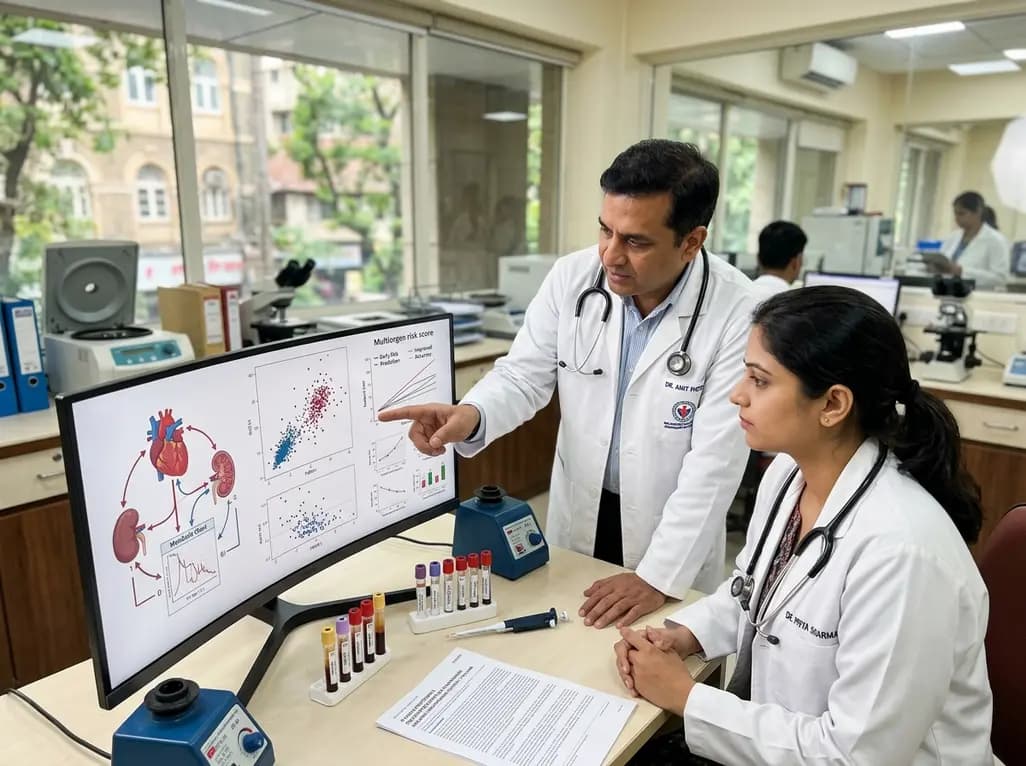
A large UK Biobank study reveals that plasma proteomic signatures capture preclinical organ damage and improve multiorgan risk prediction across early CKM syndrome stages 0 to 2 beyond traditional PREVENT clinical models.
Today
A narrative review investigates whether the articularis genus muscle functions as an independent anatomical entity or blends with the vastus intermedius. We evaluate its morphology, role in retracting the suprapatellar bursa, and direct clinical significance in anterior knee pain and arthroplasty.
Today

A Bayesian multilevel meta-analysis reveals that aerobic training combined with moderate carbohydrate restriction modestly lowers HbA1c in type 2 diabetes. However, sparse data and very low certainty leave incremental benefits over exercise or diet alone unproven, highlighting the need for individualized care.
Today
