.webp&w=384&q=75)

Loading, please wait...
Loading, please wait...

Diabetic kidney disease (DKD) remains a formidable challenge for healthcare systems globally, especially in India, which is frequently cited as the diabetes capital of the world. Early detection is paramount because traditional markers like serum creatinine and albuminuria often manifest only after significant structural damage has already occurred. Recently, researchers have identified the Mitochondrial DNA copy number (mtDNA-CN) as a pivotal biomarker that reflects the metabolic health of the renal system. Mitochondrial dysfunction is a central pillar in the pathogenesis of renal complications, driving oxidative stress and inflammatory pathways. Consequently, measuring the abundance of mitochondrial genomes within a cell provides a measurable surrogate for mitochondrial density and functional capacity. As the prevalence of type 2 diabetes continues to soar, the need for sensitive, molecular-level markers becomes increasingly urgent for clinicians. This article explores how mtDNA-CN bridges the gap between basic pathophysiology and clinical application. It offers a potential path toward more personalized and proactive management of diabetic nephropathy.
To understand the clinical role of the Mitochondrial DNA copy number, one must first appreciate the heavy energy demands of the kidney. Renal cells, particularly those located in the proximal tubules, require immense amounts of adenosine triphosphate (ATP) to maintain electrolyte balance and filtration processes. Mitochondria serve as the primary source of this cellular energy. However, chronic hyperglycemia in diabetic patients triggers a cascade of metabolic stress that directly damages mitochondrial structures. Specifically, the depletion of mtDNA-CN serves as a critical indicator of this underlying cellular failure. When the copy number falls below a threshold, the kidney can no longer maintain its energetic requirements, leading to apoptosis and subsequent tissue fibrosis. Therefore, measuring mtDNA-CN provides a unique window into the patient's bioenergetic reserve. Unlike static markers, this value is a dynamic reflection of how the body is coping with chronic metabolic insults. Moreover, genetic variations and environmental factors also influence these levels, making it a complex but highly informative marker for risk stratification.
The translational potential of the Mitochondrial DNA copy number depends heavily on the specimen type used for analysis. Peripheral blood mononuclear cells (PBMCs) are currently the most common source for measuring systemic mtDNA-CN. Low levels in the blood have been consistently associated with an increased prevalence of microvascular complications in diabetic cohorts. Nevertheless, urine analysis offers a more organ-specific diagnostic perspective for nephrologists. Because urine contains cells and cell-free DNA directly shed from the renal tubules, it provides a non-invasive liquid biopsy of the kidney itself. Interestingly, some studies in South Indian cohorts have observed a progressive increase in urinary mtDNA-CN among DKD patients. This may reflect a compensatory mitochondrial response to metabolic stress or the release of DNA from damaged, necrotic cells. In addition to being non-invasive, urinary markers can be collected repeatedly to monitor disease status without patient discomfort. However, clinicians must refine these methods to ensure that the source of the DNA is accurately identified and quantified for reliable diagnostics.
Beyond initial diagnosis, the Mitochondrial DNA copy number offers significant prognostic value for patients with early-stage diabetes. Identifying individuals who are at high risk for rapid progression to end-stage renal disease is a major challenge in modern nephrology. Longitudinal clinical trials suggest that patients with a declining trend in their blood mtDNA-CN are significantly more likely to experience a drop in their estimated glomerular filtration rate (eGFR) over time. Therefore, this marker acts as a molecular barometer, predicting clinical decline months or even years before traditional tests show abnormalities. Furthermore, monitoring mtDNA-CN can help in evaluating the efficacy of newer therapeutic agents, such as SGLT2 inhibitors, which are known to improve mitochondrial function. By observing changes in genome density, physicians can determine if a specific treatment is successfully mitigating cellular stress. This level of monitoring allows for a truly personalized approach to diabetic care. Consequently, it moves clinical practice away from a one-size-fits-all strategy toward a more targeted intervention model.
Despite the robust evidence supporting its use, several hurdles prevent the immediate clinical translation of Mitochondrial DNA copy number testing. The primary challenge lies in the lack of standardized pre-analytical and analytical protocols across different laboratories. For instance, the method of DNA extraction and the choice of reference genes for qPCR can significantly alter the final results. Moreover, environmental factors such as smoking, physical activity, and certain medications can transiently affect mtDNA levels, potentially leading to misinterpretation. Therefore, rigorous quality control and standardization are mandatory before these tests can be used for routine clinical decision-making. Additionally, clinicians require large-scale, multi-ethnic studies to establish population-specific reference ranges. In the Indian context, where genetic diversity is high, this becomes even more critical for accuracy. There is also the issue of cost and accessibility, as high-precision tools like digital PCR are not yet available in all clinical settings. Addressing these technical and economic barriers is essential for the global medical community to adopt this biomarker.
The future of DKD management likely involves a multi-marker strategy where the Mitochondrial DNA copy number is used alongside traditional parameters. Integrating molecular data with clinical findings allows for a more nuanced understanding of a patient's renal health status. As technology advances, we may see the development of point-of-care devices that can measure mtDNA levels from a simple urine strip or finger-prick blood sample. Furthermore, ongoing research into mitochondrial-targeted therapies may provide new avenues for treatment that can be monitored using mtDNA-CN as a primary endpoint. In India, where the burden of diabetic complications is a major public health concern, such innovations could significantly reduce the long-term costs of dialysis and transplantation. By focusing on mitochondrial health, we are addressing the root cause of cellular failure rather than just managing symptoms. Ultimately, the goal is to shift the paradigm of kidney care from reactive treatment to proactive prevention. The integration of mtDNA-CN into clinical practice represents a major step toward achieving this vision for all patients.
Research consistently indicates that a decrease in the Mitochondrial DNA copy number within the blood is linked to a higher risk of diabetic kidney disease progression. As mitochondrial dysfunction worsens, the cell's ability to maintain its genome count diminishes significantly. This decline often precedes the rise in serum creatinine or significant albuminuria. Consequently, monitoring these levels provides an early warning sign of impending renal decline, allowing for proactive clinical management and better long-term outcomes.
Urine-based testing of the Mitochondrial DNA copy number offers a localized view of kidney health compared to systemic blood samples. While blood reflects general mitochondrial status, urinary mtDNA-CN is specifically released by damaged renal tubular cells. Therefore, it serves as a more direct marker of kidney-specific mitochondrial distress. Additionally, urine collection is entirely non-invasive, which facilitates frequent monitoring without the discomfort of repeated blood draws, making it highly suitable for chronic disease management in clinical settings.
Standardization is vital because varied laboratory methods currently produce inconsistent results for the Mitochondrial DNA copy number. Differences in DNA extraction efficiency, primer selection, and data normalization techniques can lead to significant variability. To use this biomarker in clinical decision-making, results must be comparable across different hospitals and diagnostic centers. Therefore, developing universal protocols and reference ranges is a prerequisite for the successful integration of mtDNA-CN into standard diabetic and nephrological care practices globally.
Disclaimer: This content is for informational and educational purposes only and does not constitute medical advice or a professional relationship between the reader and the author. Always seek the advice of a qualified healthcare provider regarding any medical condition. Refer to the latest local and national guidelines for clinical practice.
References
Lu L et al. Mitochondrial DNA copy number in diabetic kidney disease: translational prospects and challenges. Arch Physiol Biochem. 2026 Jul 19. doi: 10.1080/13813455.2026.2702001. PMID: 42472475.
Saienko YA et al. Mitochondrial DNA copy number in leukocytes of patients with type 2 diabetes mellitus and chronic kidney disease. Ukrainian Biochemical Journal. 2025;97(2):41-52.
Liu Y et al. Association of mitochondrial DNA copy number with chronic kidney disease in older adults. BMC Geriatrics. 2023;23:514.

Read summarized clinical updates, watch expert medical content, and earn CME certifications right from your smartphone.
Open your smartphone camera to scan and install.





Diabetic kidney disease (DKD) is a leading cause of renal failure. This article examines the potential of Mitochondrial DNA copy number (mtDNA-CN) as a novel biomarker for DKD, focusing on its diagnostic and prognostic utility across blood and urine specimens and the challenges of clinical translation.
3 months ago

Researchers at IIT Bombay have engineered an automated, cost-effective point-of-care device that diagnoses anaemia and sickle cell disease from a single drop of blood. By measuring blood smear spreading length, this portable tool assesses blood viscosity to offer rapid screening in resource-limited healthcare centers.
Today

A multicenter study evaluates whether standardized simulation training reduces cup detachment during vacuum-assisted vaginal birth. Evidence-based simulation equips obstetricians to improve cup placement, reduce maternal-fetal trauma, and optimize clinical decision-making during operative deliveries.
Today
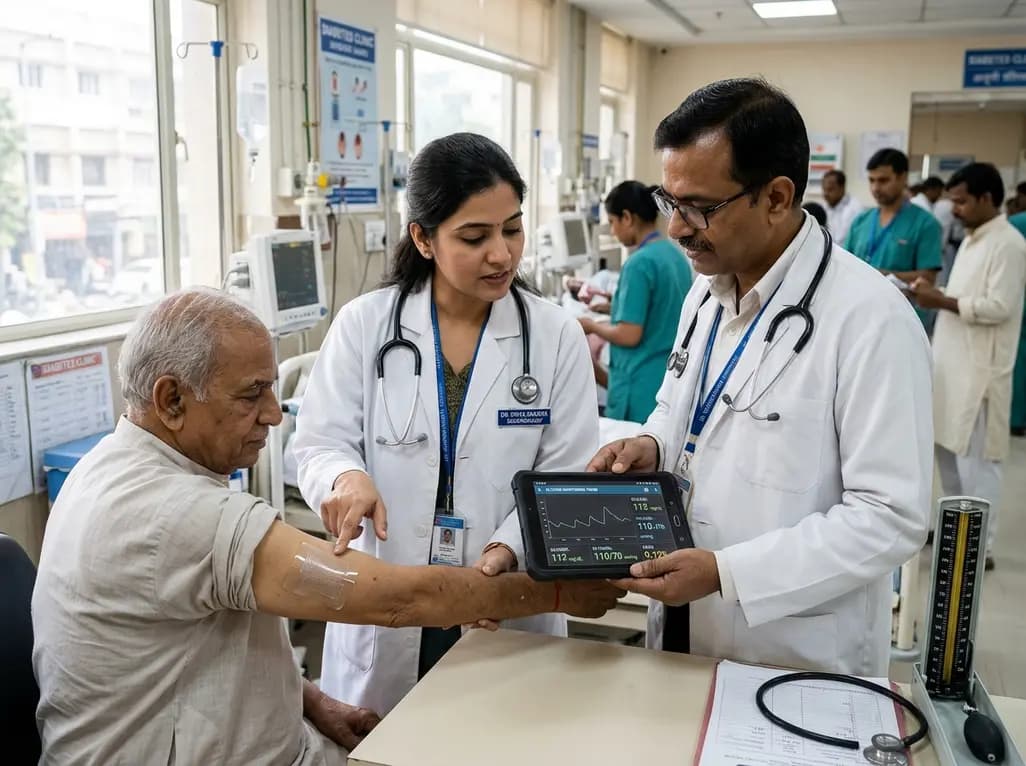
A breakthrough ultrathin multimodal sensor decouples physical hemodynamic monitoring from disposable electrochemical calibration, achieving long-term wearable glucose prediction with 81.36% accuracy and a 9.12% MARD. This offers a robust, drift-free solution for outpatient metabolic surveillance.
Today

A comparative review of tension band wiring and intramedullary screw fixation in thumb metacarpophalangeal arthrodesis, evaluating union rates, hardware complications, and clinical outcomes.
Today

Following regulatory scrutiny from FSSAI regarding promotional representations and lean muscle preservation claims, Dr. Reddy's Laboratories and Nestlé Health Science are currently reviewing the branding and marketing strategy for their joint nutritional supplement Celevida GLP+.
Today
