.webp&w=384&q=75)

Loading, please wait...
Loading, please wait...

Colorectal cancer remains a formidable challenge within the global oncology landscape, accounting for a significant percentage of cancer-related mortality. In India, the rising incidence of this malignancy necessitates a deeper understanding of its molecular drivers to develop more effective interventions. One of the most critical processes in tumor progression is angiogenesis, the formation of new blood vessels that supply essential nutrients to the growing tumor. Recent molecular investigations have identified miR-124 colorectal cancer angiogenesis as a vital area of study. MicroRNAs, which are small non-coding RNA molecules, play a pivotal role in post-transcriptional gene regulation. Specifically, miR-124 has emerged as a potential tumor suppressor that may inhibit the angiogenic switch. By understanding how this microRNA interacts with the tumor microenvironment, clinicians can better appreciate the potential for targeted biological therapies. Furthermore, the ability to modulate these pathways could offer a new dimension to the standard chemotherapy and surgical regimens currently employed in clinical practice. Consequently, academic interest in the specific pathways through which miR-124 exerts its influence has grown exponentially in recent years.
To identify the most impactful microRNAs in the context of vascularization, researchers have increasingly turned to sophisticated bioinformatic tools. Initially, a comprehensive in-silico analysis of angiogenesis-related genes was conducted to pinpoint which miRNAs concurrently target key molecular players. This computational approach allowed scientists to screen thousands of interactions, eventually narrowing down the field to five significant modulators: hsa-miR-124-3p, hsa-miR-16-5p, hsa-miR-1-3p, hsa-miR-101-3p, and hsa-miR-146a-5p. Among these candidates, miR-124-3p stood out because it targeted the highest number of genes associated with the angiogenic process. Moreover, the integration of multiple bioinformatic databases ensured that these findings were robust and reproducible. This methodology highlights the shift toward precision medicine, where computational data guides laboratory verification. Specifically, the identification of miR-124 as a primary regulator suggests that it holds a central position in the complex web of tumor signaling. Therefore, these in-silico findings provided a solid foundation for subsequent biological experiments. In addition, this systematic screening process helps avoid the inefficiencies of traditional trial-and-error research, allowing for a more streamlined discovery of therapeutic targets.
Following the computational identification, the next logical step involved confirming how miR-124 influences gene expression within colorectal cancer cells. Through the use of quantitative real-time PCR, researchers observed that the overexpression of miR-124 led to a significant reduction in the mRNA levels of several pro-angiogenic genes. Specifically, the study focused on ANGPT2, HIF1A, MMP9, and VEGFA. These genes are well-known for their roles in promoting vascular endothelial growth and facilitating the remodeling of the extracellular matrix. For instance, VEGFA is a primary driver of vessel sprouting, while HIF1A regulates the tumor's response to hypoxic conditions. By suppressing these targets, miR-124 effectively limits the tumor's ability to recruit a blood supply. Furthermore, the reduction in MMP9 suggests that miR-124 may also play a role in inhibiting the invasive capacity of cancer cells. Consequently, these results provide strong evidence that miR-124 acts as a multi-target inhibitor of the angiogenic process. Such multi-faceted regulation is particularly valuable in oncology, as it reduces the likelihood of the tumor developing resistance through alternative signaling pathways. Thus, the molecular mechanism of miR-124 is both broad and potent.
To move beyond genetic expression and observe functional outcomes, the researchers utilized the chicken chorioallantoic membrane (CAM) assay. This experimental model is widely regarded for its ability to simulate the complex environment of angiogenesis in a living system. When miR-124 was upregulated in CRC cells and introduced into the CAM environment, a visible inhibition of vascularization occurred. Specifically, the density and branching of new blood vessels were notably reduced compared to control groups. This functional validation is crucial because it demonstrates that the genetic changes observed in the lab translate into actual physiological changes. Moreover, the CAM assay provides a rapid and efficient way to screen the anti-angiogenic potential of various compounds or genetic modifiers. In this case, the results clearly showed that miR-124 has the capacity to disrupt the formation of the vascular network required for tumor sustenance. Consequently, this adds a significant layer of credibility to the proposal that miR-124 could serve as a therapeutic agent. Furthermore, these findings emphasize that microRNAs can achieve physiological effects comparable to traditional pharmacological inhibitors, though through a more natural regulatory mechanism.
The discovery of miR-124’s role has significant implications for the future of oncology in India, where the burden of colorectal cancer is rising among younger populations. Currently, most patients receive a combination of surgery and cytotoxic chemotherapy. However, adding targeted biological agents can significantly improve outcomes, especially in advanced stages. If miR-124-3p can be developed into a viable therapy, perhaps through nanoparticle delivery or viral vectors, it could offer a more specific and less toxic alternative to systemic drugs. Additionally, miR-124 levels could potentially serve as a biomarker to predict the aggressive nature of a tumor or its likely response to anti-angiogenic therapy. Notably, the Indian healthcare system is increasingly embracing genomic and molecular diagnostics, making these findings highly relevant for local practitioners. Furthermore, cost-effective molecular therapies are a priority in the regional context to ensure broader patient access. Therefore, localized clinical trials that include diverse Indian patient cohorts are necessary to validate these molecular interactions. Ultimately, the integration of miRNA-based strategies could represent a major step forward in the quest for personalized cancer care within the country.
While the current study provides compelling evidence, the transition from laboratory findings to clinical application requires further rigorous investigation. Specifically, future research must focus on assessing the therapeutic potential of miR-124-3p in more complex animal models, such as mouse xenografts, to confirm long-term safety and efficacy. Researchers also need to explore the optimal delivery methods to ensure that the microRNA reaches the tumor site without being degraded in the bloodstream. Moreover, examining patient samples will be essential to correlate miR-124 expression levels with clinical outcomes like overall survival and disease-free progression. In addition, scientists should investigate whether miR-124 can act synergistically with existing anti-VEGF therapies like bevacizumab. Such combinations might allow for lower doses of traditional drugs, thereby reducing side effects for the patient. Thus, the investigation into miR-124 is far from over; it is merely entering a more advanced stage of development. Furthermore, the broader significance of microRNAs as therapeutic targets for cancer angiogenesis remains a vibrant area of oncology research. In conclusion, miR-124-3p stands as a promising candidate for targeted intervention, offering hope for more refined and effective colorectal cancer treatments in the near future.
MicroRNA-124 acts as a tumor suppressor by binding to the messenger RNA of several key pro-angiogenic genes, such as VEGFA and HIF1A. By doing so, it prevents the translation of these genes into proteins that normally stimulate the growth of new blood vessels. Consequently, the tumor's ability to develop a dedicated blood supply is significantly impaired, which eventually restricts its growth and its ability to metastasize to other organs.
The chicken chorioallantoic membrane (CAM) assay is a vital tool because it provides a highly vascularized environment that mimics human tissue. By observing how miR-124 affects vessel formation in this model, researchers can confirm that the genetic changes they see in the lab actually result in reduced blood vessel growth. This provides a functional link between molecular biology and physical tumor development, which is a necessary step before moving to human trials.
Currently, miR-124 is considered a potential candidate for targeted therapy rather than a standalone treatment. While it shows great promise in inhibiting angiogenesis, it would likely be used in combination with surgery, chemotherapy, or other biological agents in a clinical setting. Future research is focused on developing delivery systems to make miRNA therapy safe and effective for patients, but further clinical trials are required before it becomes a standard part of oncological practice.
Disclaimer: This content is for informational and educational purposes only and does not constitute medical advice or a professional relationship. The molecular findings discussed are based on recent research and may not yet be part of standard clinical protocols. Refer to the latest local and national guidelines for clinical practice.
References
Ahmadizad Firouzjaei A et al. Exploring the potential role of miR-124 in angiogenesis in colorectal cancer. J Cancer Res Clin Oncol. 2026 Jul 10. doi: 10.1007/s00432-026-06550-5. PMID: 42426433.
Chen L et al. MicroRNA-124 as a tumor suppressor in colorectal cancer. Mol Med Rep. 2023.
World Health Organization. Cancer in India: Statistics and trends. 2024.
"
Read summarized clinical updates, watch expert medical content, and earn CME certifications right from your smartphone.
Open your smartphone camera to scan and install.





Recent research highlights the significant role of miR-124 in regulating colorectal cancer angiogenesis. By targeting key genes like VEGFA and HIF1A, miR-124 presents a promising therapeutic target for oncology practitioners seeking novel ways to inhibit tumor progression.
3 months ago
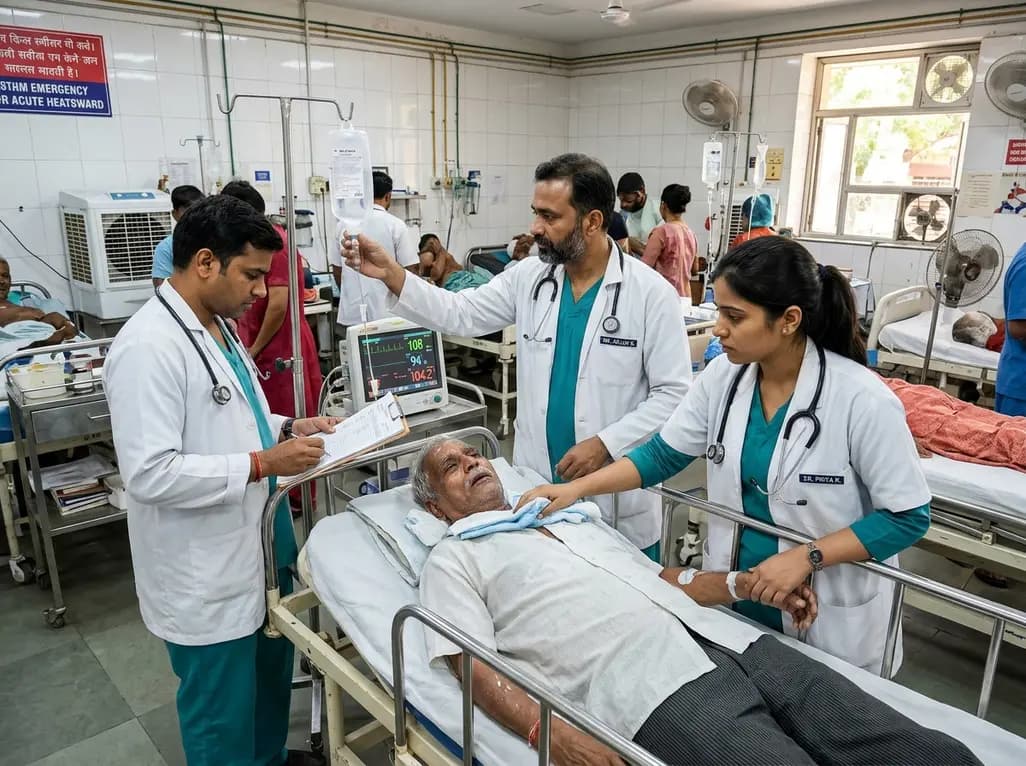
Recent epidemiological data reveals a dramatic surge in summer heat mortality driven by human-induced climate warming. This analysis explores the pathophysiological impacts on cardiac and renal systems, diagnostic dilemmas in death certification, and essential emergency cooling protocols for acute clinical care.
Today

Odisha has established India's first state-level clinical protocol specifically tailored for pregnant women with sickle cell disease. Developed with NHM and UNICEF, the framework provides structured antenatal screening, crisis mitigation, standardized referral pathways, and specialized interdisciplinary care.
Today

India is advancing preventive healthcare by integrating genomics, artificial intelligence, and quantum technologies. With the SANGAM programme sequencing one million Indian genomes, clinicians can unlock personalized therapies, detect cardiometabolic risks early, and curb the burden of diabetes and heart disease.
Today

A randomized controlled trial demonstrates that an eight-week dual-task training intervention significantly improves static and dynamic postural control over standard balance exercises in individuals with chronic ankle instability, addressing critical neurocognitive deficits during athletic and daily activities.
Today

A retrospective cohort study of 7,716 ICU patients from the MIMIC-IV database demonstrates that Gradient Boosting Decision Trees significantly outperform traditional SOFA scores in predicting in-hospital mortality among patients with sepsis and diabetes, with SHAP analysis providing clinical interpretability.
Today
