.webp&w=384&q=75)

Loading, please wait...
Loading, please wait...
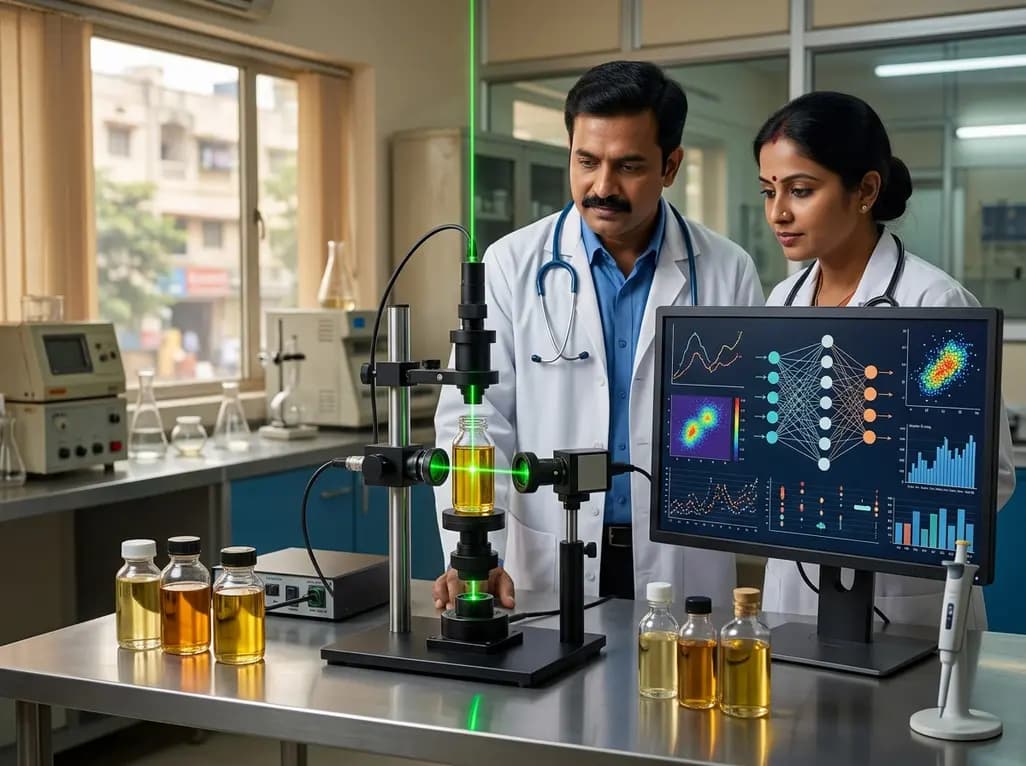
Ensuring food safety requires advanced mineral oil contamination detection methods to protect consumers from toxic petroleum byproducts in edible oils. Mineral oil contamination in vegetable oils significantly threatens food security and consumer health. In India, the Food Safety and Standards Authority of India (FSSAI) strictly prohibits the presence of mineral oil in edible oils due to its potential toxicity. These contaminants often consist of saturated and aromatic hydrocarbons that can accumulate in human tissues. Furthermore, chronic exposure may lead to serious gastrointestinal issues and hepatotoxicity.
Traditional screening methods, such as the Holde’s test, often lack the sensitivity required to find trace amounts of adulterants. For instance, most commercial saponification kits only detect contamination levels above 0.9%. Consequently, researchers have developed a novel analytical strategy that combines laser light scattering with deep computer vision. This approach utilizes a lightweight deep learning model called Oil-MobileNet to identify visual signals induced by saponification. Specifically, the system uses green laser illumination to enhance scattering visualization. This combination allows for a mineral oil contamination detection limit of just 0.05%.
The new strategy integrates saponification-induced phase and turbidity contrast. This chemical reaction transforms trace mineral oil into discriminative visual signals. Moreover, the Oil-MobileNet architecture processes these images with high efficiency. Researchers evaluated the model on both binary and multiclass classification tasks. Notably, the system outperformed human visual inspection and current rapid detection kits. Therefore, this technology provides a practical tool for on-site food safety inspections and quality control in the edible oil industry.
In addition to detection, the researchers established models to predict the exact level of contamination. Interpretability studies also clarified how the AI makes its decisions. Finally, the team deployed these models into a user-friendly graphical interface. This advancement simplifies the process for health inspectors and laboratory technicians. Better mineral oil contamination detection ultimately supports stricter regulatory compliance and protects the public from adulterated food products.
Consuming mineral oil can cause significant health problems because the body cannot easily metabolize these petroleum-derived hydrocarbons. Potential risks include liver damage, gastrointestinal distress, and the accumulation of mineral oil saturated hydrocarbons (MOSH) in organs. Some fractions may also be carcinogenic.
Traditional tests like the Holde’s test generally detect contamination at levels of 1% or higher. In contrast, the Oil-MobileNet system combined with green laser scattering reaches a detection limit of 0.05%. This makes it significantly more sensitive and reliable for identifying trace adulteration.
Yes, the strategy is designed for on-site compatibility. The researchers used a lightweight AI model and a portable laser setup. They also integrated the system into a user-friendly interface, which allows for rapid, accurate determination of contamination without complex laboratory equipment.
Disclaimer: This content is for informational and educational purposes only. It does not constitute medical advice or a substitute for professional healthcare. Refer to the latest local and national guidelines for clinical practice.
References
Wang XZ et al. Laser Light Scattering-Enhanced Deep Computer Vision Method for the Detection of Trace Mineral Oil in Vegetable Oils. Anal Chem. 2026 Jun 11. doi: 10.1021/acs.analchem.6c00302. PMID: 42275108.
Food Safety and Standards Authority of India (FSSAI). Manual of Methods of Analysis of Foods: Oils and Fats. 2016.
European Food Safety Authority (EFSA). Scientific Opinion on Mineral Oil Hydrocarbons in Food. EFSA Journal 2012;10(6):2704.

Read summarized clinical updates, watch expert medical content, and earn CME certifications right from your smartphone.
Open your smartphone camera to scan and install.





A groundbreaking study introduces Oil-MobileNet, a deep learning model that detects trace mineral oil in vegetable oils with 0.05% sensitivity. This laser-enhanced method outperforms traditional saponification kits, offering a robust solution for food safety and public health monitoring.
3 months ago
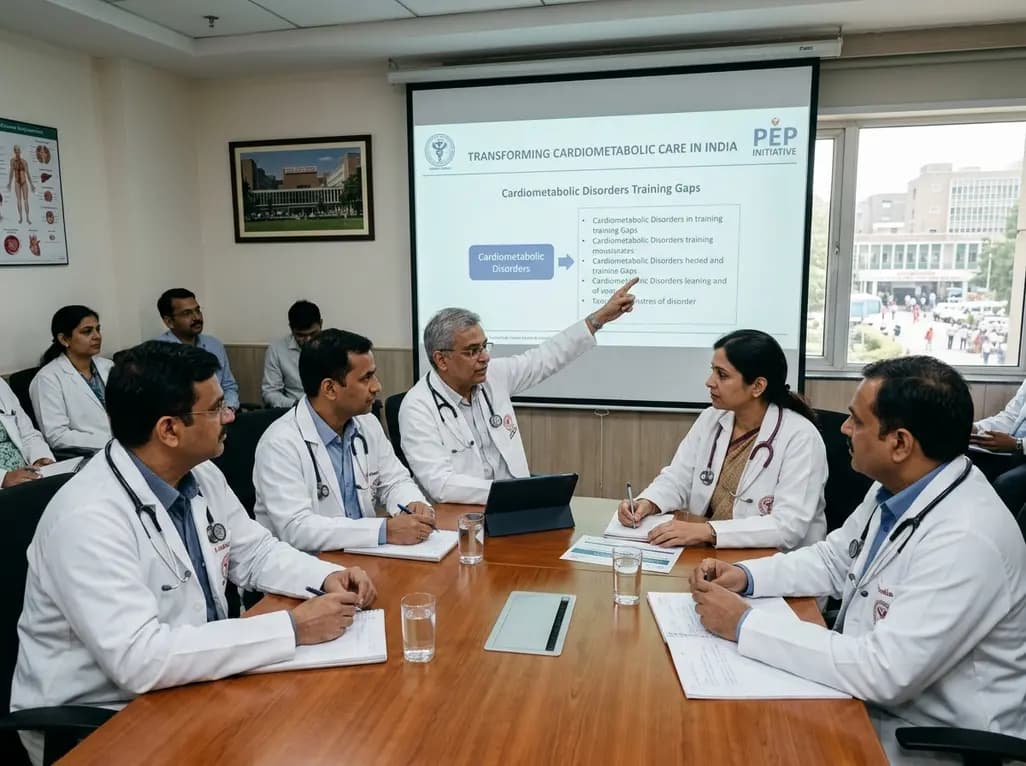
The All India Institute of Medical Sciences has convened national health experts, policymakers, and state nodal officers to transform medical training for cardiometabolic disorders. This collaborative effort under the PEP initiative addresses training gaps to elevate chronic disease care across Indian healthcare.
Today

A recent qualitative study examines how college students seek digital sexual health information under persistent uncertainty. Discover the concept of functional trust, the clinical hazards of search abandonment, and evidence-based approaches clinicians can adopt to guide youth toward verified reproductive healthcare.
Today
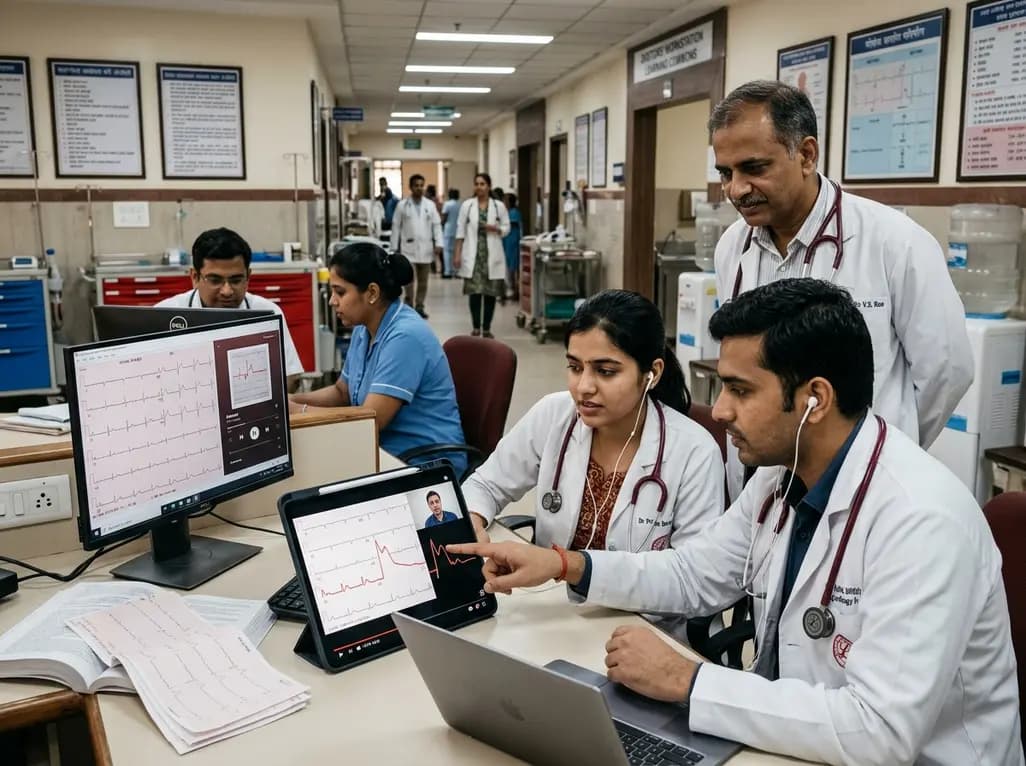
A randomized controlled trial demonstrates that curated FOAMed videos and podcasts produce superior gains in high-risk ECG interpretation and acute coronary syndrome clinical decision-making compared with print-based materials among interprofessional emergency care teams.
Today
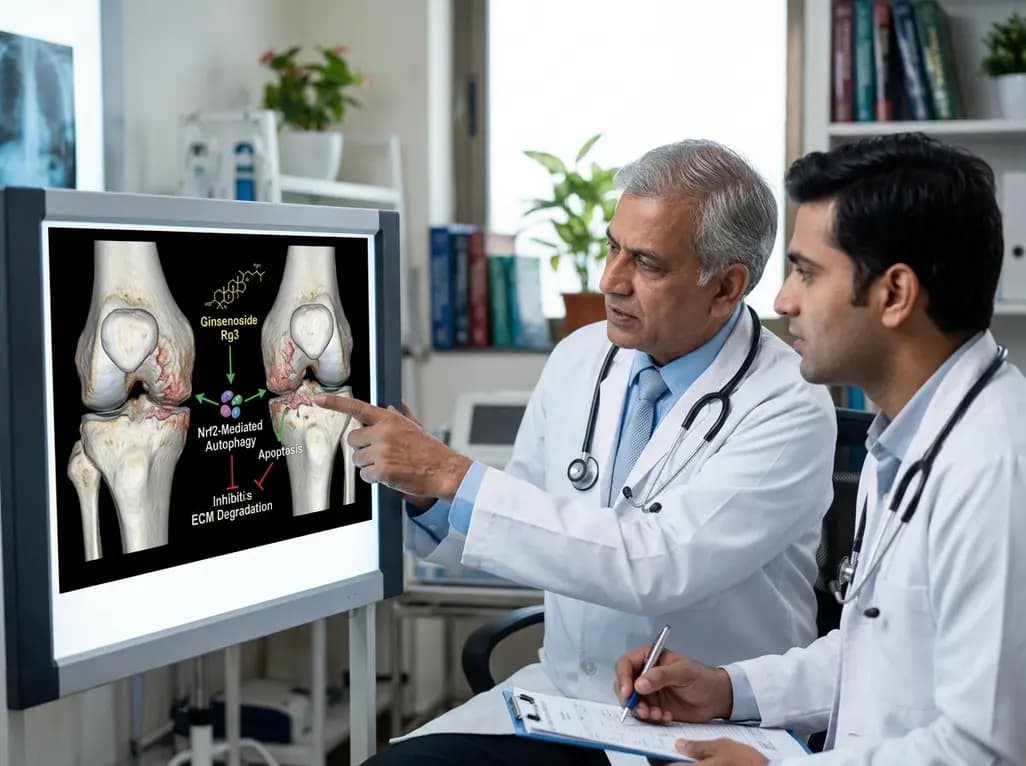
A study reveals that Ginsenoside Rg3 attenuates osteoarthritis progression by modulating the Nrf2-mediated autophagy pathway, reducing chondrocyte apoptosis, and curbing extracellular matrix degradation, offering promising chondroprotective potential.
Today

A cross-sectional study demonstrates that lower pediatric motor competence strongly correlates with adverse metabolic syndrome markers, including central adiposity, elevated triglycerides, and low HDL cholesterol, emphasizing early neuromuscular interventions in youth with overweight and obesity.
Today
