.webp&w=384&q=75)

Loading, please wait...
Loading, please wait...
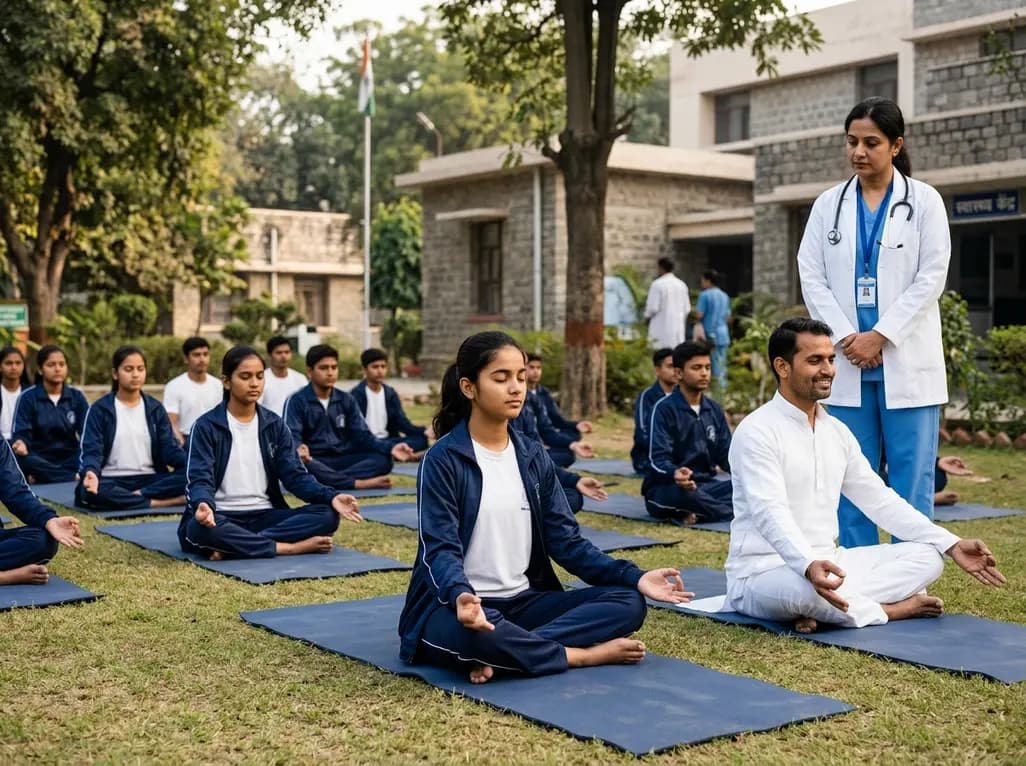
Adolescence represents a critical transitional phase characterized by rapid neurodevelopmental changes, academic stress, and heightened vulnerability to emotional dysregulation. In recent years, school-based holistic wellness strategies have emerged as viable public health interventions across India. Integrating mindful yoga for adolescents offers a promising, non-invasive therapeutic modality to mitigate psychological distress and bolster emotional resilience. Although traditional physical postures and breathing exercises remain widespread, comparative clinical evaluations of distinct yogic paradigms have remained scarce. A quasi-experimental study published in PLoS One evaluated the relative efficacy of an explicit Mindful Yoga and Meditation protocol against the standardized Common Yoga Protocol. The investigation provides valuable, empirical evidence regarding the physiological and psychological benefits of incorporating mindful awareness into structured yogic practice.
Schools across India frequently adopt standardized movement protocols, such as the Common Yoga Protocol, to cultivate physical fitness and mental relaxation among pupils. However, researchers have recently questioned whether structured mindfulness elements enhance these psychological advantages. The trial compared the Mindful Yoga and Meditation intervention against the Common Yoga Protocol and an inactive waitlist-control cohort. The Mindful Yoga framework systematically combined physical postures with intentional breath observation, present-moment awareness, and seated meditation practices. Conversely, the Common Yoga Protocol emphasized traditional dynamic sequences, static postures, and standard pranayama techniques without explicit cognitive mindfulness training. Consequently, the trial aimed to discern whether intentional mindful reflection yields superior mental health gains compared to conventional movement alone. The findings illuminate how tailored yoga strategies can effectively support pediatric behavioral health in secondary educational environments.
The researchers utilized a nonrandomized quasi-experimental design involving 147 secondary school students in India. Participants were divided across three distinct arms: the Mindful Yoga and Meditation group, the Common Yoga Protocol group, and a waitlist-control group. Both active intervention cohorts participated in dedicated sessions conducted over a 21-day intervention period. Furthermore, investigators gathered data across three critical assessment timepoints: baseline, immediately post-intervention, and at a 3-month post-intervention follow-up. To comprehensively capture emotional and psychological shifts, investigators employed validated clinical scales. Psychological distress was measured using the Kessler Psychological Distress Scale, while trait mindfulness was assessed through the Child and Adolescent Mindfulness Measure. Additionally, researchers tracked emotion regulation capacities using the Emotion Regulation Questionnaire for Children and Adolescents and evaluated general mental well-being using the World Health Organization-Five Well-Being Index.
Statistical evaluation via linear mixed models revealed that both yogic interventions produced significant clinical improvements compared to the waitlist-control cohort. However, the Mindful Yoga and Meditation group demonstrated significantly greater and more sustained improvements across nearly all primary psychological parameters. Specifically, participants practicing mindful yoga experienced profound increases in self-reported mindfulness and overall psychological well-being at both post-intervention and the 3-month follow-up. Furthermore, these students exhibited a substantial reduction in total psychological distress scores. While participants in the Common Yoga Protocol arm achieved noticeable post-intervention benefits, their gains were comparatively smaller and attenuated considerably over the 3-month observation period. In contrast, waitlist-control participants exhibited no significant positive changes, confirming that spontaneous recovery or time effects did not drive the therapeutic results.
A deeper analysis of emotion regulation strategies explains the distinct therapeutic superiority observed in the mindful yoga cohort. The Emotion Regulation Questionnaire subscales revealed that mindful yoga participants achieved significant increases in adaptive cognitive reappraisal alongside marked decreases in maladaptive expressive suppression. Therefore, students learned to reframe negative cognitive appraisals constructively rather than internalizing or suppressing distressing thoughts. Because the Mindful Yoga and Meditation program explicitly integrated cognitive attentional training with somatosensory awareness, it empowered adolescents to recognize emotional triggers without automatic reactivity. Standard yogic movements certainly alleviate physical muscular tension and modulate autonomic arousal. Nevertheless, direct mindfulness instruction provides adolescents with practical, introspective coping tools. These metacognitive skills reinforce sustained emotional stability long after the formal training program concludes.
These findings hold significant clinical and public health relevance for pediatricians, child psychiatrists, and family physicians in India. Child and adolescent mental healthcare requires scalable, accessible, and destigmatized preventive strategies. Because secondary schools provide structured access to diverse student demographics, integrating brief 21-day mindful yoga programs can serve as a potent primary prevention framework. Clinicians evaluating adolescents with mild to moderate anxiety, stress, or emotional lability should consider recommending structured mindful yoga regimens alongside routine lifestyle counseling. Moreover, educational policymakers and healthcare authorities should recognize that while general yoga provides baseline somatic benefits, incorporating targeted mindfulness exercises substantially enhances the longevity of mental health outcomes. Adopting evidence-based mindful movement programs fosters resilience during formative developmental years.
Mindful yoga combines somatic postures with intentional cognitive awareness and meditation. While standard yoga improves physical flexibility and short-term relaxation, mindful yoga provides significantly greater and more durable improvements in emotional resilience, cognitive reappraisal, and psychological well-being, while substantially reducing psychological distress over extended follow-up periods.
The study evaluated a 21-day active intervention period with structured daily sessions. Investigators assessed outcomes at baseline, immediately following the completion of the 21-day protocol, and at a 3-month follow-up timepoint to confirm whether the psychological gains were maintained over time.
Mindful yoga serves as an effective preventive and adjunctive lifestyle intervention for promoting mental well-being and managing mild distress. However, it should not replace formal psychiatric assessment, evidence-based psychotherapy, or pharmacotherapy when treating diagnosed moderate-to-severe adolescent mood, anxiety, or behavioral disorders.
Disclaimer: This content is for informational and educational purposes only. It is not intended to provide medical advice or to be a substitute for professional medical assessment, diagnosis, or treatment. Patients should always seek the advice of a qualified physician or other licensed healthcare provider regarding any medical condition. Healthcare professionals should exercise their independent clinical judgment and refer to the latest local and national guidelines for clinical practice.
References

Read summarized clinical updates, watch expert medical content, and earn CME certifications right from your smartphone.
Open your smartphone camera to scan and install.





A quasi-experimental study evaluated Mindful Yoga and Meditation versus the Common Yoga Protocol in Indian secondary school students. Both reduced psychological distress, but mindful yoga provided superior, sustained gains in mindfulness, cognitive reappraisal, and emotional resilience over 3-month follow-up.
4 weeks back

This clinical review examines the dangerous intersection of climate change and antimicrobial resistance (AMR). It highlights thermal selection, altered transmission pathways, and the imperative for One Health and Planetary Health adaptation frameworks to preserve therapeutic efficacy.
Today
Discover the crucial distinctions between mesonephric and mesonephric-like proliferations of the female genital tract. Learn the key histomorphologic, immunohistochemical, and molecular differences essential for accurate diagnosis and clinical management.
Today
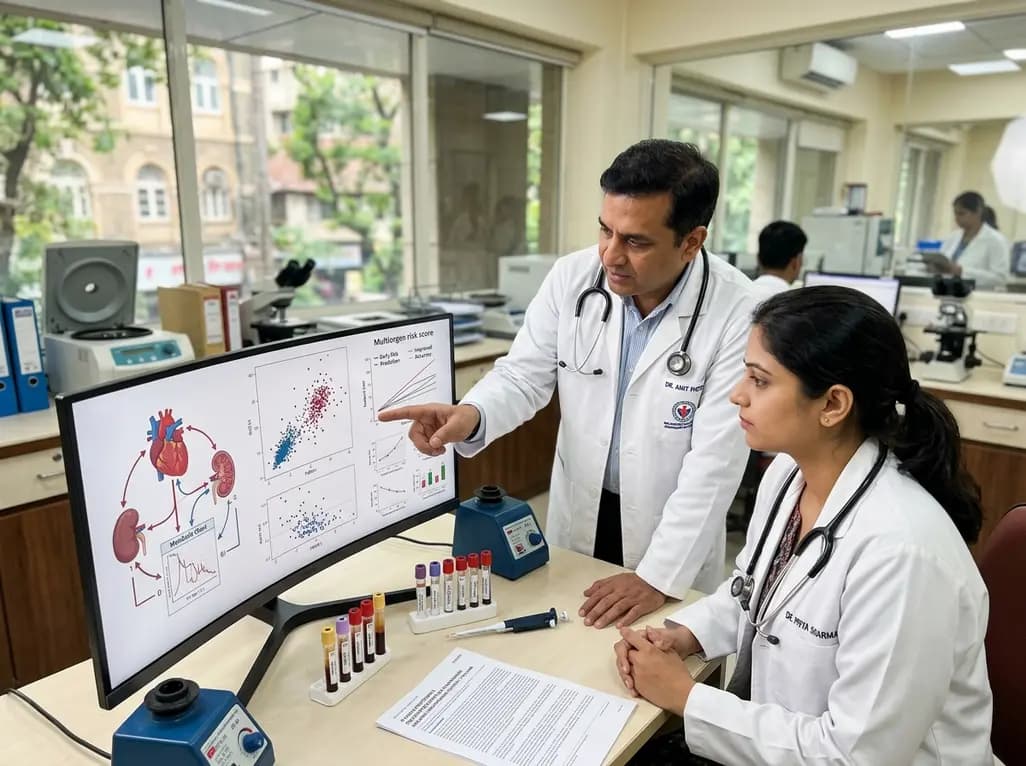
A large UK Biobank study reveals that plasma proteomic signatures capture preclinical organ damage and improve multiorgan risk prediction across early CKM syndrome stages 0 to 2 beyond traditional PREVENT clinical models.
Today

A narrative review investigates whether the articularis genus muscle functions as an independent anatomical entity or blends with the vastus intermedius. We evaluate its morphology, role in retracting the suprapatellar bursa, and direct clinical significance in anterior knee pain and arthroplasty.
Today

A Bayesian multilevel meta-analysis reveals that aerobic training combined with moderate carbohydrate restriction modestly lowers HbA1c in type 2 diabetes. However, sparse data and very low certainty leave incremental benefits over exercise or diet alone unproven, highlighting the need for individualized care.
Today
