.webp&w=384&q=75)

Loading, please wait...
Loading, please wait...
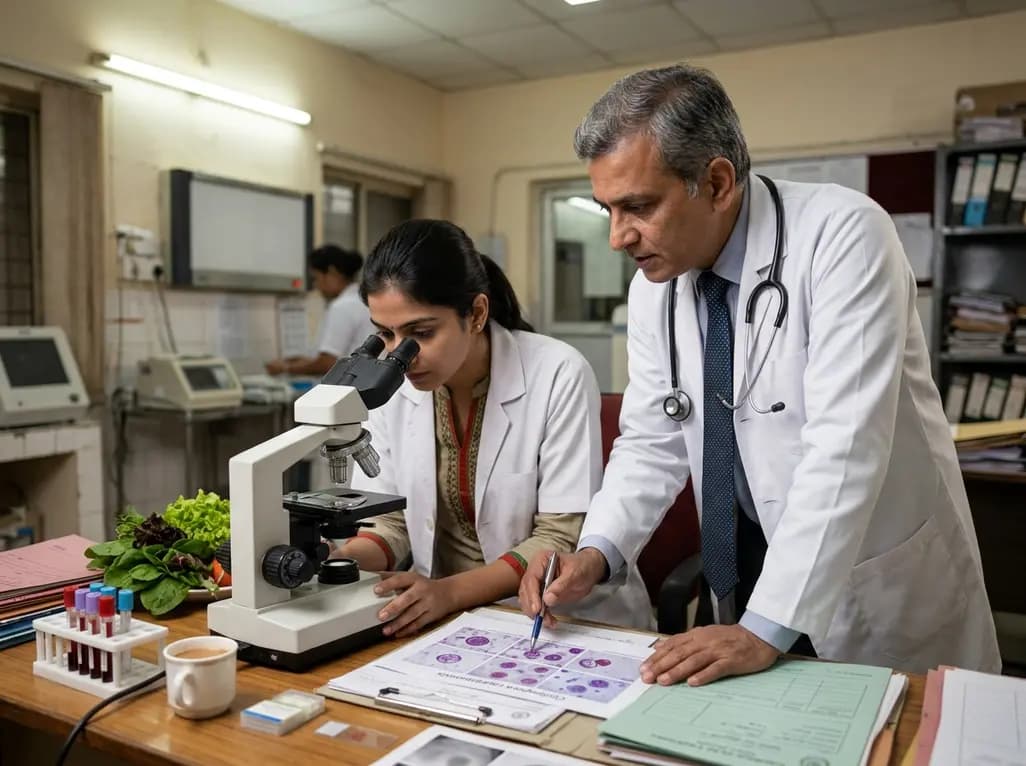
The Michigan cyclosporiasis outbreak has escalated dramatically, as state health officials recently reported over 2,640 infections. Consequently, clinicians must understand this foodborne illness to ensure prompt diagnosis and management. Therefore, healthcare providers should stay informed about this evolving situation.
Cyclospora cayetanensis is a microscopic, single-celled coccidian parasite that colonizes the human small intestine. Specifically, this organism causes a diarrheal illness known as cyclosporiasis. People typically acquire the parasite by consuming food or water contaminated with infected feces. Consequently, foodborne exposure represents the primary route of transmission. Unlike some other gastrointestinal pathogens, Cyclospora is not directly transmissible from person to person. This is because the excreted oocysts require days or weeks in the environment to become infectious. Furthermore, this environmental maturation typically occurs in warm, humid climates, explaining the summer seasonality of outbreaks. Historically, contaminated agricultural irrigation water introduces the parasite to fresh produce crops. Therefore, investigators often link outbreaks to raw, imported fruits and vegetables. Indeed, understanding the life cycle of Cyclospora is essential for public health tracking. Ultimately, clinicians must recognize that standard washing cannot completely remove these resilient oocysts. Thus, preventing contamination at the agricultural source remains the most effective defense against widespread transmission. Additionally, healthcare facilities must implement protocols to identify suspected cases during high-risk seasons.
The clinical manifestation of cyclosporiasis primarily involves gastrointestinal distress. Typically, symptoms appear about one week after ingestion, but the incubation period can range up to two weeks. Consequently, patients often present with sudden, watery, and sometimes explosive diarrhea. In addition, common symptoms include abdominal cramping, bloating, nausea, and persistent fatigue. Some individuals may also experience low-grade fever, vomiting, and significant weight loss. However, the intensity of these symptoms varies widely among patients. For instance, some individuals exhibit mild diarrhea while others experience debilitating illness. If left untreated, the infection can persist for several weeks or even months. Furthermore, symptoms can follow a remitting and relapsing pattern, which often confuses clinicians during diagnosis. Therefore, maintaining a high index of suspicion is vital for patients presenting with prolonged diarrheal illness. Additionally, severe dehydration represents a major clinical risk, especially for pediatric and geriatric populations. Thus, clinicians must emphasize aggressive oral rehydration therapy. Ultimately, a thorough clinical evaluation is necessary to distinguish cyclosporiasis from other bacterial pathogens. Indeed, early medical intervention significantly reduces the duration and severity of the illness.
The current Michigan cyclosporiasis outbreak has captured national attention due to the sheer volume of cases. Specifically, state health officials have reported over 2,640 infections, a staggering increase from the typical annual baseline. Historically, the state identifies only forty to fifty cases of cyclosporiasis each year. Consequently, this unprecedented surge has prompted a rigorous, multi-agency investigation. Investigators are currently conducting extensive interviews with affected individuals to trace the source of contamination. Meanwhile, early evidence strongly points to lettuce or other raw salad greens as the primary suspect. However, authorities have not completely ruled out other fresh produce items, such as herbs or berries. Furthermore, investigators have not officially linked any specific grower, supplier, or brand to the outbreak. This lack of a definitive source makes public health messaging particularly challenging. Therefore, health departments are advising commercial kitchens and consumers to exercise extreme caution when handling raw produce. Additionally, federal agencies like the CDC are collaborating with state partners to analyze regional data. Thus, coordinating efforts across state lines remains essential. Ultimately, tracking down the exact origin of contamination will require continued vigilance.
Diagnosing cyclosporiasis presents unique challenges for clinicians because standard stool cultures do not detect the parasite. Specifically, physicians must explicitly order specialized testing, such as a stool ova and parasite examination. Furthermore, laboratories must utilize acid-fast staining techniques or polymerase chain reaction assays to identify the oocysts. Consequently, routine laboratory screening often misses this infection, leading to significant diagnostic delays. Additionally, patients shed Cyclospora oocysts intermittently in their stool, which can cause false-negative results. Therefore, clinicians should obtain multiple stool specimens over several days to increase diagnostic sensitivity. Meanwhile, the long incubation period of the parasite complicates patient recall of food exposure. Subsequently, linking clinical cases to specific contaminated products is notoriously difficult. However, molecular diagnostic methods, including multiplex gastrointestinal PCR panels, have greatly improved detection rates. As a result, laboratories can identify pathogens much faster than they did using traditional microscopy. Nevertheless, clinical suspicion must remain high during summer outbreaks to prevent misdiagnosis. Ultimately, early and accurate diagnosis is critical. Thus, laboratory personnel must receive proper training to recognize these microscopic parasites.
The preferred pharmacological treatment for cyclosporiasis is a combination of trimethoprim and sulfamethoxazole. Specifically, clinicians prescribe this antibiotic regimen for seven to ten days in most adult cases. However, patients with sulfa allergies require alternative therapies, such as ciprofloxacin or nitazoxanide. Notably, these alternative agents are generally less effective than the standard sulfa therapy. Therefore, clinicians must carefully evaluate allergy histories before initiating treatment. Additionally, aggressive fluid and electrolyte replacement is vital to prevent dehydration from severe diarrhea. Meanwhile, preventive strategies must focus on strict food hygiene practices both at home and in restaurants. For instance, consumers should wash all fresh produce thoroughly under running water before consumption. Nevertheless, washing may not entirely eliminate the parasite from deeply textured surfaces like raspberries. Consequently, cooking fruits and vegetables remains the most reliable method to kill the parasite. Furthermore, food handlers must wash their hands frequently to prevent cross-contamination. Ultimately, public education campaigns are crucial to raising awareness during peak summer months. Thus, proactive healthcare communication can significantly reduce the incidence of foodborne transmission.
Q1: How is the Cyclospora parasite transmitted to humans?
Typically, individuals contract the parasite by consuming water or fresh produce contaminated with infected human feces. Specifically, infected hosts shed the microscopic oocysts in stool, which must undergo environmental maturation to become infectious. Consequently, direct person-to-person transmission is extremely rare because the parasite is not immediately infective. Therefore, raw agricultural items represent the most common vehicles of transmission during seasonal outbreaks.
Q2: What is the recommended treatment for a confirmed case of cyclosporiasis?
The primary pharmacological treatment is a course of trimethoprim-sulfamethoxazole, commonly known as TMP-SMX. Specifically, standard therapy requires a seven-to-ten-day antibiotic regimen for adults. However, clinicians can prescribe ciprofloxacin or nitazoxanide for patients with sulfa allergies, although these are less effective. Additionally, clinicians must encourage aggressive fluid intake to manage dehydration from persistent watery diarrhea. Thus, supportive care remains a vital component of the clinical management plan.
Q3: Why is washing raw produce sometimes insufficient to prevent infection?
Unfortunately, Cyclospora oocysts possess a highly resilient outer shell that allows them to cling tightly to produce surfaces. Specifically, the textured surfaces of items like raspberries, herbs, and leafy greens contain microscopic crevices where oocysts easily hide. Consequently, standard washing with water cannot reliably remove or destroy the parasite. Therefore, cooking remains the most effective way to eliminate the infection risk.
Disclaimer: This content is for informational and educational purposes only. It does not constitute medical advice or replace professional judgment. Refer to the latest local and national guidelines for clinical practice.
References

Read summarized clinical updates, watch expert medical content, and earn CME certifications right from your smartphone.
Open your smartphone camera to scan and install.





As cyclosporiasis cases in Michigan surge past 2,600, health authorities suspect contaminated salad greens. Explore the clinical presentation, diagnostic challenges of Cyclospora cayetanensis, and key strategies for medical management and prevention during this summer foodborne illness outbreak.
3 months ago

Failing to account for competing events like mortality in longitudinal geriatric studies produces biased risk estimates and misleading inferences. This review highlights key methodological principles, insights from the Precipitating Events Project, and practical approaches for clinical research appraisal.
Today

A study in JAMIA Open shows lightweight open-source reasoning LLMs achieve up to 95% sensitivity and accelerate evidence synthesis screening by nearly twentyfold, presenting a cost-effective, scalable AI solution for biomedical research and systematic reviews.
Today
A landmark study details how an enterprise pediatric remote patient management model expanded from a single cardiology pilot to 16 diverse specialty programs by combining centralized digital operations with specialty clinical leadership.
Today

A comparative review of tension band wiring and intramedullary screw fixation in thumb metacarpophalangeal arthrodesis, evaluating union rates, hardware complications, and clinical outcomes.
Yesterday
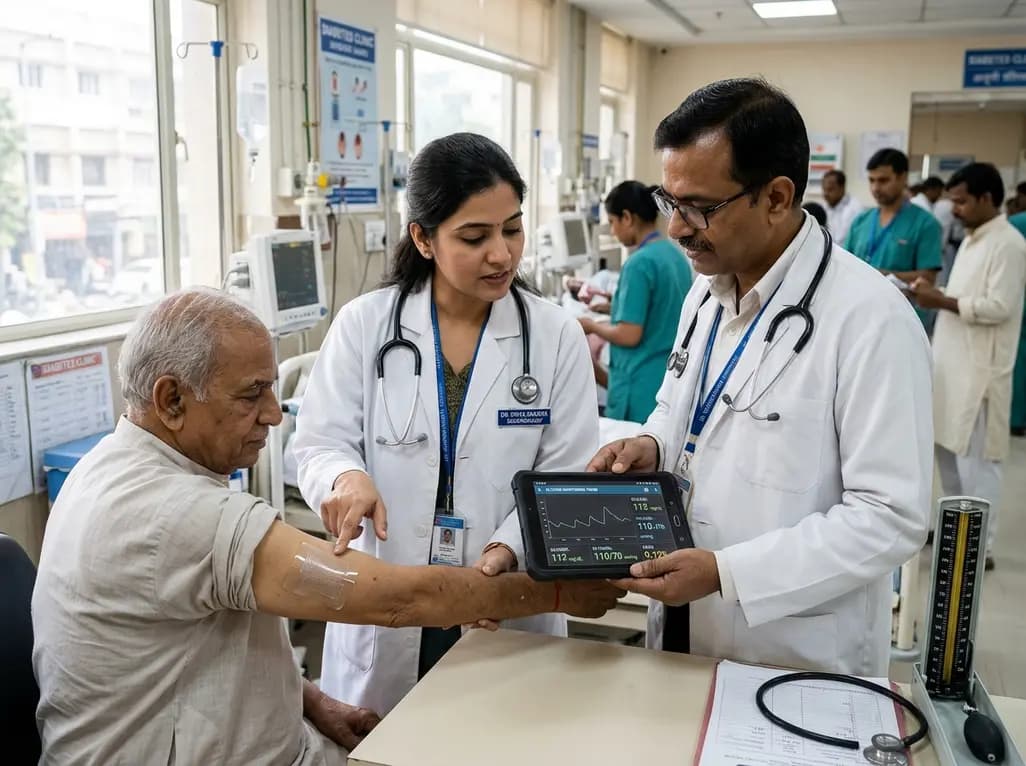
A breakthrough ultrathin multimodal sensor decouples physical hemodynamic monitoring from disposable electrochemical calibration, achieving long-term wearable glucose prediction with 81.36% accuracy and a 9.12% MARD. This offers a robust, drift-free solution for outpatient metabolic surveillance.
Today
