.webp&w=384&q=75)

Loading, please wait...
Loading, please wait...

Cerebral small vessel disease causes almost a quarter of all ischemic strokes worldwide. In particular, lacunar strokes stem from microvascular pathology within deep penetrating cerebral arteries. Clinicians often find it challenging to predict recurrence and cognitive decline because conventional vascular risk factors fail to explain disease heterogeneity. Recent breakthroughs in lacunar stroke metabolomics now offer unprecedented biological insight into these occult microvascular processes. A landmark study published in Neurology evaluated nuclear magnetic resonance metabolomic profiles in MRI-confirmed lacunar stroke cohorts. Consequently, researchers discovered specific circulating metabolites that exert putative causal influences on small vessel architecture.
Cerebral small vessel disease represents an insidious microvascular pathology that disproportionately impairs subcortical brain structures. Clinicians typically diagnose lacunar infarcts when small perforating end-arteries undergo lipohyalinosis, microatheroma formation, or focal fibrinoid necrosis. Consequently, patients develop classic focal lacunar syndromes or experience silent neurological deterioration. Beyond acute physical deficits, small vessel disease stands as the predominant etiology for vascular dementia and progressive psychomotor slowing. However, conventional biomarkers and routine lipid panels frequently fail to delineate underlying pathological pathways. Furthermore, standard systemic vascular risk markers do not reliably distinguish between localized focal lesions and diffuse, progressive white matter disease. For this reason, high-throughput metabolomics has emerged as an indispensable investigative paradigm. By quantifying hundreds of small molecular metabolites simultaneously, metabolomic profiling captures active biochemical perturbations across lipid, amino acid, and carbohydrate pathways. Therefore, these molecular signatures bridge the critical gap between genetic predisposition and clinical vascular phenotypes. In doing so, metabolomics helps clinicians decipher why certain individuals develop solitary focal infarcts whereas others suffer catastrophic, widespread leukoaraiosis. Understanding these distinct pathways is paramount for creating tailored secondary prevention strategies.
To dissect these complex metabolic mechanisms, researchers conducted an extensive multi-center investigation across stroke centers in the United Kingdom. The investigators prospectively recruited 1,456 patients with MRI-confirmed lacunar stroke alongside 952 unrelated hospital-based control participants. The mean age of stroke patients was 62 years with 34 percent female representation, whereas controls averaged 57 years with 38 percent females. Importantly, the researchers required rigorous neuroimaging confirmation using brain MRI to eliminate diagnostic ambiguity and prevent misclassification with cortical or cardioembolic infarcts. They subsequently applied high-throughput proton nuclear magnetic resonance spectroscopy to assay 250 distinct serum metabolic features. These assayed features included detailed lipoprotein subfractions, particle dimensions, apolipoproteins, amino acids, fatty acids, ketone bodies, and glycolysis-related metabolites. In their preliminary observational analysis, the authors identified 211 metabolites that showed statistically significant associations with lacunar stroke. This widespread perturbation demonstrated that cerebral small vessel disease does not represent an isolated mechanical occlusion. Instead, systemic metabolic dysregulation deeply infiltrates subcortical microvascular integrity. Moreover, these profound metabolic disturbances persisted even after adjusting for traditional demographic parameters, vascular risk factors, and socioeconomic variables.
A vital clinical strength of this investigation lies in its rigorous stratification of lacunar stroke phenotypes. The researchers divided cases into two distinct imaging subtypes based on the Fazekas rating scale. The first subtype comprised isolated lacunar infarcts, defined as a solitary lacunar lesion with minimal background white matter hyperintensities. Conversely, the second subtype encompassed multiple lacunar infarcts and severe leukoaraiosis, defined by multiple cavitated lesions or confluent white matter changes. Strikingly, metabolic profiling revealed clear biological divergence between these two patient categories. Observational profiling and subsequent causal modeling demonstrated that specific circulating molecules act differently depending on the disease phenotype. In particular, glycine demonstrated a strong inverse association with isolated lacunar infarcts. Higher circulating glycine concentrations conferred substantial biological protection against solitary microvascular cavitation. On the other hand, the proportion of cholesterol to total lipids within medium low-density lipoprotein particles showed a marked inverse association with multiple infarcts and leukoaraiosis. Therefore, separate pathobiological mechanisms appear to govern solitary perforating arteriolar thrombosis compared to widespread diffuse white matter degeneration. This vital distinction indicates that therapeutic approaches must diverge depending on individual neuroimaging patterns.
Cerebral small vessel disease exerts a devastating toll on higher cortical and subcortical cognitive networks. Because lacunar damage disrupts complex frontosubcortical connecting circuits, affected individuals characteristically develop executive dysfunction and reduced information processing speed. In this investigation, researchers conducted comprehensive neuropsychological testing alongside metabolic profiling. Consequently, they identified five circulating metabolites that significantly correlated with cognitive performance. Specifically, total small high-density lipoprotein, small high-density lipoprotein particle concentration, phospholipids within small high-density lipoproteins, cholesterol ester proportions in large low-density lipoproteins, and circulating lactate demonstrated robust links to processing speed. In addition to neuropsychological evaluations, the investigators assessed advanced microstructural integrity using diffusion tensor imaging. Advanced diffusion metrics, such as fractional anisotropy and mean diffusivity, quantify microscopic axonal disruption well before macrostructural tissue loss occurs. The investigators observed that genetically determined levels of omega-3 fatty acids relative to total fatty acids significantly influenced diffusion tensor imaging markers. Higher relative omega-3 proportions supported structural white matter preservation. Consequently, maintaining optimal fatty acid ratios may shield delicate myelinated tracts against ischemic rarefaction.
Observational associations often suffer from residual confounding, reverse causation, or environmental bias. To overcome these limitations, the investigators conducted genome-wide association studies for each metabolite and deployed bidirectional Mendelian randomization. Mendelian randomization harnesses naturally randomized genetic variants as instrumental variables to deduce true directional causality. The causal analyses confirmed that glycine protects against isolated lacunar infarcts, yielding an odds ratio of 0.704. In other words, genetically higher glycine levels reduce solitary lacunar stroke risk by nearly thirty percent. Glycine acts as an inhibitory neurotransmitter while exhibiting potent anti-inflammatory and cytoprotective properties across endothelial membranes. Meanwhile, the proportion of cholesterol to total lipids within medium low-density lipoproteins yielded an odds ratio of 0.541 for multiple lacunar infarcts and leukoaraiosis. This surprising inverse association emphasizes that lipid quality and subfraction composition matter far more than crude lipid quantities. Interestingly, reverse Mendelian randomization confirmed that cerebral small vessel disease did not induce these metabolic alterations. Instead, the altered metabolic profiles actively drive microvascular disease onset. Therefore, these circulating molecules represent genuine therapeutic targets rather than passive secondary bystanders.
These landmark discoveries carry immediate implications for clinicians managing cerebrovascular disease in India and South Asia. Indian populations exhibit an exceptionally high burden of premature stroke, small vessel vasculopathy, and subcortical vascular dementia. Furthermore, diabetes mellitus, metabolic syndrome, and early-onset hypertension occur at alarming rates across Indian cohorts. In routine clinical practice, Indian physicians rely heavily on standard lipid panels, which rarely reveal the nuanced lipid subfractions or amino acid profiles highlighted here. Recognizing that specific amino acids like glycine and distinct lipoprotein fractions modulate stroke risk encourages clinicians to embrace precision medicine. Although specialized nuclear magnetic resonance spectroscopy remains limited to advanced academic centers, these insights redefine clinical risk stratification. First, physicians should avoid viewing small vessel disease as a homogeneous entity. Clinicians must routinely utilize brain magnetic resonance imaging to differentiate solitary lacunes from diffuse leukoaraiosis. Second, aggressive dietary and metabolic management targeting endothelial health must accompany standard blood pressure lowering. As targeted nutritional and pharmacological interventions emerge, modulating glycine pathways and specific lipid fractions could revolutionize stroke prevention. Ultimately, incorporating advanced metabolomic findings will substantially improve stroke prevention across vulnerable demographic groups.
Glycine exerts anti-inflammatory, antioxidant, and cytoprotective effects directly on vascular endothelial cells. Additionally, glycine serves as an inhibitory neurotransmitter that tempers neurotoxicity and microvascular inflammation. By preserving blood-brain barrier integrity and stabilizing microcirculatory tone, higher circulating glycine levels significantly reduce the risk of solitary perforating arteriolar thrombosis and acute lacunar cavitation.
Conventional lipid panels only measure total cholesterol, triglycerides, low-density lipoprotein, and high-density lipoprotein concentrations. However, small vessel disease pathogenesis depends heavily on specific lipoprotein subfractions, particle sizes, and lipid ratios. Subfractions such as medium low-density lipoprotein cholesterol proportions directly influence endothelial function and microvascular remodeling, which standard clinical assays entirely miss.
Brain magnetic resonance imaging remains the gold standard for evaluating cerebral small vessel disease. Clinicians should utilize T1-weighted, T2-weighted, fluid-attenuated inversion recovery, and diffusion-weighted imaging sequences to detect acute lacunes and chronic white matter hyperintensities. Additionally, diffusion tensor imaging assesses microstructural axonal disruption, enabling early identification of subclinical neural damage before permanent cognitive decline occurs.
Disclaimer: This content is for informational and educational purposes only. It is not intended to substitute professional medical advice, diagnosis, or treatment. Always seek the advice of a qualified healthcare provider with any questions regarding medical conditions. Medical knowledge is constantly evolving; therefore, readers should verify information against the most current medical references and guidelines. The views expressed do not necessarily reflect the official policy or position of any medical body or organization. Refer to the latest local and national guidelines for clinical practice.
References

Read summarized clinical updates, watch expert medical content, and earn CME certifications right from your smartphone.
Open your smartphone camera to scan and install.





A landmark UK study in Neurology identifies key metabolic signatures of MRI-confirmed lacunar stroke. Mendelian randomization demonstrates causal, subtype-specific roles for glycine and medium LDL cholesterol ratios in cerebral small vessel disease, offering novel avenues for targeted stroke prevention.
last month

Co-administering antiseizure medications and DOACs frequently causes pharmacokinetic interactions, subtherapeutic drug levels, and thromboembolic failures. This review highlights enzyme induction risks, unpredictable outcomes with levetiracetam, and the vital role of therapeutic drug monitoring.
Today

Demanding exhaustive hormonal profiling can inadvertently discourage clinical studies involving females. Methodological standards must align with the specific scientific question to expand, not restrict, equitable evidence for women.
Today
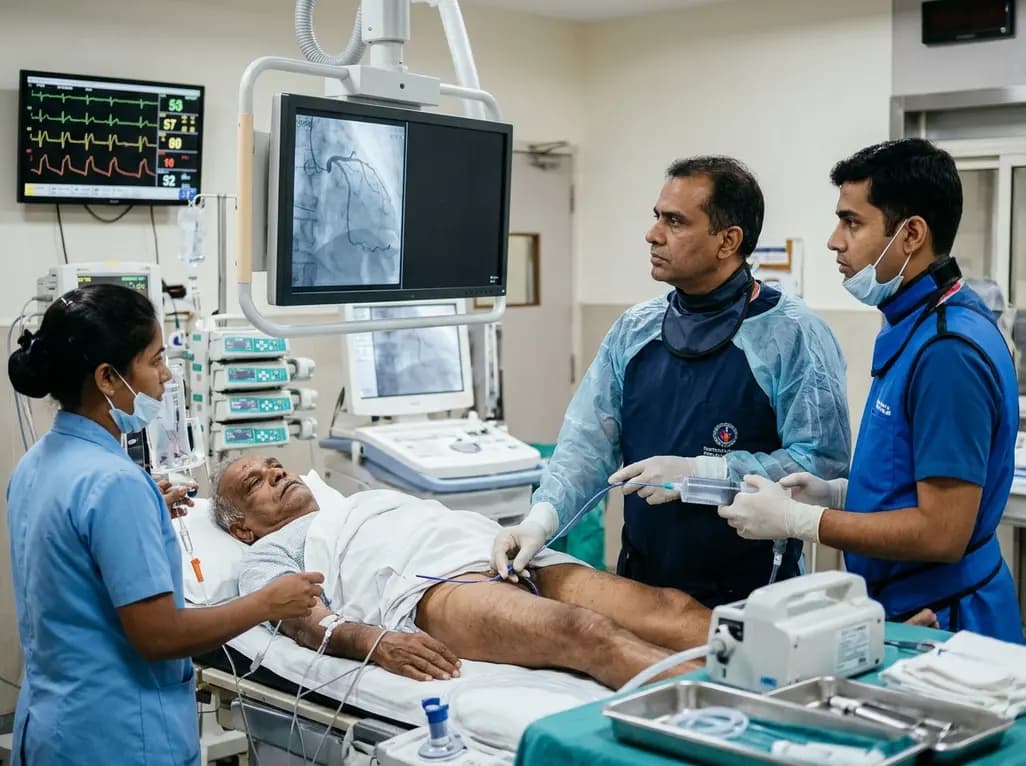
An elderly man with partially repaired Tetralogy of Fallot presented with STEMI caused by coronary embolism rather than atherosclerosis. Successful treatment with sustained mechanical aspiration thrombectomy underscores the vital need for high clinical vigilance in adult congenital heart disease.
Today

A comparative review of tension band wiring and intramedullary screw fixation in thumb metacarpophalangeal arthrodesis, evaluating union rates, hardware complications, and clinical outcomes.
Today

Following regulatory scrutiny from FSSAI regarding promotional representations and lean muscle preservation claims, Dr. Reddy's Laboratories and Nestlé Health Science are currently reviewing the branding and marketing strategy for their joint nutritional supplement Celevida GLP+.
Today
