.webp&w=384&q=75)

Loading, please wait...
Loading, please wait...

Surgical resection of intradural extramedullary spinal tumors carries an inherent risk of iatrogenic neurological injury. Intraoperative neurophysiological monitoring provides real-time functional surveillance of the corticospinal pathways. However, considerable variability in standard warning criteria complicates clinical decision-making. Determining optimal MEP alarm thresholds remains critical for preventing postoperative motor deterioration while avoiding unnecessary surgical interruption. A systematic review and meta-analysis of sixteen studies examined the diagnostic accuracy of predefined transcranial motor-evoked potential thresholds. The findings clarify the clinical reliability of varying amplitude loss criteria in safeguarding motor function during spinal tumor resection.
Intradural extramedullary tumors, such as schwannomas, meningiomas, and neurofibromas, compress the spinal cord from outside the neural parenchyma. Surgical manipulation, vascular compromise, or excessive traction during tumor debulking can induce rapid spinal cord ischemia or direct mechanical injury. Transcranial motor-evoked potentials monitor corticospinal tract integrity with remarkable temporal fidelity. Therefore, neurosurgeons and neurophysiologists rely on these signals to guide operative maneuvers. Historically, centers have employed divergent cutoff values, ranging from a fifty percent amplitude reduction to total waveform loss. Consequently, this lack of uniformity has caused substantial debate regarding which threshold provides the optimal balance between early warning sensitivity and clinical specificity. High sensitivity guarantees prompt identification of neural compromise, whereas high specificity prevents false alarms that might lead to premature termination of tumor resection. Synthesizing available diagnostic data across published cohorts resolves this clinical ambiguity and establishes evidence-based parameters for surgical teams.
The meta-analysis evaluated four distinct amplitude criteria: fifty percent decline, seventy percent decline, eighty percent decline, and complete waveform loss. For predicting short-term motor deficits, the fifty percent amplitude decline demonstrated superior diagnostic performance. Specifically, this threshold achieved a sensitivity of 94.1% and a specificity of 98.4%, yielding the most favorable diagnostic profile among all evaluated criteria. In contrast, higher thresholds, such as seventy percent decline and complete signal loss, also demonstrated statistical significance for short-term outcomes but exhibited lower overall sensitivity. When assessing long-term neurological status, both fifty percent and seventy percent amplitude decrements reliably predicted persistent deficits. A sensitivity analysis evaluating a pooled high-threshold group of seventy to eighty percent reduction retained meaningful diagnostic utility for both short- and long-term functional decline. Nevertheless, earlier intervention triggered at the fifty percent mark provides surgical teams with a vital window to halt adverse maneuvers before neural pathways sustain irreversible structural damage.
Modern spine centers rarely employ isolated motor potentials; instead, they integrate multimodal intraoperative neurophysiological monitoring. Combining motor-evoked potentials with somatosensory-evoked potentials and electromyography ensures comprehensive neural assessment. Within multimodal monitoring protocols, the fifty percent amplitude decline threshold generated the most favorable diagnostic point estimates for evaluating neurological decline. Complete amplitude loss demonstrated significant diagnostic performance for immediate short-term postoperative deterioration. Meanwhile, the fifty percent criterion showed robust statistical significance for predicting long-term neurological outcomes. Multimodal monitoring mitigates the technical pitfalls of single-modality tracking, such as transient anesthetic fluctuations, technical artifacts, or localized systemic hypotension. Furthermore, concurrent free-running and triggered electromyography monitors irritate nerve roots during tumor dissection. Thus, contextualizing motor amplitude changes within a multimodal framework refines diagnostic accuracy and enhances surgical safety during challenging dissections.
The identification of an intraoperative motor warning demands immediate, systematic action from the surgical and anesthetic teams. When an amplitude decrease reaches the fifty percent threshold, the surgeon must immediately pause resection, release tissue traction, and inspect the operative cavity. Additionally, irrigation with warm saline can counteract local vasospasm, while the surgical team removes compressive cottonoids. Concurrently, the neuroanesthesiologist must optimize mean arterial pressure, correct anemia, and verify consistent anesthetic depth without volatile agents or neuromuscular blockade. Because transient amplitude drops often reverse following rapid corrective measures, timely alerts can prevent permanent functional deficits. Adopting an overly conservative alarm criterion, such as complete waveform loss, risks delaying intervention until axonal damage becomes permanent. Conversely, treating the fifty percent decline as an actionable threshold fosters proactive neuroprotection while preserving the opportunity to achieve complete oncological resection.
Clinicians must interpret these meta-analytic findings within the context of several inherent methodological limitations. The analyzed studies displayed notable heterogeneity regarding tumor histology, anatomical level, and baseline neurological impairment. For example, cervical spinal lesions exhibit different biomechanical vulnerabilities compared to thoracic or lumbar tumors. Moreover, differences in outcome definitions and follow-up durations complicate the comparison between temporary and permanent motor deficits. Technical aspects also introduce variability, including differing stimulation montages, muscle recording sites, and anesthetic protocols across reporting centers. Future prospective registries should standardize neurophysiological reporting criteria and establish clear protocols for intraoperative rescue interventions. Standardizing these variables will clarify whether individualized alarm thresholds, adjusted for baseline motor strength and tumor location, can further refine patient outcomes in extramedullary spine surgery.
The fifty percent amplitude decline threshold offers the highest accuracy for predicting postoperative motor deficits. It demonstrates 94.1% sensitivity and 98.4% specificity in short-term assessments. Consequently, this parameter serves as the most reliable intraoperative benchmark for clinical teams during tumor removal.
Waiting for complete waveform loss delays critical intervention until severe or irreversible axonal damage occurs. Although complete loss is highly specific for deficit development, it lacks early sensitivity. Therefore, surgical teams lose the therapeutic window required to reverse mechanical or vascular insults.
Multimodal monitoring combines motor-evoked potentials with somatosensory-evoked potentials and electromyography. This comprehensive approach differentiates systemic physiological disturbances, such as hypotension or deep anesthesia, from focal surgical injury. Consequently, it minimizes false alarms and enhances overall diagnostic reliability during delicate spinal dissections.
Disclaimer: This content is for informational and educational purposes only and does not constitute medical advice, diagnosis, or treatment. Always consult qualified healthcare professionals for specific clinical scenarios. Neither the author nor the publisher accepts responsibility for any adverse outcomes arising from the application of this information. Refer to the latest local and national guidelines for clinical practice.
References

Read summarized clinical updates, watch expert medical content, and earn CME certifications right from your smartphone.
Open your smartphone camera to scan and install.





A meta-analysis evaluates motor-evoked potential (MEP) alarm thresholds during intradural extramedullary spinal tumor surgery. The 50% amplitude decline demonstrates superior sensitivity and specificity for predicting motor decline, providing crucial guidance for intraoperative neurophysiological monitoring.
Today

A recent Journal of Clinical Oncology study demonstrates that industry payments to oncologists directly sway prescribing behavior. Oncologists who received marketing transfers favored promoted therapies over non-promoted alternatives, highlighting critical ethical concerns for evidence-based cancer practice.
Today

A recent qualitative study examines how college students seek digital sexual health information under persistent uncertainty. Discover the concept of functional trust, the clinical hazards of search abandonment, and evidence-based approaches clinicians can adopt to guide youth toward verified reproductive healthcare.
Today
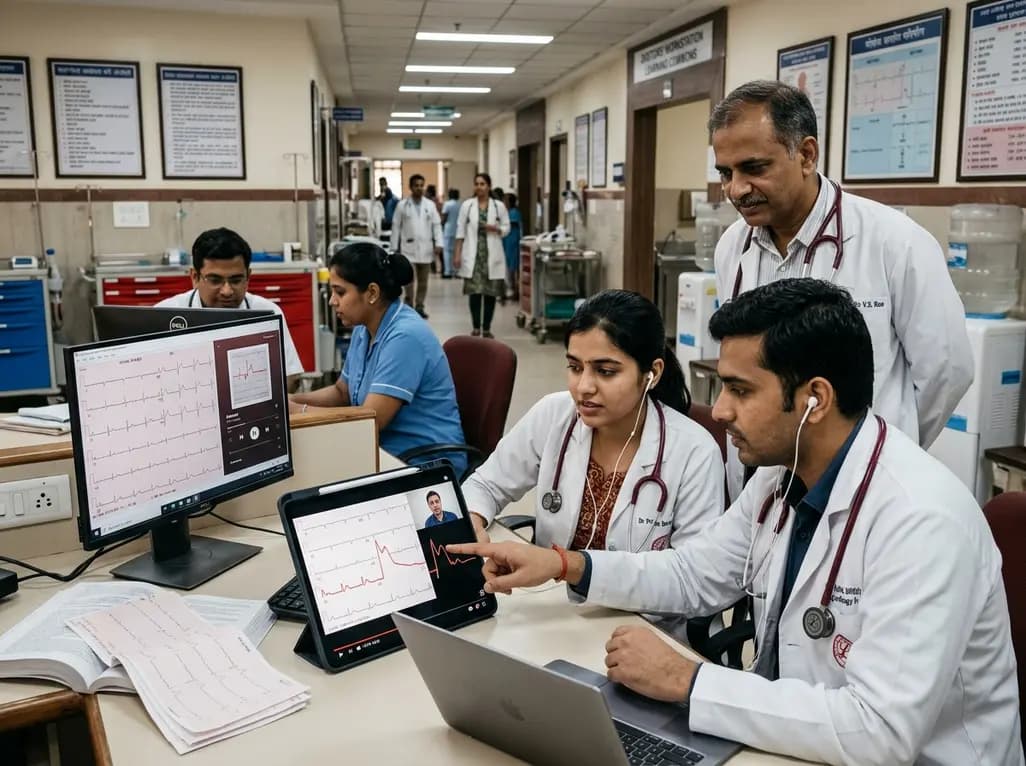
A randomized controlled trial demonstrates that curated FOAMed videos and podcasts produce superior gains in high-risk ECG interpretation and acute coronary syndrome clinical decision-making compared with print-based materials among interprofessional emergency care teams.
Today

A study reveals that Ginsenoside Rg3 attenuates osteoarthritis progression by modulating the Nrf2-mediated autophagy pathway, reducing chondrocyte apoptosis, and curbing extracellular matrix degradation, offering promising chondroprotective potential.
Today

A cross-sectional study demonstrates that lower pediatric motor competence strongly correlates with adverse metabolic syndrome markers, including central adiposity, elevated triglycerides, and low HDL cholesterol, emphasizing early neuromuscular interventions in youth with overweight and obesity.
Today
