

Loading, please wait...
Loading, please wait...
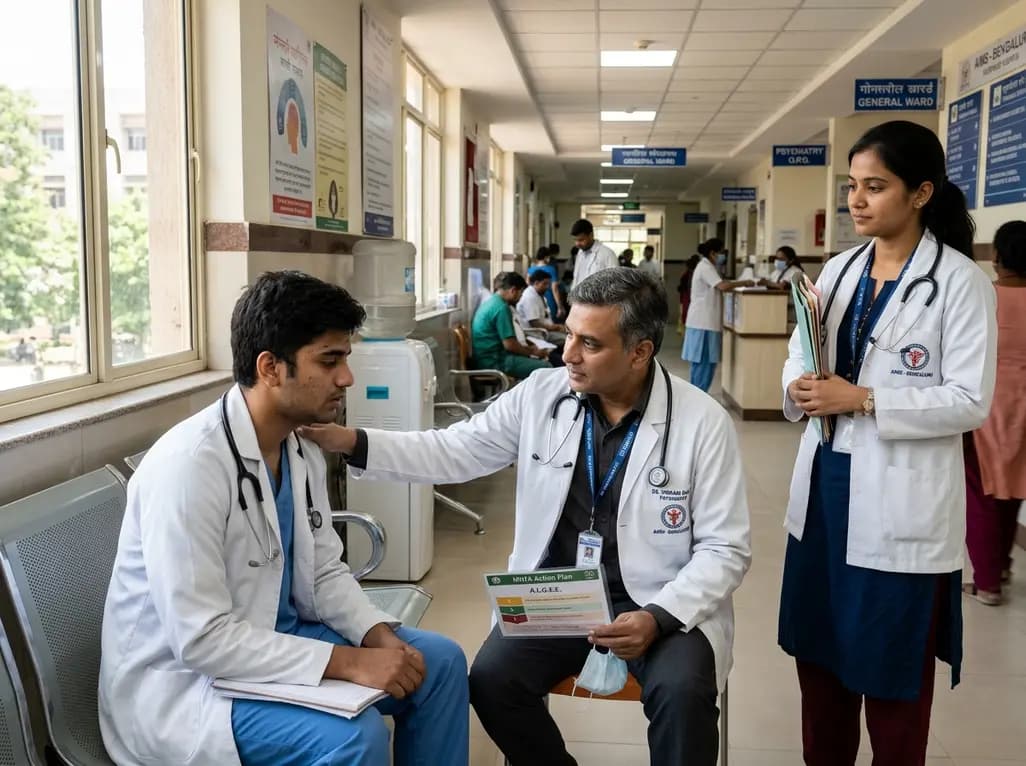
Mental health disorders among youth and university students represent an escalating global public health priority. Gatekeeper programs, particularly structured mental health first aid training, provide non-clinical individuals with actionable skills to recognize psychological distress and intervene safely. Recent longitudinal findings demonstrate that campus members sustain their mental health knowledge and supportive self-efficacy over time. Furthermore, these community-based models foster an environment of timely referral and compassionate crisis de-escalation. Consequently, healthcare professionals and academic leaders must leverage gatekeeper initiatives to bridge community identification and formal psychiatric intervention.
Gatekeeper training operates on the premise that peers and mentors notice behavioral changes long before individuals seek clinical care. Therefore, these curricula teach non-specialists how to identify warning signs of severe anxiety, depression, psychosis, and acute substance distress. Specifically, trainees master active listening, risk assessment for self-harm, and methods for facilitating prompt professional referrals. Rather than acting as informal clinicians, gatekeepers operate within structured boundaries that prioritize safety and timely escalation. As a result, trainees acquire the practical confidence required to initiate supportive conversations without fearing counterproductive missteps.
In higher education settings, early identification significantly mitigates academic failure, chronic morbidity, and self-harm. Moreover, establishing a dense network of certified gatekeepers diminishes pervasive social stigma across campus environments. When educators and student advisors understand psychiatric emergencies, they actively dismantle barriers that discourage help-seeking. Thus, institutionalizing these basic psychological response protocols mirrors the widespread adoption of cardiopulmonary resuscitation across public venues.
A central challenge in public health education involves determining whether training gains persist beyond the initial instructional workshop. Recent mixed-methods evaluation data demonstrate that trainees retain core mental health competencies remarkably well over extended intervals. Specifically, longitudinal assessments administered at three and six months post-training revealed durable stability in foundational literacy and supportive self-efficacy. Participants consistently remembered essential crisis guidelines and intervention algorithms across the follow-up window. In addition, qualitative interviews revealed that participants developed a lasting intuitive framework for evaluating peer distress.
Interestingly, actual skill utilization increased noticeably between the three-month and six-month evaluation points. Trainees reported greater ease when initiating conversations as real-world opportunities emerged naturally over time. Consequently, repeated exposure to campus interpersonal dynamics reinforced their acquired communication competencies rather than allowing them to decay. Therefore, institutions can trust that single comprehensive training workshops produce sustained community benefit throughout the academic calendar.
Substance misuse and acute chemical dependency present unique challenges that frequently provoke severe hesitation among lay responders. However, longitudinal evaluative evidence indicates that gatekeeper training effectively reduces the emotional barriers surrounding substance-related crises. Over time, trained participants reported that initiating supportive discussions with peers experiencing alcohol or drug-related distress became noticeably easier. Previously, individuals feared confrontation, reputational retaliation, or aggravating volatile interactions. Structured training directly demystifies these encounters by providing clear communication scripts and empathetic de-escalation strategies.
Additionally, gatekeeper frameworks instruct participants to separate moral judgment from clinical vulnerability. This perspective encourages honest dialogue and accelerates referral toward specialized addiction services. Trainees also learned how to identify life-threatening overdose symptoms and manage emergent behavioral agitation safely. As a result, campus gatekeepers function as effective early warning sensors for dangerous polydrug interactions and concurrent psychiatric crises.
The relevance of structured gatekeeper education is extraordinarily acute within Indian medical colleges and higher educational institutions. Medical undergraduates, interns, and postgraduate residents confront immense academic competition, chronic sleep deprivation, and intense professional scrutiny. Consequently, elevated rates of clinical depression, burnout, and student suicides have prompted urgent regulatory attention across India. The National Medical Commission and the Supreme Court-appointed National Task Force have strongly emphasized institutionalizing student wellness frameworks. Therefore, integrating peer and faculty gatekeeper programs represents an essential, evidence-backed strategy to protect vulnerable medical trainees.
Furthermore, implementing these protocols directly targets the profound institutional stigma that surrounds mental illness in Indian academic circles. Many students hesitate to visit psychiatry outpatient departments due to persistent fears regarding career progression and confidentiality breaches. However, trained peer mentors and approachable faculty wardens can offer confidential, non-stigmatizing first-line support within hostel and ward environments. In addition, these gatekeepers seamlessly connect students to national tele-counseling resources like Tele-MANAS.
From a clinical psychiatric standpoint, community gatekeepers serve as vital triaging partners rather than autonomous therapists. For tertiary care psychiatrists and family practitioners, an educated community funnel significantly improves clinical outcomes through earlier diagnostic capture. Patients who receive early intervention typically present with less severe pathology and lower risks of treatment resistance. Therefore, physicians must actively collaborate with academic leadership to deliver, supervise, and refine campus training initiatives. Medical faculties can easily incorporate local emergency hotline directories and hospital referral protocols into gatekeeper curriculums.
Moreover, clinician involvement ensures that trainees clearly understand their professional limits and legal responsibilities during acute psychiatric crises. Gatekeepers must never delay emergency medical referral when managing active suicidal ideation or severe delirium. Consequently, clinicians should provide clear escalation criteria and clear contact channels for rapid specialist handoffs. Additionally, holding periodic refresher sessions and debriefing meetings prevents secondary traumatic stress among gatekeepers.
A mental health first aid gatekeeper identifies individuals who are experiencing psychological distress, emotional crisis, or substance misuse. The gatekeeper does not diagnose or treat medical conditions. Instead, they provide immediate, non-judgmental comfort, evaluate immediate risks of self-harm, and encourage safe de-escalation. Furthermore, they guide the distressed person toward qualified healthcare professionals, clinical counselors, or emergency medical facilities, ensuring rapid and safe psychiatric linkage.
Longitudinal evidence indicates that gatekeeper competencies, core mental health literacy, and supportive self-efficacy remain remarkably stable over several months. Participants retain essential intervention algorithms and show increased skill utilization as real-world situations arise. Additionally, trainees report that engaging in challenging discussions, including substance use crises, becomes progressively easier over time. Consequently, even single-session structured programs provide sustained public health value across academic and community environments.
Indian academic settings experience high rates of student stress, clinical depression, and suicide, especially in professional colleges. Traditional healthcare channels often encounter resistance due to deep-seated societal stigma and privacy concerns. Implementing campus gatekeeper programs establishes a safe, peer-level support network that identifies distress early. Moreover, it aligns with National Medical Commission recommendations, demystifies substance abuse, and bridges vulnerable youth directly to formal platforms like Tele-MANAS.
Disclaimer: This content is for informational and educational purposes only. It is not intended to be a substitute for professional medical advice, diagnosis, or treatment. Always seek the advice of your physician or other qualified health provider with any questions you may have regarding a medical condition. Never disregard professional medical advice or delay in seeking it because of something you have read here. Refer to the latest local and national guidelines for clinical practice.
References

Read summarized clinical updates, watch expert medical content, and earn CME certifications right from your smartphone.
Open your smartphone camera to scan and install.





A mixed-methods evaluation shows that adult Mental Health First Aid training produces lasting crisis intervention skills. For Indian medical institutions addressing student burnout, gatekeeper programs provide an evidence-based frontline framework to connect distressed learners to clinical psychiatric care.
Today

Researchers developed de novo miniproteins targeting chemokine CCL25 using the BindCraft platform. These precision molecules suppress CCR9 and ACKR4 signaling and induce functional signaling bias, presenting a promising novel strategy for treating mucosal inflammation and inflammatory bowel disease.
Today

Isolated fallopian tube torsion is an elusive gynecological emergency mimicking acute appendicitis in young females. Early laparoscopy and routine pelvic inspection prevent unnecessary salpingectomy and preserve future fertility.
Today

A breakthrough study demonstrates that recruiting cytosolic E3 ligases drives ER protein degradation through the AAA ATPase VCP. This novel mechanism bypasses canonical ERAD machinery and degrades HMGCR, offering transformative potential for managing statin tolerance and challenging membrane targets.
Today

A comparative study demonstrates that simple and complex labral tears achieve comparable functional outcomes and low recurrence rates following arthroscopic stabilization for anterior shoulder instability, despite differing clinical presentations and dislocation histories.
Today

A recent investigation assesses the impact of succinate supplements on metabolic health, energy intake, and muscle remodeling in mice fed high-fat or ketogenic diets. Although succinate briefly blunts hyperphagia, it fails to improve long-term glycemic control or alter skeletal muscle hypertrophy.
Today
