.webp&w=384&q=75)

Loading, please wait...
Loading, please wait...
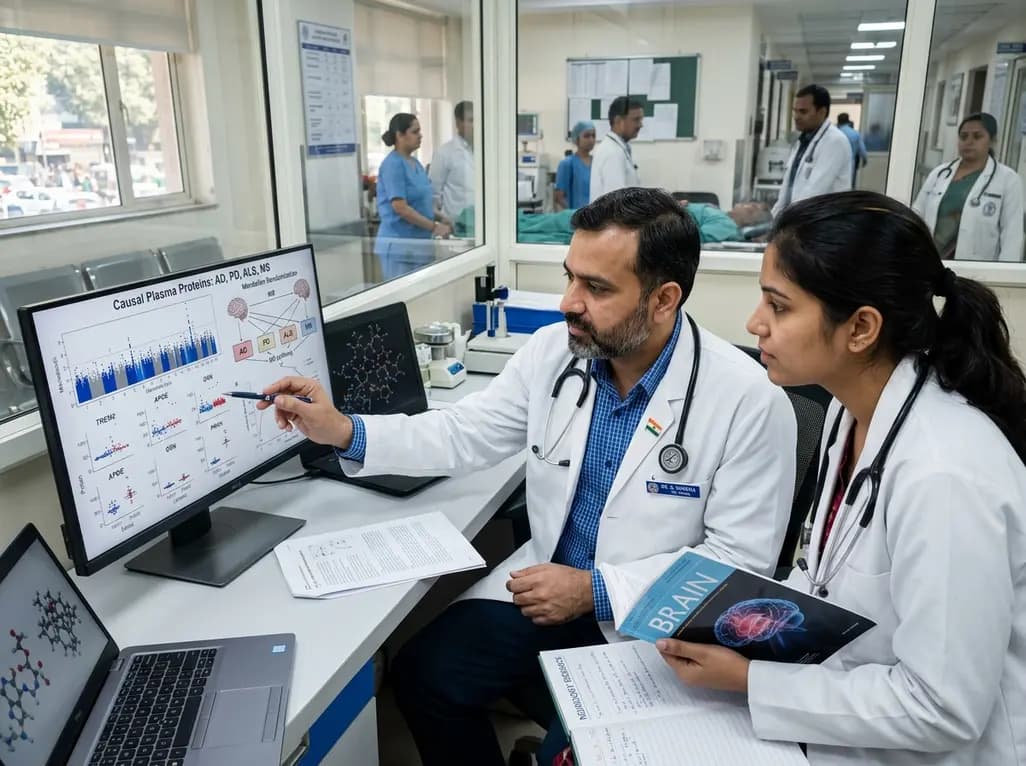
Neurodegenerative disorders present an escalating global healthcare crisis, imposing profound burdens on patients, caregivers, and clinical systems. Dissecting the precise molecular drivers of these disorders remains a paramount clinical challenge. A landmark genetic study published in Brain harnessed large-scale genomic and proteomic resources to systematically evaluate causal neurodegenerative disease proteins. By combining high-throughput proteomics with robust genetic methodologies, the researchers delineated specific circulating proteins that directly influence disease susceptibility across Alzheimer's disease, Parkinson's disease, amyotrophic lateral sclerosis, and multiple sclerosis. Consequently, these findings uncover actionable molecular mechanisms that transcend simple observational associations.
Observational epidemiological analyses frequently struggle to distinguish true etiologic drivers from downstream epiphenomena or reverse causation. To resolve this dilemma, the study authors implemented a rigorous two-sample cis Mendelian randomization framework. This analytical approach leverages germline genetic variants as instrumental variables to deduce causal effects. Specifically, the researchers quantified the circulating levels of more than 2,700 proteins using both the Olink Proximity Extension Assay and SomaScan aptamer platforms across plasma samples from the UK Biobank and the deCODE Health Study.
Subsequently, the investigative team linked these genetic instruments to the largest publicly accessible genome-wide association study datasets for neurodegenerative disorders. The team tested 13,377 protein-disease associations using Wald ratios, successfully identifying 169 statistically significant associations under a rigorous 5% false discovery rate. Furthermore, Bayesian co-localization analyses demonstrated strong evidence that shared causal genetic variants drove both circulating protein expression and disease risk in 61 protein-disease pairs. This rigorous filtering yielded 50 unique protein-disease associations. Notably, 23 of these 50 associations localized to genomic loci never previously implicated by conventional genome-wide association studies.
Alzheimer's disease accounts for the vast majority of dementia diagnoses globally, yet disease-modifying therapeutic strategies remain limited. In this comprehensive evaluation, researchers identified critical causal proteins that cluster within specific biological cascades. Particularly, the findings highlighted classical complement pathway components, notably C1S and C1R. Because complement activation mediates synaptic pruning and aberrant neuroinflammation, these circulating enzymes represent viable causal contributors rather than incidental bystanders.
Additionally, the study demonstrated robust causal links between Alzheimer's susceptibility and key microglial regulatory proteins, including SIRPA, SIGLEC9, and PRSS8. Microglia serve as primary immunocompetent sentinels within the central nervous system. Impairments in microglial clearance mechanisms precipitate excessive neurotoxic peptide accumulation and accelerate neurodegeneration. Furthermore, the analysis established a causal role for CLN5, a protein essential for lysosomal trafficking and sphingolipid metabolism. Thus, these data strongly confirm that microglial surveillance, complement-mediated synaptic disruption, and lysosomal storage integrity interact causally to govern clinical Alzheimer's vulnerability.
Parkinson's disease and amyotrophic lateral sclerosis present heterogeneous clinical courses that complicate early risk stratification. In Parkinson's disease, the Mendelian randomization analysis highlighted a significant causal role for cardiotrophin-1 (CTF1). CTF1 operates as a key cytokine within the interleukin-6 family signaling network. Although neurotrophic in certain physiologic settings, persistent cytokine signaling within the interleukin-6 pathway can induce chronic neuroinflammation, compromise dopaminergic neuron survival, and foster pathological alpha-synuclein propagation.
Conversely, the investigation uncovered distinct pathological axes in amyotrophic lateral sclerosis. The investigators identified significant causal associations for tripeptidyl peptidase 1 (TPP1), microfibrillar-associated protein 2 (MFAP2), and tumor necrosis factor superfamily member 13 (TNFSF13). TPP1 governs lysosomal peptide degradation, emphasizing that impaired proteostasis remains a central driver of motor neuron degeneration. Simultaneously, MFAP2 contributes directly to microvascular stability and extracellular matrix integrity, suggesting that microvascular breakdown facilitates motor unit loss. Finally, TNFSF13 reflects reactive astrocyte proliferation and neuroinflammation, underscoring the non-cell-autonomous mechanisms driving motor neuron demise.
Multiple sclerosis involves complex autoimmune attacks against central myelin sheaths. The proteomic investigation yielded unprecedented insights into the diverse systemic proteins modulating this demyelinating pathology. Notably, vascular endothelial growth factor B (VEGFB) demonstrated a strong causal association with multiple sclerosis risk. VEGFB plays an indispensable role in maintaining blood-brain barrier integrity. Therefore, alterations in circulating VEGFB levels likely modulate endothelial tightness, directly controlling peripheral inflammatory cell entry into central nervous tissues.
Simultaneously, the study implicated poly(ADP-ribose) polymerase 1 (PARP1), which governs oligodendrocyte DNA repair, survival, and differentiation under oxidative stress. Deficiencies in oligodendrocyte resilience impair remyelination capacity, thereby accelerating axonal loss. Furthermore, researchers identified significant links with neuronal calcium sensor 1 (NCS1), fibronectin leucine-rich repeat transmembrane protein 3 (FLRT3), and cadherin-15 (CDH15). These specific proteins govern axo-glial adhesion at the nodes of Ranvier and preserve dorsal root ganglion structural integrity. Finally, innate immunity regulators, including complement receptor 1 (CR1), alpha-2-HS-glycoprotein (AHSG), and tryptophanyl-tRNA synthetase 1 (WARS), also displayed robust causal associations.
To substantiate the clinical relevance of these plasma biomarkers, the researchers integrated structural brain magnetic resonance imaging data. Specifically, they performed two-sample Mendelian randomization and co-localization analyses against deep subcortical brain volumes and cerebral white matter hyperintensity burdens. This multimodal integration bridged circulating molecular markers with objective macroscopic neuropathology.
Remarkably, genetically predicted circulating Apolipoprotein E (APOE) abundance demonstrated highly significant associations with structural volume loss in three primary subcortical structures: the hippocampus, the amygdala, and the nucleus accumbens. Moreover, plasma APOE levels correlated significantly with higher volumes of cerebral white matter hyperintensities, confirming its extensive microvascular impact. Additionally, paired immunoglobulin-like receptor alpha (PILRA) and paired immunoglobulin-like receptor beta (PILRB) plasma levels correlated with caudate nucleus volume. Because the caudate nucleus coordinates cognitive flexibility and sensorimotor integration, these specific receptor pathways provide anatomical confirmation of biological impact. Consequently, plasma proteomic profiles reliably reflect quantifiable subcortical neurodegenerative changes.
The discovery of 23 novel protein-disease associations at genetic loci previously undetected by conventional genome-wide studies holds transformative value for translational medicine. Modern drug discovery pipelines suffer extraordinarily high failure rates, particularly in central nervous system therapeutics. However, drug targets supported by robust human genetic and causal proteomic evidence demonstrate substantially higher rates of successful clinical approval. Therefore, these causal proteins offer immediate, high-priority candidates for therapeutic development.
Furthermore, because these proteins circulate systemically, they hold immense diagnostic potential as blood-based biomarkers. Clinical neurology is shifting rapidly toward minimally invasive peripheral screening assays. Incorporating causal markers into routine diagnostic panels could accelerate preclinical diagnosis, enhance risk stratification algorithms, and enable objective monitoring of therapeutic response. In clinical practice, evaluating patients with suspected cognitive decline or neuroimmunological disease will increasingly rely on validated circulating proteomic signatures. Ultimately, translating these genetic discoveries into standardized multiplex laboratory tests will revolutionize early clinical diagnosis and precision therapeutic interventions.
Mendelian randomization uses naturally randomized germline genetic variants as instrumental variables to evaluate how lifelong exposure to specific protein concentrations alters disease risk. Because alleles segregate randomly at conception, this method effectively avoids confounding factors and reverse causation, helping clinicians determine true biological causality rather than incidental associations.
The study demonstrated that complement proteins C1S and C1R, alongside microglial modulators like SIRPA and SIGLEC9, exert direct causal effects on Alzheimer's pathogenesis. These proteins regulate innate immune responses, neuroinflammatory signaling, and synaptic elimination. When dysregulated, they accelerate aberrant synaptic pruning and impair microglial clearance of toxic aggregates.
Yes. Circulating plasma proteins like VEGFB and MFAP2 directly regulate vascular integrity and endothelial extracellular matrix stability. Furthermore, genetically predicted plasma levels of proteins such as APOE, PILRA, and PILRB correlated directly with structural neuroimaging findings, including white matter hyperintensities and subcortical atrophy in the hippocampus and caudate.
Disclaimer: This content is for informational and educational purposes only and does not constitute medical advice, diagnosis, or treatment recommendations. Healthcare professionals must evaluate each patient independently based on clinical history, laboratory findings, and standard diagnostic pathways. Refer to the latest local and national guidelines for clinical practice.
References

Read summarized clinical updates, watch expert medical content, and earn CME certifications right from your smartphone.
Open your smartphone camera to scan and install.





A landmark Mendelian randomization study published in Brain evaluated over 2,700 plasma proteins, identifying 50 causal protein-disease associations across Alzheimer's disease, Parkinson's disease, ALS, and multiple sclerosis, including 23 novel genetic loci.
last month

Review how tailored exercise programs benefit frail older patients with heart failure. Explore pathophysiological mechanisms, individualized training prescriptions, and strategies to overcome adherence barriers in clinical practice.
Today

Leucine Rich Bio has introduced South Asia's first comprehensive vaginal microbiome test, BugSpeaks. By profiling microbial dysbiosis, pathogens, and antimicrobial resistance, this next-generation diagnostic platform provides clinicians with deeper insights into recurrent infections, fertility, and reproductive health.
Today

In high-risk pulmonary embolism complicated by severe anemia and active uterine bleeding, systemic thrombolysis is contraindicated. Large-bore aspiration thrombectomy provides rapid hemodynamic rescue without fibrinolysis, supported by inferior vena cava filter placement and multidisciplinary critical care.
Today

This comparative study evaluates posterior labral tears with and without glenohumeral instability, highlighting distinct demographic patterns, MRI underestimation in stable shoulders, and successful arthroscopic repair outcomes.
Today

A clinical study demonstrates that early intervention with tocilizumab, either as monotherapy or bridged with corticosteroids, achieves significant proptosis reduction and resolves active inflammation in treatment-naive thyroid eye disease.
Today
