.webp&w=384&q=75)

Loading, please wait...
Loading, please wait...

Advanced melanoma has witnessed a therapeutic revolution over the last decade, primarily driven by the advent of immune checkpoint inhibitors (ICI). These agents, targeting the PD-1/PD-L1 and CTLA-4 axes, have significantly extended overall survival for many patients. However, the clinical reality remains complex because a substantial proportion of patients do not derive long-term benefits. Resistance to these therapies often occurs either as an innate inability to respond, known as primary resistance, or as a relapse following an initial response, termed secondary resistance. Identifying melanoma immunotherapy resistance biomarkers before the initiation of treatment is a critical clinical need to optimize patient selection and refine therapeutic strategies. Current tissue-based biopsies often fail to capture the dynamic and heterogeneous nature of the systemic immune response. Consequently, liquid biopsies focusing on extracellular vesicles have emerged as a promising frontier for non-invasive monitoring and prediction of treatment outcomes.
Extracellular vesicles (EVs) are small, membrane-bound particles released by both tumor and healthy cells into the circulation. They serve as essential mediators of intercellular communication by transporting various cargo, including proteins, lipids, and nucleic acids. In the context of malignancy, cancer cells leverage EVs to remodel the tumor microenvironment and prepare pre-metastatic niches. Because these vesicles encapsulate a snapshot of the functional state of their cell of origin, they provide a wealth of information regarding the systemic biological milieu. Furthermore, EVs are highly stable in plasma, making them ideal candidates for clinical biomarker discovery. By isolating these vesicles from pretreatment blood samples, researchers can gain insights into the host-tumor interaction that governs the success or failure of immunotherapy. This study specifically utilized size exclusion chromatography and ultracentrifugation to isolate EVs from patients with advanced melanoma, ensuring a high-purity yield for subsequent deep-dive proteomic analysis.
Identifying robust melanoma immunotherapy resistance biomarkers through proteomic profiling represents a significant leap toward precision oncology. The study utilized liquid chromatography-mass spectrometry combined with data-independent acquisition (DIA-NN) to map the EV proteome. The results demonstrated that overall resistance to immune checkpoint inhibitors is characterized by a specific enrichment of platelet- and complement-associated pathways. This suggests that a systemic pro-inflammatory and pro-coagulant state at baseline may hinder the efficacy of the immune response. Moreover, these findings highlight that resistance is not merely a localized tumor phenomenon but a systemic biological program. By integrating these protein markers into composite biomarker signatures, clinicians may eventually be able to stratify patients more effectively. Such signatures can independently discriminate between patients likely to achieve long-term progression-free survival and those at high risk of early treatment failure. This level of predictive accuracy is essential for making informed decisions regarding the use of combination therapies or alternative targeted agents.
Primary resistance occurs when the immune system fails to recognize or eliminate the tumor from the very beginning of ICI therapy. The proteomic analysis revealed that patients with primary resistance exhibited enhanced Fc gamma receptor (FCGR) signaling within their plasma EVs. This signaling pathway is often involved in modulating the activity of myeloid cells and can contribute to an immunosuppressive environment that blunts T-cell activation. Additionally, the study found a significant downregulation of KSRP-associated post-transcriptional regulatory processes in these patients. KSRP is known to regulate the stability of various cytokine mRNAs, and its reduction could lead to aberrant inflammatory signaling. Therefore, these specific EV proteomic patterns provide a window into the innate barriers that prevent a successful anti-tumor immune response. Understanding these baseline biological programs allows researchers to explore novel adjunct therapies that might sensitize primary non-responders to checkpoint blockade, thereby expanding the population that benefits from these life-saving drugs.
Secondary or acquired resistance presents a different clinical challenge, where patients initially respond but eventually progress. Interestingly, the research identified that distinct baseline EV proteomic patterns precede the development of secondary resistance even before therapy begins. These patterns primarily involved complement activation and a notable reduction in hemostasis- and platelet-related pathways. This biological signature differs significantly from the one seen in primary resistance, suggesting that the mechanisms driving a late relapse are distinct from those causing an initial lack of response. Consequently, the systemic environment at the start of treatment already harbors clues about the eventual emergence of resistance. By recognizing these subtle proteomic shifts, oncologists could potentially monitor high-risk patients more closely or introduce maintenance strategies earlier in the treatment course. This discovery underscores the importance of baseline systemic profiling, as it reveals that the seeds of future relapse may already be sown in the plasma proteome long before clinical progression is visible on imaging.
The transition of EV-derived biomarker signatures from research to clinical practice holds immense potential for improving outcomes in advanced melanoma. The ability to stratify patients by progression-free survival using a simple blood draw could revolutionize how we approach immunotherapy. However, it is essential to validate these findings in larger, multicentric cohorts to ensure their reproducibility and generalizability across diverse patient populations. In countries like India, where healthcare resources must be utilized judiciously, such predictive tools could significantly reduce the financial and physical burden of ineffective treatments. Furthermore, the integration of EV proteomics into clinical trials will help refine our understanding of how different resistance phenotypes respond to novel combination regimens. As the technology for EV isolation and proteomic profiling becomes more streamlined, it is likely that these systemic biological markers will become a standard component of the oncology toolkit. Ultimately, this research paves the way for a more personalized and effective approach to treating advanced melanoma.
While circulating tumor DNA (ctDNA) primarily provides genetic information such as specific mutations or methylations, extracellular vesicles offer a much broader biological context. EVs contain proteins, lipids, and various RNA species that reflect the functional state of the tumor and the systemic immune environment. This proteomic depth allows for the identification of complex pathway activations, such as complement signaling, which ctDNA cannot capture alone.
Primary resistance is strongly linked to enhanced Fc gamma receptor (FCGR) signaling and the downregulation of KSRP-associated post-transcriptional regulation. These pathways suggest a baseline state of immune evasion or suppression that prevents the initial activation of the anti-tumor T-cell response. Identifying these pathways in plasma-derived EVs helps explain why some patients fail to respond to checkpoint inhibitors from the start of therapy.
EV-derived signatures allow clinicians to stratify patients based on their predicted progression-free survival (PFS) before starting treatment. If a patient is identified as having a high-risk resistance signature, the oncologist might consider more aggressive combination therapies or clinical trials rather than standard monotherapy. This proactive approach helps in personalizing the treatment plan, potentially improving survival outcomes and avoiding the toxicity of ineffective medications.
Disclaimer: This content is for informational and educational purposes only. It does not constitute professional medical advice, diagnosis, or treatment. Always seek the advice of your physician or other qualified healthcare provider with any questions you may have regarding a medical condition. Refer to the latest local and national guidelines for clinical practice.
References
Kött J et al. Unraveling the Plasma Extracellular Vesicles Proteome: Predictors of Resistance in Immunotherapy of Advanced Melanoma. Int J Cancer. 2026 Jul 12. doi: 10.1002/ijc.70650. PMID: 42437992.
"
Read summarized clinical updates, watch expert medical content, and earn CME certifications right from your smartphone.
Open your smartphone camera to scan and install.





Recent research reveals that baseline plasma extracellular vesicle (EV) proteomics can identify distinct biological programs associated with primary and secondary resistance to immunotherapy in advanced melanoma, offering new biomarker signatures for predicting progression-free survival.
3 months ago

The TREM-AB open-label pilot study evaluated a wearable passive nonlinear vibration absorber for essential tremor. The Nonlinear Energy Sink bracelet reduced clinical Fahn-Tolosa-Marin tremor scores by 32.1% and electrophysiological tremor power by 49.2% with no adverse effects reported.
Today

A study in JAMIA Open shows lightweight open-source reasoning LLMs achieve up to 95% sensitivity and accelerate evidence synthesis screening by nearly twentyfold, presenting a cost-effective, scalable AI solution for biomedical research and systematic reviews.
Today
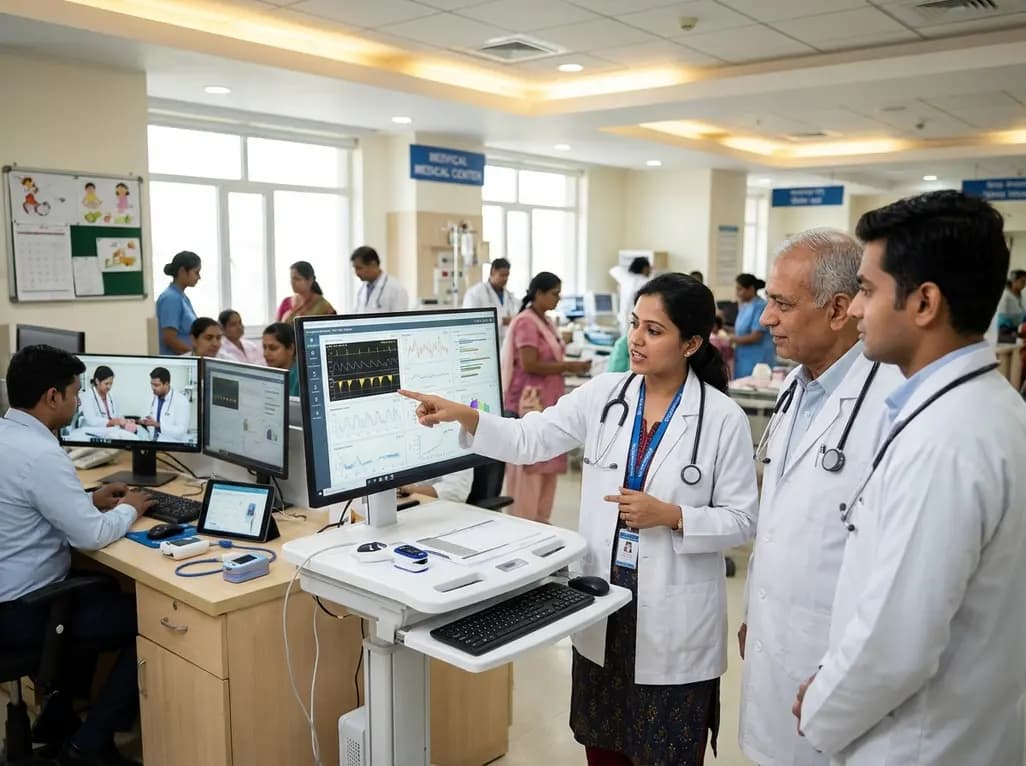
A landmark study details how an enterprise pediatric remote patient management model expanded from a single cardiology pilot to 16 diverse specialty programs by combining centralized digital operations with specialty clinical leadership.
Today

A comparative review of tension band wiring and intramedullary screw fixation in thumb metacarpophalangeal arthrodesis, evaluating union rates, hardware complications, and clinical outcomes.
Today
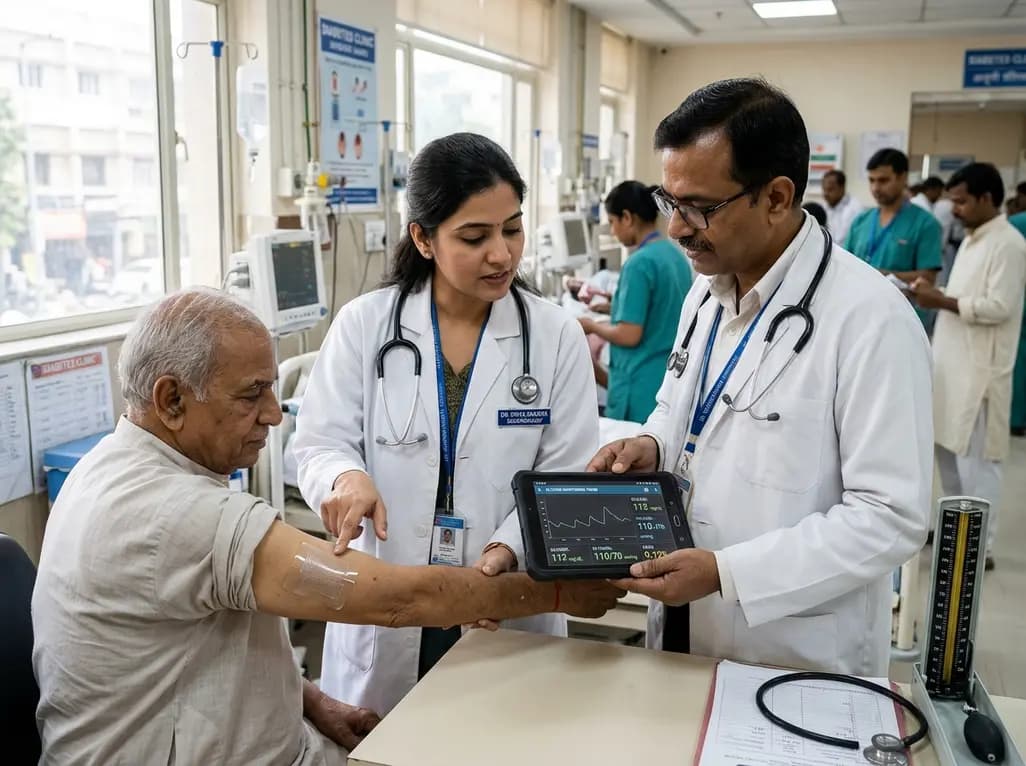
A breakthrough ultrathin multimodal sensor decouples physical hemodynamic monitoring from disposable electrochemical calibration, achieving long-term wearable glucose prediction with 81.36% accuracy and a 9.12% MARD. This offers a robust, drift-free solution for outpatient metabolic surveillance.
Today
