.webp&w=384&q=75)

Loading, please wait...
Loading, please wait...

The U.S. Food and Drug Administration (FDA) recently issued a stern warning to Medline Industries regarding Medline syringe defects found in their NAMIC division. These specific syringes are frequently used in cardiovascular procedures to inject contrast dye into patients' blood vessels. Consequently, the regulator cautioned the company about potential penal actions if it fails to resolve these safety issues promptly. Clinicians should be aware that the defects involve syringes disconnecting from manifolds during use.
The FDA highlighted that Medline failed to take appropriate action following numerous complaints about the devices. Specifically, the company received over 220 complaints regarding technical failures. One reported incident involved a life-threatening air embolism, which occurs when air enters the bloodstream. Furthermore, another case resulted in a clinician being exposed to a biohazard. Although Medline's internal analysis identified air embolism as a severe risk, the company inconsistently rated the overall risk as low. Therefore, the regulator expressed serious concerns about the company's risk assessment processes.
Following an inspection in December 2025, the FDA cited the facility for poor cleaning practices and inadequate safety testing. Because attempted fixes failed to stop the problem, complaint rates rose throughout 2025. Eventually, Medline initiated a product recall and filed a removal report in March 2026. However, the agency warned that failure to correct these violations could lead to product seizures or court action. Medical professionals should check their procedure kits for affected NAMIC syringes to ensure patient safety.
Q1: What is the primary cause of the Medline syringe defects?
The company linked the syringe disconnections to excess silicone on the connectors, which prevents a secure fit with the manifolds.
Q2: What medical procedures are most affected by this warning?
The warning primarily affects cardiovascular procedures where contrast dye is injected using NAMIC syringes and procedure kits.
Disclaimer: This content is for informational and educational purposes only. It does not constitute medical advice or replace professional judgment. Refer to the latest local and national guidelines for clinical practice.
References

Read summarized clinical updates, watch expert medical content, and earn CME certifications right from your smartphone.
Open your smartphone camera to scan and install.





The FDA warned Medline regarding defective NAMIC syringes used in heart procedures, highlighting risks of air embolism and failure to address safety complai...
6 months ago

Health authorities recently identified the first documented human infection of Shamonda virus in an immunocompromised individual in France. While the World Health Organization currently assesses wider transmission risk as very low, the event highlights critical One Health vectors and arboviral diagnostic awareness.
Today

Occult maternal malignancy accounts for 3.82% of persistent unreportable NIPT results with genomic noise. Multiple chromosomal aberrations, notably on chromosome 18, warrant thorough oncological evaluation and whole-body MRI to ensure timely maternal diagnosis while preserving fetal care.
Today

This article reviews the forensic and clinical complexities of acute myocarditis arising on left ventricular hypertrophy in children, highlighting early diagnostic red flags and multidisciplinary postmortem autopsy protocols.
Today
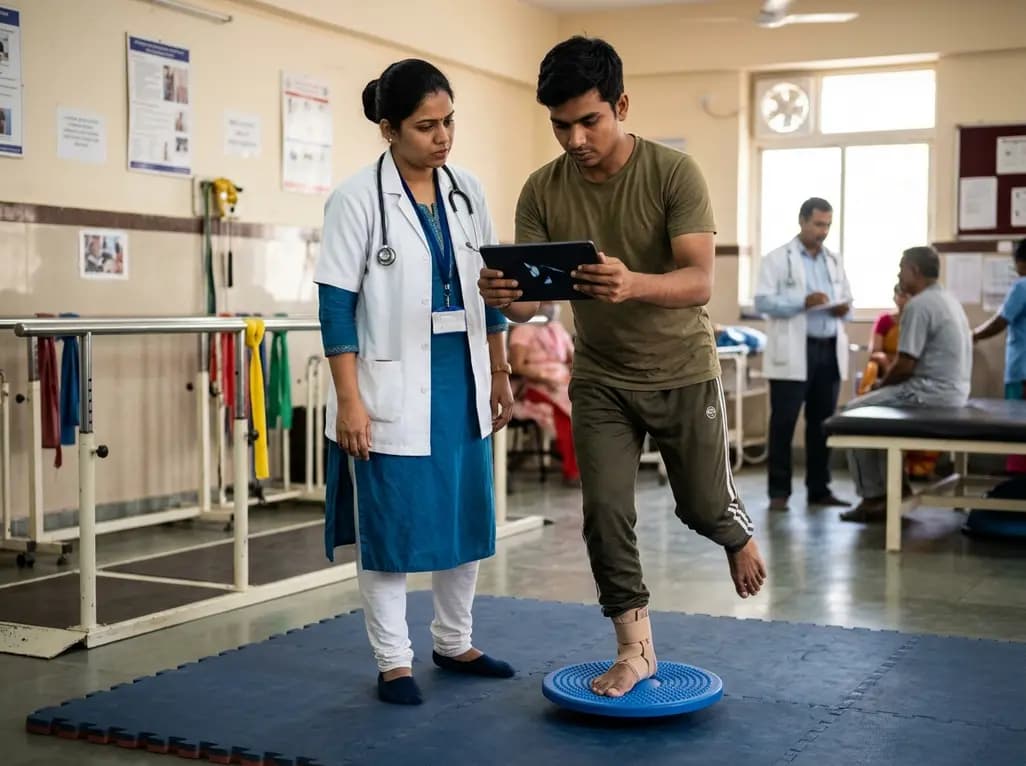
A randomized controlled trial demonstrates that an eight-week dual-task training intervention significantly improves static and dynamic postural control over standard balance exercises in individuals with chronic ankle instability, addressing critical neurocognitive deficits during athletic and daily activities.
Today

A retrospective cohort study of 7,716 ICU patients from the MIMIC-IV database demonstrates that Gradient Boosting Decision Trees significantly outperform traditional SOFA scores in predicting in-hospital mortality among patients with sepsis and diabetes, with SHAP analysis providing clinical interpretability.
Today
