.webp&w=384&q=75)

Loading, please wait...
Loading, please wait...
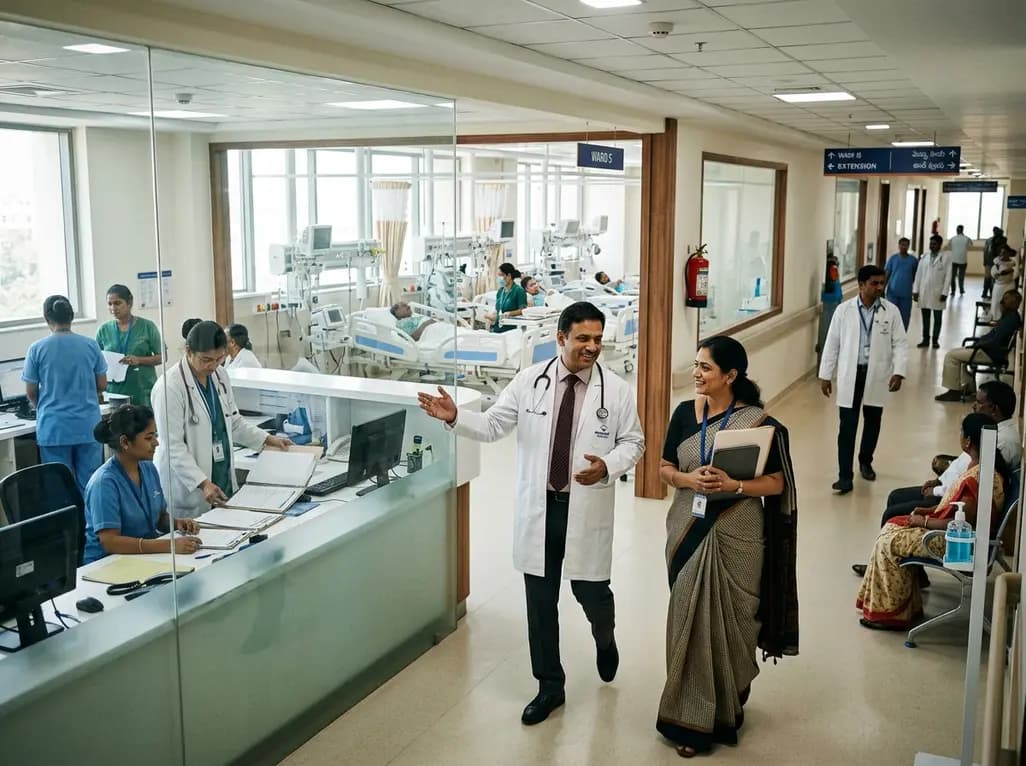
The Indian private healthcare ecosystem is witnessing a massive influx of institutional capital, driving consolidation and operational maturity across tertiary hospital networks. Recently, Medicover India hospitals announced an ambitious roadmap to achieve system-wide profitability across all 25 clinical network centers within the next 18 months. This operational turnaround follows a landmark transaction in which global private equity leader KKR agreed to acquire Swedish healthcare provider Medicover's Indian operations for €1.2 billion. Consequently, this strategic acquisition delivers necessary liquidity to resolve mounting leverage while funding an aggressive expansion plan. Healthcare providers, clinicians, and hospital administrators across India are closely watching these developments as institutional investments reshape clinical infrastructure delivery and specialized care accessibility.
Currently, 19 of the 25 Medicover India hospitals operate profitably, while the remaining six facilities are progressing rapidly through their operational ramp-up stages. Executive leadership expects consolidated core operating margins to increase substantially from the current baseline of 14% to between 20% and 25% over the next 12 to 18 months. Historically, greenfield and recently commissioned tertiary care facilities experience an initial gestation period of 12 to 18 months before reaching cash flow breakeven. As these newer hospital units mature, they cease exerting downward pressure on corporate earnings. Furthermore, accelerating bed occupancy allows hospital networks to amortize fixed infrastructure and diagnostic equipment costs across a larger patient volume. Therefore, optimizing throughput across both outpatient and inpatient clinical workflows remains central to achieving targeted financial outcomes. Leadership highlighted that rising debt burdens previously constrained strategic execution, making a partnership with an established global investor essential. Ultimately, this capital realignment stabilizes balance-sheet mechanics, enabling medical directors to focus entirely on clinical governance, patient acquisition, and operational excellence.
The acquisition agreement with KKR marks one of the most substantial private equity transactions within the Indian healthcare delivery sector. Before finalizing this agreement, Medicover considered tapping public capital markets via an initial public offering to raise expansion capital. However, private equity backing provides immediate access to substantial growth funds without public equity market volatility. Furthermore, reports indicate that KKR plans to inject additional development capital to scale existing multi-specialty hubs. Following regulatory clearances, the hospital network will undergo a formal rebranding to reflect its new ownership structure. In addition, the influx of capital allows management to aggressively settle existing liabilities that previously weighed down operating returns. Consequently, hospital leadership can now allocate dedicated capital expenditure toward procuring advanced medical technologies, including robotic surgical consoles, high-end linear accelerators, and digital diagnostic platforms. By resolving structural debt constraints, the hospital network secures a robust financial runway to compete against established tertiary healthcare chains across southern and western India.
To reach its financial targets, the hospital chain plans to scale operational bed capacity and significantly enhance clinical asset utilization. The network currently commands a cumulative capacity of approximately 6,000 beds across its multi-specialty footprint. Over the next 18 months, management aims to increase occupied beds by 67%, expanding occupied capacity from roughly 2,500 to over 4,000 beds. In addition to expanding chargeable inpatient beds, capital expenditures will optimize high-acuity infrastructure, including intensive care units, modular surgical suites, and dedicated emergency stabilization bays. Consequently, increasing high-acuity bed utilization directly enhances average revenue per occupied bed, which serves as a vital operational metric for modern hospital administrators. Furthermore, expanding operational capacity requires scaling medical staffing, including specialist consultants, intensivists, nursing personnel, and allied healthcare professionals. Therefore, clinical leadership is instituting streamlined workflow protocols to accelerate patient turnaround times without compromising diagnostic precision or safety. By converting existing physical capacity into fully staffed, operational beds, the hospital system creates significant operating leverage across its clinical specialties.
The expansion strategy of Medicover India aligns with broader demographic and epidemiological transitions across the country. India currently faces an escalating burden of non-communicable diseases, notably cardiovascular disorders, diabetes-related end-organ disease, complex neurological conditions, and oncology cases. Consequently, patients increasingly demand multi-disciplinary, specialized care that integrates advanced diagnostics with comprehensive surgical and therapeutic modalities. Moreover, rising personal disposable incomes and increasing public awareness have elevated patient expectations regarding clinical quality and healthcare delivery standards. In addition, the rapid expansion of private health insurance and government-backed healthcare protection schemes has significantly lowered out-of-pocket payment barriers for tertiary treatments. Because tertiary medical care requires high clinical expertise and sophisticated medical technology, multi-specialty hospital chains possess a distinct advantage over fragmented single-doctor clinics. Therefore, by expanding its specialized service offerings, the hospital group meets urgent community healthcare demands while ensuring steady patient footfalls across advanced clinical departments.
KKR's multi-billion-euro transaction represents an accelerating trend of global private equity involvement in Indian healthcare infrastructure. Recent years have seen massive institutional investments across leading regional and national hospital chains, fertility networks, and single-specialty clinical platforms. For example, prominent institutional funds have acquired major stakes in leading providers like CARE Hospitals, Baby Memorial Hospital, and specialized oncology networks. Institutional investors view India's healthcare sector as highly resilient, supported by long-term demographic tailwinds and a structural supply shortage of quality hospital beds. Furthermore, private equity operators bring sophisticated management practices, centralized supply chain procurement, and advanced clinical informatics to fragmented hospital networks. In addition, these institutional platforms facilitate regional clinical consolidation, creating interconnected tertiary and quaternary referral hubs. However, healthcare leaders must ensure that commercial margin targets align seamlessly with clinical governance, ethical medical practices, and patient-centric care pathways. As institutional capital accelerates healthcare modernization, Indian clinicians and patients benefit from upgraded diagnostic infrastructure, better clinical governance, and expanded access to state-of-the-art medical treatments.
Q1: Why is Medicover India transitioning ownership to private equity firm KKR?
Medicover India experienced an increasing debt burden that created operational constraints, prompting executive leadership to seek private equity backing rather than relying solely on a public market listing. Global investment firm KKR signed a €1.2 billion acquisition deal to acquire the business, providing substantial capital to extinguish existing liabilities, modernize infrastructure, and fund operational bed expansion.
Q2: What are the primary profitability and margin targets for the hospital chain?
Currently, 19 of the network's 25 hospitals are profitable. The organization plans for all 25 facilities to reach full profitability within the next 18 months as newer hospital units mature. Additionally, consolidated core operating EBITDA margins are projected to climb from 14% to between 20% and 25% through increased operational bed occupancy and enhanced clinical utilization.
Q3: How will the hospital network scale its operational bed capacity?
The hospital network maintains an overall infrastructure capacity of 6,000 beds across its multi-specialty hospitals. Over the next 18 months, the company aims to boost occupied beds by 67%, expanding occupied capacity from roughly 2,500 beds to 4,000 beds. Proceeds from the investment will convert raw floor space into fully operational, high-acuity, and chargeable beds.
Disclaimer: This content is for informational and educational purposes only. It does not constitute medical advice or replace professional judgment. Refer to the latest local and national guidelines for clinical practice.
References

Read summarized clinical updates, watch expert medical content, and earn CME certifications right from your smartphone.
Open your smartphone camera to scan and install.





Following a major €1.2 billion buyout by global private equity firm KKR, Medicover India is scaling bed capacity, boosting occupancy, and aiming for complete network profitability alongside robust 20-25% operating margins across all its multi-specialty tertiary facilities.
last month

UK Research and Innovation is deploying £80 million across the NHS to trial nine cutting-edge technologies. The initiative features seven-minute brain MRIs, blood biomarker assays, and predictive AI tools, aiming to evaluate 92% of suspected cases within 18 weeks and overcome lengthy diagnostic backlogs.
Today

A mixed-methods study identifies key drivers of PMTCT service utilization among adolescent girls and young women aged 15-24. Highlighting age disparities, PrEP uptake, and systemic barriers, the evidence guides clinicians toward adolescent-responsive, integrated maternal HIV prevention protocols.
Today

PepsiCo and Monster Beverage have challenged the FSSAI ban on the energy drink label in Indian courts. While companies highlight supply disruptions, regulatory actions spotlight severe cardiovascular and metabolic risks associated with excessive caffeine, sugar, and taurine consumption, especially in adolescents.
Today
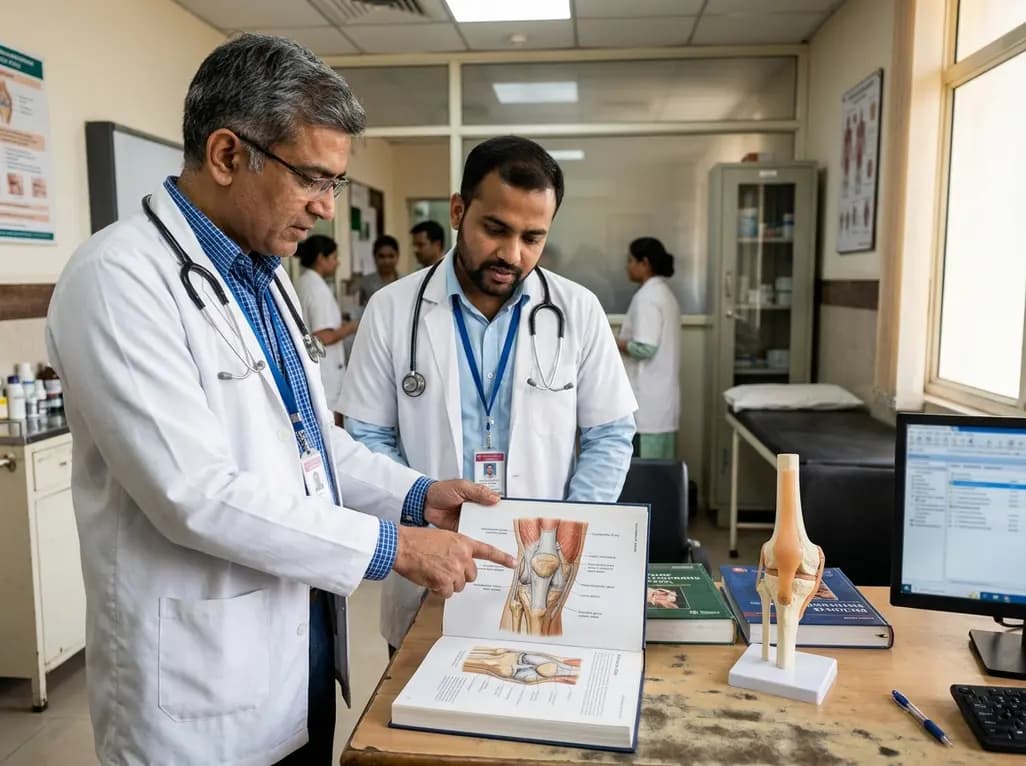
A narrative review investigates whether the articularis genus muscle functions as an independent anatomical entity or blends with the vastus intermedius. We evaluate its morphology, role in retracting the suprapatellar bursa, and direct clinical significance in anterior knee pain and arthroplasty.
Today

A Bayesian multilevel meta-analysis reveals that aerobic training combined with moderate carbohydrate restriction modestly lowers HbA1c in type 2 diabetes. However, sparse data and very low certainty leave incremental benefits over exercise or diet alone unproven, highlighting the need for individualized care.
Today
