.webp&w=384&q=75)

Loading, please wait...
Loading, please wait...
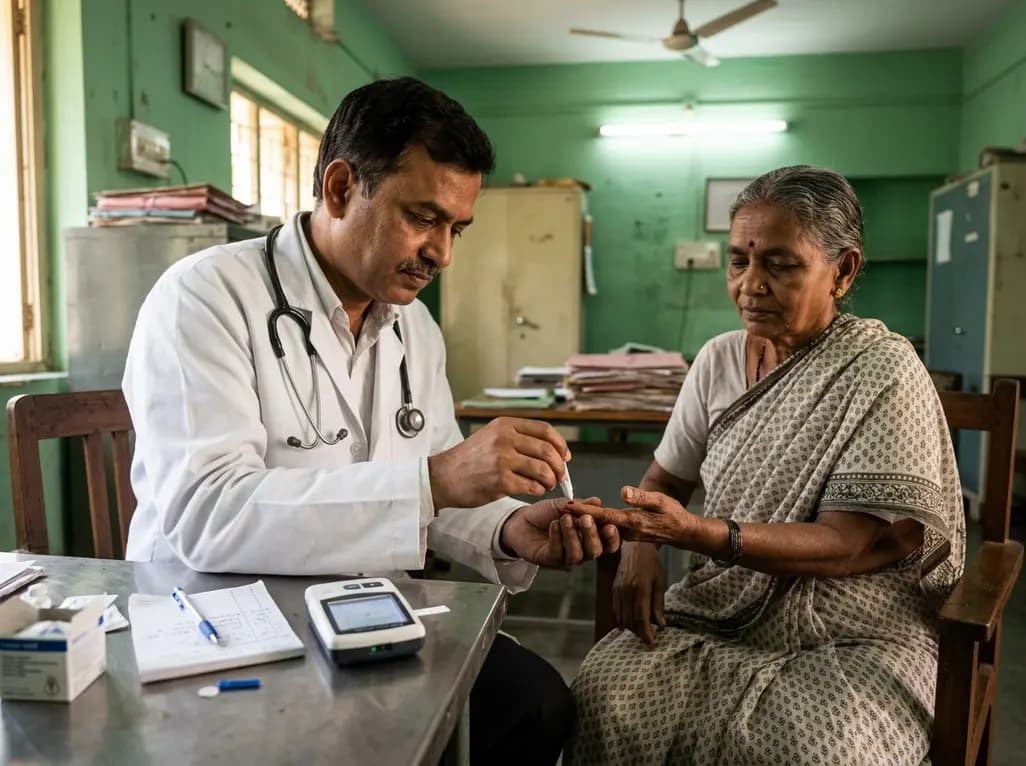
Dynamic inflammation regulation is a critical indicator of how the immune system maintains homeostasis and responds to physiological stressors. Traditional baseline measures of chronic inflammation often fail to capture the nuances of immune reactivity. Consequently, researchers have turned to ex vivo cell culture systems to quantify inflammatory responses more accurately. A recent report highlights a breakthrough in implementing these systems within low-resource environments using minimally invasive techniques.
The study utilized finger stick capillary blood collected from 202 adults in the Dominican Republic. Researchers assessed stimulated inflammation and glucocorticoid (GC) sensitivity by incubating samples with lipopolysaccharide (LPS). Notably, the median cytokine responses for IL-6, IL-1β, and TNFα were robust upon activation. However, these responses were significantly attenuated when incubated with both LPS and GC, effectively capturing the body's sensitivity to inhibition.
Measuring dynamic inflammation regulation provides a more comprehensive view of an individual's health than static markers alone. This approach allows clinicians to observe both the magnitude of an inflammatory response and the effectiveness of the body’s natural inhibitory mechanisms. Furthermore, the use of finger stick capillary blood makes this protocol highly adaptable for rural and resource-limited settings. Specifically, it eliminates the need for venous blood draws and complex laboratory infrastructure. Such innovations are particularly relevant for healthcare delivery in diverse eco-social milieus where diagnostic accessibility remains a challenge.
Microsampling offers a practical alternative for large-scale epidemiological studies. Because the protocol is minimally invasive, it encourages higher participation rates among diverse populations. Additionally, the ability to measure GC sensitivity ex vivo helps identify individuals at risk for inflammatory dysregulation before clinical symptoms manifest. Consequently, this method paves the way for novel research into the long-term health impacts of chronic stress and environmental exposures in developing regions.
Finger stick microsampling is minimally invasive and requires less equipment. This makes it ideal for field research and low-resource clinical settings where traditional phlebotomy is difficult to implement.
Glucocorticoid sensitivity measures how well the body can suppress or "turn off" an inflammatory response. Lower sensitivity often indicates a higher risk for chronic inflammatory diseases and poor stress recovery.
The system typically measures key pro-inflammatory cytokines such as Interleukin-6 (IL-6), Interleukin-1 beta (IL-1β), and Tumor Necrosis Factor-alpha (TNFα).
Disclaimer: This content is for informational and educational purposes only. It does not constitute professional medical advice, diagnosis, or treatment. Always seek the advice of your physician or other qualified healthcare provider with any questions you may have regarding a medical condition. Refer to the latest local and national guidelines for clinical practice.
References
1. Krause KC et al. Measuring Dynamic Inflammation Regulation in Low-Resource Settings: Results From a Sample of Adults in the Dominican Republic. Am J Hum Biol. 2026 Jun undefined. doi: 10.1002/ajhb.70286. PMID: 42226028.
2. Moriarity DP et al. Inflammatory Proteins are Highly Variable During a Natural Stressor: A Call for Intensive Longitudinal Blood Microsampling. bioRxiv. 2026.
3. Allen SL et al. Improving Physiological Relevance of Cell Culture: The Possibilities, Considerations and Future Directions of the Ex Vivo Co-Culture Model. ResearchGate. 2022.

Read summarized clinical updates, watch expert medical content, and earn CME certifications right from your smartphone.
Open your smartphone camera to scan and install.





A new study demonstrates the feasibility of measuring dynamic inflammation and glucocorticoid sensitivity using finger stick blood in low-resource settings....
4 months ago

A retrospective cohort study of 7,716 ICU patients from the MIMIC-IV database demonstrates that Gradient Boosting Decision Trees significantly outperform traditional SOFA scores in predicting in-hospital mortality among patients with sepsis and diabetes, with SHAP analysis providing clinical interpretability.
Today

A prenatal case highlights severe glutaric acidemia type II presenting as bilateral hyperechoic cystic kidneys at 18 weeks. Whole-exome sequencing revealed a novel homozygous ETFDH frameshift variant, demonstrating the power of rapid genetic testing in fetal renal anomalies.
Today
This article reviews the forensic and clinical complexities of acute myocarditis arising on left ventricular hypertrophy in children, highlighting early diagnostic red flags and multidisciplinary postmortem autopsy protocols.
Today

This comparative study evaluates posterior labral tears with and without glenohumeral instability, highlighting distinct demographic patterns, MRI underestimation in stable shoulders, and successful arthroscopic repair outcomes.
Yesterday

A clinical study demonstrates that early intervention with tocilizumab, either as monotherapy or bridged with corticosteroids, achieves significant proptosis reduction and resolves active inflammation in treatment-naive thyroid eye disease.
Yesterday
