.webp&w=384&q=75)

Loading, please wait...
Loading, please wait...
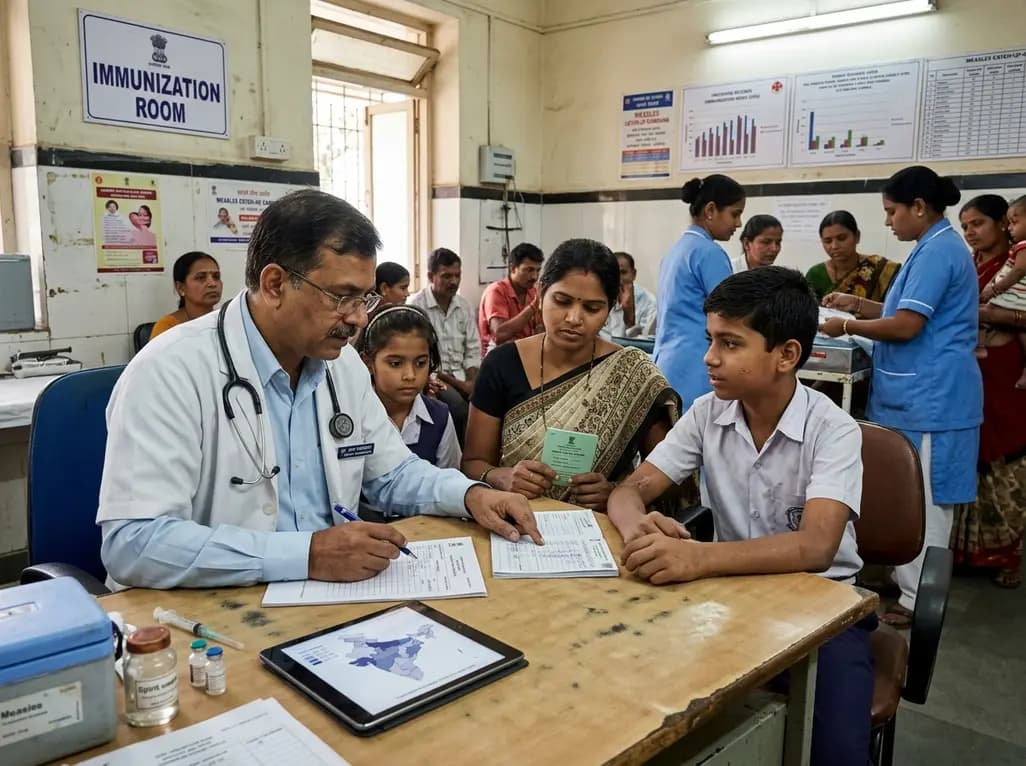
The World Health Organization South-East Asia Region currently faces persistent outbreaks of vaccine-preventable illnesses despite reporting historically high infant immunization metrics. Health experts warn that expanding measles immunity gaps among older children and adolescents now threaten regional disease elimination targets. During the 17th regional technical advisory meeting in New Delhi, leaders gathered to resolve these urgent epidemiological concerns. Consequently, clinicians and public health authorities must recalibrate routine delivery strategies to protect susceptible cohorts across all communities.
The South-East Asia Region achieved an impressive 94 percent coverage for the third dose of diphtheria, pertussis, and tetanus vaccine in 2025. Consequently, this remarkable figure represents the highest pediatric coverage level recorded globally. Furthermore, targeted immunization initiatives reduced the number of zero-dose children across member states by 65 percent since 2021. Overall, unvaccinated and under-vaccinated children dropped from 4.5 million in 2019 to approximately 2 million in 2025.
However, aggregate national numbers often conceal acute vulnerabilities within localized communities. Aggregated statistics create an illusion of regional safety while unprotected populations remain clustered in specific geographies. For example, migrant settlements, remote rural enclaves, and dense urban slums frequently register substantially lower vaccine uptake. Professor Rakesh Aggarwal, Chair of the advisory group, highlighted that national success metrics often fail to reveal these stark internal disparities. Therefore, health systems must look beyond broad country-level summaries to detect overlooked micro-pockets. In addition, persistent geographic inequities allow wild viruses to circulate freely among unprotected individuals. When disease transmission continues undetected in these marginalized groups, broader communities face recurring epidemic threats.
Measles spreads rapidly through populations whenever overall population immunity falls beneath the critical 95 percent threshold. Consequently, recent regional outbreaks demonstrate how older children and adolescents harbor substantial susceptibility. Historically, primary healthcare systems concentrated immunization resources predominantly on infants under one year of age. While this targeted focus successfully lowered infant mortality, it inadvertently left older age groups vulnerable over time.
Additionally, past disruptions to routine healthcare services created unimmunized cohorts that aged without acquiring protective antibodies. In particular, missed supplementary immunization rounds prevented older pediatric patients from receiving vital booster doses. Because measles is exceptionally contagious, even minor population gaps can ignite intense local flare-ups. Clinical presentations in older adolescents frequently produce severe systemic complications, including secondary bacterial pneumonia and encephalitis. Thus, healthcare professionals must recognize that measles poses serious dangers beyond early infancy. Moreover, failing to immunize older demographics enables persistent community transmission. Frontline practitioners must actively identify and vaccinate susceptible teenagers during routine outpatient encounters.
Addressing persistent transmission requires healthcare leaders to prioritize precise subnational surveillance mechanisms. At the advisory gathering, Dr Nilesh Buddha emphasized that sustained immunization progress demands rigorous local data monitoring. Program managers cannot rely on national averages to allocate scarce programmatic resources effectively. Instead, health authorities must deploy granular epidemiological mapping to uncover real-time vaccine dropouts.
Furthermore, strengthening integrated laboratory networks ensures rapid biological confirmation of suspected rash illnesses. Timely genomic sequencing allows epidemiologists to track specific viral lineages and identify transmission pathways across administrative boundaries. Clinicians also play an essential frontline role by reporting suspected measles cases immediately to local surveillance officers. In addition, digital tracking registers enable health workers to recall defaulters before local immunity wanes significantly. Nevertheless, surveillance systems must also monitor other vaccine-preventable infections that exploit the same delivery bottlenecks. Effective data collection directly empowers district medical officers to organize swift catch-up vaccination drives. Ultimately, robust surveillance transforms raw clinical observations into targeted public health interventions.
Public health strategies must transcend basic infant immunization by adopting a comprehensive life-course approach. The Regional Vaccine Implementation Plan 2022–2026 explicitly emphasizes equitable vaccine access across every developmental stage. For instance, human papillomavirus vaccination coverage stood at merely 7 percent across the region in 2025. Member states have established an ambitious regional goal to achieve 48 percent coverage by 2026.
However, meeting such ambitious benchmarks requires integrating adolescent healthcare delivery platforms directly into schools and youth organizations. In addition, health agencies are actively accelerating the introduction of several underutilized pediatric formulations. These vital additions include pneumococcal conjugate, rotavirus, and typhoid conjugate vaccines to mitigate severe childhood morbidity. Adolescent vaccination visits also offer valuable clinical opportunities to screen for missed childhood doses. When healthcare practitioners evaluate teenage patients, they should concurrently verify complete measles and rubella immunizations. Consequently, life-course immunization protects older demographics while simultaneously reinforcing regional population immunity against resurgent pathogens.
The South-East Asia Region currently lags behind its established measles elimination targets. Specifically, only four out of ten regional member states have officially verified measles elimination. In contrast, seven regional countries have successfully eliminated endemic rubella transmission. This notable disparity highlights the superior transmissibility of the measles virus and its ability to exploit minor gaps.
Therefore, regional health leaders are actively outlining strategic priorities beyond the 2026 planning cycle. Experts are addressing critical challenges, including volatile immunization financing, health workforce constraints, and growing vaccine hesitancy. Additionally, rapid urbanization, human migration, and environmental crises continue to complicate vaccine delivery in vulnerable zones. To overcome these persistent obstacles, governments must mobilize dedicated domestic funds rather than relying solely on external grants. Furthermore, medical societies must actively counter online misinformation with transparent scientific communication. Clinicians must champion vaccine confidence during every family consultation to ensure high community acceptance. Through sustained domestic commitment and rigorous regional coordination, member states can ultimately close historical immunity deficits.
Q1: Why are measles outbreaks occurring despite record childhood immunisation coverage in the region?
High national vaccination coverage figures often conceal significant subnational disparities and pockets of unvaccinated individuals. In addition, routine immunization systems have traditionally prioritized infants under one year of age, inadvertently leaving older cohorts unprotected. Over time, accumulated groups of unimmunized children and adolescents have created substantial community vulnerability. Because the measles virus spreads with exceptional ease, it quickly locates and exploits these localized immunity deficits, triggering widespread disease flare-ups despite overall statistical progress.
Q2: How many countries in the South-East Asia Region have eliminated measles compared to rubella?
According to the World Health Organization, only four out of ten regional member states have successfully achieved measles elimination. In contrast, seven member states have verified rubella elimination across the region. This noticeable discrepancy underscores the immense transmissibility of the measles virus, which requires population immunity levels above 95 percent to stop spread. Consequently, regional health authorities are revising strategic implementation frameworks beyond 2026 to accelerate catch-up initiatives and close remaining gaps.
Q3: What targets and interventions are prioritized under the Regional Vaccine Implementation Plan?
The Regional Vaccine Implementation Plan emphasizes equitable life-course immunization, outbreak mitigation, and vaccine-preventable disease elimination. A major current priority involves expanding human papillomavirus coverage from 7 percent in 2025 to 48 percent by 2026. Furthermore, technical advisory groups are driving the accelerated rollout of essential underutilized formulations, including pneumococcal conjugate, rotavirus, and typhoid conjugate vaccines. The regional strategy also strengthens domestic public health financing, laboratory surveillance networks, and targeted workforce training across all member nations.
Disclaimer: This content is for informational and educational purposes only. It does not constitute medical advice or replace professional judgment. Refer to the latest local and national guidelines for clinical practice.
References

Read summarized clinical updates, watch expert medical content, and earn CME certifications right from your smartphone.
Open your smartphone camera to scan and install.





Despite achieving a record 94 percent DTP3 coverage, the WHO South-East Asia Region continues to confront measles outbreaks driven by immunity gaps in older children and adolescents. Health leaders at the 17th SEAR ITAG meeting stressed subnational data surveillance, catch-up campaigns, and life-course vaccination.
Today

Alveolar macrophages in idiopathic pulmonary fibrosis display aberrant HIF-1α stabilization despite residing in oxygen-rich alveoli. Driven by reactive oxygen species, this pseudohypoxic signalling reprograms macrophages toward a profibrotic phenotype, creating new translational avenues for pulmonary therapy.
Today

The ClinGen Prenatal Gene Curation Expert Panel evaluated 63 disease relationships across 61 genes, establishing clinical validity for severe fetal phenotypes like hydrops and stillbirth to enhance prenatal genomic interpretation and clinical care.
Today
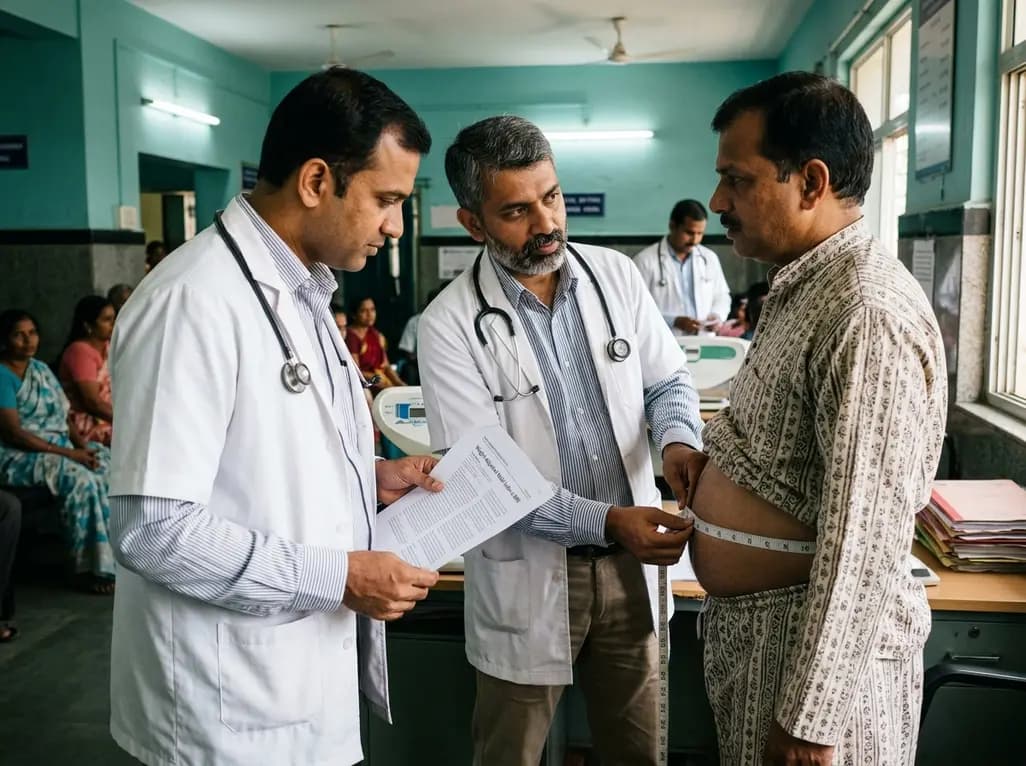
A cohort study demonstrates that the weight-adjusted waist index predicts all-cause and cardiovascular mortality more accurately than BMI and conventional adiposity metrics, offering clinicians a practical anthropometric tool for superior cardiometabolic risk stratification.
Today

New research reveals that HOXD13 regulates primary cilia signalling and genomic stability in distal synovial fibroblasts, uncovering why conditions like rheumatoid arthritis target specific joints.
Today
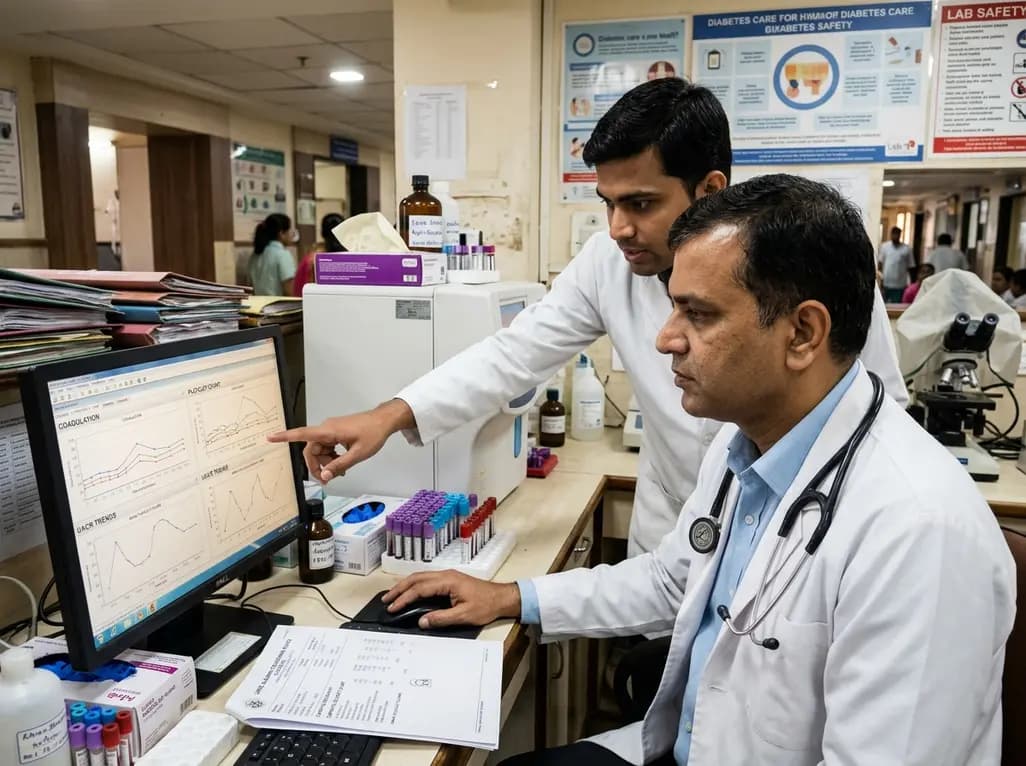
A western India study demonstrates that shortened coagulation times (PT, APTT), elevated mean platelet volume, and increased UACR strongly correlate with type 2 diabetes microvascular complications, highlighting the clinical value of combined hemostatic and renal profiling for early risk stratification.
Today
