.webp&w=384&q=75)

Loading, please wait...
Loading, please wait...

Pancreatic cancer remains a significant challenge due to its aggressive nature and late-stage detection. Consequently, researchers are turning to mass spectrometry imaging to gain deeper insights into its complex molecular landscape. This technology provides a spatially resolved map of the tumor microenvironment, which is essential for understanding intratumour heterogeneity. By analyzing tissue without labels, researchers use MSI to visualize various biomolecules concurrently. This approach offers a distinct advantage over traditional methods that lack spatial context.
Furthermore, mass spectrometry imaging is proving invaluable for biomarker discovery and tumor classification. Since the technique preserves spatial context, it helps identify how different cell populations interact within the pancreas. Additionally, clinicians use these molecular maps to characterize treatment responses and track metastatic progression. Therefore, MSI bridges the gap between basic biology and clinical diagnostics. It offers hope for more precise therapeutic interventions and improved patient monitoring.
While technical limitations still exist, ongoing advancements in spatial omics continue to push the boundaries of cancer research. Scientists are now integrating MSI with other technologies to create comprehensive spatial atlases. These tools will likely revolutionize how we diagnose and treat pancreatic malignancies in the future. As a result, the integration of MSI into routine clinical workflows could significantly enhance patient outcomes. In conclusion, spatial biology techniques are transforming our approach to oncology.
Unlike traditional methods like CT or MRI, mass spectrometry imaging provides a detailed molecular map of metabolites, proteins, and lipids directly from tissue samples at a microscopic level.
Yes, by analyzing the unique molecular signature and drug distribution within a patient's tumor, MSI helps doctors tailor specific treatments to the individual's needs.
Disclaimer: This content is for informational and educational purposes only. It does not constitute medical advice or a professional relationship. Always consult a qualified healthcare provider for diagnosis and treatment. Refer to the latest local and national guidelines for clinical practice.
References

Read summarized clinical updates, watch expert medical content, and earn CME certifications right from your smartphone.
Open your smartphone camera to scan and install.





This article explores how mass spectrometry imaging (MSI) identifies molecular markers and heterogeneity in pancreatic cancer to improve clinical diagnostic...
7 months ago

A retrospective cohort study reveals that frailty quadruples the odds of pressure injuries in hospitalized older adults. Integrating the Clinical Frailty Scale with comprehensive geriatric care is crucial for identifying vulnerability early and implementing targeted multidisciplinary prevention.
Today
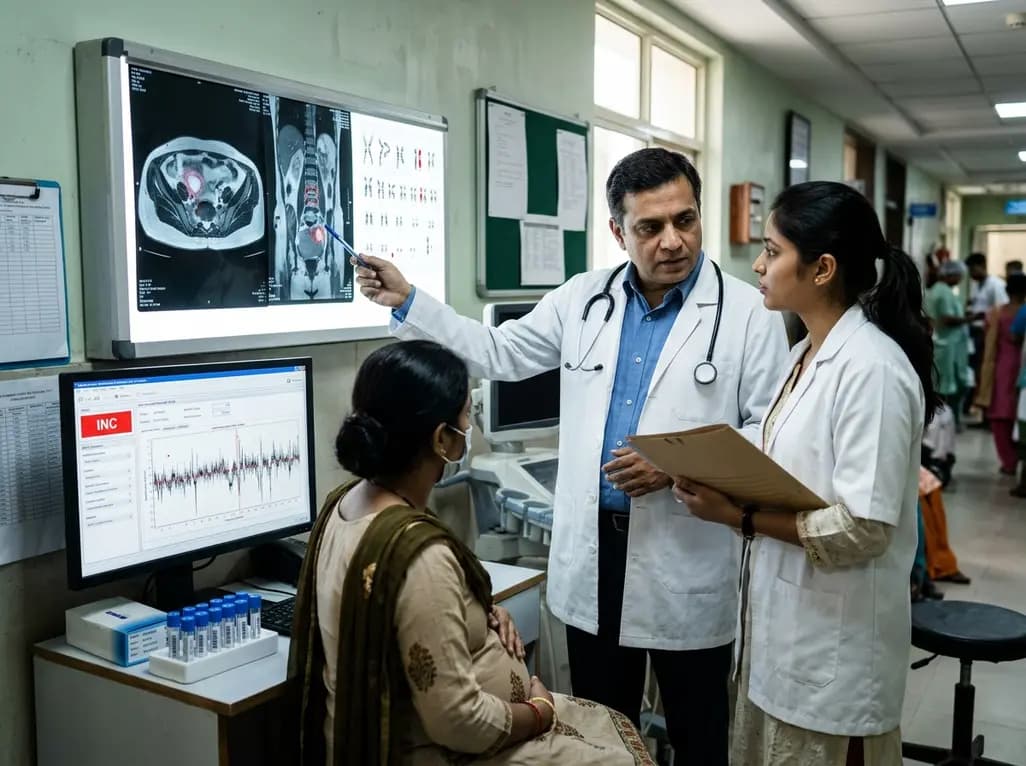
Occult maternal malignancy accounts for 3.82% of persistent unreportable NIPT results with genomic noise. Multiple chromosomal aberrations, notably on chromosome 18, warrant thorough oncological evaluation and whole-body MRI to ensure timely maternal diagnosis while preserving fetal care.
Today

This article reviews the forensic and clinical complexities of acute myocarditis arising on left ventricular hypertrophy in children, highlighting early diagnostic red flags and multidisciplinary postmortem autopsy protocols.
Today

A randomized controlled trial demonstrates that an eight-week dual-task training intervention significantly improves static and dynamic postural control over standard balance exercises in individuals with chronic ankle instability, addressing critical neurocognitive deficits during athletic and daily activities.
Today

A retrospective cohort study of 7,716 ICU patients from the MIMIC-IV database demonstrates that Gradient Boosting Decision Trees significantly outperform traditional SOFA scores in predicting in-hospital mortality among patients with sepsis and diabetes, with SHAP analysis providing clinical interpretability.
Today
