.webp&w=384&q=75)

Loading, please wait...
Loading, please wait...

Critical care medicine and anesthesiology increasingly recognize acute brain dysfunction as a major complication of systemic inflammation. Sepsis-associated encephalopathy and postoperative cognitive decline represent devastating clinical entities that share overlapping neuroinflammatory features. Despite clinical observations linking systemic infection with acute cognitive impairment, clinicians lack a precise understanding of the shared transcriptomic network connecting both disorders. Recent genomic research has successfully delineated candidate molecular signatures at the interface of sepsis and postoperative delirium. By analyzing multi-cohort transcriptomic datasets from patient populations, researchers identified pivotal biological nodes that drive systemic and neural immune dysregulation. These findings provide vital mechanistic insights that may guide earlier biomarker detection and targeted clinical therapeutics in high-risk perioperative and intensive care settings.
Both systemic infection and major surgical trauma trigger severe immune cascades that compromise the blood-brain barrier. Consequently, peripheral inflammatory mediators penetrate vulnerable cerebral regions, activating resident microglia and astrocytes. This persistent neuroinflammation disrupts neurotransmission, impairs synaptic plasticity, and precipitates acute brain dysfunction in surgical and critical care patients. However, isolating genuine biological overlap from heterogeneous clinical cohorts remains technically challenging due to divergent baseline patient demographics and confounding variables. To resolve these challenges, investigators integrated patient-derived transcriptomic profiles to identify shared differential gene expression. Specifically, researchers observed that acute systemic immune activation closely mirrors central neuroimmune signaling cascades. Therefore, identifying common hub genes provides clinicians with a coherent framework to understand how acute peripheral inflammatory stress transforms into acute delirium. This cross-disease approach establishes a solid foundation for defining unified diagnostic and therapeutic paradigms.
Multi-cohort microarray and RNA sequencing studies frequently face technical artifacts that introduce severe test-statistic inflation. In the sepsis discovery cohort GSE65682, baseline genomic inflation factors initially reached alarming levels, potentially skewing biological interpretations. Consequently, investigators applied an advanced Removal of Unwanted Variation 2 (RUV2)-style correction strategy using stable, low-variance control genes. This rigorous normalization reduced the genomic inflation factor significantly, stabilizing downstream comparative calculations. Subsequently, researchers intersected the corrected sepsis-associated differentially expressed genes with nominally significant postoperative delirium candidate profiles. Rank-rank hypergeometric overlap analysis confirmed directional concordance across disease states. Furthermore, protein-protein interaction networks pinpointed high-degree hub genes operating within shared inflammatory pathways. This robust bioinformatic pipeline successfully eliminated batch confounders, yielding highly reliable candidate genes for subsequent clinical exploration and translational biomarker validation.
Among the identified candidates, mitogen-activated protein kinase 14 (MAPK14), which encodes the p38α kinase, emerged as the most prominent hub gene. Machine learning models utilizing SHAP-based feature importance confirmed that MAPK14 provided the highest discriminative contribution among candidate biomarkers. Furthermore, cross-cohort expression profiling demonstrated consistent disease-associated upregulation of MAPK14 across independent sepsis cohorts and postoperative delirium cohorts. The p38α MAPK pathway functions as an indispensable regulator of pro-inflammatory cytokine production, including tumor necrosis factor-alpha and interleukin-1 beta. Additionally, elevated MAPK14 expression strongly correlated with a neutrophil-predominant immune signature in circulating leukocytes. Activated neutrophils release damage-associated molecular patterns, reactive oxygen species, and neutrophil extracellular traps, thereby exacerbating microvascular injury. Consequently, overactivation of the p38α axis accelerates peripheral tissue destruction and promotes neurovascular breakdown during acute systemic stress.
After establishing MAPK14 as a central biological driver, investigators prioritized clinically available pharmacological agents capable of modulating this cascade. Losartan, an established angiotensin II type 1 receptor antagonist, emerged as a promising candidate for mechanism-guided therapeutic evaluation. Beyond its conventional antihypertensive properties, losartan possesses documented pleiotropic anti-inflammatory and neuroprotective actions within vascular and cerebral tissues. Molecular docking simulations demonstrated structural plausibility for a direct interaction between losartan and the MAPK14 kinase binding domain. Specifically, the compound exhibited favorable docking energy scores, maintaining close geometric proximity to key catalytic residues, including the conserved ASP-168 motif. However, investigators emphasized that in silico docking models represent hypothesis-generating evidence rather than definitive biochemical inhibition. Therefore, comprehensive in vitro kinase assays and prospective randomized trials remain necessary to validate whether losartan confers clinically meaningful neuroprotection.
These transcriptomic findings offer compelling clinical implications for intensivists, anesthesiologists, and surgeons managing high-risk elderly patients. First, recognizing MAPK14 upregulation provides a molecular rationale for tracking systemic inflammatory severity alongside acute cognitive monitoring tools. Clinicians can utilize validated screening instruments, such as the Confusion Assessment Method for the Intensive Care Unit, in tandem with inflammatory biomarkers. Second, exploring repurposed compounds like losartan offers an exciting pathway for perioperative clinical trials aimed at mitigating neurocognitive decline. Because losartan already possesses a well-established safety profile and wide availability, translational barriers remain significantly lower compared to novel chemical entities. Nevertheless, physicians must exercise caution and avoid unapproved off-label use until prospective interventional studies confirm safety, hemodynamic feasibility, and therapeutic efficacy in septic and surgical populations.
MAPK14 encodes the p38α mitogen-activated protein kinase, a key mediator of inflammatory signaling. It coordinates pro-inflammatory cytokine release and leukocyte activation. Its sustained upregulation during sepsis and surgical stress promotes blood-brain barrier dysfunction and neuroinflammation, which directly precipitate acute cognitive impairment and postoperative delirium in vulnerable individuals.
Researchers implemented a Removal of Unwanted Variation 2 (RUV2)-style adjustment methodology. By using the 10 percent lowest-variance genes and four estimated unwanted technical factors, they successfully minimized substantial test-statistic inflation in discovery datasets, ensuring accurate identification of genuine differentially expressed genes across independent clinical cohorts.
No, clinicians should not prescribe losartan solely for delirium prevention at this stage. Although computational molecular docking demonstrated structural binding plausibility with MAPK14, these findings remain strictly hypothesis-generating. Rigorous prospective clinical trials and pharmacodynamic validations are required before considering losartan for clinical delirium management.
Disclaimer: This content is for informational and educational purposes only. It is not intended to provide medical advice, diagnosis, or treatment recommendations. Clinical decisions should always be made by qualified healthcare professionals based on individual patient assessments and established clinical guidelines. The views expressed herein do not necessarily reflect the official policies or positions of any healthcare institution or regulatory body. Refer to the latest local and national guidelines for clinical practice.
References

Read summarized clinical updates, watch expert medical content, and earn CME certifications right from your smartphone.
Open your smartphone camera to scan and install.





Multi-cohort transcriptomic analysis identifies MAPK14/p38α as a key shared molecular target bridging sepsis and postoperative delirium. The study also presents computational docking evidence exploring losartan as a potential mechanism-guided pharmacological candidate for future clinical validation.
4 weeks back

A systematic review of 41 preclinical studies reveals that baicalin dampens systemic inflammation, inhibits NF-κB and NLRP3 pathways, and improves organ preservation in sepsis models. However, substantial study heterogeneity and a complete lack of human clinical trials highlight the need for further translational research.
Today

Discover the crucial distinctions between mesonephric and mesonephric-like proliferations of the female genital tract. Learn the key histomorphologic, immunohistochemical, and molecular differences essential for accurate diagnosis and clinical management.
Today
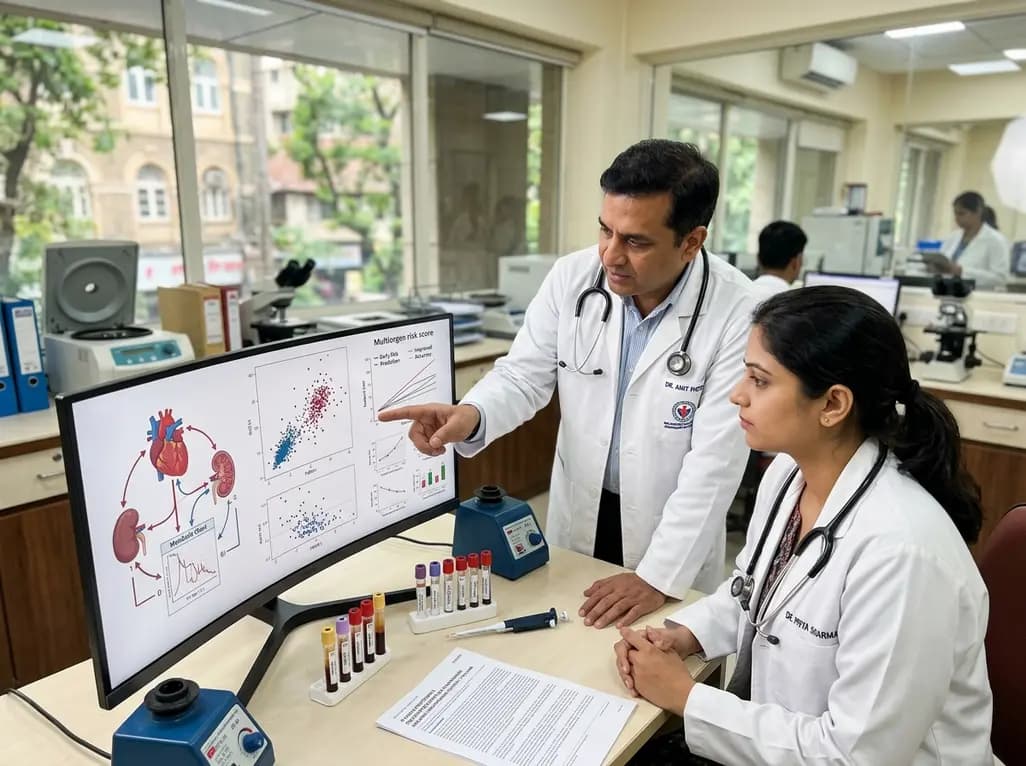
A large UK Biobank study reveals that plasma proteomic signatures capture preclinical organ damage and improve multiorgan risk prediction across early CKM syndrome stages 0 to 2 beyond traditional PREVENT clinical models.
Today

A narrative review investigates whether the articularis genus muscle functions as an independent anatomical entity or blends with the vastus intermedius. We evaluate its morphology, role in retracting the suprapatellar bursa, and direct clinical significance in anterior knee pain and arthroplasty.
Today

A Bayesian multilevel meta-analysis reveals that aerobic training combined with moderate carbohydrate restriction modestly lowers HbA1c in type 2 diabetes. However, sparse data and very low certainty leave incremental benefits over exercise or diet alone unproven, highlighting the need for individualized care.
Today
