.webp&w=384&q=75)

Loading, please wait...
Loading, please wait...
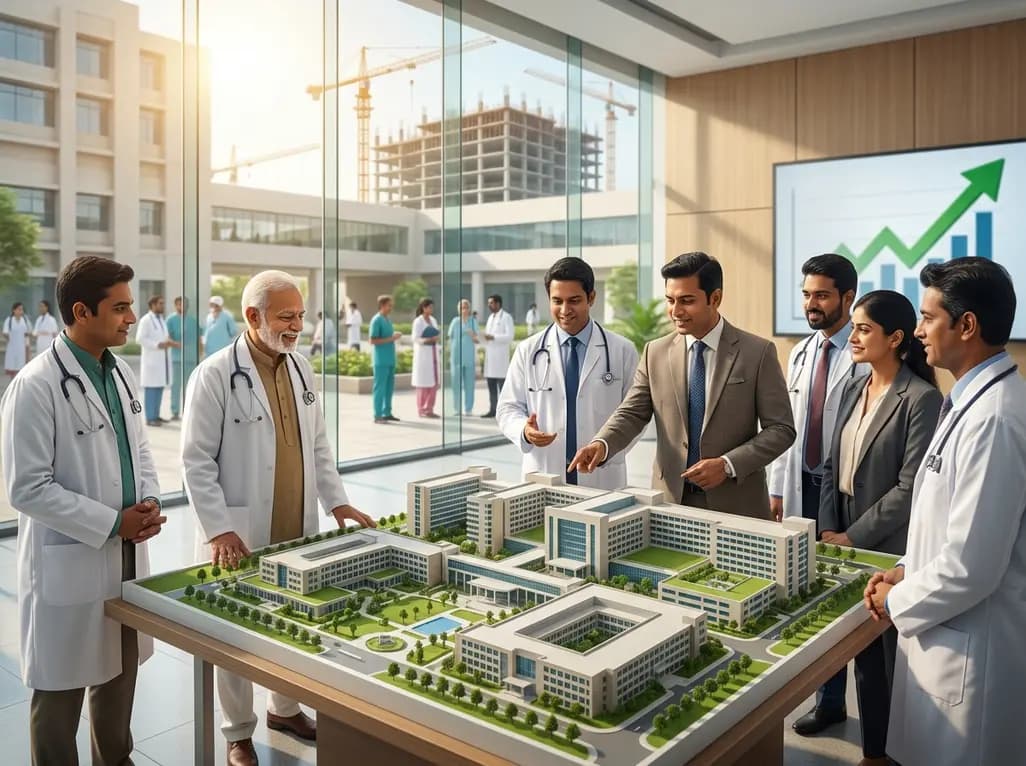
The healthcare sector in India is bracing for a major financial transition. Specifically, the highly anticipated Manipal Health IPO has secured approval from the Securities and Exchange Board of India. This milestone clears the path for a stock market debut in late July 2026. Consequently, medical professionals are closely watching these developments as the public offering will likely redefine healthcare infrastructure investments nationwide.
To begin with, the public listing of Manipal Health Enterprises is a massive healthcare IPO in India. Backed by Singapore's sovereign fund Temasek, the hospital chain initially filed its draft papers in March 2026. Furthermore, reports indicate that the company plans to raise up to $1.2 billion through this public issue. Therefore, this listing will set a new benchmark for hospital valuations in the domestic market. Indeed, industry analysts estimate the company's valuation to sit between $10 billion and $13 billion.
However, this massive debut comes at a time of significant macroeconomic volatility. For instance, recent geopolitical conflicts have driven substantial sell-offs by foreign portfolio investors in India. In fact, overseas investors have offloaded over $29 billion in domestic shares this year. Consequently, this heavy selling pressure has dragged the benchmark Nifty 50 index down by approximately 7%. Despite these external market headwinds, Manipal is moving forward with its listing plans. This decision reflects strong long-term confidence in the demand for organized private healthcare across India. Moreover, clinical leaders believe that this inflow of capital will trigger massive secondary investments in advanced medical technologies. Ultimately, this capital injection will help bridge the gap between rural and urban clinical service standards.
To understand the company's strength, one must examine its extensive clinical footprint. Specifically, Manipal Health operates one of the largest private hospital networks across India. By the end of 2025, the chain expanded its capacity to 49 hospitals. Consequently, this expansion increased its total capacity to over 12,600 licensed beds. Additionally, this massive physical presence spans 14 states and Union Territories. Therefore, the hospital group is highly capable of delivering specialized care to diverse patient populations.
This substantial growth was achieved through both organic expansion and aggressive clinical acquisitions. For example, the company recently integrated respected entities like AMRI, Medica Synergie, and Sahyadri Hospitals. As a result, Manipal consolidated its market share in eastern and western India. Moreover, the group aims to add nearly 2,700 more beds by 2030. This planned growth will involve both greenfield developments and brownfield expansions. By executing this aggressive strategy, the hospital chain ensures it remains at the forefront of the Indian healthcare system. Clinicians can thus expect continued upgrades in regional hospital infrastructure and medical resources. Consequently, the expansion will provide clinical staff with superior working environments and state-of-the-art diagnostic facilities.
From a financial perspective, Manipal Health Enterprises has demonstrated highly robust operating metrics. For instance, the company reported pro forma revenue of over 9,263 crore rupees in the fiscal year 2025. Furthermore, its operations yielded a strong earnings margin of 26.7%. This efficiency highlights the hospital chain's ability to optimize costs while maintaining high-quality medical standards. Consequently, these metrics have generated massive enthusiasm among prospective institutional and retail investors alike.
Undoubtedly, Singapore-based Temasek's heavy backing plays a pivotal role in this positive market sentiment. In addition, the involvement of other promoters, like Dr. Ranjan Pai, instills deep confidence in the brand's governance. Therefore, the upcoming listing represents more than just a capital-raising exercise. On the contrary, it acts as a validation of the corporate hospital model in developing countries. As corporate health systems grow, they must balance shareholder returns with ethical clinical care. Fortunately, Manipal's track record shows that patient-centric care and financial success can coexist harmoniously. As a result, this IPO is viewed as a landmark event for healthcare investments. Specifically, this financial stability ensures that long-term clinical research and developmental projects will receive adequate corporate funding.
Interestingly, the filing documents reveal that Manipal is betting heavily on the rising demand for complex medical care. For example, modern patients increasingly require sophisticated tertiary and quaternary medical interventions. Specifically, treatments like advanced oncology therapies, robotic surgeries, and multi-organ transplants demand massive clinical resources. Therefore, the capital raised from this public offering will likely fund state-of-the-art medical equipment across their facilities. This strategy will directly benefit patients who previously lacked access to such cutting-edge therapeutic options.
Furthermore, hospital administrations must continuously upgrade their technology to retain top-tier clinical talent. To achieve this, the company plans to establish highly specialized regional centers of excellence. Consequently, these centers will attract renowned specialists in cardiology, neurosciences, and orthopedics. Moreover, having access to advanced tools allows doctors to deliver much safer patient outcomes. Ultimately, this focus on complex care will elevate the overall quality of medical services in the country. Therefore, Indian physicians should prepare for a wave of technological integration in private healthcare facilities. This progression will undoubtedly redefine the standards of clinical practice. As a result, patients will experience shorter recovery times and far fewer surgical complications.
Ultimately, the successful execution of the Manipal Health IPO holds profound implications for medical professionals in India. First of all, the massive capital influx will create numerous career opportunities for young physicians, nurses, and allied health professionals. Additionally, the planned expansion of bed capacity across multiple states will require a massive recruitment drive. Consequently, doctors can anticipate better employment packages, improved research facilities, and structured pathways for career progression. Furthermore, corporate hospitals generally offer superior access to continuing medical education and global research collaborations.
At the same time, this corporate expansion will likely intensify competition among private healthcare providers. To stay competitive, other hospital chains will also need to upgrade their infrastructure and services. Therefore, the entire clinical ecosystem will experience a massive, technology-driven modernization. Moreover, as medical institutions become public-listed entities, their clinical outcomes and patient satisfaction rates will face intense public scrutiny. This transparency will encourage medical staffs to maintain the highest standards of safety and clinical ethics. Ultimately, the entire medical fraternity stands to benefit from this landmark financial transition.
Q1: What is the primary objective of the upcoming Manipal Health IPO?
The primary objective is to raise up to 1.2 billion dollars to fund massive clinical expansions and technological upgrades. Specifically, the hospital chain plans to add approximately 2,700 beds by 2030 through greenfield and brownfield projects. Consequently, this capital will help meet the surging demand for highly complex tertiary and quaternary care across multiple states in India.
Q2: How does Temasek's backing impact the market positioning of Manipal Health Enterprises?
Temasek's substantial backing provides a strong foundation of global financial credibility and institutional trust. Furthermore, this relationship helps the hospital group secure competitive funding and maintain rigorous corporate governance standards. Therefore, this strategic partnership enhances investor confidence in the upcoming public listing, even during periods when geopolitical conflicts trigger significant sell-offs by foreign portfolio investors in the broader Indian market.
Q3: How will the Manipal Health IPO directly affect Indian clinicians and healthcare professionals?
The successful listing will trigger rapid infrastructure growth, creating numerous career opportunities across various specialties. Additionally, doctors will gain access to cutting-edge medical technologies, advanced diagnostic tools, and better research funding. Moreover, listed hospitals must maintain high public transparency, which will foster superior clinical outcomes, enhanced patient safety, and structured, merit-based career progression for medical staff nationwide.
Disclaimer: This content is for informational and educational purposes only. It does not constitute medical advice or replace professional judgment. Refer to the latest local and national guidelines for clinical practice.
References

Read summarized clinical updates, watch expert medical content, and earn CME certifications right from your smartphone.
Open your smartphone camera to scan and install.





Temasek-backed Manipal Health Enterprises has received SEBI approval for its initial public offering (IPO), targeting a market debut in late July or early August 2026. Expected to raise up to $1.2 billion, this monumental public issue marks a major expansion milestone for India's healthcare infrastructure.
3 months ago

Discover the crucial role of glymphatic dysfunction in stroke, where perivascular clearance failure and neuroinflammation exacerbate cerebral edema and post-stroke brain injury.
Today

A prenatal case highlights severe glutaric acidemia type II presenting as bilateral hyperechoic cystic kidneys at 18 weeks. Whole-exome sequencing revealed a novel homozygous ETFDH frameshift variant, demonstrating the power of rapid genetic testing in fetal renal anomalies.
Today

Review how tailored exercise programs benefit frail older patients with heart failure. Explore pathophysiological mechanisms, individualized training prescriptions, and strategies to overcome adherence barriers in clinical practice.
Yesterday

This comparative study evaluates posterior labral tears with and without glenohumeral instability, highlighting distinct demographic patterns, MRI underestimation in stable shoulders, and successful arthroscopic repair outcomes.
Yesterday

A clinical study demonstrates that early intervention with tocilizumab, either as monotherapy or bridged with corticosteroids, achieves significant proptosis reduction and resolves active inflammation in treatment-naive thyroid eye disease.
Yesterday
