.webp&w=384&q=75)

Loading, please wait...
Loading, please wait...

Mandibular fractures in infants are exceptionally rare, yet they pose significant clinical challenges for pediatricians and surgeons. Recent data underscores that neonates and infants under 12 months require specialized diagnostic pathways compared to older children. Because the infant mandible is highly elastic and contains developing tooth buds, traditional adult surgical techniques are often inappropriate. Effective management centers on preserving growth potential while ensuring functional recovery and pediatric safeguarding.
Diagnosis primarily relies on a meticulous clinical examination. Clinical signs often include facial edema, refusal to feed, or blood-stained oral secretions. While imaging is helpful, clinicians must use it selectively to minimize radiation exposure in such young patients. For instance, ultrasound or low-dose CT scans may be indicated if a fracture is strongly suspected but not visible on plain radiographs. Furthermore, clinicians must differentiate true fractures from the natural non-union of the symphyseal region, which is a common anatomical variant in neonates.
Regarding treatment, conservative approaches remain the gold standard. Approximately 75% of infant mandibular fractures are managed without invasive surgery. Options include soft diet observation, acrylic splints, or circummandibular wiring for displaced fractures. However, surgery is reserved for only about 25% of cases, typically involving severe displacement or comminution. Consequently, preserving the periosteal integrity is vital, as it ensures that the mandible continues to grow normally. Most patients show excellent long-term outcomes, with over 90% achieving normal growth and development.
A critical component of managing mandibular fractures in infants is the safeguarding assessment. Since falls and traumatic deliveries are common causes, any injury that lacks a clear accidental explanation warrants investigation for non-accidental trauma. Statistics indicate that safeguarding procedures are documented in roughly 30% of these cases. Finally, long-term follow-up is mandatory until skeletal maturity to monitor for late-onset growth disturbances or dental eruptive issues.
These injuries are very rare, representing less than 3% of all pediatric mandibular fractures. They are usually caused by traumatic delivery in neonates or accidental falls in older infants.
Feeding can be challenging due to pain and displacement. However, most infants managed conservatively can resume feeding with soft diet modifications or specialized bottles under clinical supervision.
The primary goal is to restore function and preserve future growth. This is achieved by minimizing surgical intervention and protecting the developing tooth buds within the jawbone.
Disclaimer: This content is for informational and educational purposes only. It does not constitute medical advice or establish a doctor-patient relationship. Always seek the advice of a qualified healthcare provider for any medical condition. Refer to the latest local and national guidelines for clinical practice.
References
1. Razi MRM et al. Management of Mandibular Fractures in Infants and Neonates: A Narrative Review of Growth Preservation, Functional Recovery, and Safeguarding. Int J Paediatr Dent. 2026 May 07. doi: 10.1111/ipd.70097. PMID: 42098894.
2. Kakran A, Singhal R, Namdev R, et al. Management of Pediatric Mandibular Fractures Using Orthodontic Archwires and Elastic Traction: An Alternative to Conventional Treatment Methods. Int J Clin Pediatr Dent. 2025.
3. Vyas T, Singla S, Kuthiala P. Conservative Approach to Pediatric Mandibular Fracture: A Report of Two Cases. IOMC World. 2024.

Read summarized clinical updates, watch expert medical content, and earn CME certifications right from your smartphone.
Open your smartphone camera to scan and install.





Expert guidance on managing infant and neonatal mandibular fractures, focusing on growth-preserving conservative treatments and clinical diagnosis....
5 months ago
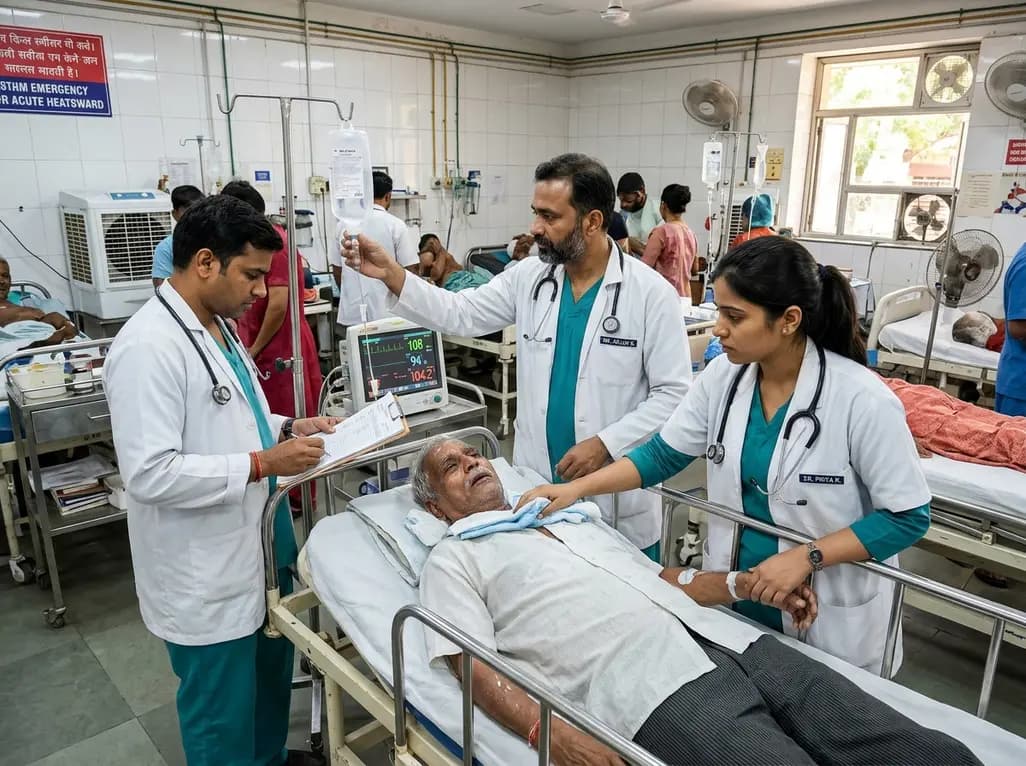
Recent epidemiological data reveals a dramatic surge in summer heat mortality driven by human-induced climate warming. This analysis explores the pathophysiological impacts on cardiac and renal systems, diagnostic dilemmas in death certification, and essential emergency cooling protocols for acute clinical care.
Today

Odisha has established India's first state-level clinical protocol specifically tailored for pregnant women with sickle cell disease. Developed with NHM and UNICEF, the framework provides structured antenatal screening, crisis mitigation, standardized referral pathways, and specialized interdisciplinary care.
Today

India is advancing preventive healthcare by integrating genomics, artificial intelligence, and quantum technologies. With the SANGAM programme sequencing one million Indian genomes, clinicians can unlock personalized therapies, detect cardiometabolic risks early, and curb the burden of diabetes and heart disease.
Today

A randomized controlled trial demonstrates that an eight-week dual-task training intervention significantly improves static and dynamic postural control over standard balance exercises in individuals with chronic ankle instability, addressing critical neurocognitive deficits during athletic and daily activities.
Today

A retrospective cohort study of 7,716 ICU patients from the MIMIC-IV database demonstrates that Gradient Boosting Decision Trees significantly outperform traditional SOFA scores in predicting in-hospital mortality among patients with sepsis and diabetes, with SHAP analysis providing clinical interpretability.
Today
