.webp&w=384&q=75)

Loading, please wait...
Loading, please wait...

Liver transplantation remains the definitive curative intervention for patients facing cirrhosis complicated by hepatocellular carcinoma. For decades, clinicians worldwide have relied heavily upon the restrictive Milan criteria to guide candidate selection. However, expanding evidence suggests that static morphological cutoffs often exclude eligible individuals who could achieve excellent post-transplant longevity. Specifically, the Malatya criteria have emerged as an innovative paradigm designed to expand recipient eligibility safely. Moreover, a landmark validation study now provides compelling fifteen-year clinical evidence demonstrating that this expanded framework maintains satisfactory oncological outcomes while broadening therapeutic access.
The Milan criteria transformed surgical oncology in 1996 by establishing predictable survival benchmarks for transplant recipients with early-stage hepatocellular carcinoma. Nevertheless, these strict parameters rely exclusively on tumor size and nodule count. Consequently, many patients with biologically indolent but slightly larger lesions face premature exclusion from curative transplantation. In response to this clinical limitation, pioneering transplant specialists formulated the Malatya criteria.
This innovative scoring system incorporates biological aggressiveness alongside macro-morphological boundaries. Specifically, the framework evaluates maximal tumor diameter, histopathological differentiation, and circulating biochemical biomarkers, including alpha-fetoprotein and gamma-glutamyl transferase. Therefore, the protocol recognizes that biological behavior dictates post-transplant recurrence more accurately than arbitrary physical dimensions. By incorporating systemic tumor biology, the criteria identify candidates who possess larger lesions yet harbor minimal metastatic potential. As a result, transplant centers can offer life-saving surgery to a substantial cohort of patients previously deemed unresectable or untransplantable. Furthermore, this dynamic perspective aligns directly with modern precision oncology, shifting clinical decision-making from rigid anatomical rules to individualized biological risk stratification.
To determine real-world oncological efficacy, researchers conducted a comprehensive retrospective investigation covering fifteen consecutive years of surgical experience. The clinical team systematically evaluated consecutive adult patients who underwent liver transplantation for hepatocellular carcinoma between 2007 and 2022. Importantly, the analysis included comprehensive clinical, radiological, and histopathological records gathered from prospectively maintained institutional databases.
During the analytical phase, investigators categorized each patient according to both the conventional Milan criteria and the newer Malatya criteria. Additionally, the researchers performed detailed survival tracking, focusing primarily on five-year overall survival, five-year disease-free survival, and post-transplant tumor recurrence rates. The team calculated the expansion rate to quantify how many additional patients qualified for transplantation under the Malatya framework compared to Milan limits. Moreover, the prolonged fifteen-year follow-up period provided sufficient statistical power to observe late tumor recurrences and overall graft durability. Furthermore, rigorous pathological review of explanted livers confirmed accurate tumor staging. Thus, investigators eliminated confounding discrepancies often observed between pre-operative imaging and final pathological examination. Because the study captured a diverse surgical cohort over a prolonged modern era, the resulting findings offer robust validation for clinical transplant teams worldwide.
The statistical findings demonstrate that expanding transplant boundaries does not compromise oncological principles. Within the traditional Milan cohort, the five-year overall survival reached 72.6%, while the five-year disease-free survival achieved 73.0%. Concurrently, patients within Milan parameters experienced a five-year tumor recurrence rate of 6.2%. These figures reaffirm the historical reliability of classic selection frameworks.
Remarkably, the Malatya group achieved highly competitive long-term therapeutic outcomes. Patients selected under the Malatya criteria demonstrated a five-year overall survival of 67.6% and a five-year disease-free survival of 68.0%. In addition, the five-year tumor recurrence rate was 7.6%, representing only a marginal, clinically acceptable increase over the Milan benchmark. Crucially, the Malatya criteria achieved a notable 16.5% expansion rate compared to Milan criteria. This finding indicates that nearly one in six additional patients successfully received life-saving transplantation without facing catastrophic recurrence hazards. Consequently, these data provide robust empirical justification for adopting expanded parameters in specialized high-volume transplant centers. Therefore, clinicians can confidently reassure borderline candidates regarding the safety of extended eligibility criteria.
The success of expanded criteria highlights an essential transition in liver oncology toward biological stratification. Traditionally, transplant committees considered tumor size and nodularity as absolute surrogates for biological aggressiveness. However, progressive translational research shows that physical tumor burden correlates imperfectly with true metastatic potential. Some small tumors exhibit rapid vascular invasion, whereas certain large encapsulated neoplasms remain biologically indolent.
By incorporating serum biomarkers such as alpha-fetoprotein and gamma-glutamyl transferase alongside histopathological grading, the Malatya framework filters out aggressive phenotypes. Specifically, elevated alpha-fetoprotein reflects dedifferentiation and vascular penetration, which predispose patients to early post-transplant dissemination. Similarly, elevated gamma-glutamyl transferase serves as an established inflammatory marker that tracks with adverse hepatic microenvironments and rapid tumor progression. When these biological indicators remain within favorable ranges, even patients bearing larger tumor burdens demonstrate excellent graft and patient survival. Thus, integrating biochemical biomarkers effectively prevents futile transplantations while simultaneously extending surgical access to suitable candidates. Ultimately, this biological paradigm empowers multidisciplinary tumor boards to refine surgical candidate selection with remarkable accuracy.
These findings hold profound practical implications for hepatology and transplant surgery in India. Unlike Western nations that rely predominantly on deceased donor liver allocation, India operates primarily through living donor liver transplantation programs. In deceased donor models, strict allocation policies guard scarce public donor pools against futile organ utilization. Conversely, living donor liver transplantation presents distinct ethical and clinical dynamics, as families willingly donate organ segments for their loved ones.
In this clinical context, adopting validated expanded criteria provides exceptional therapeutic value. Many Indian patients present with advanced liver disease and large tumors due to delayed diagnosis and limited screening infrastructure. Consequently, rigid adherence to Milan boundaries denies curative treatment to numerous individuals who possess biologically favorable tumors. Furthermore, applying the Malatya criteria can safely expand eligibility by 16.5%, granting a realistic second chance to patients who exhaust transarterial chemoembolization or ablation options. Indian transplant centers possess advanced technical expertise, making the implementation of biologically driven selection both feasible and safe. Therefore, integrating biomarker-driven selection will optimize donor liver utilization and improve survival across South Asian transplant cohorts.
The Malatya criteria combine anatomical tumor dimensions with key serological markers of biological aggressiveness. Specifically, the framework evaluates maximum tumor diameter, histopathological tumor differentiation, and circulating concentrations of alpha-fetoprotein and gamma-glutamyl transferase. By integrating these specific parameters, the system looks beyond restrictive radiological size limits alone. Consequently, transplant teams can identify biologically favorable malignancies that standard morphological criteria would otherwise exclude, thereby safely expanding the recipient candidate pool.
Validation data reveal remarkably comparable clinical outcomes between the two staging models. Patients within conventional Milan criteria achieved a five-year overall survival of 72.6% and disease-free survival of 73%. In contrast, patients selected via Malatya criteria attained a five-year overall survival of 67.6% and disease-free survival of 68%. Furthermore, recurrence remained low at 7.6% versus 6.2%. Therefore, Malatya offers satisfactory oncological durability alongside a significant 16.5% expansion in surgical eligibility.
Static morphology fails to capture the true biological behavior and metastatic propensity of liver tumors. Large tumors often exhibit indolent biology with low recurrence potential when favorable biomarkers are present. Conversely, small lesions may display microvascular invasion and aggressive dedifferentiation despite meeting strict size limits. Therefore, incorporating biological indices such as alpha-fetoprotein helps clinicians personalize transplant allocation. This modern strategy ensures that biologically favorable tumors gain curative access without compromising long-term post-transplant oncological safety.
Disclaimer: This content is for informational and educational purposes only and should not be construed as clinical advice. Healthcare professionals should exercise independent clinical judgment. Refer to the latest local and national guidelines for clinical practice.
References

Read summarized clinical updates, watch expert medical content, and earn CME certifications right from your smartphone.
Open your smartphone camera to scan and install.





A recent study validates the Malatya criteria for hepatocellular carcinoma in liver transplantation. Demonstrating a 16.5% expansion over Milan criteria with acceptable 5-year survival (67.6%) and recurrence (7.6%), this framework offers valuable guidance for expanding transplant candidacy.
Today

Newly recognized orthonairoviruses like Wetland virus trigger lethal hepatic dysfunction via caspase-3-gasdermin E pyroptosis and fatty acid synthase-dependent steatosis. This crucial link between inflammatory cell death and metabolic dysregulation highlights novel avenues for host-directed antiviral therapies.
Today

A cross-sectional study of 700 college students highlights significant contraceptive knowledge disparities between sexually active and inactive young adults. The findings demonstrate a critical need for proactive, comprehensive sexual health counseling before sexual debut.
Today
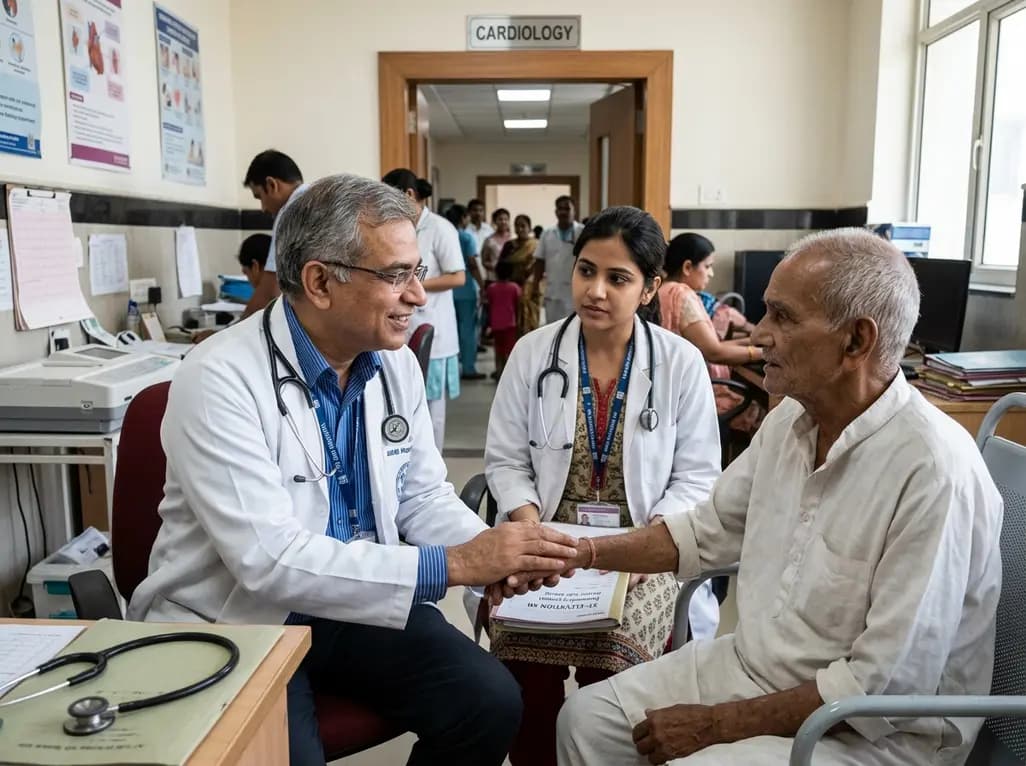
A landmark nationwide cohort study reveals that older adults with dementia who undergo cardiac catheterization for STEMI spend meaningful time alive at home, particularly community-dwelling individuals. Cognitive impairment alone should not preclude acute invasive revascularization.
Today
New anatomical and histological evidence reveals that the meniscofibular ligament and posteroinferior popliteomeniscal fascicle are true ligamentous structures. Discover the diagnostic and surgical repair implications for posterolateral knee instability.
Today

A randomized controlled trial demonstrates that theory-driven personalized mobile messaging reduces the risk of consecutive walking goal failures by 33 percent, highlighting the vital role of digital health tools in sustaining long-term exercise habits and chronic disease prevention.
Today
