.webp&w=384&q=75)

Loading, please wait...
Loading, please wait...
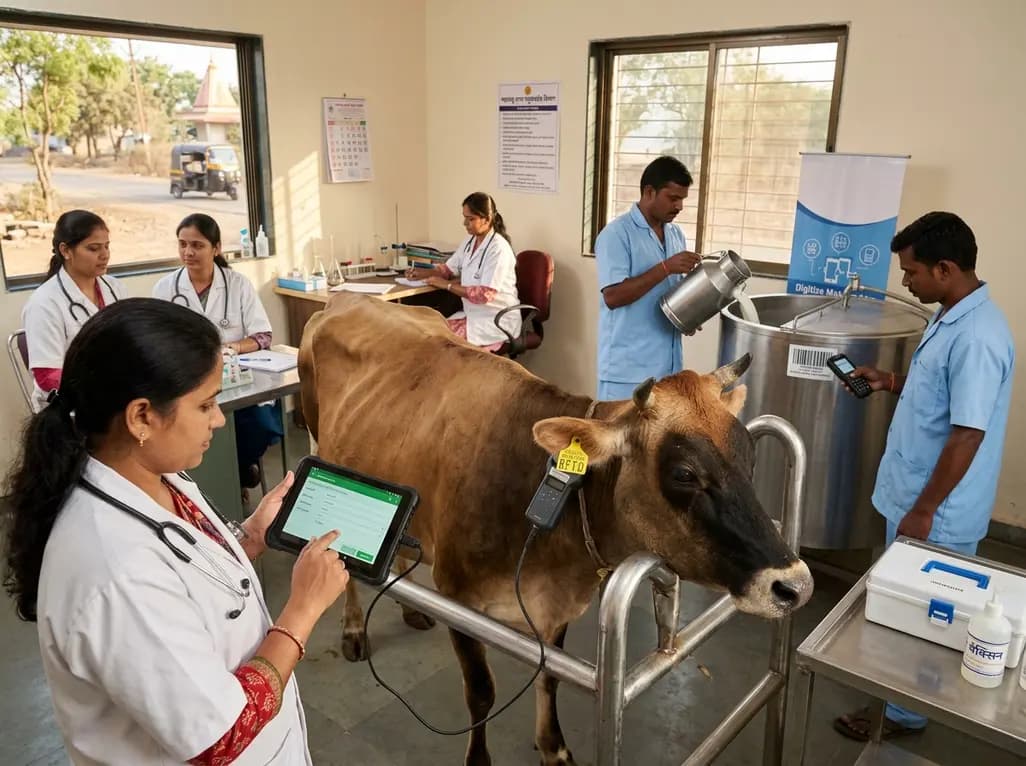
Milk remains an indispensable dietary staple across Indian households, providing vital proteins, calcium, and micronutrients to children and adults alike. However, deliberate contamination and fraudulent dilution continue to challenge regulatory frameworks and threaten consumer health. To counter these persistent risks, Maharashtra Food and Drug Administration announced plans to deploy digital milk tracking within six to twelve months. This initiative connects dairy processing facilities and local collection hubs directly back to individual tagged cattle. Consequently, regulatory authorities can verify authentic yields, eliminate clandestine adulteration points, and uphold fundamental nutritional integrity. For medical practitioners, understanding these food safety initiatives is essential to address clinical consequences arising from contaminated dairy products.
The planned surveillance framework relies on detailed data integration between the Food and Drug Administration and the state Animal Husbandry Department. Currently, livestock across the country receive unique, barcoded ear tags under central livestock tracking programs. Therefore, each animal possesses an official digital record detailing its ownership, geographic location, breed, and health parameters. The digital milk tracking initiative pairs this tagged livestock registry with recorded milk yields at registered dairy collection centres.
Additionally, automated software algorithms will evaluate daily collection totals against the realistic biological production limits of registered herds. If a chilling centre reports volumes exceeding the physiological capacity of local cattle, the system promptly flags the discrepancy. Consequently, state inspection squads can immediately investigate the anomalous batch before it enters retail supply channels. Over recent weeks, regulatory teams have already inspected hundreds of rural and peri-urban collection hubs. These targeted audits evaluate operational hygiene, chilling equipment standards, and legal compliance. Furthermore, the systematic digital architecture eliminates administrative blind spots across complex intermediate procurement routes. By converting livestock identity records into an enforcement shield, Maharashtra aims to systematically eradicate artificial supply manipulation.
Milk adulteration involves multiple harmful agents that jeopardize human metabolic, hepatic, and gastrointestinal stability. Unscrupulous actors frequently add chemical detergents, hydrogen peroxide, neutralizers, and urea to reconstitute diluted milk. Detergents help emulsify external vegetable fats to mimic natural lipid emulsion and foaming characteristics. However, chronic ingestion of detergent surfactants disrupts the mucosal barriers of the gastrointestinal tract. Consequently, patients may develop severe gastritis, erosive enteropathy, and chronic malabsorption syndromes.
Additionally, urea additions falsely elevate nitrogen content during crude protein quantification assays. When ingested continuously, excess exogenous urea increases renal solute load and contributes to chronic metabolic acid-base disruptions. Furthermore, unprincipled handlers sometimes introduce hazardous chemical preservatives like formaldehyde or boric acid to delay souring in warm transit conditions. Formalin acts as a recognized chemical irritant and probable human carcinogen. Specifically, chronic low-dose exposure damages gastric lining tissues, damages hepatocytes, and provokes systemic oxidative stress. Neutralizers such as caustic soda or sodium carbonate mask microbial lactic acid buildup in decaying batches. As a result, consumers ingest partially degraded dairy masked by synthetic alkalizing agents, provoking severe dyspepsia and microbiome dysbiosis.
Children represent the most vulnerable demographic group regarding milk safety because dairy forms their primary nutrient source. When commercial suppliers dilute milk with contaminated water, they drastically reduce caloric density and bioavailability of essential amino acids. Consequently, infants and toddlers face progressive growth faltering, micronutrient deficiencies, and childhood stunting over time. In addition, untreated dilution water introduces dangerous waterborne pathogens into vulnerable pediatric digestive tracts. Young patients often present with acute diarrheal illness, dehydration, and enteropathogenic infections.
Moreover, the introduction of synthetic chemical components presents acute toxicological hazards for developing organ systems. Pediatric renal clearance mechanisms remain physiologically immature, which reduces their capacity to eliminate synthetic chemical additives efficiently. Therefore, exposure to neutralizers, artificial stabilizers, and industrial chemicals accelerates tubular stress and electrolyte disturbances. Toxic contaminants also impair the absorption of dietary calcium, iron, and lipid-soluble vitamins within the intestinal brush border. Consequently, pediatricians observe refractory nutritional anemia and defective bone mineralization despite reported adequate dairy intake. Furthermore, deceptive dilution compromises school feeding interventions and early child development programs. Clinicians must identify covert dietary dilution when evaluating unexplained pediatric failure to thrive.
The regulatory drive in Maharashtra extends beyond dairy hubs to encompass stringent oversight across active pharmaceutical ingredient manufacturing facilities. In recent enforcement inspections, regulatory authorities documented significant deficiencies in multiple manufacturing plants, including oxidized, rusty equipment and poor compliance. Therefore, the department is enforcing strict good manufacturing practices across retail pharmacies, wholesale distribution channels, and bulk drug producers. Ensuring therapeutic chemical purity parallels the enforcement protocols required for basic nutritional food security.
Furthermore, the commissioner emphasized that public health protection begins at maternal conception and continues across the complete life cycle. Compromised pharmaceutical raw materials yield substandard medications that jeopardize therapeutic efficacy in intensive care units and outpatient clinics alike. Similarly, adulterated dietary inputs foster chronic metabolic morbidity that undermines broader public health improvements. By simultaneously strengthening surveillance across dairy routes and pharmaceutical plants, regulators target chemical hazards at their source. Additionally, institutional campaigns like the Eat Right School initiative encourage wholesome nutritional behaviors among growing school children. As a result, educational outreach complements statutory enforcement, instilling preventative health awareness across communities. Coordinated structural oversight safeguards both daily nutrition and medical treatment standards.
Physicians serve as the primary frontline observers of community-level dietary and environmental health disturbances. However, clinicians often overlook dietary adulteration when managing recurrent functional abdominal pain, persistent gastritis, or unexpected metabolic anomalies. Therefore, healthcare providers should incorporate targeted dietary histories during clinical evaluations of refractory gastroenteritis or pediatric developmental delays. Asking patients about their dairy sources, packaging credentials, and storage practices yields valuable diagnostic context.
Additionally, medical practitioners can educate families about verifiable testing procedures and authorized safety certifications. Community doctors should actively support state health campaigns by teaching patients to avoid unpackaged, unverified milk supplies. Moreover, clinicians must promptly report suspicious clusters of chemical food poisoning to local public health authorities and regulatory bodies. Such clinician reporting empowers state surveillance networks to detect illicit regional distribution hubs before widespread outbreaks occur. Furthermore, primary care teams can guide parents toward wholesome dietary alternatives whenever commercial dairy sources seem questionable. Clinicians who champion preventative nutritional hygiene reinforce the public safety mission promoted by regulatory leaders. Ultimately, collaborative vigilance among physicians, consumers, and state inspectors fosters a dependable and resilient food safety ecosystem.
Q1: Why is Maharashtra implementing a digital milk tracking system?
The state Food and Drug Administration seeks to eliminate widespread milk adulteration and guarantee community food safety across the state. By matching collection centre receipts against official livestock ear-tag records, regulators can spot abnormal volume discrepancies immediately. Consequently, enforcement teams can trace suspicious milk consignments directly back to specific farms and intermediaries. This systematic tracking eliminates fraudulent synthetic milk production and protects consumers from hazardous chemicals.
Q2: What primary health hazards arise from consuming adulterated milk?
Consuming adulterated milk exposes patients to harmful synthetic substances such as detergents, urea, neutralizers, and formalin. These chemical agents irritate gastrointestinal mucosa, causing chronic gastritis, erosive enteropathy, and severe malabsorption. Furthermore, excess exogenous urea increases renal solute burdens, while unapproved preservatives create systemic toxicities. In pediatric populations, diluted milk leads to caloric deficits, micro-nutrient deficiencies, and childhood growth impairment.
Q3: How do pharmaceutical manufacturing audits relate to public food safety?
Both sectors fall under the regulatory jurisdiction of the state Food and Drug Administration to protect citizen well-being. Deficiencies in active pharmaceutical ingredient manufacturing, such as corroded equipment, compromise drug purity and clinical efficacy. Similarly, adulteration in milk undermines vital daily nutrition and provokes chronic illnesses. Therefore, simultaneous enforcement across food chains and drug facilities ensures systemic protection against chemical hazards at every level.
Disclaimer: This content is for informational and educational purposes only. It does not constitute medical advice or replace professional judgment. Refer to the latest local and national guidelines for clinical practice.
References

Read summarized clinical updates, watch expert medical content, and earn CME certifications right from your smartphone.
Open your smartphone camera to scan and install.





Maharashtra FDA will launch a digital animal-to-dairy tracking system to tackle milk adulteration. By pairing ear-tag data with dairy collection volumes, authorities aim to curb synthetic contaminants, safeguard pediatric and public nutrition, and enhance pharmaceutical supply chain compliance across the state.
Today

A recent study identifies a rare vulvovaginal myxoid epithelioid smooth muscle tumor harboring an NCOA2 rearrangement in a 56-year-old female. Demonstrating estrogen receptor negativity and a low proliferative index, the case refines diagnostic boundaries and underscores the importance of molecular cytogenetics.
Today

A longitudinal study reveals that an escalating cardiometabolic disease burden significantly accelerates health-related work cessation among middle-aged adults, highlighting an urgent need for proactive multimorbidity screening and tailored workplace health interventions.
Today

A new cross-sectional evaluation reveals how regional lean mass and bone mineral content interact in resistance-trained men, showing that whole-body size and allometric scaling explain shared musculoskeletal phenotypes and strength relationships.
Today

Explore the emerging role of glucose metabolic reprogramming in exercise-attenuated osteoporosis, examining how physical activity influences osteoblast glycolysis, osteoclast bioenergetics, and skeletal remodeling pathways to improve bone mineral density.
Today
