.webp&w=384&q=75)

Loading, please wait...
Loading, please wait...
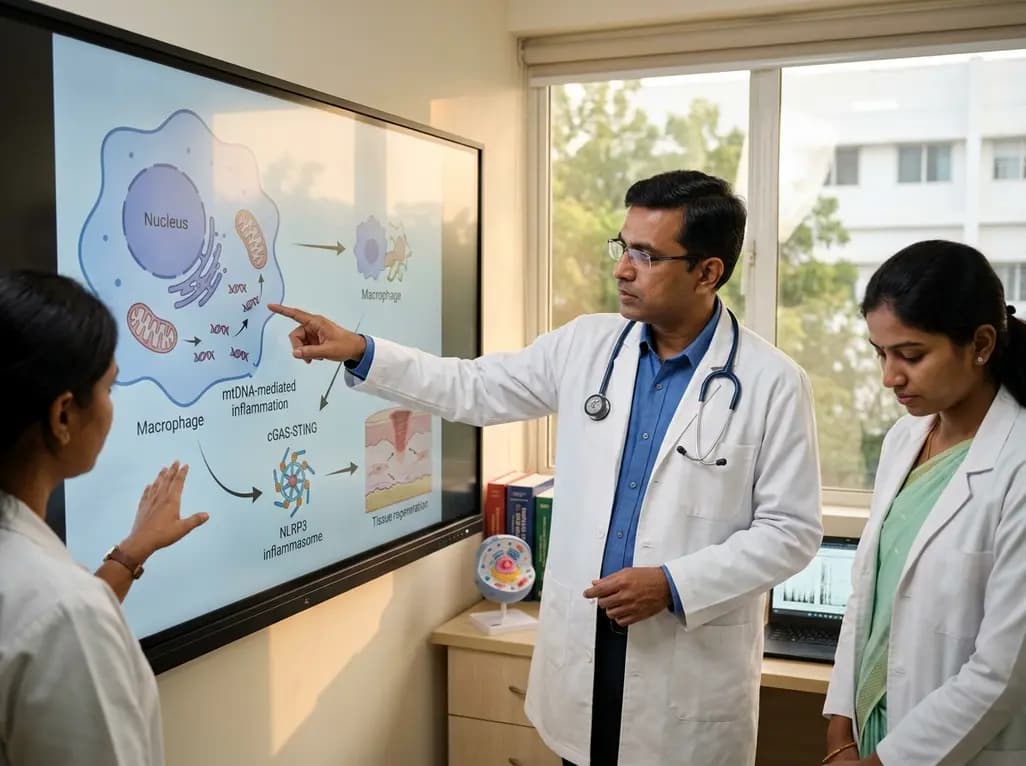
Wound healing requires a tightly synchronized sequence of immune activation and resolution. Recent molecular insights highlight that macrophage RSAD2 operates as a key regulatory node connecting cellular metabolism with cutaneous wound repair. Historically, investigators recognized that mitochondrial DNA (mtDNA) synthesis directs macrophage activation. However, the precise pathways linking de novo mtDNA generation to tissue regeneration remained unclear. By combining spatial transcriptomics with experimental skin injury models, researchers have delineated an immunometabolic circuit that drives localized inflammatory responses necessary for optimal structural recovery.
Radical S-adenosyl methionine domain containing 2 (RSAD2), also termed viperin, traditionally functions as an interferon-stimulated antiviral protein. However, recent evidence establishes its fundamental role in immunometabolism. In cutaneous injury models, macrophages upregulate RSAD2 expression within the provisional wound bed. Consequently, RSAD2 coordinates essential downstream metabolic adaptations. Mechanistically, RSAD2 directly interacts with cytidylate monophosphate kinase 2 (CMPK2), which serves as a rate-limiting enzyme in mitochondrial nucleotide salvage and mtDNA replication.
Furthermore, RSAD2 stabilizes CMPK2 by specifically inhibiting its K63-linked ubiquitination. Simultaneously, RSAD2 recruits casein kinase 2 alpha 2 (Csnk2a2) to induce direct CMPK2 phosphorylation. As a result, this dual post-translational modulation markedly elevates CMPK2 enzymatic activity. The resulting surge in nucleotide phosphorylation accelerates de novo mtDNA synthesis within activated macrophages. Therefore, RSAD2 serves as a metabolic master switch that couples stress-induced signals to mitochondrial genome replication.
Newly synthesized mtDNA does not remain inert within the mitochondrial matrix. Instead, elevated mitochondrial stress promotes the generation and cytosolic extrusion of mtDNA fragments. Consequently, these cytosolic nucleic acids trigger two coordinated, non-redundant inflammatory pathways in tissue-resident and recruited macrophages. First, cytosolic mtDNA engages cyclic GMP-AMP synthase (cGAS), which activates the stimulator of interferon genes (STING) pathway. Subsequently, STING activation induces interferon regulatory factor 3 (IRF3) phosphorylation and nuclear translocation.
Notably, IRF3 directly binds the promoter region of RSAD2, establishing a robust, self-amplifying feedforward loop. In addition to the cGAS-STING axis, newly generated mtDNA acts as a potent endogenous danger-associated molecular pattern (DAMP). It synergistically engages the NLR family pyrin domain containing 3 (NLRP3) inflammasome complex. Thus, this synergistic activation leads to caspase-1 cleavage and the maturation of interleukin-1 beta (IL-1β) and interleukin-18 (IL-18). Together, these twin pathways amplify inflammatory signaling to orchestrate cellular recruitment.
Effective tissue repair demands a balanced inflammatory phase before progressing into re-epithelialization and remodeling. Spatial transcriptomic profiling reveals that RSAD2-driven macrophage activation concentrates primarily along the leading wound margin. During the early acute phase, this localized inflammatory burst facilitates the clearance of cellular debris and prevents opportunistic bacterial colonization. Moreover, the transient secretion of inflammatory cytokines stimulates adjacent keratinocytes and dermal fibroblasts.
However, successful tissue repair requires timely resolution of this self-amplifying circuit. If the RSAD2-CMPK2-mtDNA axis remains persistently active, chronic non-healing wounds and excessive fibrosis can develop. Conversely, premature disruption of this pathway impairs initial phagocytic clearance and delays granulation tissue formation. Therefore, the spatial and temporal regulation of RSAD2 expression ensures an appropriate transitional window from acute defense to matrix deposition and vascular remodeling.
Understanding the RSAD2-dependent immunometabolic axis provides actionable translational avenues for regenerative medicine and rheumatology. In non-healing diabetic foot ulcers and venous stasis ulcers, persistent macrophage-mediated inflammation frequently stalls repair. Modulating CMPK2 phosphorylation or targeting Csnk2a2 recruitment could restore physiological balance in recalcitrant wounds. Consequently, therapeutic interventions targeting mitochondrial nucleotide metabolism might suppress chronic inflammation without causing broad systemic immunosuppression.
Additionally, this self-amplifying circuit has broad implications for autoimmune diseases characterized by elevated type I interferon signatures. For instance, systemic lupus erythematosus and rheumatoid arthritis exhibit marked upregulation of both RSAD2 and CMPK2. Targeting the post-translational stabilization of CMPK2 by RSAD2 may interrupt pathologic STING and NLRP3 activation. Thus, selective small-molecule inhibitors disrupting the RSAD2-CMPK2 interaction present promising pharmacological strategies for both chronic inflammatory conditions and aberrant fibrotic healing.
Macrophage RSAD2 acts as an immunometabolic coordinator that binds and stabilizes CMPK2, a rate-limiting enzyme for mitochondrial DNA synthesis. This interaction boosts mtDNA production, driving a controlled inflammatory response via STING and NLRP3 pathways. Consequently, this early immune activation clears debris, recruits supportive cells, and initiates the regenerative cascade necessary for normal skin repair.
RSAD2 modulates CMPK2 through a two-step mechanism. First, it directly binds the N-terminal domain of CMPK2 and blocks K63-linked ubiquitination, protecting the kinase from premature degradation. Second, RSAD2 recruits the kinase Csnk2a2, which phosphorylates CMPK2. Together, these modifications enhance CMPK2 enzymatic stability and efficiency, significantly augmenting mitochondrial nucleotide production.
The loop creates a feedforward cycle where cytosolic mtDNA activates cGAS-STING-IRF3 signaling, which further upregulates RSAD2 expression. While beneficial during acute injury repair, unchecked loop activity drives persistent cytokine release and chronic tissue inflammation. Consequently, sustained activation contributes to non-healing wounds, autoimmune tissue damage, and fibrotic complications across various organ systems.
Disclaimer: This content is for informational and educational purposes only and should not be considered medical advice. Healthcare professionals should make decisions based on each patient's individual clinical presentation and consult authoritative sources when prescribing pharmacotherapy. Refer to the latest local and national guidelines for clinical practice.
References

Read summarized clinical updates, watch expert medical content, and earn CME certifications right from your smartphone.
Open your smartphone camera to scan and install.





Researchers reveal how macrophage RSAD2 governs mitochondrial DNA synthesis and coordinates dual inflammatory cascades through cGAS-STING and NLRP3 to regulate cutaneous wound repair and tissue regeneration.
4 weeks back

Targeting ferroptosis provides a compelling strategy to dismantle hypoxia- and acidosis-driven immunosuppression in solid tumors, enhancing response to modern immunotherapy.
Today

Findings from Project Viva indicate that sustained postpartum weight retention, rather than excessive gestational weight gain alone, directly worsens women's mid-life cardiovascular health, degrading blood pressure and glycemic parameters decades after delivery.
Today
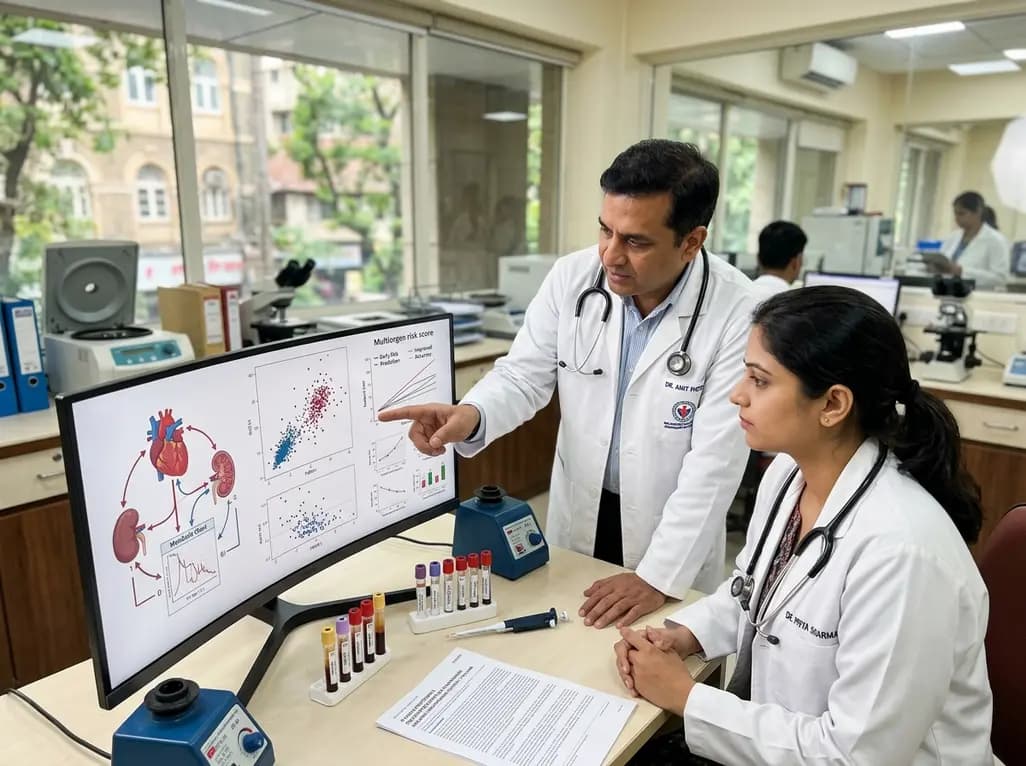
A large UK Biobank study reveals that plasma proteomic signatures capture preclinical organ damage and improve multiorgan risk prediction across early CKM syndrome stages 0 to 2 beyond traditional PREVENT clinical models.
Today

A retrospective CBCT study reveals that superior TMJ space asymmetry correlates moderately with occipital condyle-atlas-axis asymmetry in unilateral TMJ osteoarthritis, highlighting an imaging correlate between jaw biomechanics and upper cervical alignment rather than a standalone diagnostic marker.
Today

A Bayesian multilevel meta-analysis reveals that aerobic training combined with moderate carbohydrate restriction modestly lowers HbA1c in type 2 diabetes. However, sparse data and very low certainty leave incremental benefits over exercise or diet alone unproven, highlighting the need for individualized care.
Today
