.webp&w=384&q=75)

Loading, please wait...
Loading, please wait...
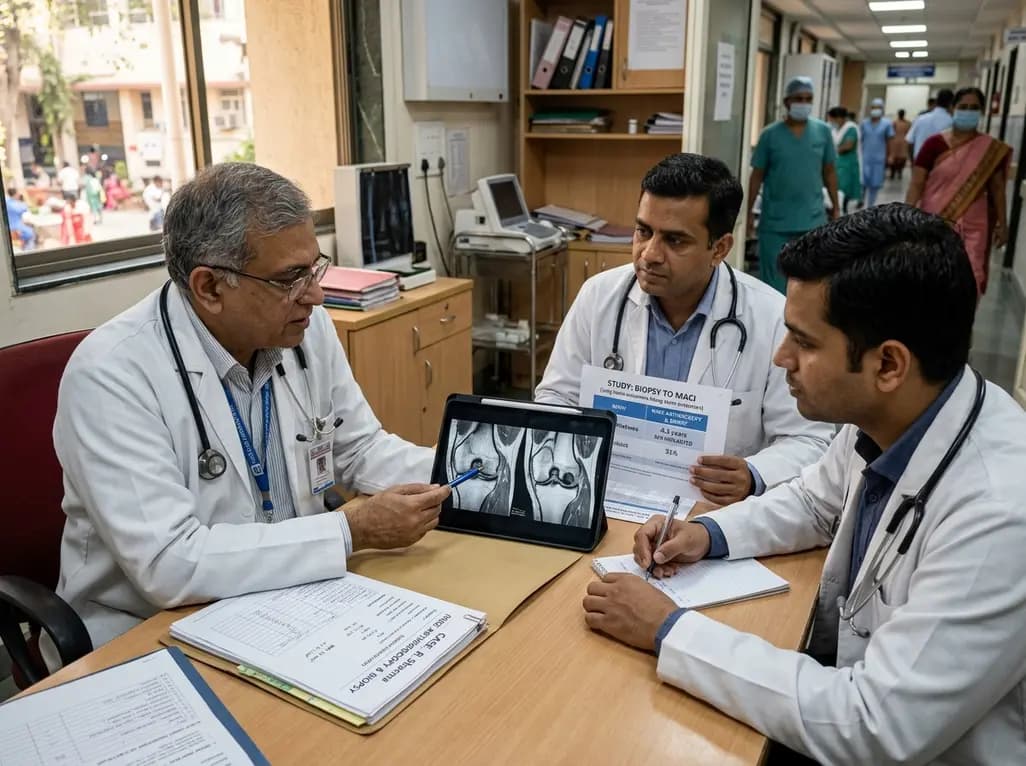
Surgical management of articular cartilage lesions in the knee presents distinct clinical challenges for orthopedic surgeons. Matrix-induced autologous chondrocyte implantation represents an established, two-stage restorative solution for focal chondral damage. However, deciding to perform a knee cartilage biopsy does not automatically guarantee that a patient will proceed to definitive cellular grafting. Recent longitudinal evidence offers critical insight into the real-world trajectory of these patients, documenting actual conversion rates, time intervals, and predictive factors over a mean follow-up of 4.3 years.
Matrix-induced autologous chondrocyte implantation requires an initial arthroscopic assessment and harvest of healthy chondrocytes, followed by laboratory cell expansion onto a collagen membrane. Therefore, clinicians must carefully evaluate both joint pathology and patient symptoms during the index arthroscopy. In a comprehensive single-center investigation reviewing procedures from 2017 to 2024, researchers tracked 208 knees across 202 patients. The mean patient age was 28.0 years, representing a young, active demographic vulnerable to focal joint impairment. Additionally, the cohort presented with 243 discrete chondral defects distributed across the patella, femoral condyle, and trochlea. Consequently, this study captured a broad spectrum of patellofemoral and tibiofemoral cartilage pathology encountered in routine sports medicine practice.
Although surgeons frequently obtain cellular harvests during diagnostic arthroscopy, only 64 knees, or 31 percent, ultimately advanced to the second-stage implantation. Furthermore, the median time from biopsy to membrane placement was 9.4 months among patients managed within the primary institution. Patients who underwent their initial harvest at outside facilities experienced significantly longer delays, averaging 13.1 months compared to 6.1 months for internal referrals. Notably, among the 144 knees that did not proceed to implantation, 60 percent experienced substantial symptom improvement following concomitant debridement and chondroplasty performed during the initial arthroscopy. Thus, initial mechanical stabilization frequently provides sufficient clinical relief, obviating the need for secondary open or mini-open cellular grafting.
Multivariable regression analysis revealed clear clinical drivers that influence whether a patient proceeds to definitive cellular repair. Specifically, lower body mass index demonstrated a significant association with progression to second-stage implantation. Each unit decrease in body mass index increased the likelihood of undergoing definitive grafting. Moreover, defect dimension directly influenced the urgency of intervention. Patients who underwent implantation within four months exhibited significantly larger chondral lesions, averaging 4.0 square centimeters compared to 3.0 square centimeters in delayed cases. Consequently, extensive chondral loss generates persistent biomechanical instability and pain that resists conservative management or simple mechanical smoothing.
While symptom improvement accounted for most non-implanted cases, other barriers influenced surgical decisions. Specifically, 18 percent of non-implanted patients reported persistent symptoms but deferred surgery due to logistical hurdles, alternative procedures, or insurance coverage denials. In addition, evaluation of long-term procedural safety demonstrated favorable outcomes across the implanted cohort. Over a mean 4.1-year follow-up, postoperative complications occurred in only 8 percent of implanted knees. Furthermore, only 4 percent required revision chondroplasty to address localized graft hypertrophy or tissue irregularities. Therefore, MACI maintains a robust safety profile with low reoperation rates when patients successfully navigate the two-stage surgical process.
These findings reshape clinical counseling strategies for orthopedic surgeons evaluating focal cartilage pathology. Obtaining a chondral harvest serves as a practical safeguard, securing cellular material without committing the patient to a major secondary operation. Because 60 percent of non-implanted patients improve after baseline chondroplasty, surgeons can adopt an expectant, stepwise management strategy. However, clinicians must actively monitor high-risk candidates with large lesions and optimal body mass index, as these individuals face higher odds of persistent disability. Ultimately, integrating patient-specific metrics, institutional workflow efficiencies, and structured symptom monitoring optimizes restorative cartilage surgery outcomes.
Many patients experience substantial clinical relief from the concomitant chondroplasty and joint debridement performed during the initial arthroscopic procedure. In the long-term study, approximately 60 percent of non-implanted knees improved adequately without needing the second-stage cellular graft. Additionally, insurance denials, patient preference, and scheduling delays contribute to non-progression.
Larger chondral defects cause greater biomechanical disruption and recurrent pain within the joint compartment. Patients with lesions averaging 4.0 square centimeters underwent definitive implantation within four months, whereas those with smaller defects waited significantly longer. Thus, larger surface areas demand rapid restoration to prevent secondary joint breakdown.
Lower body mass index independently predicts progression to definitive MACI implantation. Lower body mass index often reflects active individuals seeking complete functional restoration for high-demand athletic activities. Furthermore, surgeons and insurance payers adhere to strict weight guidelines, as elevated body mass index increases mechanical graft stress and failure risks.
Disclaimer: This content is for informational and educational purposes only and does not substitute professional medical judgment. Refer to the latest local and national guidelines for clinical practice.
References

Read summarized clinical updates, watch expert medical content, and earn CME certifications right from your smartphone.
Open your smartphone camera to scan and install.





A long-term study evaluated progression from knee cartilage biopsy to second-stage MACI. Only 31% of patients underwent implantation at 4.3 years, while 60% of non-implanted patients improved after index chondroplasty. Lower BMI and larger chondral defect size significantly predicted progression.
4 weeks back

A systematic review of 41 preclinical studies reveals that baicalin dampens systemic inflammation, inhibits NF-κB and NLRP3 pathways, and improves organ preservation in sepsis models. However, substantial study heterogeneity and a complete lack of human clinical trials highlight the need for further translational research.
Today

Discover the crucial distinctions between mesonephric and mesonephric-like proliferations of the female genital tract. Learn the key histomorphologic, immunohistochemical, and molecular differences essential for accurate diagnosis and clinical management.
Today
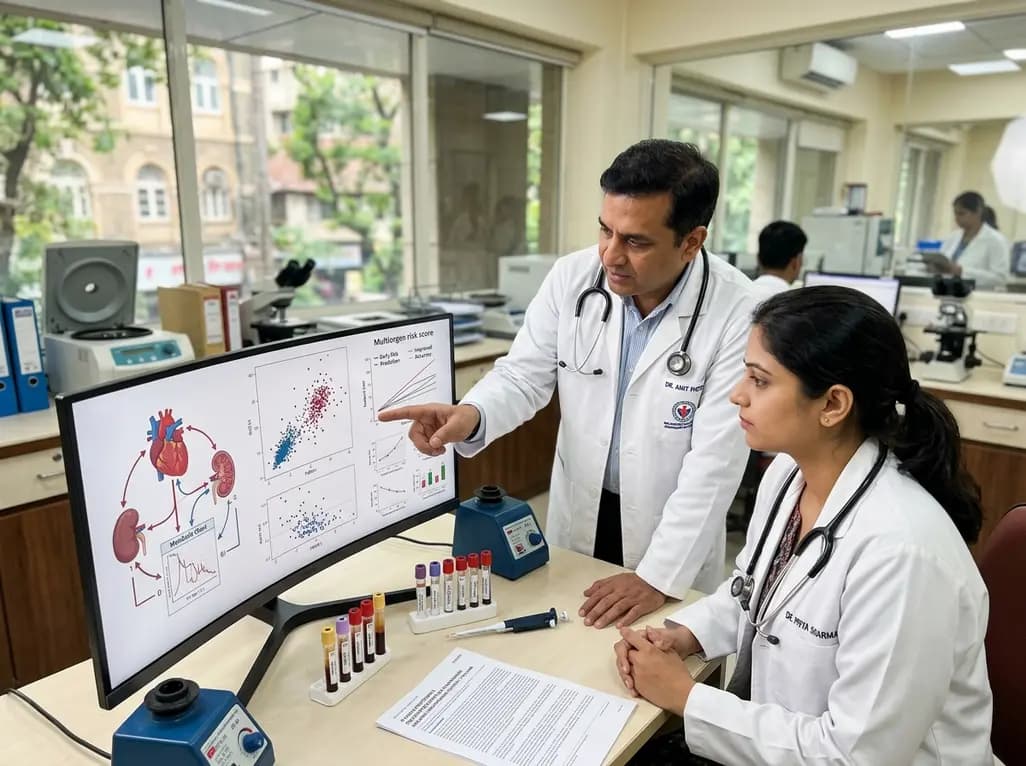
A large UK Biobank study reveals that plasma proteomic signatures capture preclinical organ damage and improve multiorgan risk prediction across early CKM syndrome stages 0 to 2 beyond traditional PREVENT clinical models.
Today

A narrative review investigates whether the articularis genus muscle functions as an independent anatomical entity or blends with the vastus intermedius. We evaluate its morphology, role in retracting the suprapatellar bursa, and direct clinical significance in anterior knee pain and arthroplasty.
Today

A Bayesian multilevel meta-analysis reveals that aerobic training combined with moderate carbohydrate restriction modestly lowers HbA1c in type 2 diabetes. However, sparse data and very low certainty leave incremental benefits over exercise or diet alone unproven, highlighting the need for individualized care.
Today
