.webp&w=384&q=75)

Loading, please wait...
Loading, please wait...

Preoperative assessment remains a cornerstone for successful dental procedures. Specifically, predicting third molar extraction difficulty allows surgeons to manage time and patient expectations effectively. A recent study by researchers at the University of Barcelona validated a multidimensional tool designed for this exact purpose.
Indeed, this cross-sectional study involved 205 patients undergoing third molar removals. The team used clinical and radiological variables to fill the assessment form. Consequently, results demonstrated a significant correlation between the assessment score and surgical duration. Moreover, the Spearman’s rho reached 0.640, which indicates a strong relationship.
Furthermore, the score successfully predicted the surgical technique and perceived difficulty. In addition, the investigators explored advanced machine learning models. Specifically, the Decision Tree model achieved a 71.7% accuracy rate for predicting surgery time. Therefore, these models offer a reliable way to optimize clinical workflows. Ultimately, preoperative tools enhance precision in oral surgery.
Difficulty depends on factors like tooth position, root morphology, and proximity to the alveolar nerve. Clinical variables such as patient age and bone density also play significant roles.
Machine learning models analyze complex data to predict surgical time and difficulty. Consequently, this helps in better scheduling and resource management.
Disclaimer: This content is for informational and educational purposes only. It does not constitute professional medical advice, diagnosis, or treatment. Always seek the advice of your physician or other qualified healthcare provider with any questions you may have regarding a medical condition. Refer to the latest local and national guidelines for clinical practice.
References
Sánchez-Torres A et al. Cross-sectional validation of a preoperative multidimensional assessment tool for third molar extraction using machine learning. Med Oral Patol Oral Cir Bucal. 2026 Apr 19. doi: undefined. PMID: 42001486.
Perera M et al. Deep Learning for Predicting the Difficulty Level of Removing the Impacted Mandibular Third Molar. J Clin Med. 2024.
Zhang X et al. A machine learning-based predictive model for mandibular third molar extraction difficulty: incorporating multimodal features and SHAP analysis. BMC Oral Health. 2026.

Read summarized clinical updates, watch expert medical content, and earn CME certifications right from your smartphone.
Open your smartphone camera to scan and install.





A study validates a new preoperative form and machine learning models for predicting surgery time and difficulty in third molar extractions....
6 months ago

A retrospective cohort study of 7,716 ICU patients from the MIMIC-IV database demonstrates that Gradient Boosting Decision Trees significantly outperform traditional SOFA scores in predicting in-hospital mortality among patients with sepsis and diabetes, with SHAP analysis providing clinical interpretability.
Today
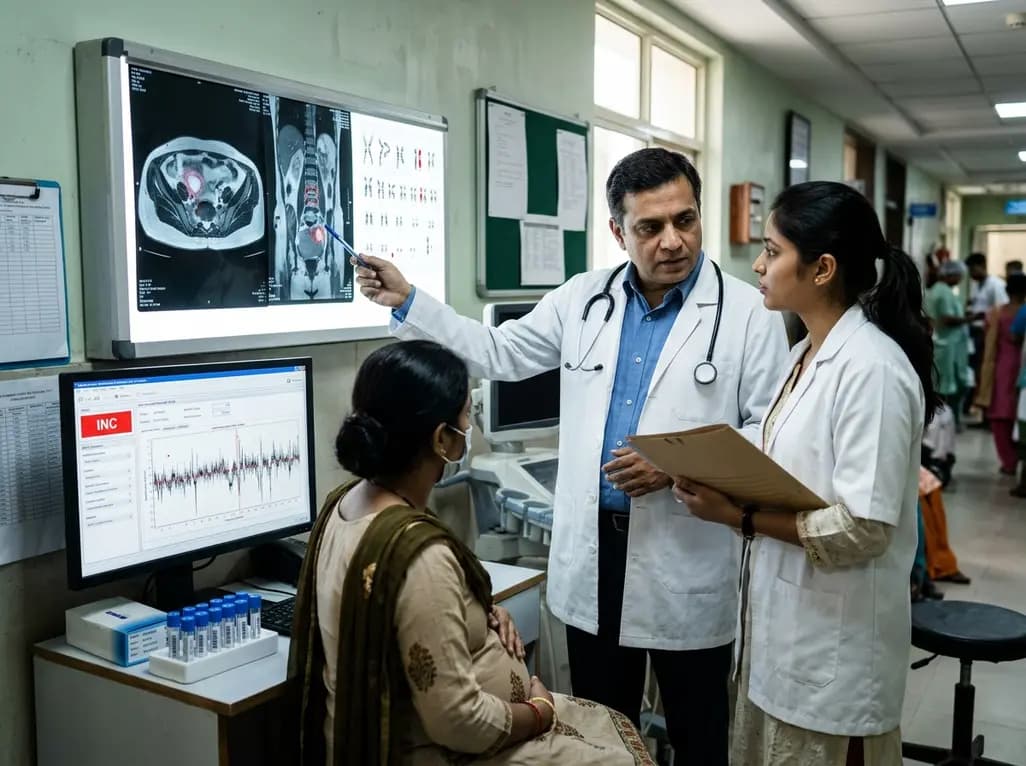
Occult maternal malignancy accounts for 3.82% of persistent unreportable NIPT results with genomic noise. Multiple chromosomal aberrations, notably on chromosome 18, warrant thorough oncological evaluation and whole-body MRI to ensure timely maternal diagnosis while preserving fetal care.
Today
This article reviews the forensic and clinical complexities of acute myocarditis arising on left ventricular hypertrophy in children, highlighting early diagnostic red flags and multidisciplinary postmortem autopsy protocols.
Today

This comparative study evaluates posterior labral tears with and without glenohumeral instability, highlighting distinct demographic patterns, MRI underestimation in stable shoulders, and successful arthroscopic repair outcomes.
Yesterday

A clinical study demonstrates that early intervention with tocilizumab, either as monotherapy or bridged with corticosteroids, achieves significant proptosis reduction and resolves active inflammation in treatment-naive thyroid eye disease.
Yesterday
