.webp&w=384&q=75)

Loading, please wait...
Loading, please wait...
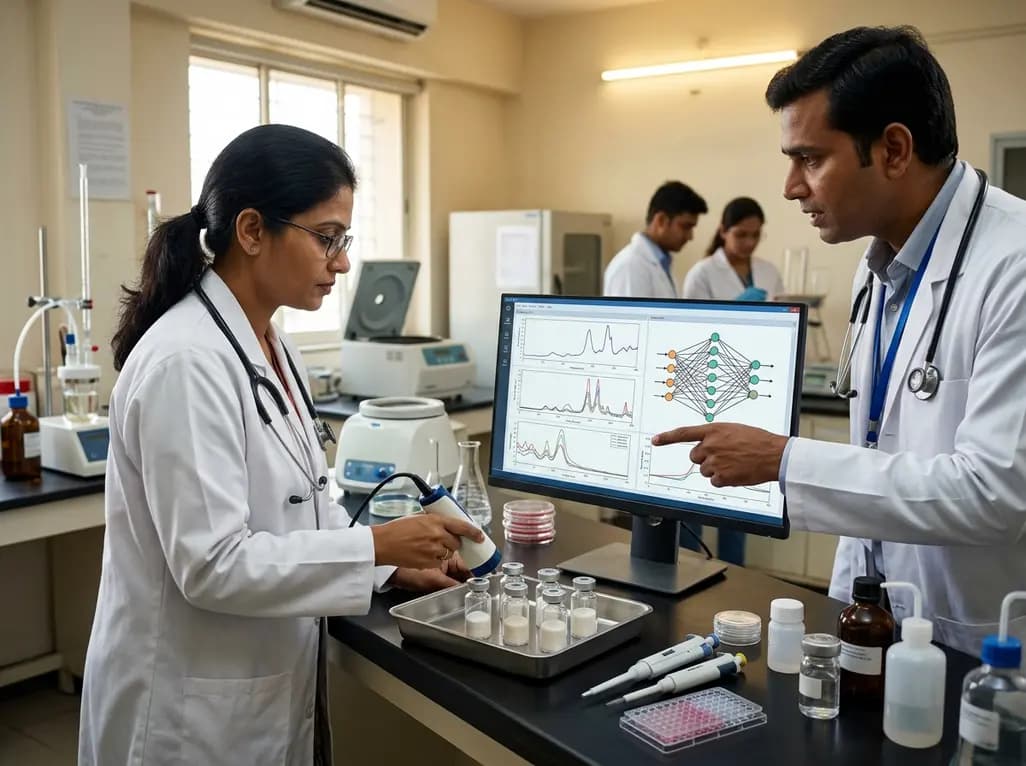
The global pharmaceutical landscape is currently undergoing a transformative shift toward smarter, more efficient manufacturing paradigms. This evolution is largely driven by the Food and Drug Administration (FDA) initiative known as Process Analytical Technology (PAT). PAT serves as a strategic framework that encourages manufacturers to design, analyze, and control production processes through real-time measurements of critical quality attributes (CQAs). In the realm of biopharmaceuticals, where product stability is paramount, the implementation of real-time residual moisture monitoring has emerged as a cornerstone of modern quality by design (QbD). By moving away from traditional retrospective testing, manufacturers can now ensure that every batch of lyophilized product meets stringent safety and efficacy standards before it ever leaves the facility. Consequently, this proactive approach significantly reduces the risk of batch failures and resource wastage. For the Indian pharmaceutical sector, which is a major global hub for vaccine and biologic production, adopting these advanced PAT tools is essential for maintaining competitive quality standards and ensuring the reliable supply of life-saving medicines across diverse climatic conditions.
Lyophilization, or freeze-drying, is a complex process used to stabilize biopharmaceuticals that are otherwise unstable in aqueous solutions. However, the success of this process hinges on achieving the correct level of residual moisture (RM). Traditionally, the industry has relied on Karl-Fischer (KF) titration for RM quantification. While accurate, KF titration is a destructive and time-consuming technique that requires the sacrifice of expensive product vials. Moreover, it provides only a snapshot of the batch quality rather than continuous insight. Recently, Near-Infrared Spectroscopy (NIRS) has been proposed as a non-destructive alternative. NIRS offers the potential for rapid assessment without compromising the integrity of the sample. Nevertheless, the implementation of NIRS is often hindered by the inherent complexity of spectral data. The relationship between moisture levels and spectral features is frequently non-linear, making simple calibration models insufficient for diverse formulations. This complexity necessitates more advanced analytical tools that can interpret subtle variations in the spectra caused by different excipients or drug concentrations. Therefore, overcoming these technical barriers is vital for the widespread adoption of NIRS-based monitoring in the high-stakes environment of biopharmaceutical manufacturing.
To address the spectral complexities of NIRS, researchers have integrated sophisticated machine learning (ML) algorithms into the PAT framework. This integration enables the development of models that can handle non-linear relationships and high-dimensional data with remarkable precision. In this recent study, a PAT tool was developed specifically for real-time residual moisture monitoring at the at-line stage of production. By training ML models on varied datasets, including placebo samples and specific drug products, the researchers created a robust system capable of identifying moisture variations that traditional linear models might miss. Machine learning excels at extracting meaningful patterns from the noise of complex spectra, allowing for a more nuanced understanding of how water molecules interact with the protein or excipient matrix in a lyophilized cake. Furthermore, this approach allows for the continuous refinement of models as more data becomes available. As a result, the pharmaceutical industry can achieve a higher level of process understanding, shifting from a \"test-into-quality\" mindset to a \"build-in-quality\" philosophy that aligns with modern regulatory expectations and global manufacturing best practices.
The effectiveness of an ML-based PAT tool depends heavily on the choice of the underlying algorithm. In this research, different models, including Partial Least Squares (PLS), Support Vector Regression (SVR), and XGBoost, were evaluated for their predictive accuracy. The study revealed that SVR significantly outperformed PLS when dealing with lower moisture levels, providing a more sensitive detection of trace water content. Conversely, PLS demonstrated greater accuracy in the higher RM ranges where relationships may be more linear. Recognizing that no single model is perfect across all conditions, the researchers developed an ensemble model that combines the strengths of both PLS and SVR. This ensemble approach improved predictive accuracy across the full range of moisture levels tested, from nearly dry states to higher humidity levels. Similarly, the inclusion of XGBoost provided additional robustness against outliers in the spectral data. By leveraging these varied mathematical architectures, the proposed tool ensures that moisture monitoring is both precise and adaptable. This level of algorithmic sophistication is crucial for biopharmaceutical manufacturers who must handle a wide variety of formulations with differing physical and chemical properties.
Validation is a critical step in the deployment of any new analytical technology within the pharmaceutical sector. To ensure the robustness of the NIRS-ML tool, the models were subjected to external validation using literature-sourced datasets and simulated drug products containing various excipients. The results confirmed that the ensemble model could adapt to different formulations with minimal adjustment. Furthermore, a minimal dataset augmentation strategy was employed to enhance the model's specialization for specific biopharmaceutical products. This scalability is particularly important for large-scale manufacturing pipelines where multiple products may be processed using the same equipment. By utilizing non-destructive real-time residual moisture monitoring, facilities can increase their throughput and reduce the time required for product release. Additionally, the adaptability of the tool across different lyophilized cakes demonstrates its potential as a versatile solution for the global biopharmaceutical industry. For practitioners in clinical settings, these advancements translate to a higher degree of confidence in the long-term stability and potency of the medications they prescribe, especially for sensitive products like monoclonal antibodies and modern mRNA-based vaccines.
The successful implementation of NIRS and machine learning for moisture monitoring represents a significant leap forward in regulatory compliance and manufacturing excellence. As regulatory bodies like the FDA and the EMA continue to advocate for the adoption of PAT and Industry 4.0 principles, such tools will likely become the standard rather than the exception. In India, where the pharmaceutical industry is rapidly moving toward more complex bioprocessing, these technologies offer a pathway to ensure that products meet international quality benchmarks consistently. Moreover, the ability to monitor moisture in real-time allows for faster interventions during the manufacturing process, potentially saving entire batches from degradation. In the long term, this data-driven approach could even facilitate real-time release testing (RTRT), where products are cleared for distribution based on in-process data rather than final laboratory tests. Consequently, this would drastically shorten the supply chain and improve the availability of critical biopharmaceuticals. Ultimately, the fusion of spectral science and artificial intelligence is not just a technological upgrade; it is a fundamental shift toward a more resilient and transparent pharmaceutical supply chain that prioritizes patient safety through innovative engineering.
Near-Infrared Spectroscopy (NIRS) offers a non-destructive and rapid alternative to traditional Karl-Fischer (KF) titration. Unlike KF, which requires dissolving the sample in reagents and destroying the vial, NIRS can measure moisture through the glass container in seconds. This allows for 100% batch inspection rather than just sampling. Additionally, NIRS eliminates the need for toxic chemicals and significantly reduces the labor-intensive preparation time associated with traditional titration methods in the laboratory.
Residual moisture is a CQA because it directly affects the chemical and physical stability of the biopharmaceutical product. Excess moisture can lead to hydrolysis, protein aggregation, or the collapse of the lyophilized cake structure during storage. These changes can reduce the potency of the medication or even cause adverse reactions in patients. Ensuring that moisture levels remain within a strict specified range is essential for maintaining the product's shelf-life and clinical efficacy throughout the distribution chain.
The ensemble model combines different algorithms, such as Support Vector Regression (SVR) and Partial Least Squares (PLS), to improve prediction accuracy. Because different algorithms excel at different moisture ranges—SVR at lower levels and PLS at higher levels—the ensemble approach leverages the strengths of both. This results in a more robust and versatile tool that can accurately predict residual moisture across a wider variety of formulations and moisture concentrations than any single model could achieve alone.
Disclaimer: This content is for informational and educational purposes only and does not constitute medical advice or professional manufacturing guidance. While the technology discussed shows significant promise in pharmaceutical research, its implementation should be guided by specific regulatory requirements and manufacturer protocols. Refer to the latest local and national guidelines for clinical practice.
References
Fiorenza S et al. Machine Learning-Based PAT Tool for Real-Time Residual Moisture Monitoring in Lyophilized Biopharmaceuticals Using NIR Spectroscopy. Biotechnol Bioeng. 2026 Jul 12. doi: 10.1002/bit.70302. PMID: 42437520.
Food and Drug Administration (FDA). Guidance for Industry: PAT — A Framework for Innovative Pharmaceutical Development, Manufacturing, and Quality Assurance. September 2004.
International Council for Harmonisation (ICH). Q14: Analytical Procedure Development. July 2026.
"
Read summarized clinical updates, watch expert medical content, and earn CME certifications right from your smartphone.
Open your smartphone camera to scan and install.





A new study introduces a Machine Learning-Based Process Analytical Technology (PAT) tool using Near-Infrared (NIR) spectroscopy for real-time monitoring of residual moisture in lyophilized biopharmaceuticals, offering a scalable, non-destructive alternative to traditional Karl-Fischer titration.
3 months ago

Discover the crucial role of glymphatic dysfunction in stroke, where perivascular clearance failure and neuroinflammation exacerbate cerebral edema and post-stroke brain injury.
Today

A prenatal case highlights severe glutaric acidemia type II presenting as bilateral hyperechoic cystic kidneys at 18 weeks. Whole-exome sequencing revealed a novel homozygous ETFDH frameshift variant, demonstrating the power of rapid genetic testing in fetal renal anomalies.
Today

Review how tailored exercise programs benefit frail older patients with heart failure. Explore pathophysiological mechanisms, individualized training prescriptions, and strategies to overcome adherence barriers in clinical practice.
Yesterday

This comparative study evaluates posterior labral tears with and without glenohumeral instability, highlighting distinct demographic patterns, MRI underestimation in stable shoulders, and successful arthroscopic repair outcomes.
Yesterday

A clinical study demonstrates that early intervention with tocilizumab, either as monotherapy or bridged with corticosteroids, achieves significant proptosis reduction and resolves active inflammation in treatment-naive thyroid eye disease.
Yesterday
