.webp&w=384&q=75)

Loading, please wait...
Loading, please wait...

Artificial intelligence and machine learning (ML) are rapidly transforming modern ophthalmology. However, keratoconus progression prediction remains a significant clinical challenge during a patient's initial visit. Clinicians often struggle to determine whether a newly diagnosed patient will remain stable or require immediate intervention like corneal cross-linking. Consequently, researchers have turned to advanced algorithms to help bridge this diagnostic gap by analyzing large datasets of corneal parameters.
A recent retrospective study of 1,000 eyes evaluated the success of XGBoost-based algorithms in forecasting disease worsening. The results demonstrated a clear divide in performance based on data availability. When researchers provided the algorithm with longitudinal change rates, it achieved near-perfect performance with an AUC of 0.999. In contrast, the model's accuracy dropped significantly when using only single-visit data. Specifically, the single-visit binary model showed a limited sensitivity of 69.1% and an AUC of 0.72. Therefore, while ML models excel with serial data, they are currently insufficient as standalone tools for one-time clinical assessments.
To improve accuracy, the study identified specific engineered features and clinical risk scores. Feature importance analysis revealed that certain anatomical combinations are high-risk indicators. For instance, an anterior maximum curvature (KmaxF) exceeding 48.0 D paired with a thinnest pachymetry of less than 470 μm strongly suggests a higher likelihood of progression. Moreover, stratifying patients into low, moderate, and high-risk groups via a clinical risk score can help doctors tailor follow-up intervals. These findings emphasize that although ML enhances risk stratification, it must still be used in conjunction with clinical judgment and serial monitoring.
Integrating these predictive models into electronic health records could eventually streamline patient triage. Currently, the moderate sensitivity of single-visit models means that clinicians should not rely on them exclusively for surgical decisions. Prospective validation across diverse populations, including those in India where prevalence is high, is essential before wide-scale implementation. Furthermore, standardized definitions of progression will be necessary to ensure that algorithms perform consistently across different diagnostic platforms.
Research indicates that single-visit machine learning models have moderate accuracy, with an AUC of approximately 0.72 and sensitivity around 69%. While helpful for risk stratification, they are not yet accurate enough for standalone clinical use.
The study found that a combination of an anterior maximum curvature (KmaxF) greater than 48.0 D and a thinnest corneal pachymetry less than 470 μm are the most significant identifiers for disease progression.
Disclaimer: This content is for informational and educational purposes only. It does not constitute medical advice or establish a doctor-patient relationship. Always seek the advice of a qualified healthcare provider for any medical condition or treatment. Refer to the latest local and national guidelines for clinical practice.
References
Jamali A et al. Predicting Keratoconus Progression From a Single Visit: Is Machine Learning Successful? Eye Contact Lens. 2026 Apr 21. doi: 10.1097/ICL.0000000000001274. PMID: 42013470.
American Academy of Ophthalmology. Keratoconus Preferred Practice Pattern. 2024. Available at: aao.org.
Hashemi H, Jamali A, et al. The application of artificial intelligence-based algorithms in predicting the progression of keratoconus: a systematic review. Int Ophthalmol. 2025;45(1):482.
"
Read summarized clinical updates, watch expert medical content, and earn CME certifications right from your smartphone.
Open your smartphone camera to scan and install.





A study evaluates XGBoost-based machine learning models for predicting keratoconus progression using single-visit vs. longitudinal clinical data....
6 months ago

A retrospective cohort study reveals that frailty quadruples the odds of pressure injuries in hospitalized older adults. Integrating the Clinical Frailty Scale with comprehensive geriatric care is crucial for identifying vulnerability early and implementing targeted multidisciplinary prevention.
Today

Occult maternal malignancy accounts for 3.82% of persistent unreportable NIPT results with genomic noise. Multiple chromosomal aberrations, notably on chromosome 18, warrant thorough oncological evaluation and whole-body MRI to ensure timely maternal diagnosis while preserving fetal care.
Today

This article reviews the forensic and clinical complexities of acute myocarditis arising on left ventricular hypertrophy in children, highlighting early diagnostic red flags and multidisciplinary postmortem autopsy protocols.
Today
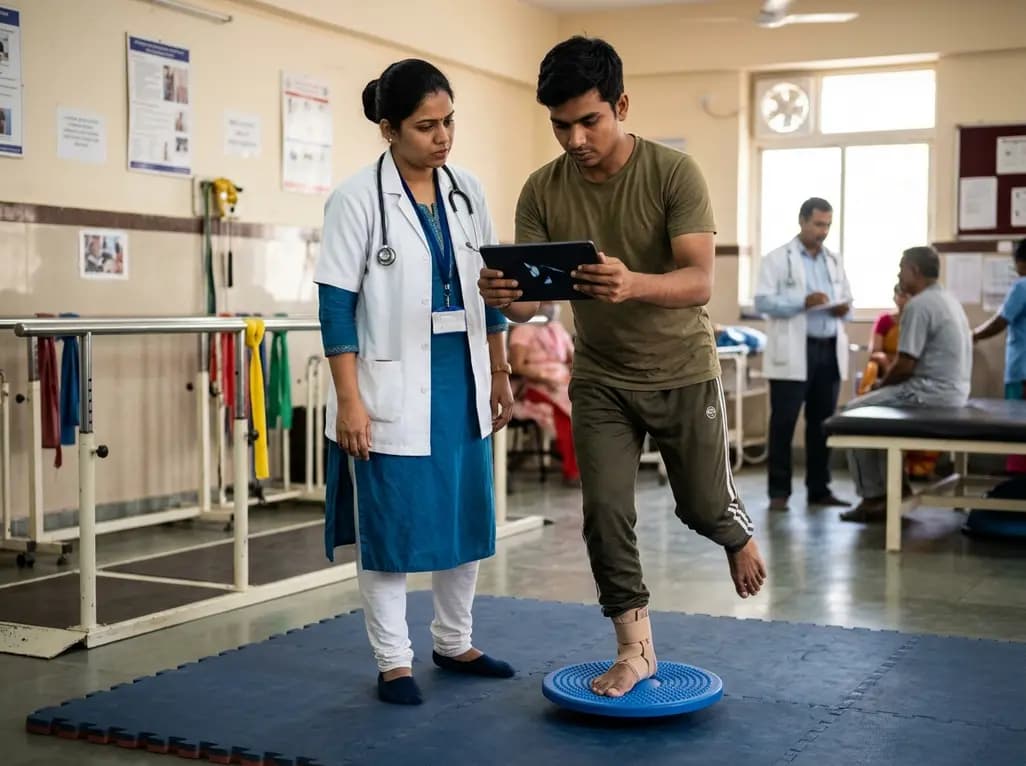
A randomized controlled trial demonstrates that an eight-week dual-task training intervention significantly improves static and dynamic postural control over standard balance exercises in individuals with chronic ankle instability, addressing critical neurocognitive deficits during athletic and daily activities.
Today

A retrospective cohort study of 7,716 ICU patients from the MIMIC-IV database demonstrates that Gradient Boosting Decision Trees significantly outperform traditional SOFA scores in predicting in-hospital mortality among patients with sepsis and diabetes, with SHAP analysis providing clinical interpretability.
Today
