.webp&w=384&q=75)

Loading, please wait...
Loading, please wait...

Common mental disorders, specifically depression and anxiety, represent substantial drivers of global disability, particularly in low- and middle-income countries. Severe resource constraints, persistent public stigma, and acute shortages of mental health specialists systematically constrain patient access to evidence-based care. Consequently, health systems require scalable, community-rooted delivery models to bridge this vast treatment gap. Furthermore, task-sharing models effectively address severe human resource limitations by empowering community health cadres to deliver structured psychological care. In this context, low-intensity psychological interventions delivered by non-specialists provide an evidence-based and cost-effective pathway to expand access. A seminal qualitative study conducted across Java, Indonesia, evaluated how diverse stakeholders perceive the anticipated acceptability of these brief programs. Because Indonesia and India share comparable healthcare challenges, these qualitative findings offer actionable insights for primary care physicians, psychiatrists, and health planners navigating decentralized community care.
Across low- and middle-income settings, depressive and anxiety disorders inflict an enormous emotional and economic toll on vulnerable populations. Unfortunately, formal psychiatric services remain heavily concentrated in tertiary urban hospitals, leaving peripheral communities largely underserved. Most individuals suffering from mild-to-moderate psychological distress never encounter a trained psychologist or psychiatrist. Therefore, public health planners increasingly endorse task-sharing frameworks that empower frontline healthcare cadres to deliver structured behavioral therapies. Furthermore, structured stepped-care protocols empower primary care doctors to prioritize complex presentations while delegating uncomplicated depression and anxiety to trained non-specialists.
Task-sharing redistributes essential screening, psychoeducation, and basic behavioral activation from scarce specialists to accessible community practitioners. However, introducing psychological models into traditional community systems requires comprehensive stakeholder support. Interventions must align with community norms, health worker capacities, and local cultural understandings of emotional suffering. Without initial prospective acceptability, even the most rigorously tested psychotherapeutic protocols encounter substantial friction during routine rollout. Thus, qualitative exploration serves as a vital first step. By examining prospective acceptability prior to widespread implementation, health systems can systematically identify operational barriers and refine training curricula. Ultimately, understanding how community members perceive non-specialist care ensures that emerging programs achieve sustainable community engagement.
To evaluate community receptivity, researchers implemented a qualitative descriptive design guided by the Theoretical Framework of Acceptability. They conducted thirty-three semi-structured interviews with individuals experiencing anxiety or depression across twelve diverse sites in Java. In addition, the investigative team facilitated twenty-one focus group discussions with families, primary healthcare workers, and respected community and religious leaders.
Overall, participants demonstrated strong positive affective attitudes and high perceived effectiveness toward low-intensity psychological interventions. This positive reception stemmed largely from deeply ingrained cultural values that emphasize self-reliance, social solidarity, and mutual community assistance. Stakeholders recognized that structured, brief emotional support could alleviate functional impairment and restore domestic stability. Furthermore, family members valued having practical strategies to assist struggling relatives without incurring prohibitive travel or consultation expenses. Similarly, community leaders recognized that accessible non-stigmatizing interventions could strengthen communal resilience and reduce domestic disharmony. Primary health staff similarly appreciated having standardized tools to manage emotional distress within routine clinics. Nevertheless, participants frequently conflated brief structured psychological sessions with general informal advice or social counselling. Consequently, health leaders must clearly communicate the structured, skill-building nature of low-intensity psychological interventions to build intervention coherence among prospective clients and their families.
Despite overall optimism, low mental health literacy and entrenched social stigma presented substantial challenges to anticipated intervention acceptability. Many community members struggled to conceptualize anxiety and depression as legitimate, treatable health conditions rather than spiritual failures or personal weaknesses. Consequently, individuals rarely sought professional help during early symptomatology. Instead, patients typically deferred help-seeking until emotional distress triggered severe functional disruption or overt physical crisis.
This pervasive diagnostic delay severely limits early intervention opportunities in primary care settings. Furthermore, community members expressed profound anxiety regarding social judgment and public ostracization. In close-knit neighborhoods, entering a designated mental health room or receiving home visits from health personnel risks disclosing vulnerability. Therefore, primary care teams must integrate mental health psychoeducation into general health campaigns, such as maternal health or non-communicable disease screenings. Moreover, educational workshops conducted at village gatherings can demystify emotional symptoms and clarify that effective non-pharmacological therapies exist. Normalizing psychological distress as a universal human experience directly counteracts social prejudice. In addition, health programs must establish clear messaging that frames low-intensity therapies as proactive emotional resilience tools rather than labels for severe psychopathology. Improving baseline literacy thereby dismantles fear and encourages timely community participation.
Stakeholders raised pertinent questions regarding ethicality, confidentiality, and provider competence when non-specialist workers deliver emotional care. Participants universally emphasized that strict privacy protection is essential for personal disclosure. In rural communities, residents expressed robust trust in established lay health workers, viewing them as compassionate and dependable neighbors. Conversely, urban participants demonstrated greater skepticism, voicing acute concerns that informal providers might inadvertently breach patient confidentiality.
Moreover, stakeholders highlighted practical burdens that could compromise sustained engagement. Lay health workers already manage demanding workloads covering immunization tracking, maternal surveys, and infectious disease surveillance. Adding psychological delivery without commensurate compensation or structured supervisory support threatens professional burnout and program fidelity. Additionally, establishing formal referral pathways allows frontline staff to rapidly escalate complex cases or acute self-harm risks to specialized psychiatric facilities. In addition, families expressed lingering uncertainty regarding how non-specialist care interfaces with traditional and faith-based healers. In many Asian communities, individuals consult religious authorities before seeking biomedical assistance. Consequently, implementation strategies must formally engage traditional healers and community elders as collaborative allies rather than competitors. Providing clear ethical guidelines, robust supervisory oversight, and reasonable compensation for frontline workers remains indispensable for sustained delivery.
The implementation dynamics documented in Java provide invaluable practical parallels for primary healthcare practitioners and psychiatrists across India. India faces an analogous treatment gap for common mental disorders, characterized by acute specialist deficits and decentralized public infrastructure. Initiatives like the District Mental Health Programme and the national Tele-MANAS helpline increasingly explore task-sharing with Accredited Social Health Activists and Community Health Officers. However, programmatic success requires navigating identical cultural nuances.
First, Indian clinicians must ensure robust confidentiality protocols at Ayushman Arogya Mandirs to overcome community gossip and fear of social boycott. Second, primary care doctors should deliver structured, competency-based mentorship to non-specialist workers rather than delegating tasks without continuing guidance. Regular supportive supervision preserves intervention fidelity and prevents provider fatigue. Third, healthcare teams must proactively bridge biomedical care with local idioms of distress, collaborating respectfully with local community champions. Furthermore, integrating digital decision-support tools alongside dedicated peer supervision can dramatically enhance diagnostic accuracy and sustain intervention fidelity across rural primary health centers. When primary care physicians actively validate psychological symptoms and endorse lay-delivered interventions, patient trust increases markedly. By embedding low-intensity interventions into routine primary care workflows, clinicians can democratize mental healthcare and provide equitable, dignified relief to millions.
Low-intensity psychological interventions are evidence-based, simplified psychological protocols designed for common conditions like depression and anxiety. Trained non-specialists, such as community health workers or nurses, typically deliver these brief therapies. They utilize structured techniques, including behavioral activation, problem-solving, and stress management, requiring fewer healthcare resources than traditional psychotherapy.
Task-sharing addresses critical specialist shortages in low- and middle-income countries by training accessible community health personnel to deliver frontline psychosocial care. This decentralized model expands treatment access, lowers patient costs, and mitigates hospital bottlenecks. Furthermore, it embeds psychological support within local cultural contexts, facilitating earlier intervention and improved community engagement.
Clinicians ensure confidentiality by establishing private consultation spaces within primary clinics and enforcing strict data security protocols. In addition, supervising physicians must continuously train community workers on ethical obligations and patient privacy. Integrating mental health visits into general outpatient or chronic disease workflows further shields patients from unwanted social exposure.
Disclaimer: This content is for informational and educational purposes only and should not be considered medical advice. Always consult a qualified healthcare professional regarding any medical condition or treatment. Refer to the latest local and national guidelines for clinical practice.
References

Read summarized clinical updates, watch expert medical content, and earn CME certifications right from your smartphone.
Open your smartphone camera to scan and install.





A qualitative study across Java, Indonesia, evaluates the prospective acceptability of non-specialist delivered low-intensity psychological interventions. It highlights cultural alignment, the burden of stigma, and implementation pathways highly relevant to LMIC primary healthcare frameworks like India's DMHP.
Today

A multicity study highlights that over 80% of acute respiratory infections remain outside hospitals. Patients frequently choose community pharmacies and digital platforms. Integrating digital health data and retail pharmacy sales can fill critical surveillance gaps and improve early outbreak detection.
Today

Scandinavian register evidence reveals that neonatal birth length strongly predicts adult health and mortality, whereas birth weight dictates cognitive capacity. Symmetric growth restriction causes far more severe long-term deficits than asymmetric restriction, underscoring the need for comprehensive anthropometry.
Today

Discover how rescue cutting balloon angioplasty successfully modifies heavily calcified carotid stenosis, enabling stent delivery without baroreceptor instability and ensuring favorable long-term neurologic outcomes.
Today

A retrospective CBCT study reveals that superior TMJ space asymmetry correlates moderately with occipital condyle-atlas-axis asymmetry in unilateral TMJ osteoarthritis, highlighting an imaging correlate between jaw biomechanics and upper cervical alignment rather than a standalone diagnostic marker.
Today
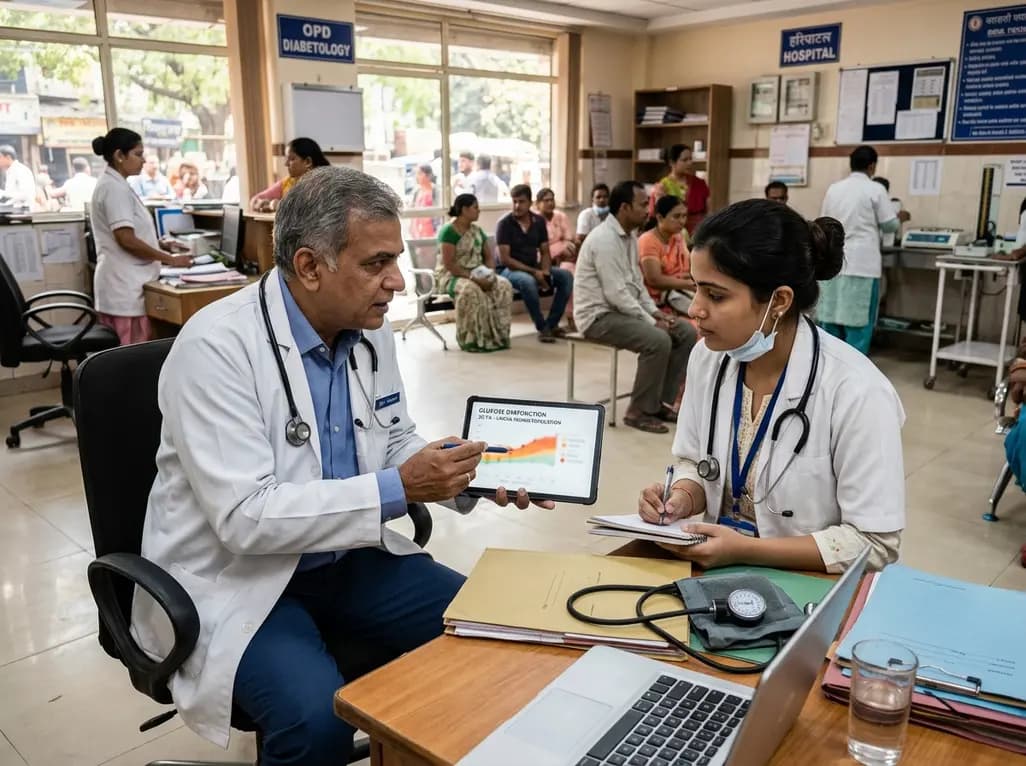
Data from the 2026 Workforce Health Index reveals that 38.7% of urban employees and dependents exhibit abnormal glycemic control. Emerging at increasingly younger ages, this metabolic shift intersects with severe vitamin deficiencies, highlighting the urgent need for early workplace screenings and targeted clinical care.
Today
