.webp&w=384&q=75)

Loading, please wait...
Loading, please wait...
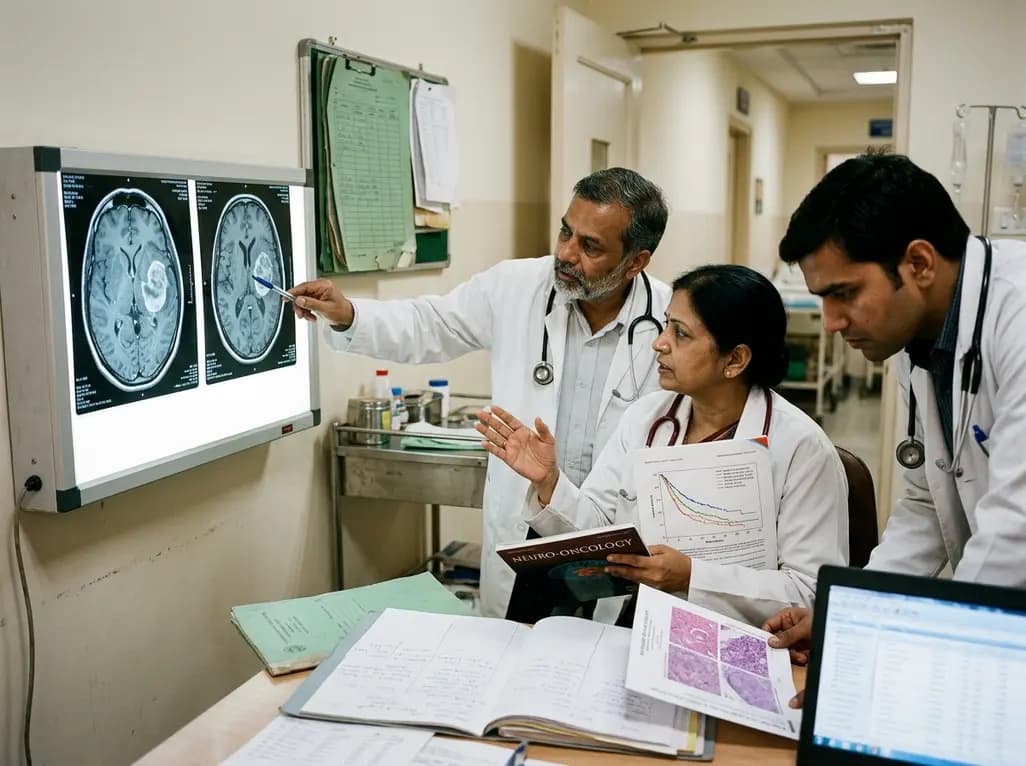
Diffusely infiltrating gliomas represent a significant therapeutic challenge in modern neuro-oncology. Today, the clinical management of molecularly defined oligodendrogliomas depends directly on combined genomic markers, specifically requiring an IDH mutation and 1p/19q codeletion. Although patients harboring these neoplasms experience favorable long-term survival, clinicians debate the prognostic significance separating grade 2 and grade 3 tumors. Evaluating robust real-world cohorts with multi-decade follow-up provides crucial clarity for oncologists and neurosurgeons striving to balance survival advantages with long-term neurocognitive preservation.
Historically, neuropathologists classified diffuse gliomas based purely on light microscopy morphology. However, subjective histological assessment caused significant interobserver variation. The introduction of integrated genomic profiling radically refined primary brain tumor categorization. According to the 2021 World Health Organization classification, an oligodendroglioma diagnosis strictly mandates the presence of an IDH1 or IDH2 mutation paired with whole-arm 1p/19q codeletion.
Furthermore, the revised diagnostic framework eliminated the grade 4 designation entirely, stratifying tumors solely into grade 2 and grade 3. Grade 2 lesions display mild cellular atypia and slow growth. In contrast, grade 3 tumors feature increased mitotic activity, vascular proliferation, and distinct nuclear pleomorphism. Because these molecularly defined tumors demonstrate substantial chemosensitivity, determining how histological grade influences disease progression remains critical for designing risk-adapted postoperative treatment algorithms.
A large institutional cohort analyzing 240 patients evaluated 149 grade 2 and 91 grade 3 molecularly confirmed oligodendrogliomas. Remarkably, median progression-free survival did not differ significantly between cohorts, showing 57.6 months for grade 2 tumors versus 59.8 months for grade 3 tumors. Furthermore, overall survival remained remarkably prolonged across the study population, reaching 274 months in grade 2 disease while remaining unreached in grade 3 disease.
Nevertheless, temporal differences emerged during extended follow-up. Patients diagnosed with grade 3 tumors demonstrated a steeper survival probability decline within the first decade following surgical resection. Additionally, individuals with grade 3 lesions experienced a shorter interval before requiring salvage radiotherapy at progression. Therefore, while both groups achieve impressive long-term outcomes, grade 3 histology portends a higher likelihood of accelerated disease recurrence requiring vigilant longitudinal monitoring.
Maximal surgical cytoreduction serves as the primary intervention for both low-grade and high-grade oligodendrogliomas. Multivariate survival models revealed that the extent of surgical resection was the only variable significantly governing both progression-free survival and overall survival. In contrast, histological tumor grade did not independently predict survival after controlling for surgical clearance.
Specifically, achieving maximal resection yielded a dramatic reduction in mortality hazard, underscoring the vital protective role of aggressive tumor removal. Consequently, neurosurgeons utilize advanced intraoperative adjuncts, including continuous neurophysiological monitoring, awake mapping, and intraoperative imaging, to maximize resection margins safely. Because oligodendrogliomas frequently originate within frontal or temporal lobes, minimizing postoperative neurological deficits while achieving maximal tissue clearance remains paramount for optimizing long-term oncological control and functional independence.
Following surgical resection, clinicians must carefully select adjuvant therapy based on recurrence risk. While standard guidelines often recommend combined chemoradiotherapy, early cranial radiation carries substantial risks of progressive neurocognitive decline and vascular injury in young patients. Therefore, oncologists frequently explore strategies that delay cranial irradiation without sacrificing overall survival.
Cohort findings demonstrated that upfront temozolomide monotherapy in high-risk grade 2 and grade 3 patients with extensive residual tumor achieved robust disease control without compromising survival. Reserving radiotherapy for subsequent progression protects cerebral architecture during initial disease phases. Furthermore, temozolomide exhibits superior hematological tolerance compared to multi-agent PCV regimens. Thus, deferred radiotherapy strategies offer an effective avenue for preserving quality of life while maintaining long-term disease control.
Detailed histopathological evaluation demonstrates notable architectural variability within grade 3 oligodendrogliomas. Pathologists distinguish between diffuse high-grade morphology and focal grade 3 malignancy surrounded by low-grade features. In retrospective cohort data, approximately 23 percent of grade 3 cases exhibited purely focal malignant changes.
Importantly, active observation without immediate postoperative chemotherapy or radiation proved safe in young patients presenting with non-enhancing tumors, focal malignancy, and complete surgical resection. These patients achieved favorable outcomes, indicating that immediate adjuvant cytotoxic therapy is not universally mandatory. Close surveillance with serial volumetric magnetic resonance imaging ensures early detection of recurrence. Consequently, this nuanced, risk-stratified paradigm spares select young adults from premature therapy-associated toxicities.
The neuro-oncology landscape is evolving rapidly with the development of targeted brain-penetrant IDH inhibitors. Evaluating the clinical impact of these molecularly targeted therapies requires robust historical benchmarks derived from comprehensively characterized cohorts receiving standard therapies.
This extensive cohort of molecularly confirmed oligodendrogliomas establishes an invaluable baseline for upcoming clinical trials. Integrating oral IDH inhibitors into frontline management could potentially stabilize residual disease and delay cytotoxic chemotherapy or radiation for years. Clinicians must synthesize long-term retrospective evidence with emerging prospective data to refine precision treatment paradigms for every patient.
Under current World Health Organization criteria, molecularly defined oligodendrogliomas require both an IDH mutation and whole-arm 1p/19q codeletion. Tumors lacking this specific genetic profile are classified into other distinct glioma categories regardless of morphological appearance under light microscopy.
The extent of surgical resection serves as the single independent factor significantly improving both progression-free and overall survival in oligodendrogliomas. Achieving maximal safe surgical cytoreduction reduces mortality hazard dramatically, exerting a stronger prognostic influence on patient survival than histological tumor grade.
Initial observation is a safe strategy for select young patients with completely resected, non-enhancing grade 3 tumors exhibiting only focal malignancy. Serial high-resolution neuroimaging allows clinicians to delay adjuvant radiation and chemotherapy safely without compromising long-term overall survival outcomes.
Disclaimer: This content is for informational and educational purposes only. It does not constitute medical advice, diagnosis, or treatment recommendations. Always consult a qualified healthcare professional regarding any medical condition or treatment options. Refer to the latest local and national guidelines for clinical practice.
References

Read summarized clinical updates, watch expert medical content, and earn CME certifications right from your smartphone.
Open your smartphone camera to scan and install.





A landmark study evaluates long-term survival in molecularly defined grade 2 and 3 oligodendrogliomas, revealing that maximal extent of resection—rather than histological grade—is the primary driver of patient survival.
last month

A review of incidental intestinal parasitic infections detected during colonoscopy, highlighting diagnostic morphology, the absence of peripheral eosinophilia, and tailored antihelminthic treatment.
Today

A nationwide South Korean study shows underreporting of smoking among women dropped from 57.4% to 36.4% between 2008 and 2021. However, over one-third of female smokers still conceal their habit, highlighting the critical role of cotinine verification in clinical risk assessment.
Today

PepsiCo and Monster Beverage have challenged the FSSAI ban on the energy drink label in Indian courts. While companies highlight supply disruptions, regulatory actions spotlight severe cardiovascular and metabolic risks associated with excessive caffeine, sugar, and taurine consumption, especially in adolescents.
Today
Persistent and recurrent musculoskeletal pain in youth athletes is often dismissed as simple growing pains. A developmentally informed biopsychosocial framework is essential to guide return-to-sport decisions, addressing biological vulnerabilities, psychological appraisals, and sociocultural expectations.
Today

A Bayesian multilevel meta-analysis reveals that aerobic training combined with moderate carbohydrate restriction modestly lowers HbA1c in type 2 diabetes. However, sparse data and very low certainty leave incremental benefits over exercise or diet alone unproven, highlighting the need for individualized care.
Yesterday
