.webp&w=384&q=75)

Loading, please wait...
Loading, please wait...

Preeclampsia remains a leading cause of maternal and perinatal mortality in India, where its prevalence ranges from 5% to 10% across different regions. While clinicians understand the systemic manifestations of this hypertensive disorder, the precise molecular drivers often remain elusive. Recent research into LncRNA UNC5C-AS1 preeclampsia interactions provides new insights into how long non-coding RNAs regulate vascular health during pregnancy. Scientists have specifically identified that UNC5C-AS1 plays a critical role in maintaining endothelial cell function and promoting healthy placental angiogenesis.
The study found that preeclamptic placentas exhibit significantly lower levels of UNC5C-AS1 compared to healthy pregnancies. Consequently, this downregulation leads to impaired migration and invasion of human umbilical vein endothelial cells (HUVECs). Furthermore, the researchers discovered that UNC5C-AS1 acts as a molecular sponge for miR-148a-3p. When UNC5C-AS1 levels drop, miR-148a-3p becomes overexpressed, which subsequently suppresses the expression of epithelial membrane protein 1 (EMP1). This molecular imbalance effectively stalls tube formation and triggers endothelial apoptosis, contributing to the vascular damage characteristic of preeclampsia.
Experimental models suggest that restoring UNC5C-AS1 levels could mitigate the severity of pregnancy-induced hypertension. In mouse models of preeclampsia, overexpressing this lncRNA successfully ameliorated tissue damage and improved vascular permeability. Additionally, the study confirmed that upregulating EMP1 can rescue the defects caused by high miR-148a-3p levels. Therefore, targeting the miR-148a-3p/EMP1 axis presents a promising avenue for developing future biological markers or gene-based therapies. For healthcare providers in India, these findings emphasize the importance of early vascular risk assessment to improve maternal outcomes in high-risk populations.
UNC5C-AS1 helps maintain the health of the placental vascular system by promoting endothelial cell migration, invasion, and tube formation while preventing premature cell death.
In preeclampsia, a deficiency in UNC5C-AS1 allows miR-148a-3p to increase, which reduces EMP1 levels. This chain reaction impairs the formation of new blood vessels and damages existing endothelial cells.
Yes, targeting these specific genetic pathways in the future may allow for therapies that repair placental vascular damage, although more clinical trials are needed.
Disclaimer: This content is for informational and educational purposes only. It does not constitute professional medical advice, diagnosis, or treatment. Refer to the latest local and national guidelines for clinical practice.
References
Wang Y et al. LncRNA UNC5C-AS1 inhibits angiogenesis and induces endothelial apoptosis via the miR-148a-3p/EMP1 axis in preeclampsia. Cell Adh Migr. 2026 Dec undefined. doi: 10.1080/19336918.2026.2622820. PMID: 41649849.
AIJFR. Pre-eclampsia in Indian Pregnancy: Regional Disparities, Diagnostic Advances, and Community Solutions. 2025.
WHO. Pre-eclampsia: Fact Sheet and Management Guidelines. 2025.
"
Read summarized clinical updates, watch expert medical content, and earn CME certifications right from your smartphone.
Open your smartphone camera to scan and install.





Research reveals LncRNA UNC5C-AS1 regulates endothelial function in preeclampsia via the miR-148a-3p/EMP1 axis, offering a new potential therapeutic target....
8 months ago
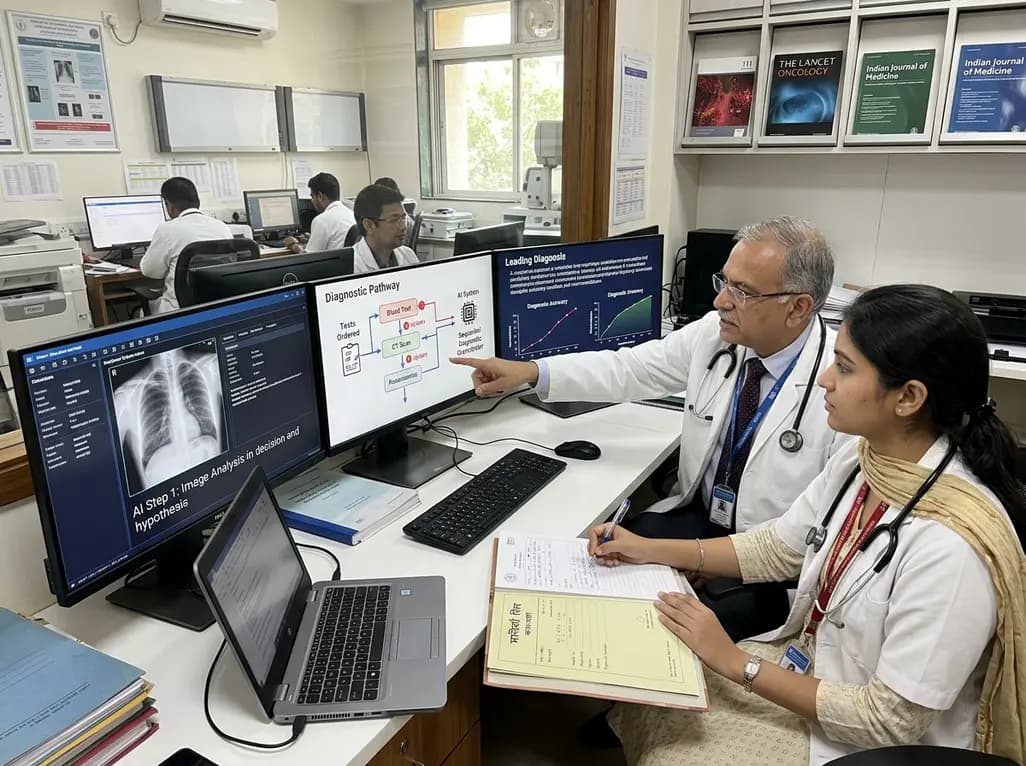
A breakthrough peer-reviewed study demonstrates that a sequential AI diagnosis system can mirror real-world clinical reasoning. By ordering stepwise tests and updating hypotheses dynamically, this multi-agent orchestrator achieved superior diagnostic accuracy while reducing investigative costs.
Today

A prenatal case highlights severe glutaric acidemia type II presenting as bilateral hyperechoic cystic kidneys at 18 weeks. Whole-exome sequencing revealed a novel homozygous ETFDH frameshift variant, demonstrating the power of rapid genetic testing in fetal renal anomalies.
Today

Review how tailored exercise programs benefit frail older patients with heart failure. Explore pathophysiological mechanisms, individualized training prescriptions, and strategies to overcome adherence barriers in clinical practice.
Yesterday

This comparative study evaluates posterior labral tears with and without glenohumeral instability, highlighting distinct demographic patterns, MRI underestimation in stable shoulders, and successful arthroscopic repair outcomes.
Yesterday

A clinical study demonstrates that early intervention with tocilizumab, either as monotherapy or bridged with corticosteroids, achieves significant proptosis reduction and resolves active inflammation in treatment-naive thyroid eye disease.
Yesterday
