.webp&w=384&q=75)

Loading, please wait...
Loading, please wait...

Asthma represents a heterogeneous, chronic inflammatory airway disorder that affects hundreds of millions of children and adults globally. Although current inhaled corticosteroids and biologic therapies have revolutionized disease management, a significant proportion of patients continue to suffer from persistent symptoms, progressive structural remodeling, and severe disease exacerbations. Consequently, elucidating the molecular pathways underlying persistent airway inflammation is crucial. In recent years, the epigenetic landscape has taken center stage, and investigators have identified lncRNA in asthma as a pivotal regulatory network orchestrating respiratory immune responses and structural airway pathology.
Long non-coding RNAs (lncRNAs) are transcripts exceeding two hundred nucleotides that do not translate into functional proteins. Instead, these molecules regulate gene expression through epigenetic modification, transcriptional interference, alternative splicing, and molecular scaffolding. Within the pulmonary microenvironment, lncRNAs interact dynamically with microRNAs, messenger RNAs, and chromatin-modifying enzymes to modulate essential cellular behaviors. Furthermore, research demonstrates that aberrant lncRNA expression disrupts immune homeostasis across respiratory epithelia, airway smooth muscle cells, and invading immune effectors.
Specifically, lncRNAs frequently act as competing endogenous RNAs or molecular sponges. By binding and sequestering specific microRNAs, they liberate target transcripts that drive pro-inflammatory cascades. Therefore, exploring dysregulated non-coding transcripts provides clinicians and researchers with vital insights into treatment-refractory asthma phenotypes. Among the vast array of identified non-coding transcripts, two nuclear-retained transcripts—nuclear paraspeckle assembly transcript 1 (NEAT1) and metastasis-associated lung adenocarcinoma transcript 1 (MALAT1)—have emerged as critical drivers in chronic respiratory pathology.
Nuclear paraspeckle assembly transcript 1 (NEAT1) is an architectural lncRNA essential for the structural assembly of nuclear paraspeckles. In healthy airway tissues, NEAT1 maintains basal cellular integrity and regulates normal physiological transcriptional stress responses. However, under chronic allergic or inflammatory stimuli, pulmonary cells upregulate NEAT1 expression significantly. Consequently, elevated NEAT1 levels correlate strongly with increased airway hyperresponsiveness, enhanced eosinophilic recruitment, and elevated systemic concentrations of pro-inflammatory cytokines such as interleukin-4, interleukin-13, and tumor necrosis factor-alpha.
Mechanistically, NEAT1 acts as a powerful molecular sponge for anti-inflammatory microRNAs. For example, NEAT1 directly sequesters microRNA-124 and microRNA-128 within respiratory cells. When NEAT1 sponges these microRNAs, it removes their inhibitory control over downstream inflammatory pathways, thereby triggering nuclear factor kappa B activation and nucleotide-binding oligomerization domain-like receptor protein 3 (NLRP3) inflammasome assembly. Additionally, elevated circulating NEAT1 levels in clinical cohorts correlate inversely with forced expiratory volume in one second (FEV1), making this molecule a robust candidate biomarker for asthma severity and exacerbation risk.
Metastasis-associated lung adenocarcinoma transcript 1 (MALAT1) is another widely conserved lncRNA located abundantly within the lung parenchymal and bronchial tissues. Although initially characterized in pulmonary malignancy, MALAT1 plays an indispensable role in chronic airway remodeling in persistent asthma. Airway remodeling involves subepithelial reticular basement membrane thickening, goblet cell hyperplasia, subepithelial fibrosis, and substantial airway smooth muscle cell proliferation and hypertrophy. Unfortunately, existing pharmacotherapies rarely reverse these established structural alterations.
Importantly, MALAT1 orchestrates airway remodeling by driving phenotypic switching in airway smooth muscle cells. Under chronic inflammatory conditions, MALAT1 sponges protective non-coding RNAs such as microRNA-150 and microRNA-216a. As a direct result, airway smooth muscle cells switch from a quiescent, contractile state to a proliferative, synthetic, and migratory phenotype. Moreover, MALAT1 activates downstream eukaryotic translation initiation factor 4E and Akt signaling pathways, thereby amplifying extracellular matrix deposition and collagen synthesis. Thus, targeting MALAT1 represents a promising therapeutic avenue to halt or potentially reverse progressive bronchial structural changes.
Viral respiratory infections, predominantly caused by human rhinoviruses and respiratory syncytial virus, represent the leading cause of acute asthma exacerbations across all age groups. When viral pathogens infect bronchial epithelial cells, host cells launch a complex innate immune defense that depends heavily on dynamic non-coding RNA networks. However, in asthmatic airways, dysregulated baseline expression of NEAT1 and MALAT1 compromises adequate antiviral interferon responses while paradoxically heightening destructive hyper-inflammatory cascades.
Specifically, viral exposure triggers an overactivation of NEAT1 within paraspeckles, which modulates the sequestration of essential transcriptional repressors and alters type I interferon production. Consequently, the airway epithelium suffers from impaired viral clearance and prolonged mucosal injury. Simultaneously, MALAT1 upregulation during viral illness stimulates excessive interleukin-6 and interleukin-8 secretion, exacerbating neutrophilic infiltration and precipitating sudden clinical deterioration. Therefore, understanding non-coding RNA dynamics during viral infections provides an important rationale for preventing viral-induced asthma flares.
The emerging discoveries surrounding NEAT1 and MALAT1 introduce practical translational opportunities for personalized respiratory medicine. First, circulating lncRNAs demonstrate remarkable stability in peripheral blood, sputum, and bronchoalveolar lavage fluid because they are protected within extracellular vesicles or ribonucleoprotein complexes. Consequently, clinicians may soon utilize plasma or sputum lncRNA expression profiles as non-invasive biomarkers to assess airway inflammation severity, predict exacerbation susceptibility, and monitor therapeutic responses.
Second, targeted silencing of pathogenic lncRNAs presents an innovative therapeutic frontier. Researchers are currently developing synthetic antisense oligonucleotides (ASOs), small interfering RNAs (siRNAs), and locked nucleic acid gapmers engineered to degrade NEAT1 or MALAT1 transcripts in preclinical models. In addition, advances in aerosolized nanoparticle delivery platforms now permit direct, localized pulmonary delivery, which minimizes systemic exposure and optimizes therapeutic concentration within the bronchial tree. Ultimately, integrating RNA-targeted interventions with conventional inhaler therapies could transform the management of severe, steroid-resistant asthma.
Both NEAT1 and MALAT1 exhibit high stability in biological fluids, including plasma, serum, and induced sputum. Clinical studies show that their expression levels correlate significantly with disease severity, eosinophilic inflammation, and reduced lung function parameters like FEV1. Therefore, measuring circulating levels of these non-coding transcripts can assist clinicians in identifying high-risk patients, monitoring subclinical inflammation, and predicting forthcoming exacerbations.
Researchers are developing antisense oligonucleotides, small interfering RNAs, and CRISPR-based gene editing strategies designed specifically to silence or degrade pathologically elevated lncRNAs like NEAT1 and MALAT1. Furthermore, scientists are packaging these molecular inhibitors into lipid nanoparticles or functionalized polymeric carriers for inhalation, enabling targeted local pulmonary delivery while avoiding systemic side effects.
Respiratory viruses such as rhinovirus induce host cell stress and profoundly dysregulate lncRNA networks in the airway epithelium. Excessive upregulation of NEAT1 and MALAT1 alters nuclear paraspeckle assembly, impairs protective interferon responses, and unleashes severe downstream pro-inflammatory cytokine signaling. As a result, asthmatic patients experience accelerated mucosal injury, acute airflow limitation, and severe clinical exacerbations.
Disclaimer: This content is for informational and educational purposes only. It is not intended to provide medical advice or substitute for professional healthcare consultations. Refer to the latest local and national guidelines for clinical practice.
References

Read summarized clinical updates, watch expert medical content, and earn CME certifications right from your smartphone.
Open your smartphone camera to scan and install.





Asthma remains a major global respiratory condition. Emerging evidence highlights long non-coding RNAs, particularly NEAT1 and MALAT1, as central epigenetic regulators driving airway inflammation, remodeling, and exacerbations, opening promising avenues for RNA-targeted diagnostic and therapeutic approaches.
4 weeks back

A systematic review of 41 preclinical studies reveals that baicalin dampens systemic inflammation, inhibits NF-κB and NLRP3 pathways, and improves organ preservation in sepsis models. However, substantial study heterogeneity and a complete lack of human clinical trials highlight the need for further translational research.
Today

Discover the crucial distinctions between mesonephric and mesonephric-like proliferations of the female genital tract. Learn the key histomorphologic, immunohistochemical, and molecular differences essential for accurate diagnosis and clinical management.
Today
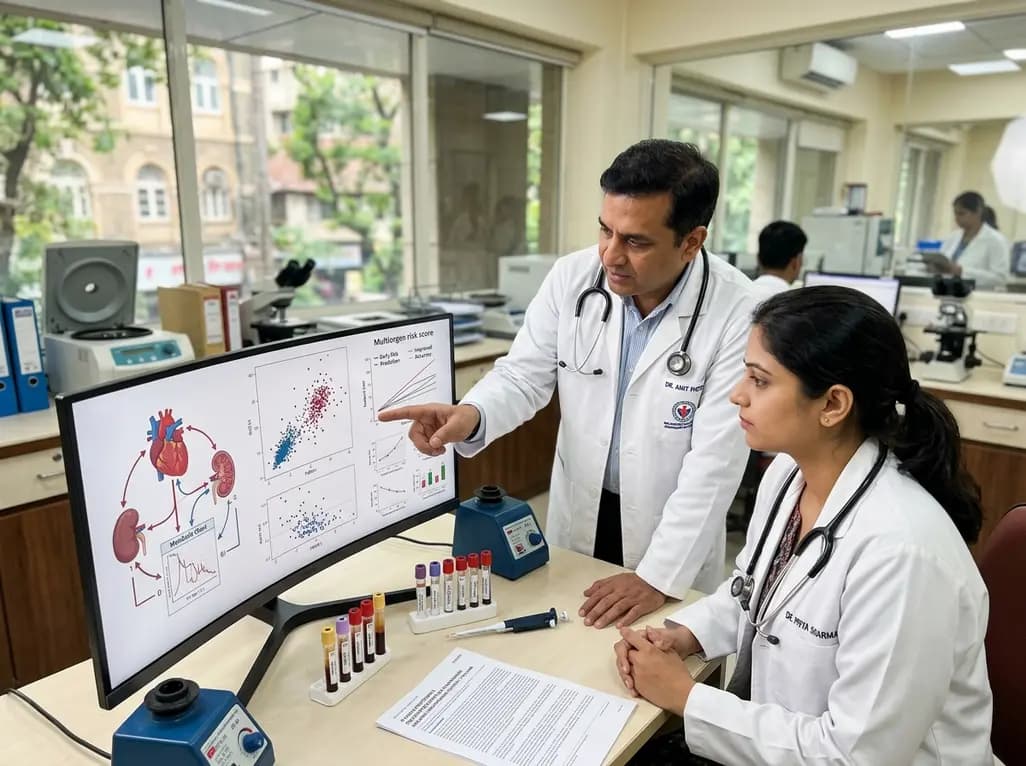
A large UK Biobank study reveals that plasma proteomic signatures capture preclinical organ damage and improve multiorgan risk prediction across early CKM syndrome stages 0 to 2 beyond traditional PREVENT clinical models.
Today

A narrative review investigates whether the articularis genus muscle functions as an independent anatomical entity or blends with the vastus intermedius. We evaluate its morphology, role in retracting the suprapatellar bursa, and direct clinical significance in anterior knee pain and arthroplasty.
Today

A Bayesian multilevel meta-analysis reveals that aerobic training combined with moderate carbohydrate restriction modestly lowers HbA1c in type 2 diabetes. However, sparse data and very low certainty leave incremental benefits over exercise or diet alone unproven, highlighting the need for individualized care.
Today
