

Loading, please wait...
Loading, please wait...

Surgical correction of congenital cleft lip and palate requires meticulous post-operative vigilance to achieve optimal wound healing and functional recovery. However, delivering effective cleft discharge instructions remains a formidable challenge across diverse healthcare settings. When pediatric patients leave the surgical ward, caregivers must manage feeding mechanics, surgical site hygiene, analgesics, and warning signs of infection. In resource-limited regions, disparities in health literacy and scarce medical supplies exacerbate these challenges. Consequently, text-heavy handouts often cause parental confusion, inconsistent home care, and preventable surgical complications. Therefore, surgical teams must adopt standardized, literacy-friendly educational pathways that empower caregivers and protect pediatric surgical outcomes.
Health literacy fundamentally determines how effectively families navigate complex surgical recovery instructions at home. Historically, conventional discharge summaries have relied on dense textual narratives, complex medical jargon, and hurried verbal explanations. Consequently, caregivers who experience low literacy or language discordance struggle to comprehend vital post-surgical tasks. In low- and middle-income countries, families often live far from tertiary health centers and lack reliable transport. Therefore, misunderstandings regarding oral feeding methods or incision care can rapidly trigger wound breakdown, infection, or severe dehydration. Furthermore, clinical teams frequently overestimate caregiver comprehension during the emotionally charged discharge encounter. Research shows that families forget over half of verbal medical information almost immediately after leaving the hospital. When surgical missions operate across borders, these communication barriers multiply. Clinicians must recognize that passive paperwork distribution fails vulnerable families. Thus, transforming surgical discharge into an accessible, visually guided educational experience addresses a major determinant of postoperative health equity.
To eliminate educational disparities, the Global Smile Foundation established standardized cleft discharge instructions across global surgical sites in South America and the Middle East. Clinical specialists focused on four specific procedures: cleft lip repair, cleft palate repair, alveolar bone grafting, and premaxillary setback. Because each procedure poses unique anatomic and physiological vulnerabilities, the multidisciplinary group created dedicated, procedure-specific guides. Furthermore, the team engineered all patient-facing materials at a fourth-grade reading level. Designers replaced confusing paragraphs with clear, full-color illustrations demonstrating arm restraint application, spoon feeding, and suture cleaning. In addition, the educational sheets incorporate color-coded alert zones to help parents recognize fever, excessive swelling, or active bleeding immediately. The project also introduced standardized provider-facing instructions. As a result, ward nurses, surgical trainees, and outpatient teams provide uniform advice across clinical encounters. Standardized visual materials bridge literacy divides, eliminate provider variability, and help families execute essential home nursing care with unwavering confidence.
Creating effective pediatric surgical education requires deep collaboration across multiple medical disciplines. Cleft care inherently depends on coordinated contributions from plastic surgeons, pediatricians, pediatric dentists, speech-language pathologists, and specialized nurses. Therefore, the curriculum development team engaged specialists from each field to establish evidence-based postoperative parameters. Surgeons defined precise rules for tension-free wound maintenance and physical activity restrictions. Meanwhile, pediatric nutritionists formulated gentle feeding regimens that prevent trauma to freshly repaired palatal tissues. Similarly, pediatric dental experts provided guidelines for oral hygiene, intraoral splint management, and bone graft protection. Speech-language pathologists ensured that early feeding adaptations safeguarded future velopharyngeal function. Specialized nurse practitioners synthesized these clinical recommendations into intuitive, chronological daily checklists for parents. Consequently, this collaborative process eliminated contradictory instructions from different team members. When all disciplines unite behind standardized education, patient safety improves significantly.
Surgical discharge protocols from high-income hospitals frequently depend on specialized supplies that families cannot obtain in resource-limited environments. For example, specialized cleft bottles, silicone scar gels, and prescription oral disinfectants are rarely available in rural pharmacies. Consequently, the Global Smile Foundation adapted its educational guidance to reflect local infrastructure in Ecuador, El Salvador, Lebanon, and Peru. Instead of prescribing unattainable commercial devices, surgical teams distribute procedure-appropriate feeding utensils directly to families at discharge. In addition, instructional illustrations depict boiled water and basic cotton applicators for suture hygiene. Translators produced Spanish and Arabic editions, ensuring accurate cultural and linguistic resonance. Furthermore, the instructions address domestic storage barriers by clarifying antibiotic stability at ambient room temperatures. By grounding recommendations in community realities, clinical teams protect families from severe financial strain. Thus, practical adaptation transforms complex medical instructions into feasible daily practices, protecting surgical repairs from avoidable failure.
Clear written materials achieve optimal clinical success only when paired with interactive communication at the bedside. Therefore, the implementation strategy embedded the structured teach-back method into daily discharge workflows. Rather than asking passive questions, clinicians invite caregivers to explain and demonstrate essential home care procedures. For instance, a caregiver demonstrates how to cleanse facial incision lines gently with cotton swabs. Similarly, parents show how they measure liquid pain medications using calibrated oral syringes. If a caregiver exhibits uncertainty, the nurse gently re-explains the step using illustrated reference guides. This proactive approach holds profound relevance for India, where tens of thousands of children undergo cleft repair annually. National health initiatives like Rashtriya Bal Swasthya Karyakram coordinate extensive surgical outreach across diverse populations. However, linguistic diversity and variable literacy rates frequently undermine home compliance. Therefore, adopting literacy-friendly, visually driven discharge materials translated into regional languages offers immense value across Indian centers. Furthermore, training Accredited Social Health Activists in teach-back verification extends safe post-surgical monitoring into rural households. Ultimately, standardizing cleft discharge education represents an accessible, high-impact strategy to enhance surgical success, prevent readmissions, and advance pediatric health equity.
The teach-back method provides objective verification of caregiver understanding before hospital discharge. Rather than relying on passive verbal agreement, clinicians ask caregivers to demonstrate wound care techniques and calculate medication dosages. Furthermore, this interactive approach identifies specific knowledge gaps in a supportive manner. In high-stakes pediatric surgical recovery, active demonstration prevents medication errors, reduces parental anxiety, and confirms that families can safely perform complex post-operative tasks at home.
Low health literacy directly contributes to post-surgical complications such as wound dehiscence, infection, and severe dehydration. When caregivers cannot comprehend complex textual instructions, they may inadvertently use improper feeding utensils, administer inaccurate drug dosages, or miss early signs of infection. Consequently, simplified pictorial instructions written at a primary school level bridge educational disparities. This accessible format empowers caregivers from all backgrounds to adhere strictly to delicate postoperative protocols.
Discharge kits in low-resource environments should provide procedure-appropriate feeding tools, sterile gauze, cotton-tipped applicators, and prescribed topical ointments. In addition, providing oral measuring syringes prevents dangerous analgesic dosing errors at home. When surgical teams furnish these tangible supplies alongside illustrated instructions, families avoid relying on unavailable commercial products. Consequently, this practical provision ensures that caregivers can immediately execute all necessary hygiene and nutritional recommendations without experiencing financial hardship.
Disclaimer: This content is for informational and educational purposes only and is not intended to serve as medical advice, diagnosis, or treatment. Healthcare professionals must exercise independent clinical judgment and consult authoritative medical references when making patient care decisions. Guidelines, dosages, and evidence may evolve over time; clinicians should refer to the latest institutional protocols and peer-reviewed literature to confirm recommendations. Treatment decisions should always be tailored to individual patient presentations. The authors and publishers disclaim any liability for adverse outcomes resulting from the use or application of this information. Refer to the latest local and national guidelines for clinical practice.
References
Andari D et al. Development of Literacy-Friendly Discharge Instructions for Patients With Cleft Lip and/or Palate. J Craniofac Surg. 2026 Nov 09. doi: 10.1097/SCS.0000000000013561. PMID: 43002755.
Almulla A, et al. Improving Discharge Instructions: Systematic Review of Language and Health Literacy Interventions. Hosp Pediatr. 2026;14(11):e374-e385.
Newcombe J, et al. Assessing Health Literacy to Improve Discharge Education in Pediatric Surgical Care. Crit Care Nurse. 2026;46(2):32-41.

Read summarized clinical updates, watch expert medical content, and earn CME certifications right from your smartphone.
Open your smartphone camera to scan and install.





A multidisciplinary initiative developed standardized, literacy-friendly discharge instructions for cleft lip and palate procedures in low-resource settings, using visual aids, teach-back methods, and simplified text to enhance caregiver adherence and reduce post-surgical complications.
Today
Explore the three-tier harness framework for clinical LLM agents. Learn how orchestration, clinical adaptation, and failure-driven evaluation surpass raw model capability to deliver safe, reliable healthcare AI integration.
Today
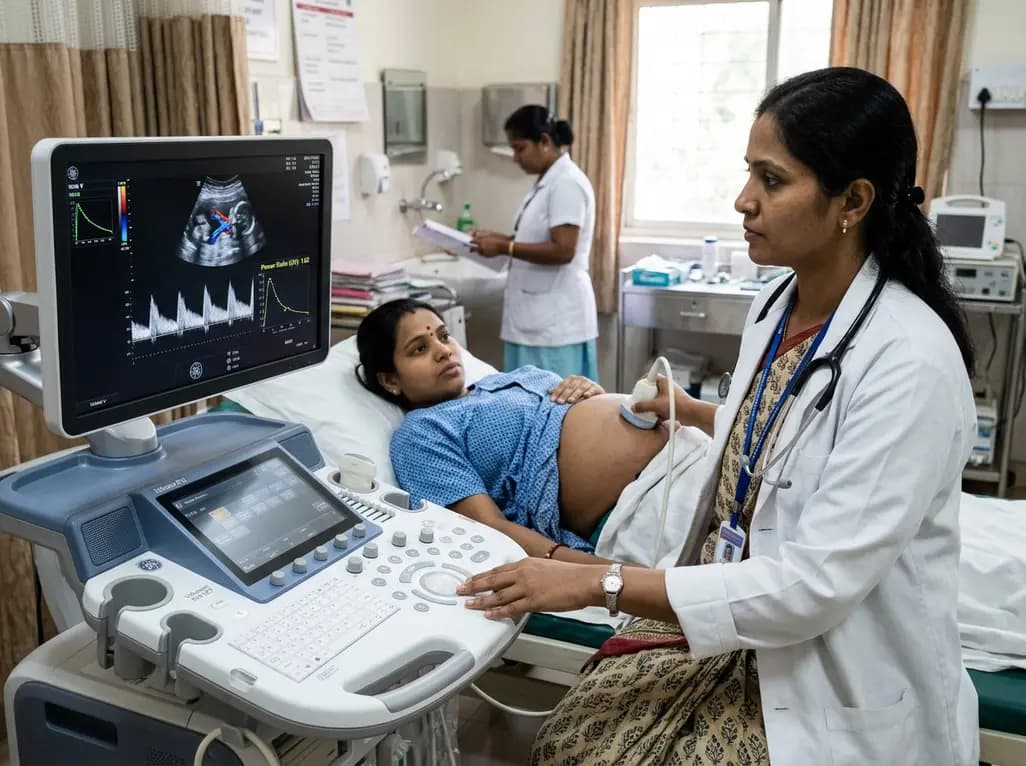
Adaptive spectral analysis of umbilical venous Doppler recordings reveals that an elevated second-trimester maternal-fetal power ratio can distinguish pregnancies at risk of preeclampsia, offering a novel biophysical approach to enhance early vascular risk stratification.
Today

A real-world cohort study of 6,537 patients from the FOUNTAIN platform demonstrates that initiating finerenone significantly reduces albuminuria by 40.7% with minimal eGFR decline and manageable hyperkalemia risk, confirming its practical effectiveness and safety in diabetic kidney disease.
Today

A comprehensive analysis of MAP therapy resistance in osteosarcoma, examining canonical and non-canonical mechanisms across damage avoidance, enhanced DNA repair, and replication stress tolerance to identify novel vulnerabilities.
Today
Near-infrared autofluorescence provides real-time label-free optical guidance during endoscopic transsphenoidal pituitary surgery. By highlighting stark signal contrasts between normal pituitary gland and adenomas, this technique aids gross-total tumor resection while safeguarding critical endocrine function.
Today
