.webp&w=384&q=75)

Loading, please wait...
Loading, please wait...
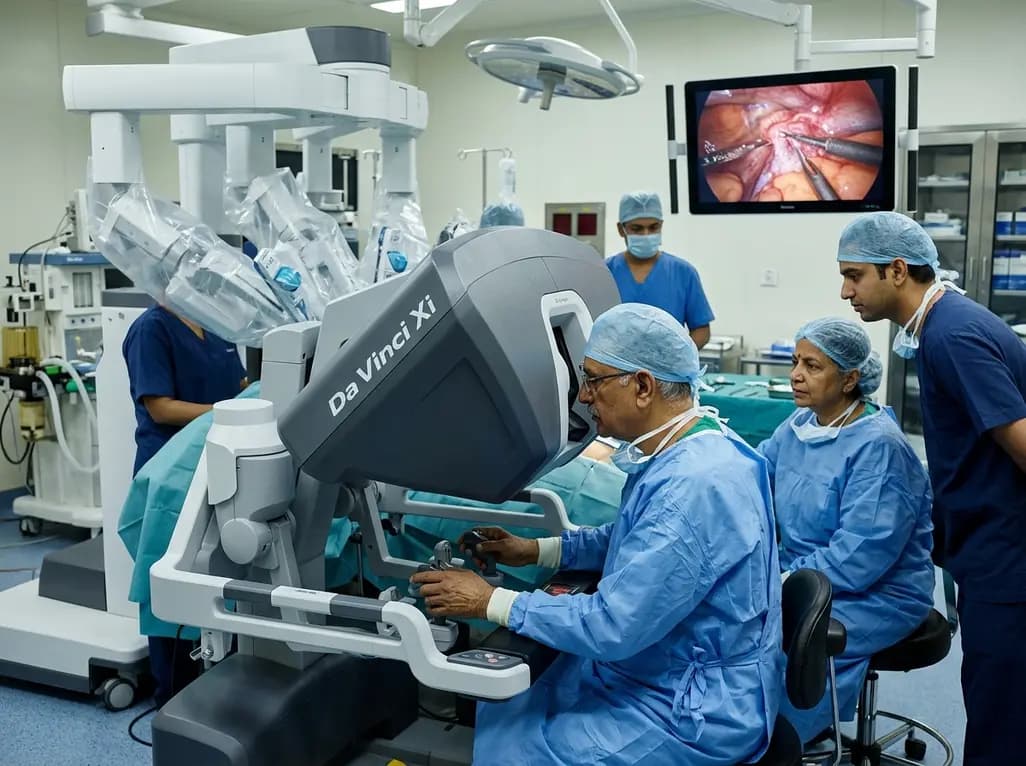
Lilavati Hospital and Research Centre in Mumbai has officially launched the Da Vinci Xi System to expand its advanced surgical care. This fourth-generation platform represents a technological leap forward for minimally invasive operative interventions. Consequently, surgical teams can now handle intricate pathologies with superior precision, greater dexterity, and flexible anatomical reach. The hospital aims to deploy this robotic console across numerous surgical disciplines, such as urology, gynaecology, oncology, gastroenterology, and thoracic surgery. As a result, patients throughout western India gain access to cutting-edge interventions that reduce physical trauma and speed up recovery times.
The Da Vinci Xi System integrates state-of-the-art multi-quadrant access designed for anatomical versatility. Specifically, the system utilizes an overhead boom architecture that enables instrument arms to rotate effortlessly around the patient. Therefore, surgical teams can reconfigure the operative setup without repositioning the entire mobile cart during surgery. Moreover, the console incorporates digital endoscopes that attach to any of the four mechanical arms. This visual flexibility gives clinicians high-definition stereoscopic views of complex tissue planes. In addition, the console features intuitive master controls that filter out natural physiological tremors. Surgeons manipulate EndoWrist instruments that bend and articulate beyond the physical range of human hands. Consequently, operative precision increases significantly during microsurgical maneuvers. Furthermore, integrated table motion technology synchronizes the operating table with the robotic arms in real time. Thus, the clinical team can optimize gravity exposure without interrupting the procedure. Ultimately, these structural refinements streamline theatre workflow and reduce procedural setup delays.
Urological surgery demands exceptional accuracy due to delicate vascular and neurological bundles within the pelvic cavity. Therefore, the implementation of robotic technology brings transformative advantages to complex renal and pelvic operations. For example, surgeons performing robotic radical prostatectomy can dissect neurovascular tissue with sub-millimeter visual precision. Consequently, patients experience superior functional recovery, particularly regarding urinary continence and sexual function preservation. Similarly, partial nephrectomy procedures benefit immensely from wristed instrument dexterity during renal tumor enucleation. Surgeons can excise deep parenchymal lesions while preserving healthy nephron mass. Furthermore, the robotic instruments facilitate rapid intracorporeal suturing under warm ischemia conditions. As a result, ischemia times decrease significantly, which helps protect overall renal function. Additionally, robotic reconstructive urology, including pyeloplasty and ureteral reimplantation, achieves high success rates. Surgeons manipulate fine sutures in constrained anatomical corridors without encountering instrument collisions. In contrast to conventional open repairs, robotic urology minimizes post-operative catheter dependency and pain.
Robotic technology also provides profound clinical benefits in complex gynecological and oncologic interventions. Notably, pelvic organ visualization becomes crystal clear under magnified three-dimensional illumination. Consequently, surgeons can excise deep infiltrating endometriosis lesions while sparing adjacent bowel and bladder structures. Furthermore, gynecologists perform complex myomectomies with secure multilayer uterine reconstruction. This meticulous closure preserves uterine wall integrity for future reproductive outcomes. Additionally, gynecologic oncologists manage endometrial and cervical malignancies through minimally invasive staging protocols. Clinicians utilize integrated fluorescence imaging to identify sentinel lymph nodes with exceptional accuracy. Therefore, surgeons avoid extensive lymphadenectomy when nodal sampling provides sufficient staging data. Furthermore, cancer resections in deep pelvic spaces achieve clear surgical margins with minimal tissue handling. As a result, patients experience significantly lower perioperative blood loss compared to traditional laparotomy. Ultimately, women recover much faster and resume their routine personal and professional lives sooner.
Gastrointestinal and thoracic disciplines also derive substantial technical benefits from advanced robotic platforms. For instance, colorectal resections in narrow pelvic confines require exceptional visibility and steady retraction. Robotic arms navigate low rectal cancers efficiently, enabling sphincter-saving anterior resections. Furthermore, gastrointestinal surgeons construct delicate intracorporeal anastomoses with consistent tensile strength. Consequently, instances of anastomotic leakage and wound breakdown decrease notably. In addition, upper gastrointestinal specialists perform bariatric revisions and complex hiatus hernia repairs with stable visualization. Similarly, thoracic surgeons benefit from nimble instrument articulation when working inside the mediastinum. Robotic lobectomy and thymectomy procedures proceed through tiny intercostal port sites without spreading the ribs. Therefore, patients experience substantially less intercostal nerve irritation and postoperative chest wall pain. Moreover, surgeons dissect hilar vascular structures safely under true depth perception. Thus, complex cardiopulmonary reconstructions achieve predictable operative endpoints with low conversion rates.
Minimally invasive robotic surgery generates meaningful clinical benefits across the entire perioperative pathway. For instance, tiny port incisions cause far less systemic inflammatory trauma than extensive laparotomy wounds. Consequently, patients require substantially lower doses of postoperative opioid analgesia. Furthermore, minimal intraoperative blood loss virtually eliminates the need for blood transfusions during routine oncologic cases. As a result, transfusion-related systemic complications and infectious risks drop dramatically. Additionally, reduced tissue disruption accelerates the return of normal gastrointestinal motility. Patients tolerate enteral nutrition sooner, which promotes rapid physiological healing. Consequently, hospital lengths of stay shorten by several days across all surgical specialties. Furthermore, surgical site infection rates decrease significantly because robotic ports protect surrounding subcutaneous tissue. In addition, patients appreciate the cosmetic outcome of minimal surgical scars. Ultimately, advanced surgical robotics optimizes clinical efficiency, enhances bed turnover, and improves overall patient satisfaction in tertiary healthcare settings.
Q1: What are the main clinical advantages of robotic surgery over conventional laparoscopy?
Robotic platforms deliver high-definition three-dimensional visualization with true depth perception, unlike conventional two-dimensional laparoscopic cameras. Furthermore, wristed instruments provide seven degrees of articulation that exceed human hand mobility. The system also filters involuntary tremors and scales surgeon movements accurately. Consequently, surgeons achieve superior precision during delicate dissections in tight anatomical spaces, reducing tissue trauma and intraoperative bleeding.
Q2: Does the surgical robot perform the operation automatically without human intervention?
No, the robotic surgical system does not perform operative steps independently or make autonomous surgical decisions. Instead, a qualified surgeon controls every mechanical arm and instrument from an ergonomic master console inside the operating room. The robot precisely translates the surgeon's real-time hand movements into micro-movements within the patient's body, ensuring continuous human expertise throughout the procedure.
Q3: How does robotic-assisted surgery contribute to faster postoperative recovery for patients?
Robotic surgery utilizes small incisions measuring less than one centimeter, avoiding extensive muscle cutting associated with open procedures. Consequently, patients experience substantially reduced wound pain, minimal surgical inflammation, and lower blood loss. Furthermore, early restoration of bowel function allows rapid resumption of oral diet, leading to shortened hospital stays and faster return to baseline daily activities.
Disclaimer: This content is for informational and educational purposes only. It does not constitute medical advice or replace professional judgment. Refer to the latest local and national guidelines for clinical practice.
References

Read summarized clinical updates, watch expert medical content, and earn CME certifications right from your smartphone.
Open your smartphone camera to scan and install.





The installation of advanced fourth-generation surgical robotics at Lilavati Hospital marks a significant advancement for tertiary healthcare in India. Surgeons can now perform delicate oncological, urological, and gynecological procedures with high-definition 3D imaging, minimal blood loss, and accelerated healing.
Today

A multicenter cohort study reveals real-world adherence to IL-17, IL-23, and IL-12/23 biologics in moderate-to-severe psoriasis exceeds 94%. Older age, female sex, and IL-23 inhibitors independently predict adherence rates of 90% or greater, offering key practical guidance for managing psoriatic disease.
Today
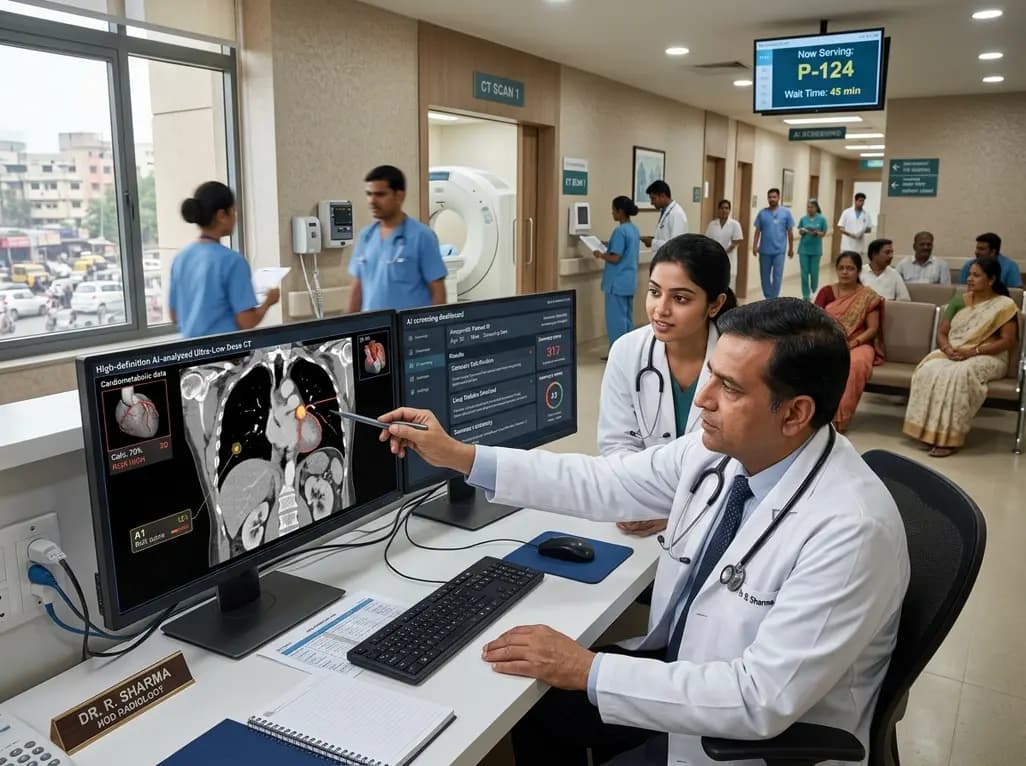
Discover how AI-assisted imaging and ultra-low-dose CT are transforming preventive health checkups in India. By identifying silent cardiometabolic and pulmonary risks early, structured clinical workflows and physician oversight deliver accurate, comprehensive health assessments within a two-hour window.
Today
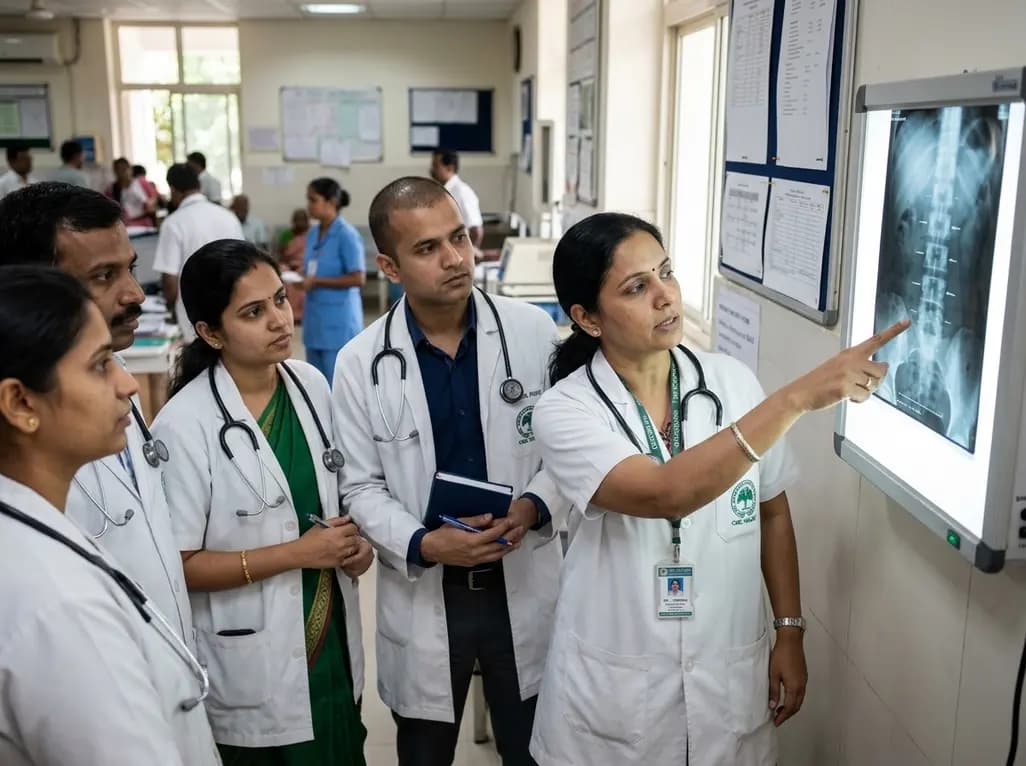
A comprehensive umbrella review of 22 meta-analyses and 286,584 adults reveals that calcium supplementation modestly increases bone mineral density and reduces vertebral fractures, but does not decrease hip or wrist fracture risks.
Today

Recent research challenges the traditional view of menopause as a slow transition, demonstrating an abrupt physiological cliff across metabolic, renal, and bone markers. Understanding these rapid multi-organ shifts allows clinicians to optimize early screening, lifestyle guidance, and personalized hormone therapy.
Today
