.webp&w=384&q=75)

Loading, please wait...
Loading, please wait...

The rapid expansion of wearable medical technology has introduced significant challenges regarding electromagnetic wave pollution. This interference can compromise the accuracy of sensitive diagnostic equipment and potentially affect patient health. Consequently, there is an urgent demand for advanced materials like the EMI shielding composite film. Recently, researchers developed a novel carbon nanotube-nickel nanoparticle/polyimide (CNT-Ni/PI) composite. This film offers high mechanical strength and exceptional shielding performance, making it ideal for the next generation of medical applications.
The researchers fabricated the newly developed film using electrospinning, vacuum filtration, and advanced coating methods. This process resulted in a material with a high tensile strength of 42.1 MPa. Furthermore, the inclusion of nickel nanoparticles significantly enhanced the Young's modulus to 710.5 MPa. These mechanical properties ensure that the film remains durable even in flexible, wearable formats. Therefore, medical professionals can rely on these materials for long-term patient monitoring devices without fear of structural failure.
The EMI shielding composite film functions through a sophisticated synergistic effect of reflection and absorption. The carbon nanotube layer provides high electrical conductivity, which efficiently reflects incoming electromagnetic waves. Simultaneously, the nickel nanoparticles generate magnetic and interfacial polarization losses to absorb residual waves. As a result, the composite achieved a total shielding effectiveness of 81.45 dB in the X-band. Additionally, its specific shielding effectiveness (SSE) reached an impressive 9819.28 dB·cm²/g. This high-level performance ensures that portable medical electronics operate without signal corruption in electromagnetically dense environments.
Modern hospital environments are increasingly crowded with electronic devices that emit electromagnetic signals. This creates a landscape where electromagnetic interference (EMI) is a constant threat to diagnostic integrity. For instance, wearable ECG monitors or implantable pacemakers require robust protection from external signals to prevent false readings or malfunctions. The lightweight and flexible nature of the CNT-Ni/PI film allows for seamless integration into medical textiles and radar-shielding layers. Consequently, this innovation supports the development of safer, more reliable healthcare technology for both clinicians and patients.
EMI shielding prevents external electromagnetic signals from disrupting the internal electronics of medical devices. This ensures diagnostic accuracy and prevents potentially life-threatening malfunctions in equipment like pacemakers and infusion pumps.
Unlike traditional metal shields which are heavy and prone to corrosion, this composite film is lightweight and highly flexible. This allows it to be used in wearable sensors and smart medical textiles without adding bulk or restricting patient movement.
By absorbing waves rather than just reflecting them, the material reduces the overall electromagnetic noise within a clinical environment. This minimizes "cross-talk" between multiple electronic devices used in close proximity.
Disclaimer: This content is for informational and educational purposes only. It does not constitute medical advice or professional engineering recommendations for device manufacturing. Refer to the latest local and national guidelines for clinical practice and medical device safety.
References

Read summarized clinical updates, watch expert medical content, and earn CME certifications right from your smartphone.
Open your smartphone camera to scan and install.





A new carbon nanotube-nickel nanoparticle/polyimide composite film provides lightweight, flexible, and high-performance EMI shielding for medical wearables....
8 months ago

A prospective study using wireless sensors reveals that smaller physician workrooms significantly increase contact density and respiratory virus transmission risks despite lower average occupancy, underscoring the urgent need for better architectural design and infection control in healthcare duty rooms.
Today

A KGMU study reveals over half of women with breast abnormalities fail to undergo diagnostic confirmation, leading to advanced-stage detection. Discover the socio-cultural barriers, clinical risks of incomplete resection, and community-level solutions needed to bridge the critical screening-to-diagnosis gap in India.
Today
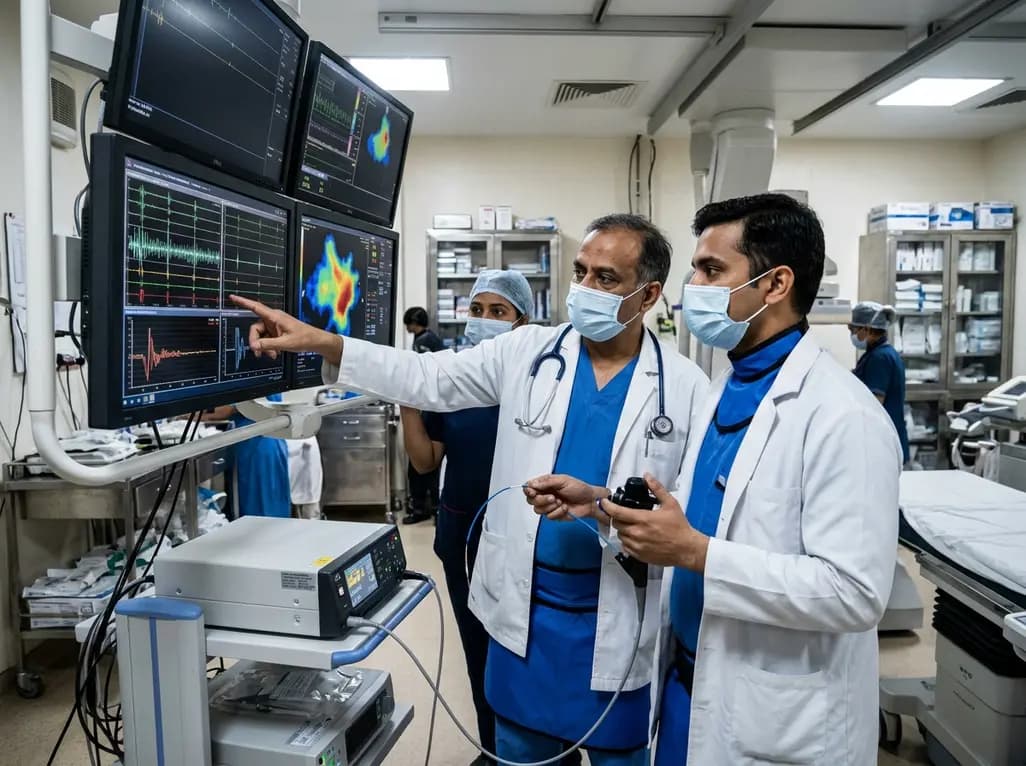
A comparative non-contact study reveals that high-power radiofrequency delivery with the QDOT MICRO catheter induces an artifactual contact force rise. Electrophysiologists must understand this power-dependent thermal and electrical phenomenon to avoid inadvertent catheter withdrawal and ineffective ablation.
Today
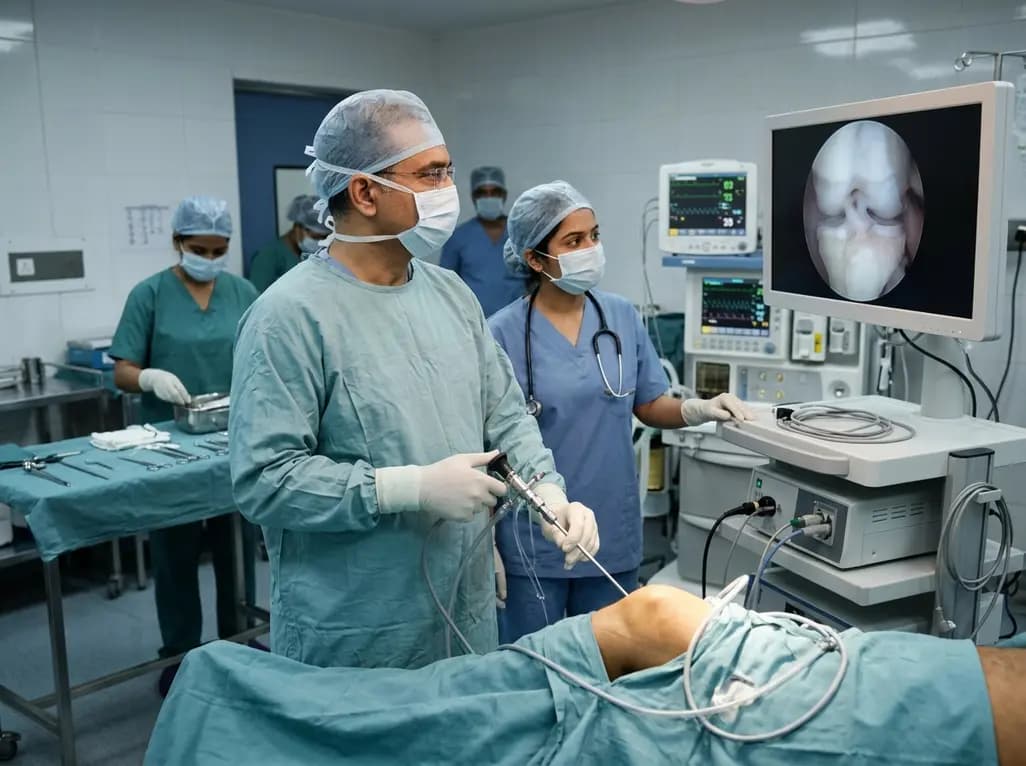
Healthium Medtech has transitioned its arthroscopy vertical into SIRONIX Orthopedics, aiming to capture key segments of the global joint care market. The strategic shift introduces dedicated portfolios in sports medicine, joint regeneration, surgical reconstruction, and digital operating technologies.
Today
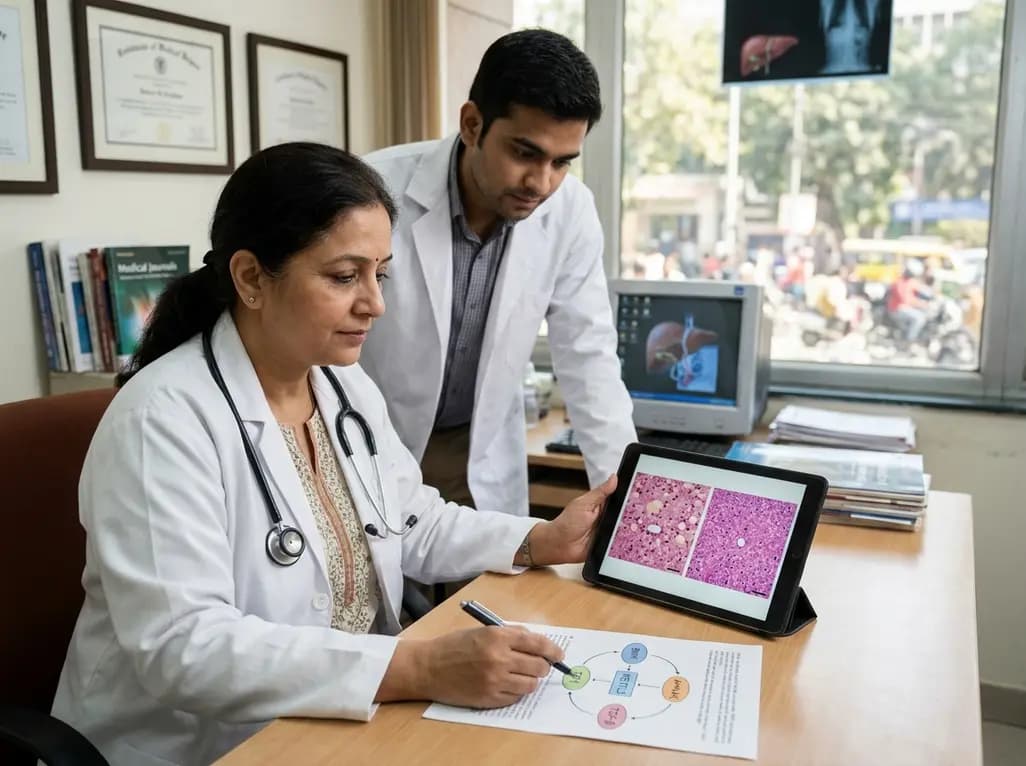
Preclinical research demonstrates that BMI1 overexpression alleviates metabolic syndrome-related liver injury. By triggering ubiquitin-mediated METTL3 degradation, BMI1 prevents AHNAK m6A methylation and suppresses fibrogenic TGF-β/SMAD signaling, significantly improving hepatic steatosis and insulin resistance.
Today
