.webp&w=384&q=75)

Loading, please wait...
Loading, please wait...

Recognizing life-threatening perioperative anaphylaxis remains one of the most critical challenges in modern anesthesia and surgical care. When patients experience acute circulatory collapse under general anesthesia, immediate identification determines whether resuscitation succeeds or fails. Recent multicenter clinical evidence has uncovered a crucial diagnostic paradigm shift. Historically, clinicians expected classical generalized vasodilation, flushing, and tachycardia during systemic allergic emergencies. However, emerging observational data reveal that an early cutaneous vasoconstriction phenotype marks severe IgE-mediated reactions and correlates strongly with fatal or near-fatal outcomes. Consequently, anesthesia providers and critical care teams must update their diagnostic instincts to identify subtle skin changes and paradoxical hemodynamic responses before irreversible cardiac arrest develops.
In a pivotal multicenter study evaluating 72 adults with severe IgE-mediated reactions, researchers discovered that cutaneous manifestations provide profound prognostic insight. Patients categorized with the early cutaneous vasoconstriction phenotype exhibited extreme pallor, piloerection, localized cyanosis, and intense cold sweating immediately following allergen exposure. Notably, all fatal and near-fatal events occurred exclusively within this cutaneous vasoconstriction cohort, accounting for an absolute risk difference of 22.2%. In contrast, patients displaying conventional cutaneous vasodilation, late skin changes, or no cutaneous signs survived without needing mechanical circulatory support.
Therefore, cutaneous vasoconstriction serves as a critical bedside indicator of catastrophic distributive shock. Surgical drapes and dim operating theatre lighting often conceal early skin pallor, which complicates rapid identification. Because neuromuscular blocking agents and perioperative beta-lactam antibiotics act within minutes of induction, anesthesiologists must inspect exposed skin surfaces systematically. When severe pallor accompanies sudden hypotension, clinicians should suspect immediate hypersensitivity rather than routine anesthetic-induced vasodilation. Prompt recognition prevents diagnostic delays and ensures immediate escalation of advanced hemodynamic support.
Clinicians routinely utilize the modified Ring and Messmer grading scale to classify the severity of immediate hypersensitivity during anesthesia. Grade I involves isolated cutaneous or mucosal manifestations, such as erythema and urticaria. Grade II introduces moderate multivisceral involvement, including moderate hypotension, mild bronchospasm, and cutaneous flushing. However, grades III and IV represent true life-threatening emergencies that demand emergent intervention. Grade III presents as profound cardiovascular collapse, severe bronchospasm, and cardiac dysrhythmias, whereas grade IV manifests as full cardiac arrest.
Importantly, the investigated cohort focused strictly on grades III and IV IgE-mediated reactions. Grade III presentations accounted for over 90% of the severe cases, while grade IV represented nearly 10%. Interestingly, four out of six fatal or near-fatal outcomes initially appeared as grade III collapse before rapidly deteriorating into intractable circulatory failure. This clinical trajectory underscores how rapidly grade III reactions can escalate to death if initial management fails to restore intravascular filling pressures. Therefore, clinicians must treat any sudden grade III collapse as a potential precursor to refractory cardiac arrest, initiating aggressive resuscitation without waiting for overt cutaneous erythema or classic bronchospasm.
A cornerstone finding from recent clinical observations is the consistent association between early cutaneous vasoconstriction and profound bradycardia in fatal cases. In all fatal and near-fatal events, patients demonstrated a median heart rate of 46 beats per minute during initial collapse. Traditionally, physicians anticipate compensatory reflex tachycardia during acute allergic hypotensive states. However, massive and sudden mediator release triggers severe interstitial capillary leakage, causing up to 35% of total intravascular volume to leave the circulatory compartment within ten minutes.
Consequently, extreme hypovolemia leads to a critical decrease in venous return and ventricular end-diastolic filling. This abrupt empty ventricle phenomenon activates intracardiac vagal mechanoreceptors, triggering the Bezold-Jarisch reflex. As a result, paradoxical bradycardia develops alongside severe arterial hypotension. Furthermore, intense endogenous sympathetic activation attempts to preserve central perfusion, resulting in early peripheral cutaneous vasoconstriction and pallor. Anesthesiologists must recognize that the lethal combination of severe bradycardia, profound arterial hypotension, and cutaneous vasoconstriction reflects catastrophic central hypovolemia rather than routine vagal hypertonia or anesthetic overdose.
The retrospective analysis highlighted that purely symptomatic treatment contributed significantly to poor outcomes in fatal cases. When confronted with unexplained hypotension and bradycardia, anesthesia teams frequently administer isolated doses of ephedrine, phenylephrine, or atropine. Although these agents temporarily address individual hemodynamic parameters, they fail to target the underlying pathophysiology of IgE-mediated shock. For instance, alpha-1 adrenergic agonists worsen peripheral vasoconstriction without addressing profound capillary permeability or mast cell stabilization. Similarly, atropine may transiently raise heart rate, but it cannot restore stroke volume in an empty heart.
Moreover, attributing sudden intraoperative collapse solely to anesthetic depth or surgical manipulation delays life-saving epinephrine administration. Delaying epinephrine increases the risk of refractory pulseless electrical activity and irreversible hypoxic brain injury. Clinicians must realize that symptom-directed temporizing measures waste precious minutes during fulminant anaphylaxis. Instead, providers must approach unexplained intraoperative hypotension with a high index of suspicion, abandoning pure vasoconstrictor mono-therapy in favor of structured anaphylaxis resuscitation algorithms that prioritize immediate epinephrine and massive volume expansion.
Immediate intravenous epinephrine remains the primary first-line pharmacotherapy for perioperative anaphylaxis. Epinephrine provides essential alpha-1 vasoconstriction to restore systemic vascular resistance, beta-1 positive inotropy and chronotropy to augment cardiac output, and beta-2 stimulation to reverse bronchospasm while inhibiting further mast cell mediator release. In adult grade III collapse, clinicians should titrate intravenous epinephrine boluses of 50 to 100 micrograms every one to two minutes, escalating rapidly to an intravenous infusion if hemodynamic instability persists.
Simultaneously, aggressive volume expansion is mandatory to counteract massive capillary extravasation. Anesthesia teams should rapidly infuse warm crystalloids, often requiring two to four liters within the first thirty minutes through large-bore peripheral access. In addition, all prospective offending agents, including ongoing neuromuscular blockers, antibiotics, and anesthetic infusions, must cease immediately. If the patient does not respond to escalating doses of epinephrine and fluid resuscitation, second-line vasopressors such as vasopressin or norepinephrine must follow promptly. Furthermore, teams should prepare for early mechanical circulatory support, such as veno-arterial extracorporeal membrane oxygenation, in refractory near-fatal cases.
Effective management of perioperative allergic crises extends beyond the operating room into structured follow-up care. Following successful resuscitation, patients require admission to an intensive care unit for at least 24 hours to monitor for biphasic reactions and persistent vasoplegia. During the acute phase, clinicians must obtain serial serum total tryptase measurements. The first sample should be drawn within one to two hours of reaction onset, followed by a second baseline sample at 24 hours or during subsequent outpatient evaluation. An acute tryptase level exceeding 1.2 times baseline plus 2 micrograms per liter confirms systemic mast cell activation.
Additionally, comprehensive allergological evaluation must take place four to six weeks post-event. Specialist allergy clinics perform skin prick testing, intradermal testing, and specific IgE assays to identify the offending allergen definitively. Common culprits include neuromuscular blocking agents like rocuronium and succinylcholine, beta-lactam antibiotics, chlorhexidine, and sugammadex. Providing patients with detailed written documentation, medical alert identifiers, and safe future anesthesia plans prevents catastrophic repeat exposures. Multidisciplinary collaboration between anesthesiologists and allergists ensures robust patient safety across future surgical interventions.
Traditional teaching emphasizes generalized cutaneous vasodilation, intense erythema, and flushing caused by histamine-mediated peripheral dilation. In contrast, the early cutaneous vasoconstriction phenotype manifests as severe pallor, piloerection, cyanosis, and profuse cold sweating. This distinct presentation signifies extreme distributive hypovolemia, intense sympathetic compensation, and profound circulatory collapse. Recognizing this lesser-known phenotype is vital because it correlates with fatal and near-fatal perioperative allergic outcomes.
Paradoxical bradycardia develops due to massive capillary permeability and rapid fluid extravasation, which reduces circulating blood volume by up to 35 percent. The resulting decrease in venous return severely depletes ventricular end-diastolic volume. Consequently, an underfilled, vigorously contracting ventricle stimulates intracardiac vagal unmyelinated C-fibers, triggering the Bezold-Jarisch reflex. This reflex overrides typical compensatory tachycardia, causing profound bradycardia alongside life-threatening arterial hypotension.
Intravenous epinephrine is the definitive first-line pharmacological agent for perioperative anaphylactic shock. Clinicians should administer titrated intravenous boluses of 50 to 100 micrograms for grade III cardiovascular collapse, adjusting according to arterial blood pressure response. Concurrently, rapid intravenous infusion of crystalloids is essential to replace intravascular volume loss. If hypotension persists despite repeated boluses, clinicians must start a continuous epinephrine infusion and consider second-line vasopressors.
Disclaimer: This content is for informational and educational purposes only and does not constitute medical advice, diagnosis, or treatment. Healthcare professionals should rely on their clinical judgment and refer to official guidelines when making treatment decisions. Always consult with a qualified healthcare provider for specific clinical inquiries. Refer to the latest local and national guidelines for clinical practice.
References
Dewachter P et al. Lessons Learned From Fatal and Near-Fatal Perioperative IgE-Mediated Anaphylaxis. J Allergy Clin Immunol Pract. 2026 Aug 14. doi: undefined. PMID: 42599270.
Dewachter P, Savic L. Perioperative anaphylaxis: pathophysiology, clinical presentation and management. BJA Educ. 2019;19(10):313-320.
Garvey LH, Dewachter P, Hepner DL, et al. Management of suspected immediate perioperative allergic reactions: an international overview and consensus recommendations. Br J Anaesth. 2019;123(1):e50-e64.
Ring J, Messmer K. Incidence and severity of anaphylactoid reactions to colloid volume substitutes. Lancet. 1977;1(8009):466-469.

Read summarized clinical updates, watch expert medical content, and earn CME certifications right from your smartphone.
Open your smartphone camera to scan and install.





Perioperative IgE-mediated anaphylaxis can present with an early cutaneous vasoconstriction phenotype and paradoxical bradycardia, signaling extreme hypovolemia and high mortality risk. Immediate recognition, intravenous epinephrine, and aggressive fluid resuscitation are paramount for preventing fatal outcomes.
last month

A recent clinical report details an atypical presentation of bilateral proptosis as the primary manifestation of aggressive multiple myeloma. Explore the diagnostic pathway, imaging findings, and critical multidisciplinary management strategies essential for handling extramedullary plasma cell dyscrasias.
Today

Prenatal evaluation of fetal growth restriction requires an integrated diagnostic approach. While chromosomal microarray remains fundamental, exome sequencing offers significant diagnostic yield in isolated and syndromic cases, especially when ultrasound shows skeletal anomalies or normal placental function.
Today
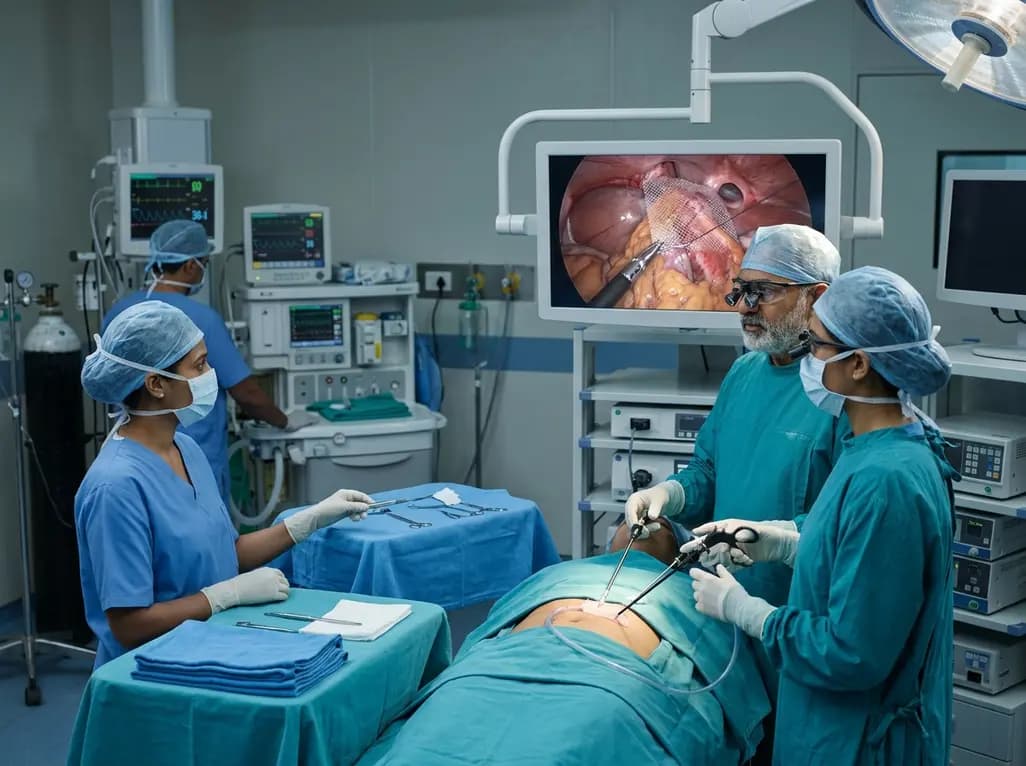
Discover a novel laparoscopic approach for iatrogenic diaphragmatic hernia repair following pedicled omentoplasty. This modified Sugarbaker technique integrates dorsal pedicle lateralization and round ligament reinforcement to secure the diaphragmatic defect while preserving vital omental vascularity.
Today

High-grade trochlear dysplasia disrupts patellofemoral stability. Although the patellotrochlear index measures cartilage overlap on MRI, cartilage contact does not ensure osseous containment. Relying solely on two-dimensional metrics may lead surgeons to overlook necessary tibial tubercle osteotomy procedures.
Today

New research reveals that M1 macrophage-derived exosomes aggravate diabetic nephropathy by transferring WTAP to stabilize S1PR2 mRNA. Silencing WTAP in these vesicles attenuates endothelial injury and renal fibrosis, pointing toward innovative nanomedicine therapies.
Today
